
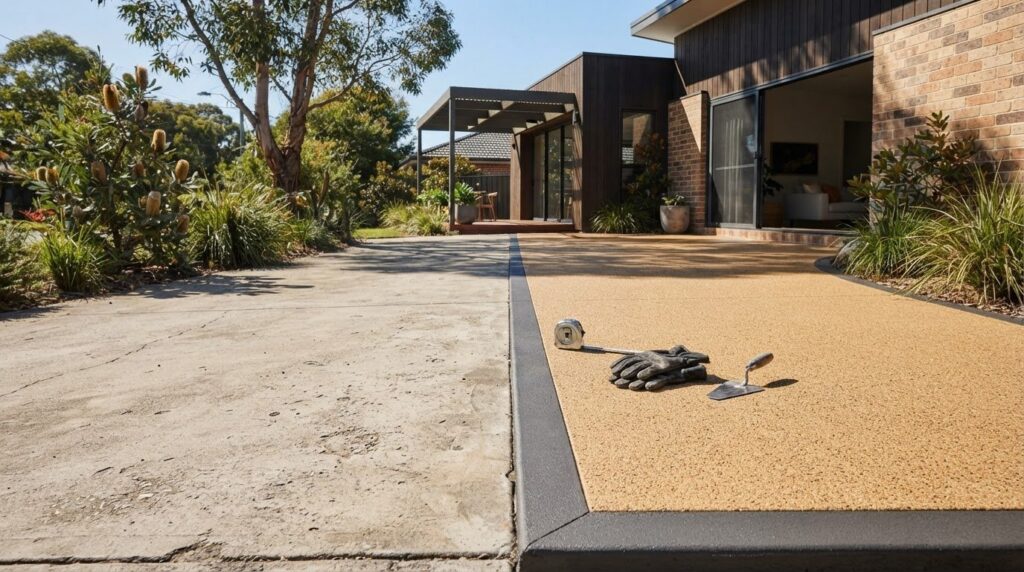
What if the finish you love isn’t right for the concrete underneath it? If “concrete resurfacing liverpool nsw” is on your shortlist, start by checking whether the existing surface is sound enough to support a lasting result. Choosing a colour or texture comes later.
An ageing driveway, path or entertaining area can make a property feel tired, but cracks and worn patches don’t always rule out resurfacing. The condition and stability of the slab matter. An on-site assessment can help distinguish surface issues that may be addressed during preparation from deeper damage that could call for a different solution.
This guide explains what makes concrete suitable for resurfacing, what assessment and preparation may involve, and how to choose a finish that fits the site and its everyday use. You’ll also find practical questions to discuss with a local concreting team before planning the work. Inspire Concrete is a family-owned Sydney business with more than 20 years of industry experience, serving Sydney Metro including the Western Suburbs. Contact the team to discuss a Liverpool project and confirm whether the proposed work suits your surface.
Key Takeaways
- For concrete resurfacing liverpool nsw, the existing slab’s condition matters more than the finish you choose.
- Cracking, flaking, unevenness and pooling are useful signs to raise during an assessment, but they don’t confirm the cause or rule out resurfacing.
- Compare resurfacing with replacement by considering slab stability, defect severity, how the area will be used and the finish you want.
- A clear project plan should cover assessment, confirmed scope, surface preparation, application and care guidance, with timing and access discussed for your site.
- Before choosing a contractor, check relevant experience, licensing details, the quality of the assessment and examples of comparable work.
What Concrete Resurfacing in Liverpool NSW Can and Cannot Fix
Resurfacing can renew the appearance and feel of existing concrete without automatically replacing the whole slab. The finish system must suit the concrete beneath it, though, and a fresh surface won’t make an unstable base sound.
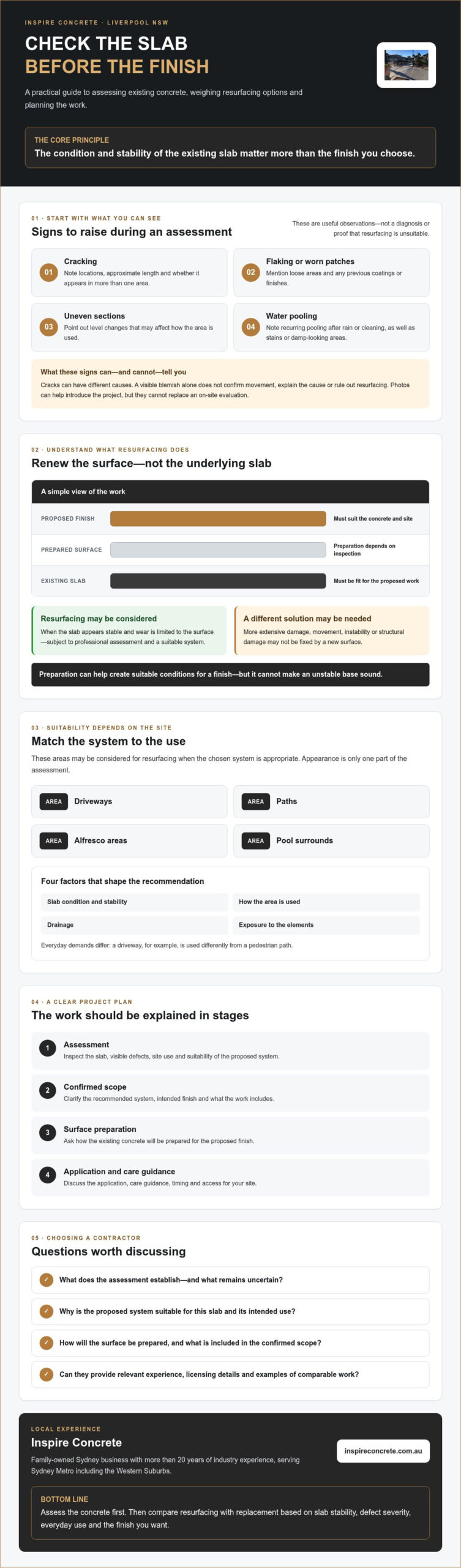
Concrete resurfacing improves the surface of an existing slab, but it does not repair every defect or correct underlying movement, instability or structural damage. That distinction matters when planning concrete resurfacing liverpool nsw. A worn or unattractive finish may be a candidate for renewal, while cracks, uneven sections or other signs of damage need assessment before a contractor recommends a finish.
What does concrete resurfacing involve?
In general, the existing concrete is cleaned and prepared before a compatible finish system is applied to renew its appearance. Methods and materials vary, so resurfacing isn’t one identical product or procedure for every site. Decorative options vary too; for background on overlay approaches, see this overview of decorative concrete overlays.
Preparation helps create suitable conditions for the proposed finish, but it can’t compensate for a slab that isn’t fit for the work. Ask the contractor to inspect the concrete and specify the system they propose, including how the surface will be prepared. Don’t assume a particular coating or finish is suitable until it has been matched to the slab and site.
Which existing concrete surfaces may be candidates?
Driveways, paths, alfresco areas and pool surrounds may be considered when the chosen system is appropriate. Suitability depends on more than appearance: the slab’s condition, how the area is used, drainage and exposure to the elements all inform the assessment. A driveway, for example, has different everyday demands from a pedestrian path.
Look for visible signs such as flaking, cracking, unevenness or water pooling, and point them out during an inspection. These observations help frame the discussion, but they don’t reveal the cause of a crack or confirm whether movement is occurring. Photos can help introduce the project, but they can’t replace an on-site evaluation of the concrete.
If the slab appears stable and the wear is limited to the surface, resurfacing may be worth considering, subject to professional assessment. More extensive damage or movement may call for a different approach. A careful contractor should explain what they can establish from the inspection, what remains uncertain and why the recommended system suits the intended use. Confirm the proposed scope and finish before proceeding.
How a Liverpool Concrete Resurfacing Assessment Checks the Existing Slab
A useful assessment looks beyond the most visible blemish. Cracks, flaking, uneven patches and recurring water pooling can all affect the decision, but none tells the full story on its own. The contractor needs to inspect the slab, understand how the area is used and consider whether the proposed resurfacing system is compatible with the surface.
The finish should be recommended only after the existing slab has been assessed. This keeps the choice of appearance grounded in the concrete’s condition and the demands of the site, rather than guesswork.
What signs should homeowners look for before requesting an inspection?
Before an inspection, note what you can see and where it occurs. This short list gives the contractor a clearer starting point:
- Crack locations, approximate length and whether cracks appear in more than one area.
- Flaking, loose or worn patches, and any previous coatings or finishes.
- Stains, damp-looking areas or water that repeatedly pools after rain or cleaning.
- Uneven sections or changes in level that may affect how the area is used.
These are observations, not diagnoses. Cracks can have different causes, so don’t assume one is merely cosmetic or conclude that the slab is moving without an inspection. Clear photos can help explain the issue when you first discuss concrete resurfacing liverpool nsw, but they can’t show every condition on site or replace an in-person assessment.
Why preparation and substrate condition matter
The existing surface influences what preparation is needed and whether a proposed finish is suitable. Residues, old coatings, weak areas or moisture may affect how the concrete can be prepared and whether a selected system is appropriate. The right approach depends on what the inspection finds, so there isn’t one fixed preparation recipe for every driveway, path or entertaining area.
Ask the contractor to explain what they’ve identified and how it will be addressed before the finish is applied. For example, clarify whether a loose patch or existing coating changes the planned preparation, and whether a crack needs further assessment before work proceeds. A clear scope should describe the proposed system and preparation in terms you understand, without treating surface preparation as a substitute for resolving deeper slab concerns.
For Liverpool homeowners, Inspire Concrete offers resurfacing, cleaning and sealing across Sydney Metro and the Western Suburbs. Discuss your project through its concrete resurfacing service and confirm the proposed scope for your address.
Resurface or Replace Concrete in Liverpool? Compare the Slab’s Condition
The choice between resurfacing and replacement should follow the slab’s condition, not just the appeal of a fresh finish. Sound concrete with surface-level wear may be suitable for resurfacing after inspection. Widespread movement, severe deterioration or unresolved drainage concerns call for closer investigation before a scope is set.
| What to assess | Resurfacing may be worth assessing | Further investigation or replacement may be considered |
|---|---|---|
| Slab stability | The concrete appears stable, with no apparent signs of widespread movement. | There are signs of movement or instability that need professional assessment. |
| Defect severity | Wear appears mainly at the surface, subject to inspection and system compatibility. | Deterioration is extensive, or defects may extend beyond the surface finish. |
| Intended use | The existing slab remains appropriate for how the area is used. | Its condition raises concerns about its suitability for its current use. |
| Finish goals | A compatible finish can meet the desired look while allowing for the slab’s condition. | The result depends on correcting issues a new surface alone cannot resolve. |
When might resurfacing be worth assessing?
A driveway, path or outdoor entertaining area that looks tired but appears stable may be a candidate for resurfacing. That’s a reason to arrange an assessment, not a guarantee of suitability. The proposed finish must be compatible with the existing concrete and appropriate for how the area is used and exposed.
Set realistic expectations, too. A new finish can refresh the surface, but it may not conceal every imperfection or make the underlying slab uniform. Ask what preparation the chosen system requires, whether any defects need attention first, and how much of the existing character may remain visible.
When should replacement or further investigation be considered?
Widespread movement, severe deterioration or recurring drainage issues deserve closer attention before resurfacing is specified. A new surface finish cannot, by itself, resolve underlying slab movement. If the cause of a defect is unclear, ask a qualified contractor to assess the condition and explain the available options before work is planned.
For concrete resurfacing liverpool nsw, a site-specific recommendation should weigh stability, defect severity, everyday use and the finish you want. A careful assessment helps clarify whether resurfacing is practical or whether the slab needs further investigation first.
What to Expect From a Concrete Resurfacing Project in Liverpool NSW
A well-planned project moves from inspection to finish with the scope, access and aftercare understood in advance. For concrete resurfacing liverpool nsw, the sequence and timing depend on the site, the concrete’s condition and the resurfacing system selected. Ask the contractor to explain how each stage applies to your property.
- Initial discussion: Describe the area, how it’s used and what you want the finished surface to look like.
- Site assessment: The contractor inspects the concrete and considers its condition, use and site requirements.
- Scope confirmation: Agree on the proposed system, preparation, identified repairs, finish and any exclusions.
- Preparation and application: The surface is prepared for the specified system, which is then applied according to the agreed scope.
- Care guidance: Get project-specific instructions for looking after the finish and returning the area to use.
For broader context on resurfacing services, read the Sydney concrete resurfacing guide.
Questions to ask before approving the work
Before you agree to proceed, ask which resurfacing system is proposed and why it suits the assessed concrete. Request a written scope that sets out preparation, any identified repairs, the intended finish and what’s excluded. This gives you a clear basis for understanding what the work covers and discussing any changes before the project begins.
Also confirm access arrangements, expected disruption, aftercare instructions and whether project-specific approvals need to be checked. Don’t assume requirements are identical for every site or scope. Ask the contractor what applies to your project and who will confirm it.
Planning access and aftercare around the site
Think through how the area functions day to day. For a driveway, discuss where vehicles can be kept and how people will enter or leave the property. For paths or outdoor living areas, consider pedestrian access, household schedules and whether other parts of the site need to remain usable. Mention any drainage concerns or regular uses that could affect planning.
Timing and access requirements vary by project, so arrange these details with the contractor rather than relying on a standard duration. After application, follow the project-specific care and curing instructions. Ask for the actual return-to-use guidance for the selected system instead of assuming a generic reopening time.
To discuss a Liverpool resurfacing project, contact Inspire Concrete and ask about the assessment process for your site.
Choosing a Concrete Resurfacing Contractor for Liverpool NSW
A strong contractor recommendation should connect the slab’s condition with a finish that suits the site, rather than start with appearance alone. For concrete resurfacing liverpool nsw, compare how each contractor assesses the existing concrete, explains the proposed work and communicates what’s included before you decide.
- Relevant experience: Ask about their experience with concrete resurfacing and projects similar to your surface and its intended use.
- Licensing details: Check the contractor’s licence details and that they’re appropriate for the work being proposed.
- Assessment quality: Look for an on-site evaluation and clear reasoning about the slab’s condition, not a confident recommendation based only on photographs.
- Written scope: Make sure the proposal explains preparation, identified repairs, the specified finish, exclusions and aftercare.
- Communication: Choose a contractor who answers questions clearly and discusses access, disruption and any assumptions affecting the scope.
Ask to see examples of comparable resurfacing work, then discuss whether the same type of finish is appropriate for your concrete. A result that suits one driveway or outdoor area may not suit another, because slab condition, use and exposure differ.
How to compare resurfacing quotes and scopes
Look beyond the headline figure and compare what each proposal actually covers. Check whether surface preparation, identified repairs, the specified finish and aftercare are described consistently, and note any exclusions. If one scope is less detailed, ask what has been assumed rather than treating the proposals as equivalent.
Invite each contractor to explain which site conditions could change the work. Clear answers make it easier to understand the differences between proposals and judge whether the recommended system is suitable for the assessed slab. For broader contractor checks, see the Sydney concreters hiring guide.
Why consider Inspire Concrete for a Liverpool project?
Inspire Concrete is a family-owned Sydney business with licensed concreters and more than 20 years of industry experience. Its services include concrete resurfacing, cleaning and sealing, with coverage across Sydney Metro and the Western Suburbs. The team can assess existing concrete before recommending a finish; ask how the proposed system and any identified repairs apply to your project.
For a considered next step, discuss your Liverpool concrete resurfacing project with Inspire Concrete and ask about an assessment for your site.
Plan Your Next Step With Confidence
A successful resurfacing project begins with a sound decision about the existing slab. For concrete resurfacing liverpool nsw, arrange an on-site assessment, choose a finish suited to the concrete and its intended use, and clarify the preparation, scope and aftercare before work begins. If the slab shows signs of movement or deeper damage, get advice on its condition before settling on a surface finish.
Before discussing your project, consider how the area is used, any drainage concerns and what access the household will need during the work. These details help shape a practical plan as well as a considered finish.
Inspire Concrete is family-owned and operated, with licensed concreters and over 20 years of industry experience. Its Sydney Metro coverage includes the Western Suburbs. Ask the team which resurfacing options may suit your concrete and whether it can assess the project at your address.
Contact Inspire Concrete to discuss your Liverpool concrete resurfacing project and request an assessment.
Frequently Asked Questions
Can all concrete be resurfaced?
No, resurfacing isn’t suitable for every concrete slab. The existing surface must be assessed for its stability, condition and compatibility with the proposed finish system. Concrete with surface wear may be a candidate, while widespread movement or deeper deterioration may need further investigation before a finish is considered. An on-site assessment helps establish what the slab can support and whether resurfacing is practical for its intended use.
How do I know if my concrete driveway in Liverpool can be resurfaced?
You’ll need an on-site assessment to determine whether your driveway is suitable. Note visible cracks, flaking, uneven areas, previous coatings and places where water pools, then share those observations with the contractor. These signs don’t reveal the cause by themselves, and photos can’t replace an inspection. For concrete resurfacing liverpool nsw, the recommendation should account for slab condition, vehicle use, drainage and whether the proposed finish suits the site.
Is concrete resurfacing better than replacing a concrete driveway?
Neither option is always better; the right choice depends on the slab’s condition and your goals. Resurfacing may be worth assessing if the concrete is stable and the wear is mainly at the surface. If there are signs of widespread movement or severe deterioration, ask a qualified contractor to investigate whether replacement or another approach is more appropriate. Compare the assessed condition and written scope, not just the appearance you want.
What happens if concrete has cracks before resurfacing?
Cracks need to be inspected before resurfacing is specified. Their appearance alone doesn’t confirm the cause, whether movement is occurring or how they should be treated. Point out where cracks are, whether you’ve noticed changes, and any related unevenness or pooling. Ask the contractor to explain how the findings affect the proposed preparation and finish. A new surface can improve appearance, but it won’t by itself resolve underlying movement.
How long does a concrete resurfacing project take in Liverpool NSW?
There isn’t one reliable duration for every resurfacing project. Timing depends on the area, the slab’s condition, the preparation required, the selected system and site access. Ask the contractor for a project-specific schedule after assessment, including how access may be affected and what conditions could change the plan. Before work begins, also request the selected system’s instructions for curing and returning the surface to use rather than relying on a generic timeframe.
Can resurfacing improve the look of old concrete?
Yes, resurfacing can renew the appearance of old concrete when the slab is suitable and the finish system is compatible. The result depends on the existing surface, preparation and selected finish. It may not conceal every imperfection or correct unevenness caused by deeper problems. Discuss your desired look with the contractor, ask what the proposed finish can realistically achieve, and review examples of comparable work before settling on an option.
How do I choose a concrete resurfacing contractor near Liverpool?
Choose a contractor who assesses the slab on site, explains why the proposed finish suits it and provides a written scope covering preparation, identified repairs, exclusions and aftercare. Check relevant experience and licensing details, and ask to see comparable resurfacing examples. Inspire Concrete is a family-owned Sydney business with licensed concreters and over 20 years of industry experience, serving Sydney Metro including the Western Suburbs. Contact the team to discuss your Liverpool address and project.
