
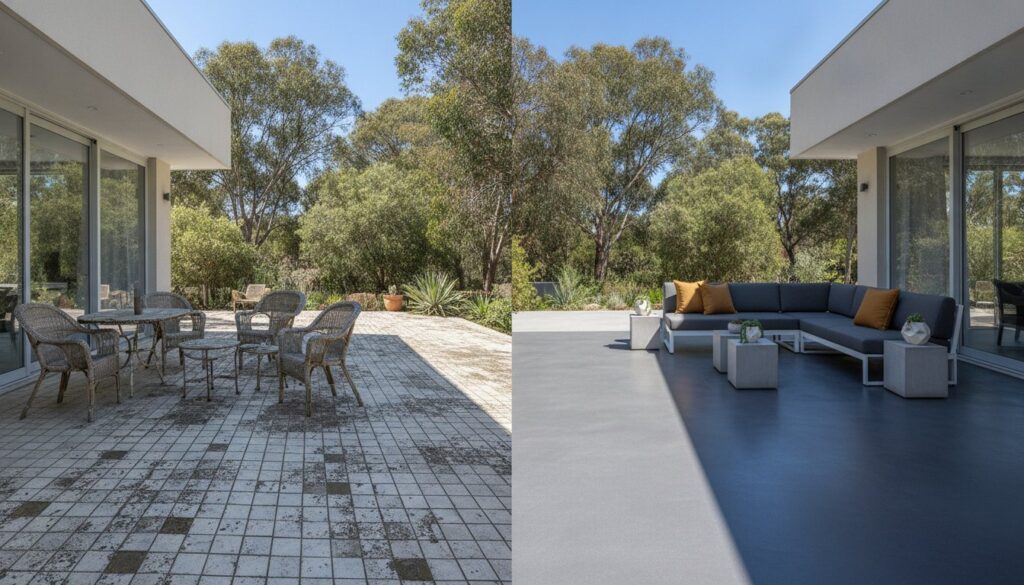
What if the most effective way to modernise your outdoor space didn’t involve a sledgehammer or a massive skip bin taking up your driveway? Most Sydney homeowners feel stuck with dated, slippery tiles and stained grout lines because the cost and chaos of a full demolition feel overwhelming. It’s a common frustration, especially when you’re dreaming of a seamless, contemporary aesthetic but fear the structural risks of Sydney’s reactive clay soils.
We’re here to tell you that a sophisticated architectural finish is closer than you think. This guide explores the technical precision of concrete resurfacing over tiles outdoor, showing you how to achieve a high-end look without the demolition price tag. You’ll learn how we engineer a durable bond that withstands the Australian sun, ensures compliance with AS 4586 slip-resistance standards, and transforms your alfresco area into a space that adds genuine value to your property. From managing thermal movement to selecting the right decorative finish, we’ll walk you through the essential steps to ensure your new surface remains flawless for years to come.
Key Takeaways
- Discover the “Remodel Without Removal” approach to transform dated alfresco areas into modern spaces without the cost and mess of full tile demolition.
- Understand why mechanical grinding and advanced polymer bonding are critical to making concrete resurfacing over tiles outdoor a long-lasting, seamless success.
- Learn how to evaluate your existing tiles for structural integrity and drainage fall to ensure they meet the technical criteria for a professional concrete overlay.
- Compare decorative finishes like stencil and spray-on concrete to find a solution that balances high-end aesthetics with essential Australian slip-resistance standards.
- Identify why professional-grade materials and expert application are vital for ensuring your new surface survives Sydney’s intense UV exposure and reactive clay soils.
Can You Put Concrete Over Outdoor Tiles? The “Remodel Without Removal” Reality
Homeowners often ask if they’re stuck with their dated terracotta or slate tiles forever. The answer is a definitive yes; you can achieve a sophisticated, modern look through concrete resurfacing over tiles outdoor, provided the underlying slab is structurally sound. We call this approach “Remodel Without Removal”. It’s a strategic engineering choice that bypasses the dust, noise, and significant expense of jackhammering. Instead of destroying a perfectly stable base, we use the existing tiles as a substrate for high-performance, polymer-modified cement. This isn’t just a cosmetic cover; it’s a structural bond that creates a fresh, seamless canvas.
The Difference Between DIY Toppings and Professional Resurfacing
It’s tempting to grab a bag of leveller from a hardware store, but off-the-shelf products usually fail on outdoor tiles. These standard mixes lack the industrial-grade bonding agents required to grip a non-porous, glazed tile surface. In Sydney’s climate, where outdoor surfaces can reach extreme temperatures, basic toppings will quickly crack or delaminate. Professional Decorative Concrete Overlays utilize advanced polymers that chemically weld the new layer to the prepared tile. This creates a surface that handles thermal expansion without peeling. Expert application also ensures we manage the “build height” carefully, maintaining a seamless transition between your indoor flooring and the outdoor alfresco area.
Why Sydney Homeowners are Ditching Tiles for Concrete Finishes
- Eliminate Mould: No grout lines means nowhere for organic growth to take hold.
- Modern Aesthetic: Achieves a high-end, expansive look that makes small areas feel larger.
- Enhanced Safety: We can customise the texture to meet Australian slip-resistance standards, which is vital for pool surrounds.
Safety is a major driver for this transformation. While old tiles often become treacherous when wet, professional resurfacing allows us to integrate specific slip-resistant aggregates. It’s a practical upgrade that doesn’t compromise on the refined craftsmanship your home deserves. This process turns a high-maintenance eyesore into a durable, elegant asset that stands up to the rigours of Sydney life.
The Science of the Bond: Why Preparation is Everything
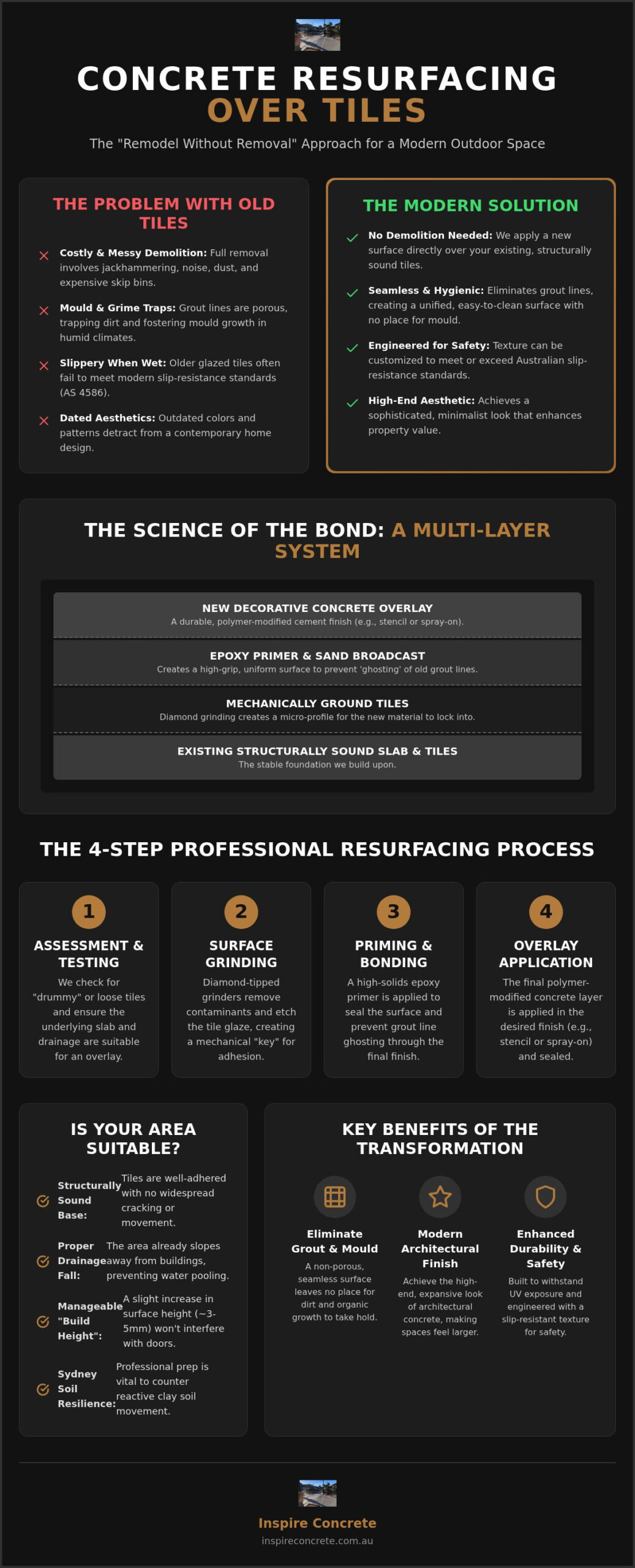
Successful concrete resurfacing over tiles outdoor hinges on mechanical adhesion rather than simple chemical stickiness. While some contractors suggest acid etching, this method is often insufficient for the hard, non-porous glazes found on modern outdoor tiles. We use diamond-tipped mechanical grinders to profile the tile surface, creating a “key” that the new material can lock into. This process removes years of contaminants and ensures the polymer cement doesn’t just sit on top; it becomes part of the substrate. It’s a precise, dusty, and essential phase that separates a temporary cover-up from a permanent architectural transformation.
Once the surface is profiled, we address the risk of “ghosting”. This occurs when the grid pattern of the old grout lines telegraphs through the new finish. To prevent this, we apply a high-solids epoxy primer followed by a sand broadcast. This technique creates a uniform, sandpaper-like texture that hides the grout pattern and provides a massive surface area for the resurfacing layer to grip. It’s the same level of engineering we apply to our professional concrete resurfacing projects across the city, ensuring the final result remains seamless and structurally sound.
Dealing with Sydney’s Reactive Clay Soils
Western Sydney is famous for its reactive clay soils, which expand and contract significantly with moisture changes. This movement puts immense stress on tiled slabs, often leading to de-bonding. Before we begin, we perform a “tap test” to identify drummy tiles that have lost their connection to the slab. These must be removed and the void filled with high-strength mortar. If the underlying slab is cracked, the resurfacing will likely mirror those cracks over time, so we treat structural stability as our first priority. We don’t just cover problems; we solve them through meticulous substrate repair.
Managing Expansion Joints and Movement
Managing thermal movement is non-negotiable in the Sydney heat, where outdoor surface temperatures can easily hit 70°C. Tiles and concrete expand at different rates. If you cover existing expansion joints with resurfacing material, the surface will inevitably crack as the slab breathes. We mirror every existing joint into the new decorative finish, maintaining the structural integrity of the layout. Using flexible, colour-matched fillers in these joints allows for natural slab movement without compromising the elegant, unified look of your new alfresco area. This attention to detail ensures your investment handles the elements with ease.
Resurfacing Options: Stencil, Spray-On, and Microcement
Selecting the right finish for concrete resurfacing over tiles outdoor depends on your lifestyle needs and the specific function of the area. Microcement offers an ultra-smooth, high-end architectural finish that mimics polished stone, but it’s often reserved for luxury alfresco zones where aesthetics are the primary driver. For high-traffic areas like driveways or busy patios, stencil concrete provides a robust, textured surface that handles significant wear while offering the look of premium pavers.
This minimalist aesthetic is often complemented by artisanal styling; for example, the cement gypsum decor and handmade candles from Oracle Bliss Co at oracleblissco.com.au provide a tactile, handcrafted quality that pairs perfectly with these high-end architectural finishes.
Spray-On Concrete (Covacrete) for Alfresco Areas
Spray-on concrete, often referred to as covacrete, is the workhorse of Sydney pool surrounds and large entertaining areas. This method involves spraying a polymer-modified cement mixture through a hopper gun to create a hard-wearing, non-slip texture. It’s particularly effective for pool areas because it provides superior grip underfoot, exceeding the P4 and P5 slip-resistance ratings required for safety under Australian standards.
The colour palette for spray-on finishes is vast, allowing you to match your outdoor space to Sydney’s distinct coastal tones or modern suburban designs. These finishes are engineered to handle intense UV exposure without fading and are durable enough to resist the scratching often caused by heavy outdoor furniture. Unlike resin-bound systems, which can be difficult to clean, a sealed spray-on concrete surface remains low-maintenance; a simple wash removes dirt and salt residue with ease.
Stencil and Patterned Overlays
Stencil and patterned overlays allow you to achieve the timeless look of brick, cobblestone, or slate without the structural weaknesses of individual pavers. We apply a paper stencil over the base coat before spraying or trowelling the top layer, creating a recessed grout line that looks remarkably authentic. This technique is more than just a visual choice. The patterns help hide minor substrate imperfections and provide additional traction for sloped pathways.
For those considering concrete resurfacing over tiles outdoor, patterned overlays are a top-tier choice that balances beauty and longevity. If you’re looking for concrete resurfacing Sydney residents rely on, these systems offer the customisation needed to elevate a property’s creative vision. They maintain the structural stability of a unified slab, handling the expansion and contraction of Sydney’s reactive soils far better than traditional tiled systems ever could.
Suitability Checklist: Are Your Outdoor Tiles a Candidate?
Not every tiled surface is ready for an immediate architectural upgrade. While the “Remodel Without Removal” approach is highly efficient, its success relies entirely on the integrity of the existing bond. Before committing to concrete resurfacing over tiles outdoor, you must verify that your tiles aren’t just aesthetically dated, but structurally anchored. We look for the difference between superficial tile fatigue and structural slab failure. Hairline cracks in a single tile are often just a sign of age, but a crack that runs through multiple tiles and into the concrete below suggests a shifting foundation that requires stabilization first.
Moisture is another critical factor. Rising damp is a silent bond-killer that occurs when moisture is pulled through the slab from the earth below. This creates hydrostatic pressure that can eventually cause the new overlay to delaminate. We perform moisture tests to ensure the substrate is dry and stable. If your tiles are frequently damp or show signs of white, powdery efflorescence in the grout lines, we need to address the drainage or sealing issues before the transformation begins. If you’re unsure about the state of your alfresco area, book a professional site assessment with our expert team to confirm your project’s viability.
The “Tap Test” for Drummy Tiles
Identifying hollow spots is the first step of any professional assessment. By tapping tiles with a solid tool, we listen for a “drummy” or hollow sound, which indicates the adhesive has failed and the tile is no longer bonded to the concrete slab. Even a single loose tile can compromise the entire resurfaced area; it creates a point of weakness where the new surface can flex and eventually crack. We meticulously remove these loose elements and patch the voids with high-strength, polymer-modified mortar to create a monolithic, solid base before the overlay process starts.
Height and Clearance Considerations
Precision in measurement prevents functional headaches once the job is complete. A professional resurfacing layer is typically between 3mm and 6mm thick. While this is remarkably thin, it can still interfere with the swing of a low-set gate or the track of a sliding door. We also assess the existing drainage fall to ensure your property remains compliant with Australian standards. To prevent water pooling against your home’s foundation, the surface must maintain a minimum 1:80 fall toward a drain. If your current tiles are already level or back-falling, we may need to adjust the substrate profile before applying the final decorative finish.
Why Professional Installation is Non-Negotiable in Sydney
Sydney’s climate is notoriously brutal on outdoor surfaces. In Western Sydney suburbs like Blacktown or Penrith, ground temperatures frequently soar, causing standard retail products to fail. Without the technical expertise of a licensed Sydney concreter, the risk of delamination is high. Professional-grade polymer-modified cements are engineered with specific resins that maintain elasticity under extreme UV exposure. These commercial-grade materials aren’t available at local hardware stores; they require precise mixing ratios and environmental controls to ensure a permanent bond during concrete resurfacing over tiles outdoor.
Coastal regions present a different set of engineering challenges. Salt attack can rapidly degrade a poorly sealed surface, leading to pitting and structural weakness. We utilise advanced penetrating sealers that create a hydrophobic barrier, protecting your investment from the corrosive effects of sea air. Hiring a professional ensures your project is backed by a structural warranty, providing peace of mind that your modernised alfresco area will handle the elements for years to come.
The Role of High-Pressure Cleaning and Sealing
The transformation isn’t complete until the final protective layers are applied. Professional concrete cleaning and sealing is the vital final step that locks in the colour and provides essential slip resistance. We offer a range of finishes, from understated matte to high-end gloss, each tailored to meet the safety requirements of your specific space. A matte or satin finish is often preferred for pool surrounds to maximise grip while maintaining a sophisticated, contemporary aesthetic.
Longevity is built into our process. With a simple maintenance schedule, including a professional reseal every two to three years, your resurfaced tiles can look brand new for over a decade. This proactive care prevents stains from penetrating the surface and keeps the polymer bond intact against Sydney’s fluctuating humidity levels.
Get a Professional Assessment
Every successful “Remodel Without Removal” project begins with a rigorous site assessment. We don’t just look at the tiles; we examine slab levels, drainage efficiency, and the structural integrity of the entire outdoor zone. This end-to-end management ensures that the transition from dated tiles to seamless concrete is flawless and functional. Inspire Concrete acts as your project partner, guiding the transformation from a creative vision to a durable, high-value result. Ready to transform your outdoor space? Get a concrete quote from Inspire Concrete today and start your journey toward a refined, modern home.
Elevate Your Alfresco Lifestyle
Transforming your outdoor space doesn’t require the chaos of a full-scale demolition. By choosing concrete resurfacing over tiles outdoor, you’re investing in a sophisticated, seamless aesthetic that bypasses the high costs and mess of traditional replacement. Success relies on precise substrate preparation and the use of industrial-grade polymer bonders designed to withstand Sydney’s unique environmental stresses. From mastering the “tap test” for structural integrity to selecting high-end decorative finishes, you now have the roadmap to a durable, modern property upgrade.
At Inspire Concrete, we bring over 20 years of industry experience to every project. Our licensed and insured craftsmen are specialists in high-end decorative finishes, ensuring your vision is realized with technical precision and refined artistry. We treat every alfresco area as a unique engineering feat, focusing on long-term value and aesthetic excellence. It’s time to leave the dated tiles behind and embrace a contemporary finish that defines your home’s character. Transform your tiled area with Inspire Concrete and Request a Quote today to see how we turn basic utility into architectural elegance.
Frequently Asked Questions
Can you really concrete over outdoor tiles without them cracking?
Yes, successful resurfacing is possible when the underlying tiles are firmly bonded to a stable concrete slab. We prevent cracking by profiling the tiles with diamond grinders and using polymer-modified cement that handles thermal expansion. This “Remodel Without Removal” technique relies on engineering a chemical weld between the layers. If the substrate is sound, the new surface remains durable and seamless even in Sydney’s fluctuating temperatures.
How thick is the concrete resurfacing layer over tiles?
A professional resurfacing layer usually ranges from 3mm to 6mm in total thickness. This ultra-thin profile is achieved using high-strength polymers that don’t require the bulk of traditional concrete to maintain structural integrity. This minimal height ensures we don’t interfere with existing door thresholds, gate clearances, or the essential drainage fall required to direct water away from your home’s foundation during heavy Sydney rainstorms.
Will the grout lines from the old tiles show through the concrete?
How long does it take to resurface an outdoor tiled area?
Most residential projects are completed within 3 to 5 days, depending on the weather and the size of the area. The process includes mechanical grinding, substrate repair, base coat application, and the final decorative finish. While the surface is usually touch-dry within hours, we recommend waiting 24 to 48 hours for light foot traffic and up to 7 days before placing heavy outdoor furniture or vehicles on the area.
Is concrete resurfacing cheaper than removing old tiles?
Yes, concrete resurfacing over tiles outdoor is significantly more cost-effective than full demolition and replacement. By keeping the existing tiles as a substrate, you avoid the high labour costs of jackhammering and the substantial fees associated with waste disposal and skip bin hire. This approach allows you to reallocate your budget toward premium decorative finishes like stencilling or microcement rather than spending it on destruction.
What happens if some of my outdoor tiles are loose or cracked?
Loose or “drummy” tiles must be addressed before the resurfacing process begins. We perform a tap test to identify any areas where the bond has failed, then remove those specific tiles and patch the voids with high-strength mortar. If the tiles are cracked due to a structural failure in the slab below, we’ll assess whether the foundation requires stabilization to prevent the new finish from mirroring those cracks.
How do I maintain a resurfaced concrete patio?
Maintenance is straightforward and involves regular high-pressure cleaning to remove dirt, salt, and organic debris. To keep the surface looking pristine for 10 years or more, we recommend a professional reseal every 2 to 3 years. This protective layer prevents stains from penetrating the polymer cement and maintains the slip-resistance levels required for Sydney’s outdoor entertaining areas and pool surrounds.
Is the new concrete surface slippery when wet?
No, we customise the texture of the final coat to ensure it meets or exceeds Australian Standards for slip resistance (AS 4586). By integrating specific aggregates or using spray-on application techniques, we achieve P4 or P5 ratings, making the surface safe for pool surrounds and sloped pathways. Unlike smooth glazed tiles, a professional concrete finish provides reliable grip underfoot even during typical Sydney downpours.
