
Your choice of pool surround is a structural commitment that determines whether your backyard remains a sanctuary or becomes a maintenance liability. While many homeowners default to modular stones, the traditional path might actually be the biggest risk to your pool’s long-term compliance and safety. You want a space that looks like a high-end resort but functions with the rugged durability required for a Sydney summer. It’s frustrating to watch expensive pavers sink into reactive clay or become a breeding ground for weeds and ants just a few seasons after installation.
This 2026 guide provides the definitive comparison of exposed aggregate vs pavers for pool area installations to ensure your investment is safe, durable, and stunning. We’ll explore the technical realities of Sydney’s reactive soils, Australian slip-resistance standards, and how to achieve a “set and forget” surface that handles the intense heat of the Western Suburbs. By the end of this analysis, you’ll understand how to transform your utility space into a high-end landscape that adds genuine property value without the constant upkeep.
Key Takeaways
- Discover how a seamless, monolithic finish eliminates the unsightly grid lines of traditional stone while offering custom stone blends that mirror Sydney’s natural landscape.
- Compare the P4-rated slip resistance and thermal cooling properties of exposed aggregate vs pavers for pool area designs to ensure foot comfort during Western Sydney’s peak summer heat.
- Learn why engineered reinforced concrete slabs are essential for preventing the “dipping” and “heaving” caused by the reactive Wianamatta clay soils found across the Sydney basin.
- Understand the maintenance advantage of a “set and forget” surface that permanently blocks the weed growth and ant infestations common in sand-set paving systems.
- Ensure your property remains council-compliant by choosing a stable surface that maintains the mandatory 1,200 mm safety barrier height over the long term.
Aesthetics and Design: Seamless Modernity vs. Classic Modular Appeal
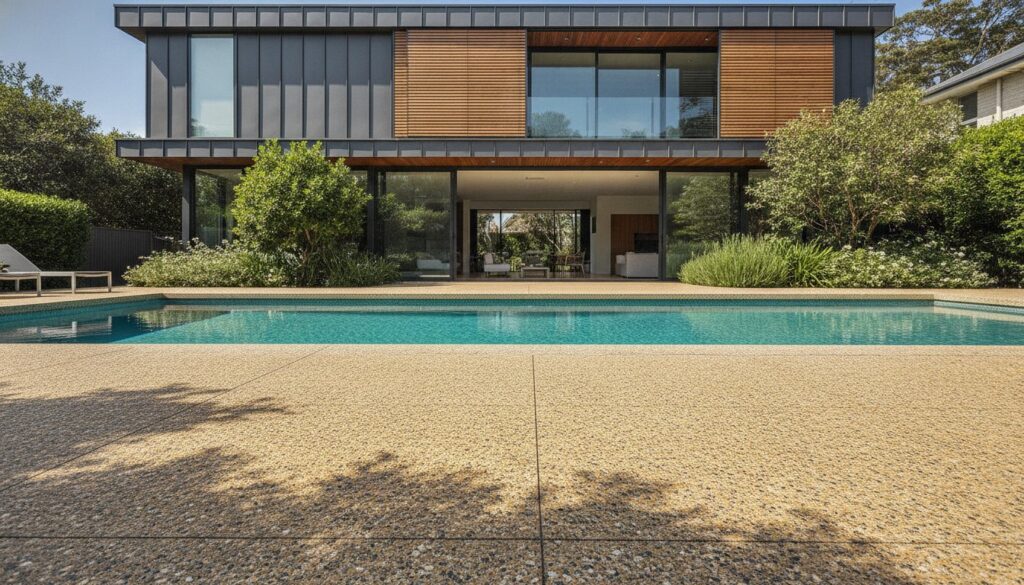
Visual impact is the first thing you’ll notice when comparing exposed aggregate vs pavers for pool area design. The choice often comes down to a battle between a continuous, flowing surface and a segmented grid. A seamless concrete finish provides a resort-style aesthetic that stretches the horizon of your backyard. By eliminating the visual noise of hundreds of grout lines, the pool surround feels significantly larger and more cohesive. It creates a clean canvas that lets the water itself remain the hero of your outdoor space.
Sydney homeowners frequently look to match their landscaping with the local environment. Whether you’re aiming for the warm, golden tones of Hawkesbury sandstone or the cool, charcoal greys of the coastal cliffs, custom stone blends allow for a bespoke finish. These stone-heavy aggregate mixes don’t just look premium; they hold their market value because they don’t date like specific tile patterns or trendy paver colours. It’s a transformation from a basic utility area into a high-end architectural feature that feels like a natural extension of the home.
The Architecture of Exposed Aggregate
This isn’t just poured concrete; it’s a refined architectural finish. Using professional water-washing or acid-etching techniques, we reveal the natural beauty of 3mm to 7mm rounded quartz or granite pebbles. This texture perfectly complements modern Sydney architecture, from the crisp white lines of a Hamptons-style home in the Hills District to the raw, minimalist vibes of a Northern Beaches renovation. We can cast integrated steps and decorative borders as part of the same monolithic slab, creating a structural unity that modular systems simply can’t replicate.
The Modular Nature of Pavers
Traditional materials like travertine, bluestone, and granite have a long history in Sydney landscaping. They offer a classic, segmented look that suits heritage-style properties where a modular pattern, such as herringbone or stack bond, adds traditional character. However, this beauty often comes with a hidden structural compromise. Because pavers sit on a flexible sand or road-base bed, they’re highly susceptible to the movement of expansive clay soils found throughout the Sydney basin. This movement doesn’t just ruin the visual symmetry; it creates uneven lips that break the clean lines you’ve worked hard to achieve. While the individual beauty of a single stone is high, the collective impact of grout lines can often feel cluttered in smaller, modern backyard plots.
Safety and Practicality: Slip Resistance and Foot Comfort
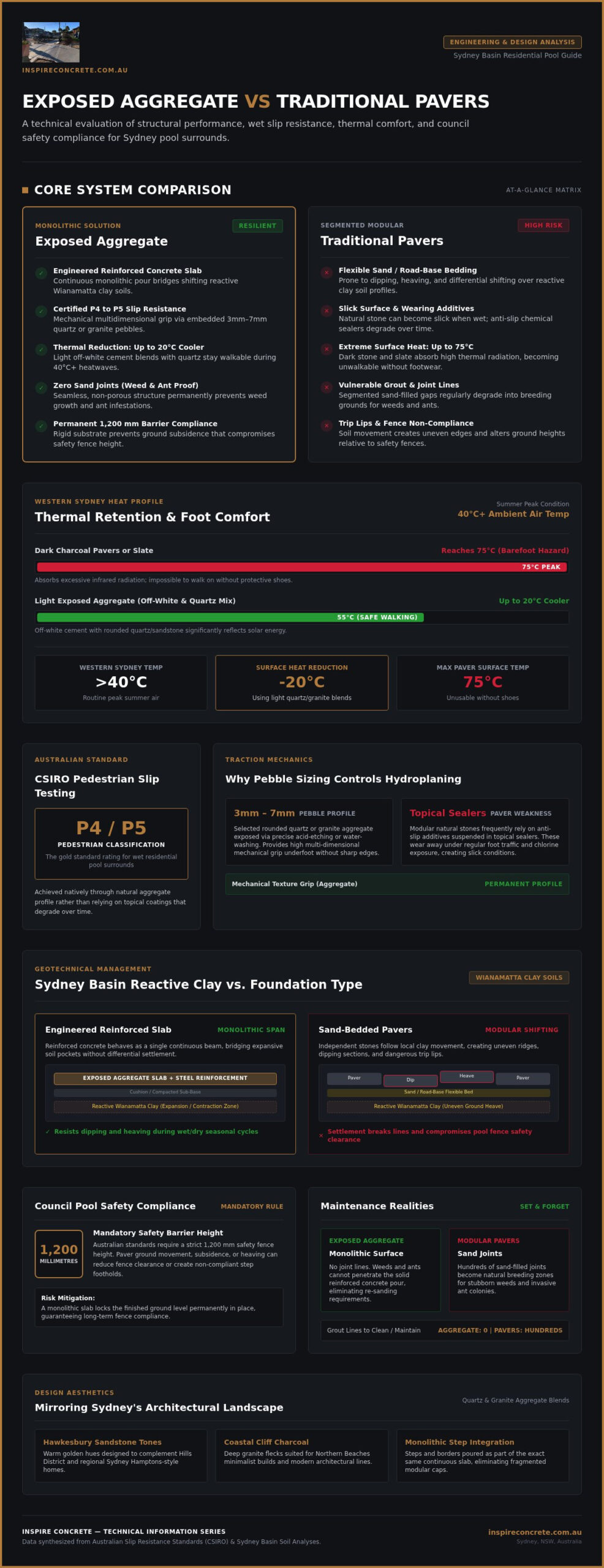
Safety around a swimming pool isn’t just about the height of the fence; it’s about the security of every step your family takes on a wet surface. When evaluating exposed aggregate vs pavers for pool area safety, the primary concern is often slip resistance. While a high-end travertine paver might look stunning, many natural stones become dangerously slick the moment they’re splashed. In contrast, exposed aggregate provides an inherent, multi-dimensional grip that remains consistent even under heavy water flow. This mechanical traction is a product of the stone’s physical profile, not just a chemical coating.
Slip Resistance: The Non-Negotiable Factor
The Australian standard for wet pedestrian areas is rigorous for a reason. According to the CSIRO, surfaces must meet specific classifications to ensure residential safety. By utilising pedestrian surface slip resistance testing data, we know that appropriately finished aggregate typically achieves a P4 or P5 rating. This is the gold standard for pool surrounds. Unlike pavers, which often rely on topical anti-slip additives in sealers that wear down over time, aggregate uses the physical texture of the stone itself to prevent hydroplaning. For Sydney families with young children, this provides a level of certainty that a smooth stone surface simply can’t match.
Heat Retention and Foot Comfort
Western Sydney summers are unforgiving, with temperatures frequently exceeding 40°C. Dark charcoal pavers or slate can reach surface temperatures of 75°C, making them impossible to walk on without shoes. Choosing a light-coloured mix, such as off-white cement with rounded quartz or sandstone aggregate, can reduce surface heat by up to 20°C compared to dark modular stones. This thermal performance ensures your outdoor area remains usable even in the middle of a February heatwave.
There’s a common myth that aggregate is “sharp” on the feet. This only happens with poor stone selection or aggressive exposure techniques. We recommend a 5mm to 7mm rounded alluvial pebble mix. These stones are naturally smoothed by river water, then lightly exposed to provide a texture that feels more like a firm massage than a rough surface. This precision in craftsmanship ensures your pool surround is as comfortable as it is secure. If you’re planning a new build, it’s wise to consult with a specialist to select a mix that balances safety with underfoot comfort.
Finally, drainage efficiency is a major practical advantage. A monolithic concrete slab is engineered with precise falls to move water away from the pool and into drainage pits. Pavers rely on the permeability of sand joints, which can wash out during Sydney’s heavy coastal rain events, leading to pooling water and slippery moss growth over time. By choosing a continuous slab, you eliminate these puddles and the slip hazards they create.
Structural Integrity: Managing Sydney’s Reactive Clay Soils
Sydney’s geology presents a unique challenge for any outdoor construction, particularly around the high-moisture environment of a swimming pool. Much of the Sydney basin, from the Hills District to the Western Suburbs, sits atop Wianamatta Shale. This produces highly reactive clay that behaves like a sponge; it swells significantly during our heavy coastal rain and shrinks during intense summer droughts. When weighing up exposed aggregate vs pavers for pool area durability, the structural response to this ground movement is the most critical factor for your long-term investment.
A well-engineered pool surround should last between 20 and 30 years. Achieving this longevity requires a surface that can bridge unstable ground rather than simply resting on top of it. While pavers are individual units that move independently, a professionally poured aggregate surround is a monolithic 100mm reinforced concrete slab. This structural unity allows the entire surface to distribute loads evenly, preventing the isolated sinking that plagues modular systems. To manage thermal expansion and the inevitable stress of soil movement, we utilize strategic control joints. These precision-cut lines dictate exactly where the concrete should flex, preserving the surface’s visual integrity for decades.
Why Sinking Pavers are a Sydney Epidemic
The “heave and dip” cycle of Sydney’s clay is the primary cause of paver failure. Because pavers rely on a flexible base of compacted sand or road base, even minor soil shifts cause individual stones to tilt or sink. This movement creates “lipping,” where the edge of one paver sits higher than the next. Near a pool, these small lips become dangerous trip hazards for running children. During heavy rain, water often penetrates the joints and washes away the bedding sand, accelerating the collapse. For a deeper look at how we engineer foundations to resist these forces, see our guide on Concrete Slabs Sydney.
The Strength of Reinforced Exposed Aggregate
Our approach treats your pool surround as a piece of vital infrastructure. By using SL72 or SL82 steel reinforcement mesh, we create a rigid “bridge” that remains stable even if the underlying clay shifts. This engineering prevents the structural sagging that ruins the aesthetic of a backyard. We follow the industry standards outlined in the CCAA technical briefing on exposed aggregate flatwork to ensure every mix design and exposure method meets Australian benchmarks for strength. This level of technical precision is why architectural drafting and professional site preparation are essential. We don’t just pour concrete; we partner with you to ensure your poolscape remains a permanent, level, and safe datum for your family’s lifestyle.
Maintenance Realities: Weeds, Ants, and Surface Longevity
Maintaining a pool is enough work without your surround adding to the Saturday chore list. When comparing exposed aggregate vs pavers for pool area longevity, you have to look beyond the day of installation. Modular pavers are essentially a collection of individual stones held together by friction and sand. This creates thousands of opportunities for failure. Over time, the cost of ownership for pavers climbs as you invest in joint sand refills, weed poisons, and the manual labor of scrubbing grout lines. Choosing a monolithic surface is an investment in your future leisure time.
Eliminating the Weed and Pest Cycle
The most common complaint from Sydney homeowners with paved pools is the relentless battle against nature. Traditional sand-swept joints are the perfect incubator for weeds and a highway for nuisance ants that undermine the bedding layer. By choosing a monolithic concrete slab, you physically remove the environment these pests need to thrive. There are no gaps for seeds to take root and no sand for ants to excavate. This creates a truly “set and forget” surface that allows you to spend your weekends enjoying the water rather than spraying chemicals. For detailed steps on keeping your surface in peak condition, refer to our guide on Concrete Cleaning and Sealing.
Sealing and Surface Protection
Sydney’s saltwater chlorinators and coastal air are incredibly harsh on porous materials. Natural stone pavers like sandstone or soft travertine can suffer from salt spalling, where salt crystals grow inside the stone and cause the surface to flake away. We protect our exposed aggregate with high-performance, UV-stable penetrating sealers. These aren’t just for looks; they create a chemical barrier that resists chlorine degradation and prevents salt from entering the concrete matrix.
To maintain this level of protection, we recommend a professional re-seal every 2 to 3 years. This process is straightforward and significantly less labor-intensive than lifting and re-leveling sunken pavers. A fresh coat of sealer doesn’t just protect; it deeply enhances the natural colors of your chosen stone mix, making the entire area look brand new again. This rhythmic maintenance cycle ensures the architectural finish remains as striking as the day it was poured.
Cleaning a paved area often requires hands-and-knees scrubbing of grout lines to remove moss and algae. In contrast, aggregate is designed for high-pressure washing. A quick seasonal blast is usually all it takes to clear away debris and keep the slip-resistant texture clear of build-up. If you’re ready to transition from a high-maintenance backyard to a luxury retreat, contact our team to discuss your pool surround transformation.
The Verdict: Why Exposed Aggregate Wins for Sydney Pools
Deciding between exposed aggregate vs pavers for pool area renovations often comes down to the balance between initial aesthetics and long-term performance. While the modular appeal of stone has its place, the practical and structural benefits of a seamless concrete slab are overwhelming for the Sydney market. It’s the difference between a surface that moves with the seasons and one that stands as a permanent foundation for your outdoor lifestyle. For those seeking a high-end, resort-style finish that actually simplifies their life, the choice is clear.
The “Sydney Factor” is the ultimate tie-breaker. Our city’s unique combination of reactive Wianamatta shales and intense coastal weather cycles requires a surface that acts as a single, stable unit. Individual pavers, no matter how premium the stone, simply can’t match the load-bearing capacity of a 32 MPa reinforced slab. By choosing aggregate, you’re selecting a structural solution designed specifically for our city’s ground conditions. It’s an investment in certainty that ensures your pool surround remains level, safe, and stunning for decades.
Which Is Right for Your Pool Area?
While we believe in the superior performance of concrete, the right choice depends on your specific goals and property style. Use this framework to guide your decision:
- Choose Exposed Aggregate if: You prioritize maximum safety with P4/P5 slip resistance, want to eliminate the weed and ant cycle permanently, and prefer a modern, seamless look that makes your backyard feel larger.
- Choose Pavers if: You own a heritage-listed home where modular patterns are architecturally required, and you’re comfortable with the annual maintenance of joint sanding and re-leveling.
Regardless of your choice, the quality of the installation is paramount. Always hire a licensed Sydney concreter who specializes in architectural finishes. A professional understands the nuances of mix design, slump control, and exposure timing that separate a basic trade job from a crafted masterpiece.
Next Steps for Your Transformation
Before committing to a project, prepare for your site consultation by checking your local council’s 2026 regulations regarding pool safety barrier heights. Shifting ground levels can impact compliance, so it’s vital to establish a permanent ground datum. When reviewing a quote for exposed aggregate, ensure it specifies the concrete strength, the type of steel reinforcement mesh (SL72 or higher), and the specific anti-slip sealer being used.
At Inspire Concrete, we don’t just pour surfaces; we act as your project partner to transform basic utility into a backyard masterpiece. We’re ready to help you navigate the technical and design choices required for a world-class result. Contact Inspire Concrete for a custom pool surround quote and take the first step toward a safer, more beautiful outdoor sanctuary.
Transform Your Sydney Pool Into a Permanent Sanctuary
The decision between exposed aggregate vs pavers for pool area design is ultimately a choice between a surface that requires constant correction and one that offers structural certainty. By opting for a reinforced monolithic slab, you effectively bypass the sinking and weeding issues inherent in modular systems while securing a P4-rated slip-resistant finish for your family. This isn’t just about utility; it’s about an aesthetic transformation that elevates your property’s value and provides a barefoot-friendly retreat that handles the intense Western Sydney heat with ease.
With 20+ years of Sydney concreting expertise, Inspire Concrete brings a meticulous eye for detail to every project. We manage the entire journey, from initial architectural drafting to the final application of specialized architectural aggregate mixes and sealers. This ensures your vision is realized with technical precision and long-term durability. Don’t leave your backyard sanctuary to chance. Book Your Sydney Pool Surround Consultation with Inspire Concrete today and let us build a stunning foundation for your lifestyle. Your dream poolscape is just a professional conversation away.
Frequently Asked Questions
Is exposed aggregate concrete too hot for pool areas in Sydney?
Light-toned exposed aggregate mixes are significantly cooler underfoot than dark pavers or slate. By selecting off-white cement and light quartz or sandstone aggregates, you can reduce surface temperatures by up to 20°C during intense Western Sydney heatwaves. This thermal performance makes it a superior choice for families who want to walk barefoot comfortably from the alfresco area to the water without the burning sensation common with dark modular stones.
Do pavers or exposed aggregate provide better slip resistance near water?
Exposed aggregate provides superior slip resistance compared to most natural stone or concrete pavers. The physical texture of the exposed stones creates a multi-directional grip that remains effective even when the surface is soaking wet. While many pavers become slick and require frequent topical anti-slip treatments, a professionally finished aggregate surround inherently meets the P4 or P5 Australian standards for safety, making it the gold standard for high-traffic splash zones.
Will my exposed aggregate pool surround crack over time?
Concrete is designed to flex, but we manage this through precision engineering. By using SL72 or SL82 steel reinforcement mesh and strategically placed control joints, we dictate where the concrete moves. This prevents the unsightly, random structural cracking that concerns many homeowners. While individual pavers often sink or “lip” due to Sydney’s reactive clay soils, a monolithic reinforced slab acts as a bridge, maintaining a level and safe surface for decades.
How much more does exposed aggregate cost compared to pavers?
The total investment for exposed aggregate vs pavers for pool area projects is often comparable when you factor in the necessary excavation and structural base. While high-end natural stone pavers carry a significant material cost, aggregate requires specialized labor for the architectural finish. However, aggregate usually offers better long-term value because it eliminates the recurring expenses of re-leveling sunken pavers, poisoning weeds, and replacing washed-out joint sand over the product’s lifespan.
Can I use salt water with an exposed aggregate pool surround?
Yes, exposed aggregate is highly compatible with saltwater chlorination systems provided it is professionally sealed. We use high-performance, penetrating sealers that create a chemical barrier against salt and chlorine. This prevents salt spalling, a common issue where salt crystals grow inside porous natural stone pavers and cause the surface to flake. Regular maintenance every 2 to 3 years ensures your surround remains impervious to chemical erosion and stays looking new.
How do I stop weeds from growing in my pool area?
The most effective way to eliminate weeds is to choose a monolithic surface like exposed aggregate. Unlike pavers, which have thousands of sand-filled joints where seeds can take root, a continuous concrete slab provides no environment for growth. This “set and forget” nature is a primary reason Sydney families choose concrete over modular systems. By removing the gaps, you also stop nuisance ants from excavating bedding sand and undermining the structural stability of your surround.
Can you resurface old pool pavers with exposed aggregate?
You cannot directly resurface old pavers with aggregate because the underlying flexible base isn’t stable enough for a concrete pour. The existing pavers must be removed and the site excavated to prepare a proper sub-base. However, if you have an existing plain concrete pool surround that is structurally sound, we can often provide concrete resurfacing to achieve a modern architectural look without the need for a full slab replacement, saving significant site disruption.
What is the best stone size for a barefoot-friendly pool area?
For maximum comfort, we recommend a 5mm to 7mm rounded alluvial pebble mix. These smaller stones provide a dense, uniform texture that feels smooth underfoot while maintaining high slip resistance. Using exposed aggregate vs pavers for pool area installations allows you to customize the feel of the surface. By choosing river-worn stones and applying a light water-wash exposure technique, we ensure the finish is firm and secure without being sharp or uncomfortable for children’s feet.
