
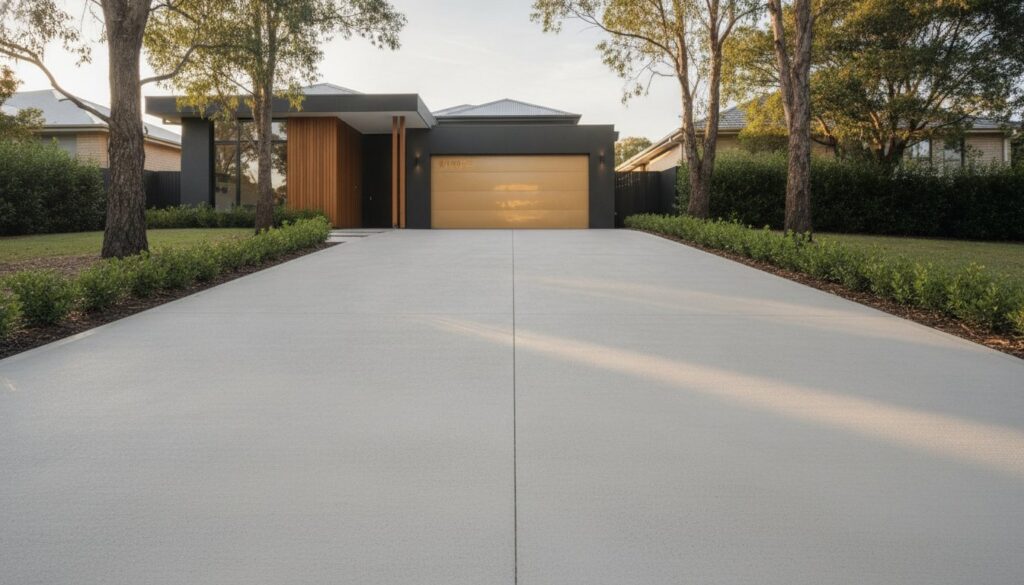
Why do two identical-looking quotes for a plain concrete driveway cost sydney homeowners such vastly different amounts once the concrete actually cures? You want a durable, low-maintenance entrance to your home, but the fear of hidden costs and Section 138 permit confusion often makes the process feel like a gamble. It’s natural to feel wary of initial estimates that don’t account for Sydney’s reactive clay or the specific engineering required to prevent unsightly cracking. We understand that your driveway is more than just a slab; it’s a foundational element of your property’s value and daily function.
This guide provides a transparent, expert breakdown of the variables that dictate a project’s success in 2026. You’ll gain a clear understanding of the engineering essentials that ensure long-term durability and how to navigate council requirements without any nasty surprises. We’re going to explore the transition from basic utility to a professional finish, covering everything from site preparation to the structural standards that transform a simple path into a lasting asset for your home.
Key Takeaways
- Identify the core factors influencing a plain concrete driveway cost sydney project, ensuring your budget accounts for both surface finish and structural depth.
- Uncover how Sydney’s specific landscape, from narrow street access to reactive clay soils, dictates the engineering requirements of your build.
- Master the technical essentials, including high-strength MPA ratings, to protect your investment against heavy vehicle wear and premature cracking.
- Secure your property’s legal standing by mastering Section 138 council requirements and the specific standards for driveway crossovers.
- Evaluate the long-term savings achieved through precision sub-base preparation and high-quality sealing compared to the risk of structural failure.
Understanding the Baseline: Plain Concrete Driveway Costs in Sydney (2026)
Plain concrete, often referred to as ‘grey concrete’, is the backbone of residential infrastructure across the Sydney basin. To understand the fundamentals of what is a driveway, one must look past the surface and focus on the structural slab itself. It’s a classic choice that prioritizes function without sacrificing a clean, professional aesthetic. When calculating the plain concrete driveway cost sydney homeowners should expect, it’s vital to view the project as an engineered foundation rather than just a path for a car.
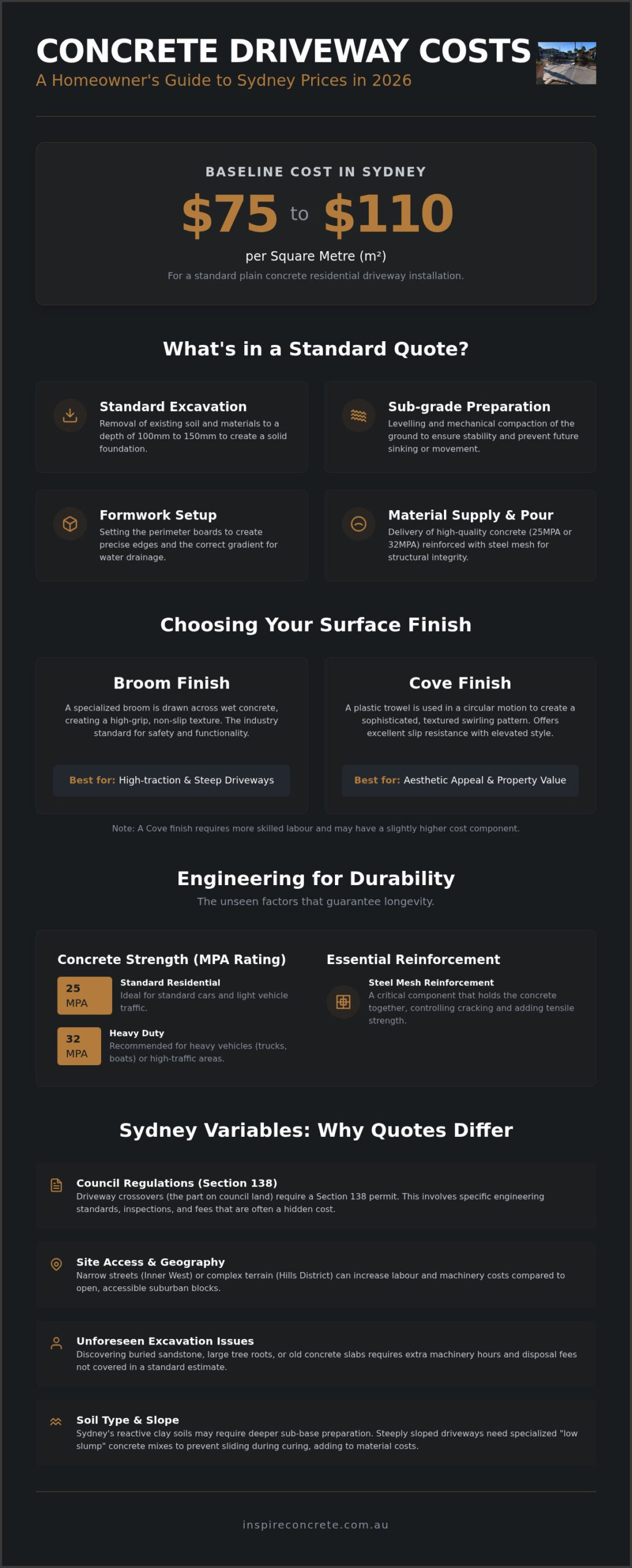
Market data for 2026 indicates that typical industry price ranges for standard residential installs sit between $75 and $110 per square metre. This material remains the primary choice for concrete driveways in Western Sydney. It’s particularly popular because it withstands the region’s intense heat cycles without the high thermal absorption found in darker, decorative finishes. Beyond the initial pour, there’s a hidden value in this choice; it serves as a perfect structural canvas for future resurfacing or stencilling if your design vision evolves down the track.
What is Included in a Standard Quote?
A professional quote from an expert craftsman is never just about the liquid concrete. It encompasses several critical stages of preparation that dictate the lifespan of the slab. You’ll typically see these items bundled into a comprehensive quote:
- Standard Excavation: Removal of existing soil or old materials to a depth of 100mm to 150mm.
- Sub-grade Preparation: Leveling and mechanical compaction of the ground to prevent future sinking.
- Formwork: Setting the perimeter boards to ensure precise edges and correct drainage fall.
- Material Supply: The delivery and pouring of high-quality 25MPA or 32MPA concrete, reinforced with steel mesh.
The Cost of the ‘Broom’ vs. ‘Cove’ Finish
The final texture of your driveway isn’t just a matter of style; it’s a critical safety feature. A broom finish is the most common approach, where a specialized stiff-bristled broom is drawn across the wet concrete to create a high-grip, non-slip surface. It’s a hardworking finish that’s highly effective on Sydney’s varying terrain, especially on steeper blocks where traction is a priority.
For those seeking a more refined look, a cove finish offers a sophisticated alternative. This technique involves using a plastic trowel in a rhythmic, circular motion to create a textured, swirling pattern. It provides excellent slip resistance while adding a layer of craftsmanship that elevates the overall property value. Because a cove finish requires a higher degree of technical skill and more time on the tools, the labour component is slightly higher than a standard broom finish, but the aesthetic transformation is often worth the investment.
The Sydney Variables: Why Your Quote Might Differ from the Average
Sydney’s diverse topography ensures that no two projects are identical. From the sandstone-rich terrain of the Northern Beaches to the sprawling residential blocks of Western Sydney, geographical context heavily influences the plain concrete driveway cost sydney homeowners receive in their quotes. Regional labour rates also play a role; the logistical complexity of the Hills District or the tight access of the Inner West often commands a premium compared to more accessible suburban sites where machinery can move freely.
Excavation is another area where costs can shift unexpectedly. While a standard residential driveway of 60 to 80 square metres may require the removal of roughly 15 tonnes of soil, discovering buried sandstone, old concrete slabs, or extensive tree roots can quickly change the scope. These “unseen” factors require additional machine hours and disposal fees that a generic online estimate simply cannot account for. Consulting with a specialist for a comprehensive site assessment ensures these variables are identified before the first shovel hits the ground.
Sloped Driveway Engineering
Concrete is a fluid material that obeys the laws of gravity. On steep gradients, standard mixes can slide or “slump” down the incline before they have a chance to set. To solve this, we utilize “low slump” mixes as recommended by industry bodies like Cement Concrete & Aggregates Australia. These specialized mixes have a thicker consistency that holds its position on a slope, allowing for a precise finish. A 15-degree incline can increase labour costs by 20% because it requires intensive manual handling and specialized reinforcement to ensure the slab remains stable and provides adequate traction for vehicles.
Logistics and Pumping Fees
In many Sydney suburbs, the distance between the street and the pour site makes direct access for a concrete truck impossible. When this happens, a concrete pump is required. A line pump is the go-to for narrow side-access paths, while a boom pump is used to lift concrete over obstacles like power lines or existing structures. These pumps typically add between $1,200 and $2,000 to a project’s cost per pour. Logistics also include “travel time” fees if your property is far from a batching plant, as well as traffic management costs. For properties on busy arterial roads, the council often mandates professional traffic control to manage the safety of pedestrians and passing vehicles during the delivery.
Engineering for Durability: Beyond the Surface of Plain Concrete
The true longevity of your build is decided long before the first truck arrives on site. In Sydney, our reactive clay soils undergo significant volume changes during wet and dry cycles, expanding when damp and contracting during the hot summer months. If a contractor ignores this movement and pours a thin slab on poorly compacted ground, the result is almost certain: structural cracking within 24 months. This is a common pitfall that artificially lowers an initial plain concrete driveway cost sydney quote but effectively doubles the long-term expense through early replacement.
Sub-base compaction is the invisible hero of any high-quality project. We ensure the ground is mechanically vibrated and stabilized to create a rigid, uniform platform. This meticulous preparation prevents the soil from shifting independently of the concrete, which is the primary cause of sinking and uneven slabs. When you invest in a professional install, you’re paying for the certainty that your driveway won’t become a liability as the soil breathes beneath it.
Reinforcement and Steel Grades
Steel reinforcement acts as the internal skeleton of your driveway, providing the tensile strength that concrete lacks on its own. While budget contractors often utilize SL72 mesh to trim material costs, we recommend SL82 as the standard for Sydney’s demanding conditions. SL82 features thicker 8mm wires that provide a much more robust framework. We use plastic bar chairs to ensure this mesh remains suspended precisely in the centre of the slab. If the mesh is allowed to sink to the bottom, it loses its structural purpose. We also implement edge thickening, pouring the perimeter of the slab deeper to prevent ‘spalling’ and provide extra support at the most vulnerable entry points.
MPA Strength and Thickness
Concrete strength is measured in Megapascals (MPA), and choosing the right rating is vital for an asset that needs to last decades. While 25MPA is common for footpaths, 32MPA is the gold standard for residential driveways. This higher rating provides a denser finish that better resists the thermal expansion caused by Sydney’s extreme heat cycles. A standard 100mm thickness is suitable for most cars, but for homeowners with heavy 4WDs, caravans, or boats, upgrading to 125mm is a necessary precaution. The plain concrete driveway cost sydney might increase slightly for the additional material, but the cost-benefit analysis is clear: you’re trading a small upfront premium for a slab that won’t buckle under heavy loads.
Council Regulations and Compliance: The Hidden Costs of Sydney Driveways
Navigating the legal landscape of a new build is often the most overlooked component of a plain concrete driveway cost sydney project. Under the Roads Act 1993, any work performed on public land, including the “crossover” that connects your property to the street, requires a Section 138 Permit. This isn’t merely a suggestion; it’s a mandatory legal requirement that ensures your project meets safety and engineering standards. Permit fees for Sydney councils typically range from $50 to $800, depending on the complexity of the site and the specific local government area.
The risk of bypassing these approvals is significant. Council inspectors perform pre-pour and post-pour verifications to check formwork, steel reinforcement, and levels. If the work is found to be non-compliant, you may face heavy fines or even a demolition order to remove the slab at your own expense. Furthermore, an unapproved driveway can create major hurdles during a house sale, as savvy buyers and conveyancers will look for compliance certificates as part of their due diligence. In suburbs like Blacktown, for instance, Pebblecrete is no longer permitted for new applications, making strict adherence to current specifications essential for a successful build.
The Driveway Crossing (The ‘Verge’)
The crossover is the most technically demanding portion of the project because it must support the weight of heavy utility vehicles and delivery trucks. This section requires a heavy-duty specification, often utilizing a thicker slab and higher reinforcement grades than the rest of the driveway. Handling this work on council-owned land requires a licensed concreter in Sydney who understands how to manage local utility assets. We carefully coordinate around NBN pits, water meters, and electrical kiosks to ensure no damage occurs to essential services during the excavation or pour.
Drainage and Run-off Compliance
Sydney Water and local councils enforce strict regulations regarding stormwater management to prevent street flooding and erosion. Your driveway must be engineered to direct water away from neighboring properties and into the appropriate drainage systems. This often necessitates the installation of grates and pits, which adds to the material and labour costs but protects your home from water ingress. A ‘Standard Drawing’ is the mandatory technical template issued by a local council that specifies the exact dimensions, reinforcement grades, and levels required for a compliant crossover. Ensure your project meets every legal benchmark by consulting our specialists for expert driveway planning before you begin.
Investing in Longevity: Why Quality Installation Saves You Thousands
The most expensive driveway you’ll ever buy is the one you have to pay for twice. While a bargain-basement plain concrete driveway cost sydney might seem attractive today, the ‘cheap concreter’ trap often leads to catastrophic failure within just a few years. Skipping essential sub-base preparation or using inferior materials can result in a $15,000 replacement bill when the slab inevitably cracks or sinks. At Inspire Concrete, we leverage over 20 years of Sydney-specific experience to ensure your project is built to last, combining architectural drafting precision with hardworking trade expertise.
True value is measured by the total cost of ownership over decades, not just the initial pour. A project that is engineered correctly from day one resists the shifting clay soils of Western Sydney and maintains its structural integrity through decades of use. We view ourselves as your project partner, focusing on the meticulous details that many contractors overlook to provide a final result that adds genuine value to your property.
The Sealing and Cleaning Process
Plain concrete is naturally more porous than exposed aggregate driveways, meaning it acts like a sponge for automotive fluids and environmental grime. Without protection, oil stains and permanent tyre marks can quickly degrade the aesthetic transformation you’ve achieved. We recommend a high-quality penetrating sealer to close those pores and provide a robust chemical barrier. You can choose a natural finish that maintains the raw, minimalist look of the concrete or a ‘wet-look’ sealer that adds a sophisticated sheen and deepens the grey tones.
Choosing the Right Project Partner
Your project partner should be a master of the craft who leaves no room for guesswork. When reviewing a concrete quote, look for clear line items regarding site cleanup, waste removal, and the specific use of mesh chairs to hold reinforcement in place. If these aren’t mentioned, you’re likely looking at a shortcut that will cost you later. A professional service provider manages the entire lifecycle, from navigating council drafting to the final sweep of the site. This end-to-end commitment is what provides warranty peace of mind and ensures your creative vision is realized without compromise.
Maintaining your investment is straightforward but essential for long-term pride of ownership. A simple pressure wash once a year and a reseal every three to five years will keep your plain concrete looking fresh for over 20 years. This proactive approach prevents the surface from becoming weathered and protects the structural integrity of the slab against Sydney’s harsh UV rays and heavy coastal rainfall.
Build Your Property’s Future on Structural Certainty
Realizing a durable driveway requires looking far beyond the initial pour and investing in the engineering that anchors your property’s value. We’ve explored how Sydney’s reactive clay soils and strict Section 138 council requirements define the true plain concrete driveway cost sydney homeowners should expect in 2026. Success isn’t found in the cheapest quote, but in the invisible details like high-strength 32MPA mixes, SL82 steel reinforcement, and precision sub-grade compaction that prevents premature cracking. These elements transform a simple utility into a long-term asset that withstands the test of time and Sydney’s harsh climate.
With over 20 years of local industry experience, Inspire Concrete acts as your dedicated project partner. Our licensed and insured master concreters handle every aspect of the build, from architectural drafting to full council compliance management. We bring a sophisticated blend of rugged professionalism and refined craftsmanship to every site, ensuring your vision is realized without compromise or hidden surprises. Get a precise, no-obligation quote for your Sydney plain concrete driveway, built to last by Inspire Concrete. Your property deserves an entrance that reflects your commitment to quality and excellence.
Frequently Asked Questions
Is plain concrete the cheapest driveway option in Sydney?
Plain concrete is generally the most cost-effective permanent driveway solution available in Sydney. While gravel or recycled materials might have a lower initial entry price, they lack the structural longevity and low maintenance requirements of a solid slab. By choosing this finish, you minimize the overall plain concrete driveway cost sydney homeowners face by avoiding the additional labour and material expenses associated with decorative aggregates or complex stencilling patterns.
How much does a Section 138 permit cost in Sydney?
Permit fees for a Section 138 application typically range from $50 to over $800 depending on your local council area and the project’s complexity. These fees cover the council’s administrative costs and the mandatory inspections of the crossover on public land. It’s a non-negotiable expense that ensures your build complies with the Roads Act 1993, protecting you from future legal issues or fines during a property sale.
Can I park my car on a new plain concrete driveway immediately?
You shouldn’t park a vehicle on your new slab for at least seven days. While the surface might feel hard to the touch within 24 hours, the internal structure takes time to reach its design strength. For heavier vehicles like boats, caravans, or large 4WDs, we recommend waiting a full 28 days. This allows the hydration process to complete, ensuring the slab can support significant weight without risking structural damage.
Why did my plain concrete driveway crack so quickly?
Rapid cracking is often the result of poor sub-grade preparation or a failure to account for Sydney’s reactive clay soils. If the ground wasn’t mechanically compacted or if the steel mesh was placed incorrectly at the bottom of the slab, the concrete can’t resist the soil’s natural movement. Another common culprit is the absence of properly spaced expansion joints, which are essential to allow the material to breathe during temperature shifts.
Does plain concrete add value to my Sydney home?
A professionally installed plain concrete driveway significantly enhances curb appeal and provides a clean, minimalist aesthetic that appeals to a wide range of buyers. It transforms a tired entrance into a functional, low-maintenance asset. Because it serves as a durable foundation, it also offers future flexibility, allowing new owners to easily apply resurfacing or stencilling treatments if they wish to update the home’s look later.
How do I clean oil stains off plain concrete?
Acting quickly is the key to removing oil from porous concrete surfaces. Use a specialized alkaline degreaser or a paste made of laundry detergent and warm water to lift the oil before it penetrates deep into the slab. For stubborn marks, a high-pressure wash combined with professional-grade cleaning agents is often required. Applying a penetrating sealer during the initial installation is the best way to prevent these stains from becoming permanent.
What is the difference between 25MPA and 32MPA concrete?
The primary difference lies in the compressive strength and density of the mix. While 25MPA is suitable for garden paths and foot traffic, 32MPA is the industry gold standard for residential driveways. This higher rating provides superior resistance to heavy vehicle loads and better handles the thermal stress of Sydney’s summer heat. Investing in a higher MPA rating is a strategic choice that ensures your driveway remains durable for decades.
Can I resurface my old plain concrete driveway instead of replacing it?
Resurfacing is a viable option if your existing slab is structurally sound and free from deep, moving cracks. If the issues are purely cosmetic, such as surface scaling or minor stains, a professional concrete resurfacing treatment can provide a fresh finish without the full plain concrete driveway cost sydney of a total replacement. However, if the slab has sunk or has significant structural failures, a complete removal and repour is usually the only permanent fix.
