
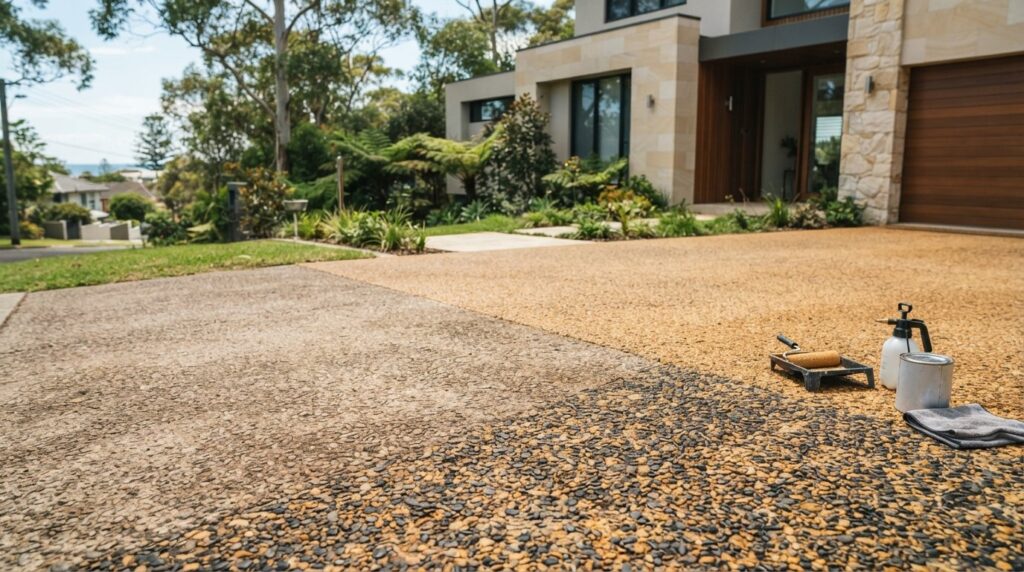
Tearing up a structurally sound slab is never necessary just because you’ve fallen out of love with its original tones. If you find yourself asking, can you change the colour of exposed aggregate, the answer is a definite yes; but true craftsmanship lies in transforming the cement matrix between the stones, rather than suffocating the natural rock under a coat of peeling paint.
Years of intense Australian sun, stubborn tyre marks, and natural weathering can easily leave a premium aggregate surface looking faded and mismatched with your home’s exterior. It’s only natural to worry that an attempted fix might bubble, lift, or ruin the slip-resistant texture you rely on daily. Fortunately, modern colouring methods allow you to establish a fresh, architectural palette without sacrificing durability under vehicle traffic.
In this guide, you’ll discover how to alter, tint, or completely renew your decorative concrete safely and effectively. We’ll explore penetrating stains, protective tinted sealers, and full resurfacing solutions so you know exactly when a targeted refresh works and when a professional transformation is required.
Key Takeaways
- Learn the technical reality behind whether can you change the colour of exposed aggregate without masking natural stone texture or causing premature surface failure.
- Compare the practical trade-offs between tinted acrylic sealers, penetrating stains, and full concrete resurfacing overlays for durability under harsh Australian conditions.
- Understand why ordinary paving paint invariably blisters over dense river pebbles and traps rising ground moisture.
- Discover the straightforward on-site porosity tests required to detect failing sealers and evaluate slab movement before choosing a finish.
- See how systematic commercial decontamination and mechanical profiling prepare weathered concrete for a long-lasting architectural transformation.
Can You Change the Colour of Exposed Aggregate? The Short Answer
Yes, you can alter the appearance of your existing concrete, but success requires understanding the material’s structural makeup. When homeowners ask, can you change the colour of exposed aggregate, they often picture painting the entire surface in one uniform shade. In trade practice, true colour modification relies on specialised tinted penetrating sealers that alter the cement paste while celebrating the natural stone embedded within it.
Whether you want to deepen a washed-out driveway or complement a modernised home exterior, your existing slab provides a solid foundation for transformation. You can explore how these surfaces are initially installed and finished in our comprehensive guide to exposed aggregate driveways. However, whether a simple tinting treatment will succeed depends almost entirely on whether previous curing compounds or acrylic sealers remain on the surface.
Understanding How Aggregate and Cement Matrix Interact
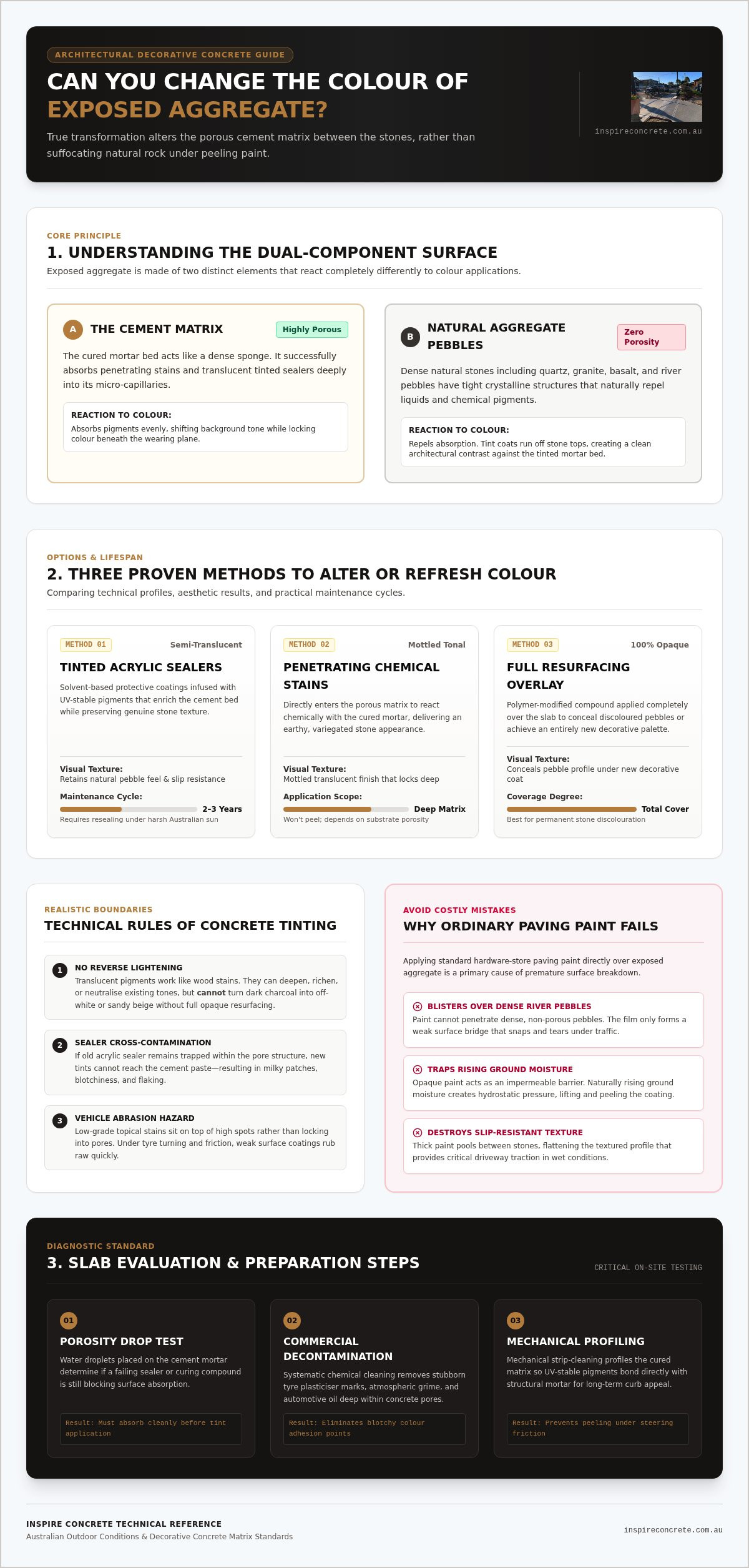
Exposed aggregate is a dual-component surface. As a foundational principle in modern decorative concrete, the finish balances structural mortar with tactile natural stones. These two materials behave completely differently when introduced to colour:
- The cement matrix: This cured mortar bed is highly porous. It acts like a sponge, drawing in penetrating stains and translucent tinted sealers evenly across the floor.
- The aggregate pebbles: Dense natural stones such as quartz, granite, basalts, and river pebbles possess practically zero porosity. They naturally repel chemical pigments.
Because the stones resist absorption, tinted applications shift the background matrix hue rather than masking the rocks. This creates a refined, high-contrast finish that preserves natural texture instead of burying it under a flat, artificial coating.
Limitations of Modifying Cured Decorative Concrete
Colouring cured concrete comes with distinct technical boundaries. Understanding what products can and cannot do prevents costly missteps on your property:
- No reverse lightening: Translucent penetrating tints cannot transform a dark charcoal matrix into an off-white or sandy beige. Penetrating pigments work like wood stains; they can deepen, richen, or neutralise existing tones, but they cannot hide dark underlying pigment without fully opaque resurfacing.
- Sealer cross-contamination: If an old acrylic sealer remains trapped within the pores, newly applied tints cannot reach the cement paste. This leads to blotchy patches, milky residue, and premature flaking.
- Vehicle abrasion: Low-grade topical stains sit on high spots rather than locking into the pores. Under vehicle tyres and steering friction, poorly applied surface films quickly rub raw across the exposed aggregate stones.
A professional on-site evaluation ensures the existing substrate is cleanly prepared so your new colour locks deep into the matrix for years of resilient curb appeal.
The 3 Best Methods to Alter or Refresh Aggregate Colour
Homeowners reassessing an aged driveway often ask, can you change the colour of exposed aggregate without creating maintenance headaches down the track? Achieving a clean, durable transformation comes down to matching your aesthetic goals with the right treatment system. The three proven approaches range from light tonal shading to complete structural covering.
Tinted concrete sealers are solvent-based protective coatings infused with UV-stable pigments that enrich the cement bed while typically lasting between two and three years under harsh Australian outdoor conditions before requiring maintenance. Where aggregate stones are permanently discoloured or a complete stylistic shift is needed, homeowners turn to professional concrete resurfacing to conceal the pebble profile entirely under a fresh, decorative finish.
To help you weigh your options, the core trade methods compare as follows:
- Tinted Acrylic Sealers: High transparency, retains genuine stone texture, maintains existing slip resistance, requires resealing every 2 to 3 years.
- Penetrating Chemical Stains: Mottled translucent finish, penetrates the cement matrix directly, zero film build-up, requires clear resealing every 3 to 4 years.
- Resurfacing Overlays: 100% opaque cover-up, creates brand-new texture (knockdown or broom), restores slip resistance, delivers a 10-plus year lifespan when properly maintained.
Method 1: Tinted Solvent-Based Acrylic Sealers
This process blends translucent iron oxide pigments into a hard-wearing solvent carrier. As the sealer cures, it forms a semi-transparent protective shell over the slab, shading faded cement matrix areas and revitalising natural pebble gloss. It works exceptionally well for evening out sun-bleached patches, concealing minor surface blemishes, and deepening light grey mortar into richer charcoal or earthen tones. Sydney’s intense UV index requires high-grade resins to prevent chalking under vehicle paths.
Method 2: Penetrating Chemical and Acid Stains
Rather than sitting atop the aggregate, penetrating stains react chemically with the free lime and calcium hydroxide inside the cement paste. This reaction yields rich, permanent earthen hues such as terracottas, bronzes, and deep tans that will not peel, chip, or blister under hot tyres. Because the acid-based compound must fully react, the entire driveway requires precise chemical neutralisation and thorough pressure washing before receiving a protective clear sealer.
Method 3: Polymer-Modified Resurfacing Overlays
When the original pebble blend no longer suits your home facade or the slab has experienced uneven wear, a polymer-modified overlay provides the ultimate solution. A specialised cementitious base coat is applied over the existing aggregate, encapsulating every stone to create a level, blank canvas. From there, contemporary textures and modern solid colours can be applied seamlessly over the top.
If you’re unsure which method suits your driveway’s underlying condition, consulting with the team at Inspire Concrete ensures you receive an accurate, trade-backed evaluation before making an investment.
Why Ordinary Paving Paint Fails on Exposed Aggregate
When considering how can you change the colour of exposed aggregate, reaching for a tin of off-the-shelf acrylic paving paint often feels like an easy weekend fix. In trade practice, applying standard paint to decorative stone concrete is the single most common cause of total surface failure. Paving paints create an impermeable topical skin engineered for flat, uniformly porous timber or render, not dense, rounded river stones.
Instead of penetrating deeply, paint creates a weak plastic bridge across the tops of the pebbles. When vehicles return from highway driving, hot tyres bond chemically to the soft thermoplastic resins in ordinary paint. As the rubber cools and grips, vehicle torque tears the coating clean off the stones, leaving ragged patches and peeling tracks that cannot be patched neatly.
The Science of Concrete Vapour Transmission
Concrete driveways continually breathe. Moisture deep beneath the subgrade wicks upward through the slab, releasing into the atmosphere as water vapour. Specialized penetrating treatments allow this vapour to vent naturally without compromising the finish. Solid exterior paints, by contrast, lock that pathway down.
As ground moisture encounters the impermeable paint film, hydrostatic pressure builds directly beneath the coating. In warm conditions, this trapped moisture expands, forming white blisters, cloudy discolouration, and total delamination across the cement bed.
Loss of Texture and Increased Slip Hazards
Properly laid exposed aggregate delivers exceptional mechanical traction, naturally meeting rigorous Australian P4 or P5 slip ratings due to protruding pebble profiles. Applying heavy paving paint destroys this built-in safety:
- Puddle pooling: Thick, viscous paint levels out the natural valleys between stones, turning an intentional texture into an uneven, slick plain.
- Wet-weather hazards: A rain shower turns smooth acrylic paint into an ice-like hazard for descending cars and walking families.
- Costly rectification: Stripping failed paint out of millions of tightly packed pebble crevices cannot be done with a simple sander. It requires aggressive chemical stripping and high-pressure washing to restore the concrete to a recoatable standard.
Evaluating Your Driveway: Key Factors Before Choosing a Colour Solution
Before deciding how you will alter your concrete, an honest diagnostic check of the slab is critical. While asking can you change the colour of exposed aggregate leads to exciting design choices, existing slab conditions dictate which method will actually bond. Rushing straight into tinting without checking substrate readiness risks trapping contaminants and wasting your investment.
Every driveway tells a story of weather exposure, ground movement, and prior chemical treatments. Confirming underlying stability with an experienced Sydney concrete contractor ensures you choose a colour pathway built to endure local conditions rather than a temporary cover-up.
The Water Droplet and Solvent Adhesion Test
Porosity determines how well any colourant will bond. You can test your surface in seconds using clean water across both high-traffic vehicle paths and sheltered edges:
- Beading water: If water beads tightly on the surface, an active acrylic or penetrating sealer barrier is intact. All existing sealer must be chemically stripped before applying any tint.
- Immediate absorption: If water darkens the cement matrix within thirty seconds, the capillaries are open. This confirms the slab will readily draw in translucent tints or stains.
Assessing Underlying Structural Cracks and Repairs
Translucent tints highlight surface character, meaning they will not hide structural repairs. Patching compounds possess different cement densities and aggregate distributions, which absorb stain at noticeably different rates. Across Western Sydney’s reactive clay soils, subgrade settlement often creates movement cracks that require mechanical stitching or joint re-engineering before cosmetic work begins.
Take time to review your slab’s base stability against the structural benchmarks outlined in our guide to concrete driveways to verify that cosmetic enhancements rest on solid ground.
Selecting Tones That Withstand Australian Climates
Local sunlight levels require careful pigment chemistry. Deep charcoals look striking against modern architecture, yet they absorb considerable thermal energy, driving up surface heat during peak summer. Warmer earthy hues like terracotta, sandy buffs, and mid-greys naturally disguise wind-blown dust and tyre rubber.
Always verify that your chosen tint uses inorganic iron-oxide pigments. Unlike organic dyes, iron oxides resist UV breakdown and withstand relentless sun exposure without yellowing or bleaching out.
Ready to transform tired aggregate into a modern architectural feature? Contact Inspire Concrete today to book a full on-site assessment with our specialist team.
The Professional Colour Transformation Process: What to Expect
Achieving an architectural finish requires far more than rolling tint over an existing slab. When trade specialists approach the question of whether can you change the colour of exposed aggregate, the answer always hinges on strict process control. A lasting transformation is eighty percent substrate preparation and twenty percent technical application, ensuring new pigments fuse deeply into the cement matrix.
A professional crew executes this work through four disciplined steps:
- Step 1: Heavy-duty decontamination: Commercial degreasers break down embedded motor oils, road grime, and tyre residue before industrial rotary cleaners wash the pores clean.
- Step 2: Coating removal and profiling: Specialised chemical strippers dissolve remnants of past acrylic sealers, followed by mild acid profiling if capillaries require opening.
- Step 3: Moisture testing: Electronic meters confirm the concrete slab is thoroughly dry, eliminating the risk of water vapour becoming trapped beneath solvent resins.
- Step 4: Precision tinted application: Two balanced coats of industrial-grade, UV-stable sealer are applied, infused with micronised anti-slip additives for wet-weather grip.
Surface Preparation and Chemical Decontamination
Contaminants are the primary enemy of pigment adhesion. High-output, hot-water rotary cleaning strips away surface grime that cold domestic pressure washers simply smear across pebble crevices. If initial diagnostics reveal old acrylic sealers, dedicated chemical strippers dissolve the legacy film without harming the structural bond between the aggregate and the cement paste. The slab then requires forty-eight hours of clear, dry weather so deep moisture vents completely before coating begins.
Even Application and Anti-Slip Inclusion
Applying tinted solvent products demands careful technique. Laying down a single heavy coat causes liquid to pool in low valleys around the pebbles, creating unsightly roller lines and glassy patches that fail under vehicle torque. Professional trades apply two uniform, thin coats to build rich, translucent depth across the mortar bed without smothering the stone profile.
During the final pass, micronised polymer beads or aluminium oxide grit are suspended directly into the mix. This step ensures your refreshed driveway retains its natural traction and easily meets Australian pedestrian safety standards. If you want to elevate your home’s exterior appeal with long-lasting results, discuss your project with the Inspire Concrete team.
Elevate Your Exposed Aggregate with Lasting Colour
Renewing weathered concrete doesn’t require tearing out structurally sound slabs. When asking can you change the colour of exposed aggregate, the secret lies in enriching the porous cement matrix while preserving genuine stone texture. Always steer clear of thick paving paints that blister under trapped ground moisture, and ensure previous sealers are completely stripped before applying translucent tints. Where deep staining or outdated pebble blends cannot be unified, polymer resurfacing offers a clean architectural slate.
With over 20 years of dedicated concreting expertise across Greater Sydney, we deliver full-service project management from precision decontamination to high-grade architectural sealing. Partner with craftsmen who understand local ground conditions and the exact chemistry of decorative finishes. Request a professional driveway consultation with Inspire Concrete to turn your property vision into a durable reality.
Frequently Asked Questions
Can you change the colour of exposed aggregate concrete without covering the stones?
Yes; if you want to know can you change the colour of exposed aggregate without hiding the stones, the solution is a semi-transparent tinted penetrating sealer. These formulas alter the porous cement matrix between pebbles while leaving dense rocks untouched. Natural quartz, river pebbles, and granite resist pigment absorption, allowing their distinct mineral shapes and colours to shine through against a refreshed background hue.
Will painting an exposed aggregate driveway make it slippery when wet?
Yes, applying standard paving paint significantly increases slip hazards. Paint pools inside the crevices between pebbles, creating an impermeable plastic barrier that flattens out the slab profile and destroys its natural P4 or P5 slip resistance. In wet conditions, painted concrete turns treacherous underfoot. Professional colour restorations avoid paint completely, using breathable tinted sealers combined with micronised anti-slip grit to preserve vehicle and pedestrian grip.
How long does a tinted sealer last on an exposed aggregate driveway?
A quality solvent-based tinted sealer typically lasts between two and three years under Greater Sydney’s intense sun. UV radiation, heavy rainfall, and turning vehicle tyres gradually abrade the surface resin over time. Driveway sections shaded by carports maintain their colour longer than fully exposed aprons. Applying a straightforward maintenance wash and protective topcoat every couple of years prevents premature wear without requiring aggressive chemical stripping.
Can you make dark exposed aggregate concrete lighter?
No, you cannot lighten a dark exposed aggregate matrix using translucent sealers or penetrating stains. These products work like wood stains; they can deepen or enrich existing tones, but they cannot hide dark underlying pigment. If you want to transform a dark charcoal or brown driveway into a modern off-white or sandy beige, a polymer-modified resurfacing overlay is required to completely cover the existing stone profile.
Do you have to strip old sealer before applying a new coloured tint?
Yes, stripping existing topical sealer is mandatory if you want uniform, long-lasting results. When deciding can you change the colour of exposed aggregate on an older driveway, removing residual sealer is the most crucial step. New pigments require open capillaries to bond with the cement paste. If old acrylic remains, fresh colour coats dry patchy, turn milky, and quickly peel under hot car tyres.
Can you resurface over exposed aggregate with a completely different decorative finish?
Yes, existing aggregate slabs offer an exceptionally strong structural foundation for polymer resurfacing overlays. Once the surface is mechanically profiled and decontaminated, a commercial polymer-modified base coat bonds securely over the stones and mortar bed. This creates a level substrate ready for contemporary broom finishes, knockdown textures, or decorative stencilling, allowing you to modernise your driveway completely without the disruption of slab replacement.
How soon can you drive on an aggregate driveway after applying a colour tint?
You can walk on the treated surface after 24 hours, but vehicles should stay off the driveway for at least 72 hours. While modern solvent sealers feel dry within a few hours, the resin system requires three full days to cure completely. Parking or turning tyres too early causes hot tyre pick-up, tearing fresh pigment away from the cement paste before it reaches full abrasion resistance.
