
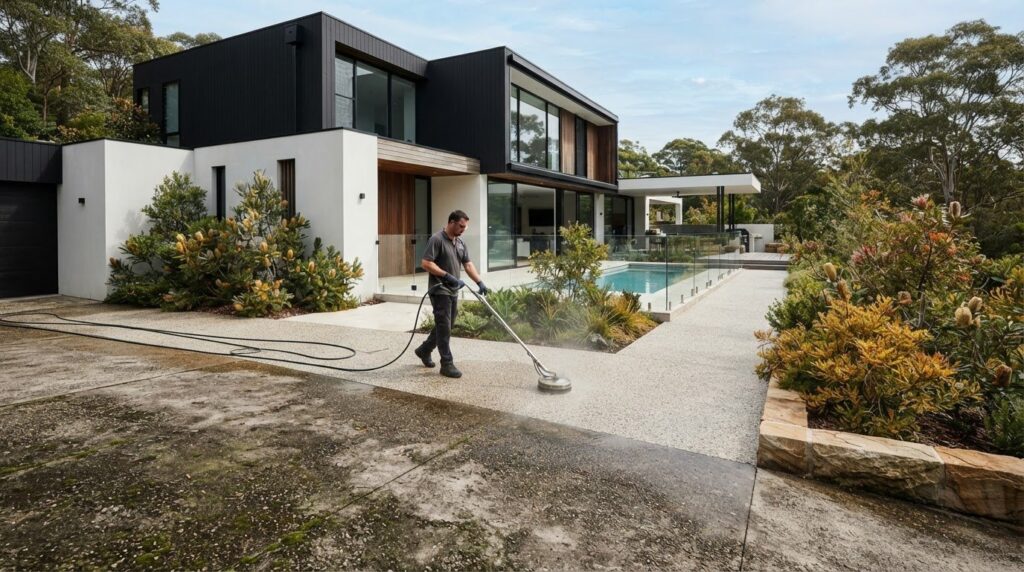
Effective cleaning starts with matching the method to the surface, not simply turning up the pressure. Concrete cleaning services in the Hills District can cover outdoor concrete such as driveways, pathways, patios and pool surrounds, while sandstone needs a different approach. The surface’s condition matters too: pressure cleaning can damage deteriorating materials, including flaking sandstone.
It’s natural to want outdoor areas looking fresh without risking the finish beneath the grime. This guide explains which surfaces can be cleaned, how concrete and sandstone should be treated, and what factors shape the cleaning approach.
You’ll also learn how cleaning and sealing work together, why unsealed concrete can absorb water, oil and grime, and how this can contribute to staining and cracking. We’ll cover the Hills District areas the service reaches and the details that help determine whether a surface needs cleaning, sealing or more considered treatment.
Key Takeaways
- Match the cleaning method to the surface and its condition; high pressure can harm deteriorating finishes.
- Sandstone, pebblecrete and stencilcrete need careful treatment to protect their texture and appearance.
- Learn how cleaning and sealing can help address grime, staining and moisture exposure on concrete.
- Understand what affects mould, mildew and lichen removal, including where growth has taken hold.
- See how to read local reviews for relevant details about outdoor concrete work, rather than relying on ratings alone.
Pressure cleaning driveways, pathways, patios and other outdoor surfaces
Driveways, concrete paths, patios and pool surrounds can collect tyre marks, leaf stains and surface grime. The right cleaning method depends on the material, its condition and nearby features such as garden beds.
Driveway and Pathway Cleaning
Driveway pressure cleaning typically targets dirt, algae, tyre marks and residue across the exposed surface. Pathway cleaning tackles similar buildup in narrower areas, including garden edges and spaces beside steps. Before requesting quotes from Hills District driveway cleaners, note the surface material, approximate area and visible stains. A photo of an oil mark or damaged edge helps describe the work.
Compare quotes by checking that each describes the surfaces and tasks included. One quote, for example, may cover only a driveway, while another includes the connecting path and patio. A clear scope makes it easier to compare the proposed pressure-cleaning approach, rather than relying on a headline price alone.
Cleaning Methods and Surface Risks
Pressure washing uses a concentrated water jet to dislodge grime; soft washing uses lower pressure with cleaning solutions. The distinction matters on concrete, pavers and nearby finishes because excessive pressure can erode joints, disturb loose material or mark a vulnerable surface. Pressure cleaning can also adversely affect deteriorating materials, including flaking sandstone, faded stencil finishes, rotting timber and poorly painted areas.
Prepare the garden and work area too. Move outdoor furniture and loose pots, and clear toys or other items from the driveway. Point out delicate plants, painted edges and loose pavers so they can be considered during setup. Testing a less visible patch can show how the surface responds.
Pricing, Timing and Surface Use
The cost depends on the job. Key factors include the area, surface condition, access, staining and surfaces included. A heavily marked driveway or a job covering several pathways may require a different scope from a lightly soiled, open area. Ask for the quote to describe its boundaries and any post-cleaning treatment.
Cleaning time depends on the area, buildup, access and method, while drying time varies with the weather and surface conditions. There is no single timetable for every Hills District property. Keep vehicles and foot traffic off the cleaned area until it is dry and safe to use. In NSW, insurance and licensing are separate questions; ask about relevant insurance and whether the specific work requires a licence.
Sealing and Post-Cleaning Treatments
After cleaning, sealing can create a barrier that repels moisture, helps prevent weed growth and makes concrete easier to clean. It may suit an exposed driveway or patio where ongoing maintenance matters, but assess the surface before treatment. Cleaning removes surface grime; sealing is a separate step intended to protect the cleaned finish.
Ask the quote to distinguish cleaning from sealing and identify which surfaces each treatment covers. Before the appointment, clear vehicles, furniture and loose items from the work area, and keep pets away from the cleaning zone. This leaves room to reach the edges and reduces the chance of spray reaching nearby belongings.
Cleaning sandstone, pebblecrete and stencilcrete
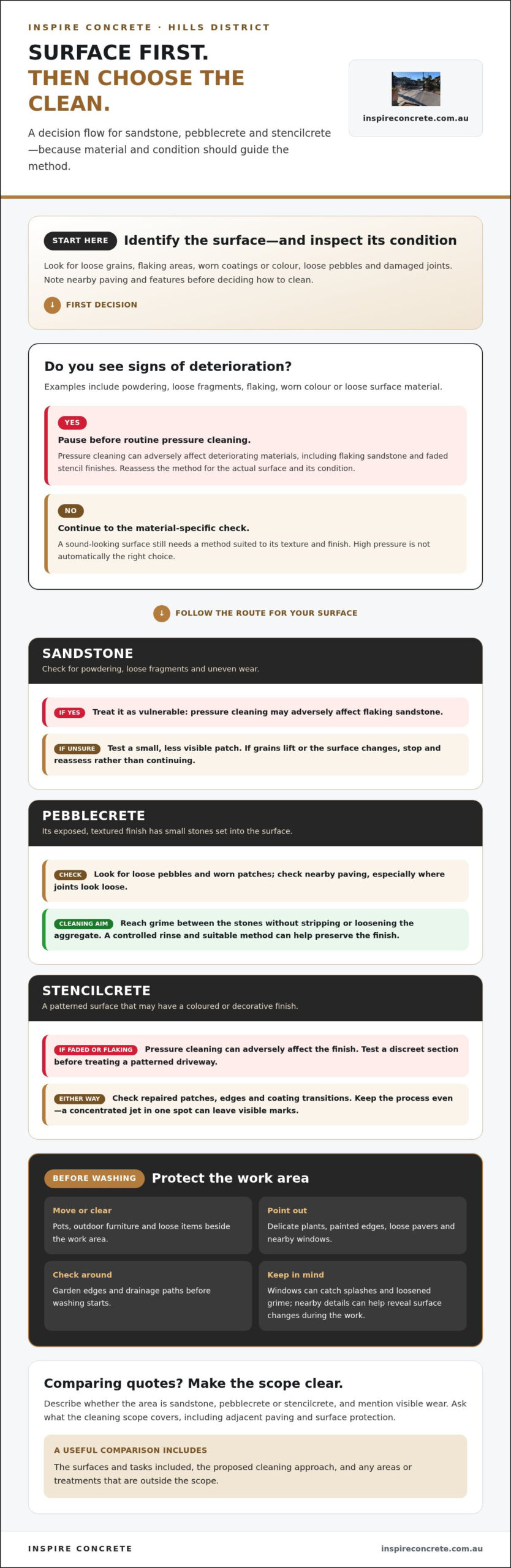
Sandstone, pebblecrete and stencilcrete each respond differently to washing. Their texture, finish and condition should guide the cleaning method. First identify the material, then look for loose grains, flaking areas, worn coatings or damaged joints. A sandstone step with crumbly edges needs different care from sound pebblecrete paving. This assessment helps prevent a routine wash from aggravating an existing surface problem.
Deteriorating sandstone can be vulnerable. Pressure cleaning may adversely affect flaking sandstone, so high pressure isn’t automatically the right choice. Look for powdering, loose fragments and uneven wear before cleaning. A gentle test on a small, less visible patch can show how the stone responds. If grains lift or the surface changes, stop and reassess the method rather than continuing across the whole area.
Pebblecrete has an exposed, textured finish, with small stones set into the surface. Dirt can collect between the stones, so cleaning needs to reach the texture without stripping or loosening aggregate. Check first for loose pebbles and worn patches. A controlled rinse and suitable cleaning method can help clear grime while preserving the finish. Inspect nearby paving too, especially where joints look loose.
Stencilcrete has a patterned surface, often with a coloured or decorative finish. Faded StencilCrete can be adversely affected by pressure cleaning, so check for worn colour and flaking before washing. Take the same care around repaired patches, edges and coating transitions. For example, test a discreet section before treating a patterned driveway. Keep the process even: concentrating a jet in one spot can leave visible marks.
Protect surrounding details before cleaning. Move pots and outdoor furniture, then cover or move items beside the work area. Windows near sandstone steps or a pebblecrete patio can catch splashes and loosened grime, so note their position before washing starts. Check garden edges and drainage paths too. These steps help limit mess and make surface changes easier to spot during the work.
An affordable cleaning plan begins with the actual material, condition and buildup, not a one-method-fits-all approach. When comparing quotes, describe whether the area is sandstone, pebblecrete or stencilcrete, and mention visible wear. Ask what the cleaning scope covers, including adjacent paving and surface protection. If you’re also considering a refreshed concrete finish, explore concrete surface options as part of planning the outdoor area.
Concrete cleaning
Concrete can look solid while absorbing water, oil and grime through its pores. These substances can contribute to staining and cracking, especially when spills remain on an unsealed driveway. Identify the affected area and residue first. A fresh oil spot, leaf stain and general dirt need different attention. Marking their locations helps define the cleaning scope and protect the surrounding finish.
Before cleaning, inspect the slab for cracks, loose edges, worn coatings and earlier repairs. A sound plain concrete path can tolerate a different approach from a weathered, coloured surface. Note whether the concrete is sealed, textured or smooth, and check where water drains. These details guide the cleaning method and help prevent runoff from being directed towards a garage, garden bed or neighbouring paving.
For ordinary soil buildup, a controlled rinse and suitable surface cleaner can lift grime across open areas. Stubborn marks may need targeted treatment rather than repeated pressure in one spot. For example, treat driveway oil separately from dusty residue on an alfresco area. Test a small, inconspicuous patch first, then compare its appearance as it dries.
Cleaning can reveal existing discolouration that dirt had partly concealed. A patchy appearance after washing may reflect differences in wear, previous repairs or sun exposure, rather than leftover grime alone. Inspect the whole surface in consistent light before deciding whether another pass is useful. Repeatedly concentrating a jet on one mark can roughen the concrete and make the finish less uniform.
After cleaning, let the surface dry before assessing whether sealing is appropriate. Sealing creates a barrier that repels moisture, helps prevent weed growth and makes concrete easier to clean. It’s a separate treatment, not a substitute for removing embedded grime. On a Sydney driveway, consider the surface condition, exposure and intended use when deciding whether to seal.
For a quote request, describe the concrete type, approximate area and visible stains. Include examples such as a narrow pathway, a broad driveway or an oil-marked parking bay. Mention nearby doors, windows, garden edges and drainage points. This gives the quote a clear scope and helps distinguish cleaning from additional treatment. A free quote should never be assumed; state what you need priced and what work it covers.
Once the surface is clean and dry, keep vehicles and foot traffic off it until it’s ready for use. Drying depends on weather, shade, airflow and the amount of water used. Check the finish in daylight, especially around repaired patches and garage thresholds. This final inspection helps identify remaining marks before furniture, pots or parked cars return.
Mould, mildew and lichen removal
Mould, mildew and lichen can leave outdoor concrete slippery, stained and uneven in appearance. Look for green or dark growth in shaded corners, beneath dripping gutters and along garden edges. Lichen often appears as firm, crusty patches attached to the surface. Identifying the type and location helps show whether cleaning needs focused attention or broader coverage across a path, patio or driveway.
Moisture and limited sunlight can help growth persist. Check where water collects after rain, such as beside a downpipe or at a low point in paving. Note nearby trees, overhanging branches and garden beds that keep concrete damp or shaded. Removing leaves and debris first exposes the affected area and shows whether growth extends into joints or remains on the surface.
Cleaning should address the growth without roughening the concrete. Start with a small, inconspicuous patch and use a controlled application rather than directing intense pressure at one spot. A stiff, non-metal brush can help loosen surface residue on suitable concrete. Rinse the treated area carefully, then inspect it as it dries. Persistent lichen may need targeted treatment before further washing.
Take particular care around coloured or textured finishes. A patterned concrete patio, for example, may show uneven marks if its coating is already worn. Flaking sandstone and faded stencil finishes can be adversely affected by pressure cleaning, so inspect them before starting. Match the cleaning method to the material, and don’t treat a decorative finish like plain concrete.
Protect nearby features before removing growth. Clear outdoor furniture, pots and leaves from the work area, then cover vulnerable garden plants where splashes may reach them. Check windows, door thresholds and painted surfaces beside the patio. Clear debris from downpipes or drains, and avoid letting loosened material collect there.
After cleaning, reduce the conditions that encourage regrowth. Clear leaf litter from shaded pathways, redirect persistent drips where practical, and keep garden growth from resting on concrete. If dampness returns beside the same downpipe, address that moisture source rather than repeatedly washing the stain. House washing may remove grime from nearby exterior areas, but wall and concrete surfaces need methods suited to their different finishes.
For a clear cleaning scope, record where growth appears and describe the surface beneath it. A photo of lichen on a path or mildew around a patio edge helps show the extent. Include nearby gardens, windows and drainage points when discussing the area. These details help distinguish targeted growth removal from cleaning a larger outdoor surface and guide a suitable treatment plan.
Which concrete cleaning companies in The Hills District have the best reviews?
Review rankings can change across platforms, so a single star score doesn’t establish which Hills District cleaner is right for your job. Look for recent, detailed feedback about concrete cleaning, not just general property maintenance. A review describing an oil-stained driveway or delicate patterned path gives more useful context than a brief rating without service details.
Compare reviews for signs of careful preparation and clear communication. A customer might, for example, mention that a cleaner identified loose pavers before washing or explained how runoff would be managed. Comments about protecting garden edges, moving outdoor furniture and keeping spray away from painted surfaces can also reveal how carefully a team approaches the work.
Check whether reviews describe results on a surface like yours. A polished result on plain concrete doesn’t prove the same approach suits sandstone, pebblecrete or stencilcrete. Look for examples involving your material, along with details about existing wear or staining. Feedback that explains the situation helps you assess relevance instead of relying on broad praise.
Read negative reviews alongside positive ones. Focus on specific issues such as missed areas, unclear scope, unexpected delays or poor communication. Then look for a response that addresses the concern directly and describes a practical resolution. A defensive reply or repeated complaints about the same issue may matter more than an isolated disagreement.
Use a consistent comparison process. Check each business’s service descriptions, then compare review details with your needs: driveway cleaning, pathways, a patio or post-cleaning sealing. Ask for a written scope describing the surfaces and tasks included. This makes it easier to compare like with like, rather than treating different jobs as equivalent because they share a high rating.
Reviews are only one part of the decision. A useful enquiry explains your surface, visible stains and any fragile edges, while the response should address those details clearly. For instance, mention a shaded patio with lichen or a driveway with oil marks. Choose the provider whose proposed approach suits the material and condition, not simply the profile with the most eye-catching rating.
Inspire Concrete: Exposed Aggregate Driveways
Inspire Concrete can help when a worn outdoor area prompts plans for a new driveway finish. Its Exposed Aggregate Driveways offer a textured concrete option, while Stencil Concrete Driveways, Stamped Concrete Driveways and Coloured Concrete Driveways offer other design directions. The right choice depends on the look you want and how the driveway connects with your home and outdoor spaces.
If cleaning highlights damage or you’re planning a broader upgrade, consider how a new driveway could shape your property’s entrance. Inspire Concrete also provides concrete resurfacing, cleaning and sealing for projects where existing concrete remains part of the plan.
Contact Inspire Concrete to discuss your driveway or concrete project.
Plan an Outdoor Surface That Suits Your Home
A cleaner outdoor area can also be the starting point for a broader design decision. Before choosing the next step, consider how your driveway connects with your home, pathways and entertaining spaces. For concrete cleaning services in the Hills District, define whether your priority is maintenance, a refreshed finish or a new driveway design.
If a new surface is part of the plan, Inspire Concrete offers Exposed Aggregate Driveways, Stencil Concrete Driveways and Stamped Concrete Driveways. Each creates a distinct look, so consider the texture and character you want for your property. A clear brief helps shape a practical conversation about the project.
Contact Inspire Concrete to discuss your concrete project and explore a suitable direction. A considered plan can help turn an outdoor area into a more welcoming part of your home.
Frequently Asked Questions
What types of surfaces do you clean?
Outdoor concrete cleaning can cover driveways, paths, patios and pool surrounds, with the method matched to each surface’s material and condition. Decorative finishes, pebblecrete and sandstone need particular care because aggressive pressure can affect their texture or coating. Before arranging work, identify the surface type and point out worn, flaking or previously repaired areas. This helps define a suitable scope for the job.
Which concrete cleaning services operate in The Hills District, NSW?
For concrete cleaning services in the Hills District, consider Sydney-based Inspire Concrete. It provides concrete cleaning and sealing, alongside concrete maintenance and restoration services across Sydney. Its work focuses on concrete surfaces. When comparing options, look for service details relevant to your surface, such as whether the work covers cleaning alone or includes sealing.
What concrete surfaces do Hills District cleaning services clean, such as driveways, paths and patios?
Concrete cleaning can cover functional and entertaining areas, including driveway aprons, side access paths, patios and pool surrounds. The layout can shape the job: a narrow path beside a wall needs different access planning from an open driveway. When describing your property, note connected areas and obstacles such as gates, steps or outdoor fixtures. This helps define which sections the work includes.
How much does concrete cleaning cost in The Hills District?
The cost depends on the area, concrete condition, access, staining and whether sealing forms part of the work. A small, clear patio has a different scope from a large driveway with oil marks and tight access. Inspire Concrete provides a free quote from a qualified estimator, with no obligation. Share the surfaces you want covered and any treatments you’re considering so the quote reflects the requested scope.
How do professional concrete cleaning services remove oil stains, mould and lichen?
Professionals assess the stain and concrete finish before choosing a treatment. Oil can penetrate concrete pores, while mould and lichen attach differently to the surface, so each needs a suitable cleaning approach. The process may involve targeted treatment followed by controlled rinsing and inspection. If a mark has penetrated deeply or the finish is worn, cleaning may reveal that condition rather than make the surface uniform.
