
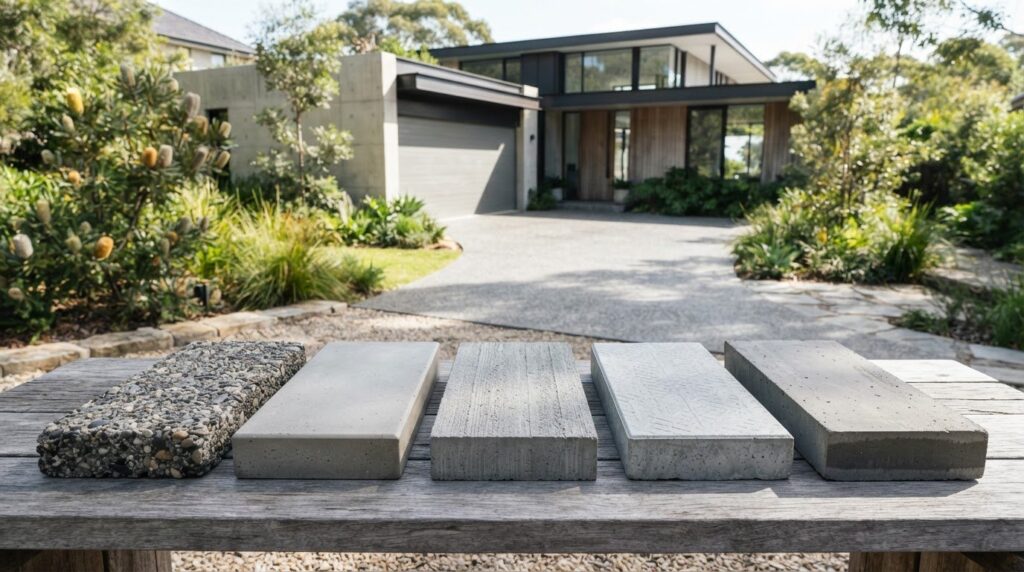
Grey concrete doesn’t produce one universal pigment shade. A coloured concrete colour chart for Australia shows guide doses for pigments added to grey concrete rated at 25-32 MPa: pigments marked (1) use 1 x 10 kg bag per cubic metre, while those marked (2) use 2 x 10kg bags per cubic metre. The final colour also depends on the concrete mix and finish.
It’s easy to focus on a chart swatch, but its colour can look different across a full driveway or outdoor area. Oxide pigments colour concrete throughout the mix, and the same pigment can create distinct effects depending on the surface finish.
This guide explains how concrete oxides and pigments work, how to compare grey-based shades, and what to consider before choosing a colour. You’ll also see how exposed aggregate, stamped, stencilled and polished finishes can affect the result, and why viewing samples in different light helps you make a more informed choice.
Key Takeaways
- Oxides and pigments colour concrete throughout, while the finish shapes how that colour is revealed at the surface.
- Read pigment chart doses alongside the concrete strength and the chart’s bag-per-cubic-metre markings.
- Compare grey-based pigment shades with the aggregate and finish in mind, as exposed, stamped and stencilled concrete can create different effects.
- View colour samples in the lighting where the finished concrete will sit to make a more considered choice.
- For a driveway, the choice between exposed aggregate, coloured, stamped and stencilled concrete affects the final look and feel.
Full-depth concrete colour using oxides and pigments
Oxides and pigments colour concrete throughout the mix, while finishing methods shape what appears at the surface. Start by understanding how colour is added to the concrete and how the site will be prepared.
Integral, Oxide, and Surface-Applied Colour
Integral colour is pigment mixed throughout the concrete; oxide pigment is a colouring material used to achieve this full-depth effect. Surface-applied colour sits on hardened concrete, colouring the finish rather than the full depth. Compare where the colour sits, then match the method to the planned finish.
For an Australian driveway, consider colour separately from structural and site requirements. Identify whether the work includes a council-controlled crossover or drainage before setting the project scope, as local requirements may apply to these site elements.
Preparation starts with a stable, properly formed base and a consistent concrete mix. Specify the pigment and finish before placement, then distribute and finish the concrete evenly. For example, exposed aggregate is created by washing away the surface paste before the concrete fully sets.
Finish, Lighting, and Shade Appearance
The finish affects how a grey-based pigment looks. Exposed aggregate reveals stone through the concrete surface, while polished concrete can partly or fully reveal selected stone. In both finishes, the exposed material influences the overall appearance alongside the coloured paste.
Stamped concrete can use coloured oxides and coloured sealers to create its finish. Stencilled concrete can pair a coloured base slab with contrasting oxide applied on top. Compare samples featuring the intended pattern and surface treatment, not just a flat colour swatch.
Check the sample outdoors in direct sun and shade, then view it beside nearby paving or brickwork. To maintain the finish, use suitable concrete cleaning and sealing practices. According to Hunter Readymixed Concrete, sealer should be applied after coloured concrete has sufficiently cured, which can take up to 30 days.
Climate, UV Exposure, and Fading
Australian sunlight and weather can affect the appearance of coloured concrete over time. UV exposure can alter surface-applied colour and sealer, while dust, moisture and wear can change the visible finish. Full-depth pigment colours the concrete throughout, so surface wear won’t reveal an uncoloured layer.
For a Sydney sample, compare the shade in the conditions where the concrete will sit. Consider whether nearby trees cast shade or whether the area gets direct afternoon sun. Regular cleaning helps remove dirt that can make the surface look dull.
Batch Colour Consistency
Concrete batches can vary in appearance if their ingredients, water content, pigment distribution or finishing differ. Keep the specified pigment and mix consistent across the job, and use the same finishing approach throughout. A small sample can help establish the intended shade before pouring the full area.
Australians can compare physical samples through concrete suppliers and discuss a local quote with a concreter. Share the intended finish, site dimensions and access details so the scope is clear. An Australian coloured concrete colour chart is a useful starting point, but compare its shades with a sample in the planned finish.
Grey concrete pigment colour chart
A grey concrete chart helps compare pigment doses and sample shades before specifying a mix. Read its strength rating, bag quantity and colour marking together.
Available Pigment Colours
Australian pigment charts show colour options as samples added to a grey concrete base. Depending on the chart, you may compare lighter greys with deeper charcoal-like tones, then assess how each looks beside paving, brick or exterior finishes. Treat each swatch as a guide, not a guaranteed match for the finished surface.
Concrete strength matters when reading a chart. The listed pigment doses are based on grey concrete rated at 25-32 MPa. Check that rating before applying the chart to a proposed mix, because comparing a swatch without its stated concrete basis can lead to the wrong expectation.
For a fair comparison, line up the shades against the same grey base and finish. Note each chart’s pigment marking, then compare samples in the intended outdoor setting. This gives you a more useful visual reference than choosing by colour names alone.
Supplier Charts and Sample Swatches
Australian concrete and pigment suppliers may provide charts or physical samples for comparing shades. Use a chart linked to the intended mix, and record its concrete strength basis and dose markings. Hunter Readymixed Concrete is an Australian concrete supplier named in guidance on coloured concrete curing and sealing.
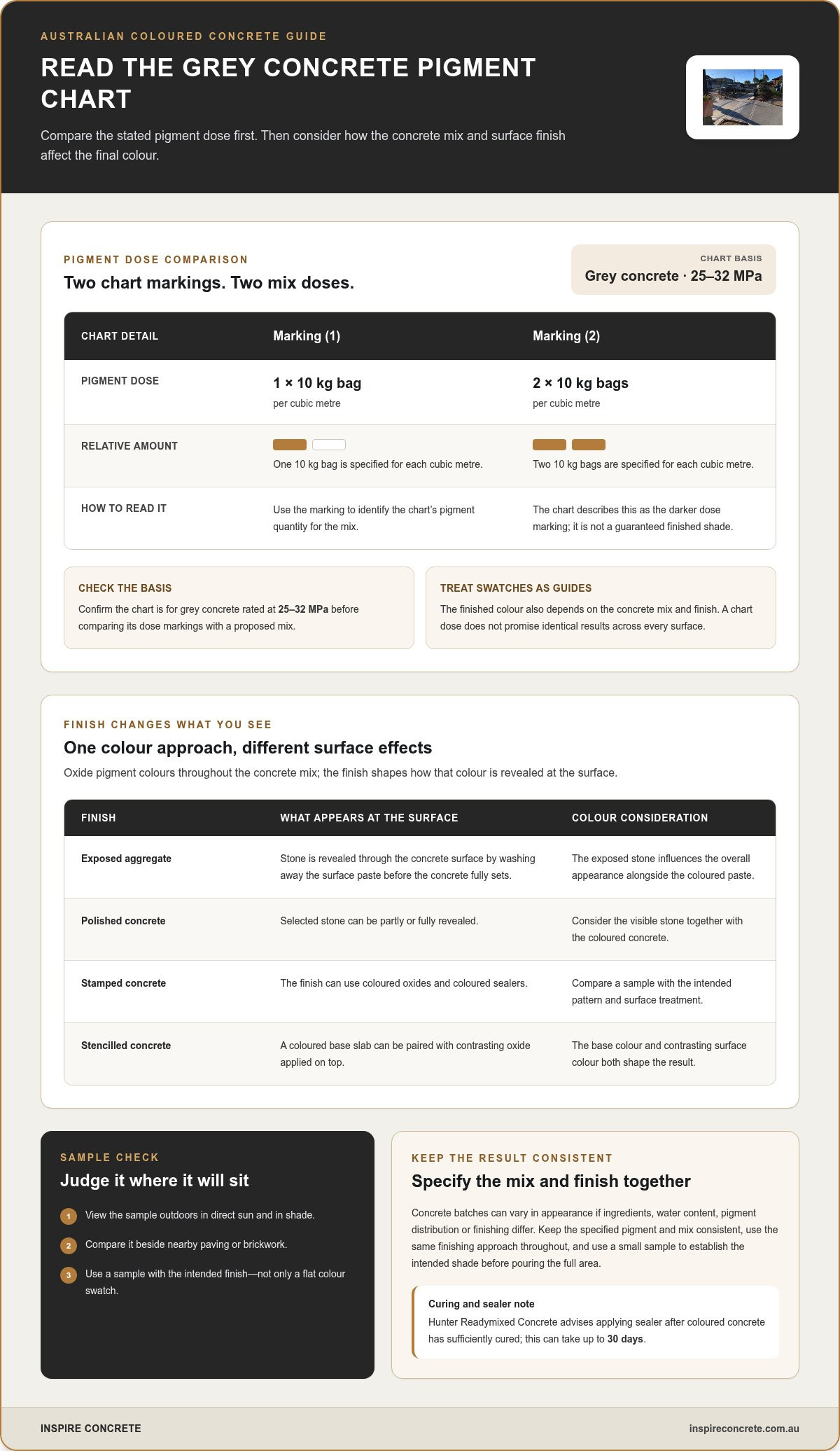
When reviewing a sample, note the pigment label and the amount represented by its marking. A chart marked (1) uses 1 x 10 kg bag per cubic metre of grey concrete. A chart marked (2) uses 2 x 10kg bags per cubic metre of grey concrete. These are mix doses, not a promise that every finished surface will look identical.
How much extra pigment is needed for darker coloured concrete? In the listed chart, the darker dose marking (2) uses 2 x 10kg bags per cubic metre of grey concrete, compared with 1 x 10 kg bag per cubic metre for marking (1). The chart’s dose indicates pigment quantity; the finished shade also reflects the concrete and surface finish.
Follow a simple comparison process: first, confirm the chart’s 25-32 MPa basis. Next, match its (1) or (2) marking to the intended dose. Then view a sample beside the materials around the project. This sequence keeps the chart’s technical information connected to the design decision.
For a driveway or pathway, compare the chosen grey with its planned finish before settling on a shade. A coloured concrete project can be planned around the desired tone and surface treatment.
What colours are available in Australian coloured concrete charts?
Australian coloured concrete charts compare pigment shades against a stated concrete base. For a grey-concrete chart, use its actual swatches and dose markings rather than assuming every supplier offers the same named colours. Available information identifies dose categories, not a universal list of shade names, so compare the chart in front of you with the finish you plan to use.
Start with the chart’s mix basis. The listed colour-mix doses apply to grey concrete rated at 25-32 MPa. A pigment marked (1) uses 1 x 10 kg bag per cubic metre of grey concrete. A pigment marked (2) uses 2 x 10kg bags per cubic metre of grey concrete.
Those markings show pigment quantity, not a colour name or a guaranteed finished appearance. Use the swatch beside its marking to understand the chart’s shade-and-dose pairing. For example, compare two entries on the same chart, then note whether each uses marking (1) or (2).
Consider concrete colour alongside the surface finish. Oxides can colour standard concrete, exposed aggregate concrete and polished concrete. In exposed aggregate, the coloured paste appears alongside the revealed stones, so the overall impression includes both the pigment and the aggregate.
- Standard concrete: Compare the chart swatch with the intended plain surface.
- Exposed aggregate: Consider the colour of the paste and the aggregate together.
- Polished concrete: Account for the selected stone, which may be partly or wholly revealed.
Keep the chart’s context attached to every comparison. Record the swatch, its (1) or (2) marking, and the 25-32 MPa base. That makes it easier to distinguish a colour choice from a change in pigment dose. Don’t compare a chart entry in isolation from its mix information.
For a practical selection, shortlist chart entries that suit nearby materials, such as exterior brick or paving. Then view the chosen shade against the planned surface treatment. A grey-base chart helps narrow the options, but treat a swatch as a guide to that chart’s mix, not a promise that every finished area will match it exactly.
Use the chart to create a clear specification: identify the chosen swatch, its dose marking, the concrete basis and the intended finish. This gives the colour decision a practical reference for the project, from grey pigment selection to the final surface appearance.
Which Australian concrete suppliers publish colour charts and sample swatches?
In Australia, begin with the ready-mix supplier serving the project location, then compare its concrete colour information with pigment manufacturers’ charts. A chart should identify the concrete base, pigment shade and recommended dose. A physical swatch provides a useful visual reference, but its finish may differ from a poured driveway or pathway.
Ask for the chart and sample associated with the intended concrete mix, not just a pigment-only colour card. The distinction matters because a pigment’s appearance in a sample can change when mixed into grey concrete. Check whether the chart gives a strength rating and dose basis; the listed colour-mix doses in this guide use grey concrete rated at 25-32 MPa.
Hunter Readymixed Concrete is an Australian supplier that provides guidance on coloured concrete curing and sealing. Its advice is to apply sealer after the concrete has sufficiently cured, which can take up to 30 days. Use supplier guidance to understand the specified mix and finishing process, while comparing colour information separately.
Use these steps to assess a supplier chart or swatch:
- Match the mix: Check that the chart relates to grey concrete and note its strength rating.
- Read the dose: Record the pigment marking and its stated quantity per cubic metre.
- Identify the finish: Ask whether the sample represents standard, exposed aggregate, stamped or polished concrete.
- Compare in place: View the swatch beside the home’s paving, brickwork or exterior finishes.
For example, a flat colour chip won’t show how exposed stone changes the look of an exposed aggregate surface. Compare the pigment with the aggregate and surrounding materials. For stamped concrete, consider how the pattern and surface treatment affect the finished appearance.
Record the supplier, chart name, swatch reference, mix basis and dose. These details help distinguish a genuine shade change from a difference in concrete mix or finish. If samples come from different suppliers, note their respective bases and pigment instructions before comparing them.
A local ready-mix supplier is a practical starting point for concrete-specific charts, while a pigment manufacturer can explain its own pigment references. Use both sources to narrow the shade, then base your final selection on a sample that reflects the proposed concrete and finish. This gives the colour choice a clear reference before specification.
How do coloured concrete shades look in different finishes and lighting?
A pigment sample shows only part of the finished look. Surface treatment changes how much coloured paste is visible, while aggregate, texture and light also affect the appearance. Compare a swatch with the planned finish, not just a flat colour chip. For a Sydney driveway, view it beside nearby paving, brickwork and exterior finishes too.
Exposed aggregate reveals stone by washing away surface paste before the concrete fully sets. The finished colour combines the pigmented paste with the visible aggregate. Grey pigment beside pale stone can look different from the same paste beside darker stone. Assess the sample’s stone and paste together before choosing a shade.
Stamped concrete uses coloured oxides and coloured sealers to create its finish. Stencil concrete can combine a coloured base slab with contrasting coloured oxide applied on top. These approaches bring pattern and colour into the visual result. Compare the intended pattern and colour placement rather than judging the pigment in isolation.
Polished concrete can also use coloured oxides. Selected stone may be partly or fully revealed, affecting the balance between coloured paste and aggregate. Before choosing, decide whether the design should emphasise the pigment, the exposed stone or both. A sample with a similar level of stone exposure offers a more useful comparison.
Lighting changes how a shade looks throughout the day. Direct sunlight can make a surface appear brighter, while shade can deepen its appearance. Nearby walls and paving also affect the comparison. View a sample outdoors in both sun and shade, then check it beside the materials that will remain around the finished area.
- Match the finish: Compare a sample with the planned exposed, stamped, stencilled or polished surface.
- Check the surroundings: Place it beside the home’s brickwork, paving and exterior colours.
- View changing light: Look at the sample in direct sun and shade before deciding.
For example, a charcoal-looking sample may appear lighter beside dark brick and more prominent beside pale paving. This is a visual comparison, not a change to the pigment itself. Keep the chosen swatch and finish reference together when discussing the project, so the colour decision stays tied to its surface treatment.
Plan the finish and pigment as one design choice. If you’re shaping an outdoor area around a coloured surface, discuss your concrete finish as part of the project planning.
Inspire Concrete: Exposed Aggregate Driveways
Inspire Concrete creates exposed aggregate driveways for homeowners seeking a durable, textured finish. This option suits a design where visible stones contribute to the overall colour and character. The surface paste is washed away before the concrete fully sets, revealing the aggregate beneath. Coloured oxide can pigment the paste, adding another layer to the finished appearance.
Choose this approach when you want the concrete tone and exposed stone to work together, rather than relying on a flat colour sample alone. Inspire Concrete also creates coloured, stamped and stencilled concrete driveways, each with a different surface treatment. Share your preferred shade and finish when discussing your project. Contact Inspire Concrete to talk through your driveway plans.
Turn your colour choice into a considered design
Let the finished surface guide your decision, not the swatch alone. A coloured concrete colour chart in Australia can help narrow the palette, but the right shade should also suit the setting and the character you want for your outdoor space.
Inspire Concrete offers exposed aggregate, stencil and stamped concrete driveways, giving you different ways to shape the surface around your preferred look. Bring your colour direction and finish ideas into the conversation, then consider how the concrete will sit alongside your home and outdoor areas.
Whether you’re planning a refined aggregate texture or a patterned finish, a clear design direction is a strong starting point. Contact Inspire Concrete about colours and take the next step towards an outdoor space that feels considered and distinctive.
