
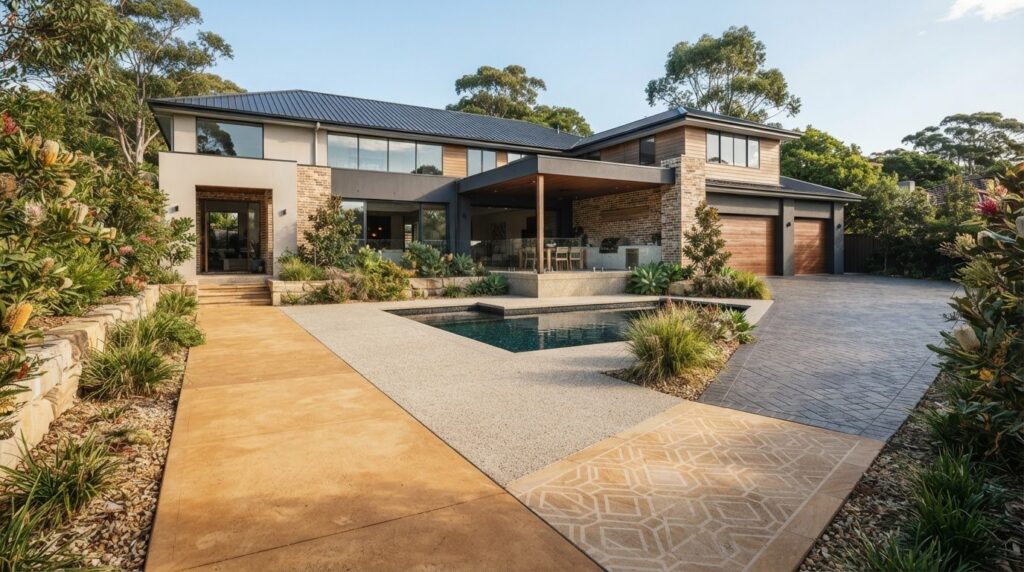
The colour that looks perfect on a sample can feel quite different across a finished driveway or alfresco area. Sydney’s changing light, nearby brickwork and paving all influence how concrete reads, so choosing concrete colours and finishes takes more than picking a shade you like.
It’s understandable to want a coordinated look without sacrificing practicality. The right choice should complement your home, suit the area’s purpose and match the appearance you want. A surface that works beautifully for a pathway may not be the best visual fit for an entertaining area or a pool surround, an aspect custom pool builders such as whitespools.com frequently highlight when planning aquatic hardscaping.
This guide explains how colour, texture, light and setting work together, and what to consider when comparing options for your property. You’ll learn how to relate concrete to existing exterior materials, select a finish for the way you’ll use the area, and make decisions with greater confidence before planning your project. Inspire Concrete brings design, planning and construction together to help shape outdoor surfaces around your property and intended use.
Key Takeaways
- Start with the space’s purpose, then consider how colour and surface finish together shape its character and usability.
- Daylight, shade, nearby materials and surface texture can all influence how a concrete colour appears in your outdoor area.
- Compare exposed aggregate, stencil, stamped, coloured and plain concrete by their visible texture, pattern and colour emphasis.
- Make choosing concrete colours and finishes easier by noting fixed exterior colours, shortlisting options and reviewing samples in context.
- Inspire Concrete combines design, planning and construction experience, backed by 24 years construction experience, over 600 projects and a 10 Year Workmanship Warranty.
Choosing concrete colours and finishes starts with the space
Begin with the area you’re planning, not a colour card. A driveway, pathway, pool surround and alfresco space each sit within a different visual and practical context. The home’s exterior, surrounding hard surfaces and landscape all influence which concrete tones and textures feel at home. Consider how the area connects to the house and what you want it to contribute: a quiet backdrop, a defined feature or a visual link between outdoor zones.
Colour sets concrete’s visual tone, while finish shapes its surface appearance and texture. Together, they determine how the area looks and feels in its setting. A colour viewed on its own may appear warmer, cooler, lighter or darker beside brick, roofing or paving. The goal isn’t just to like a shade in isolation, but to see how it works as part of the whole property.
What is the difference between concrete colour and finish?
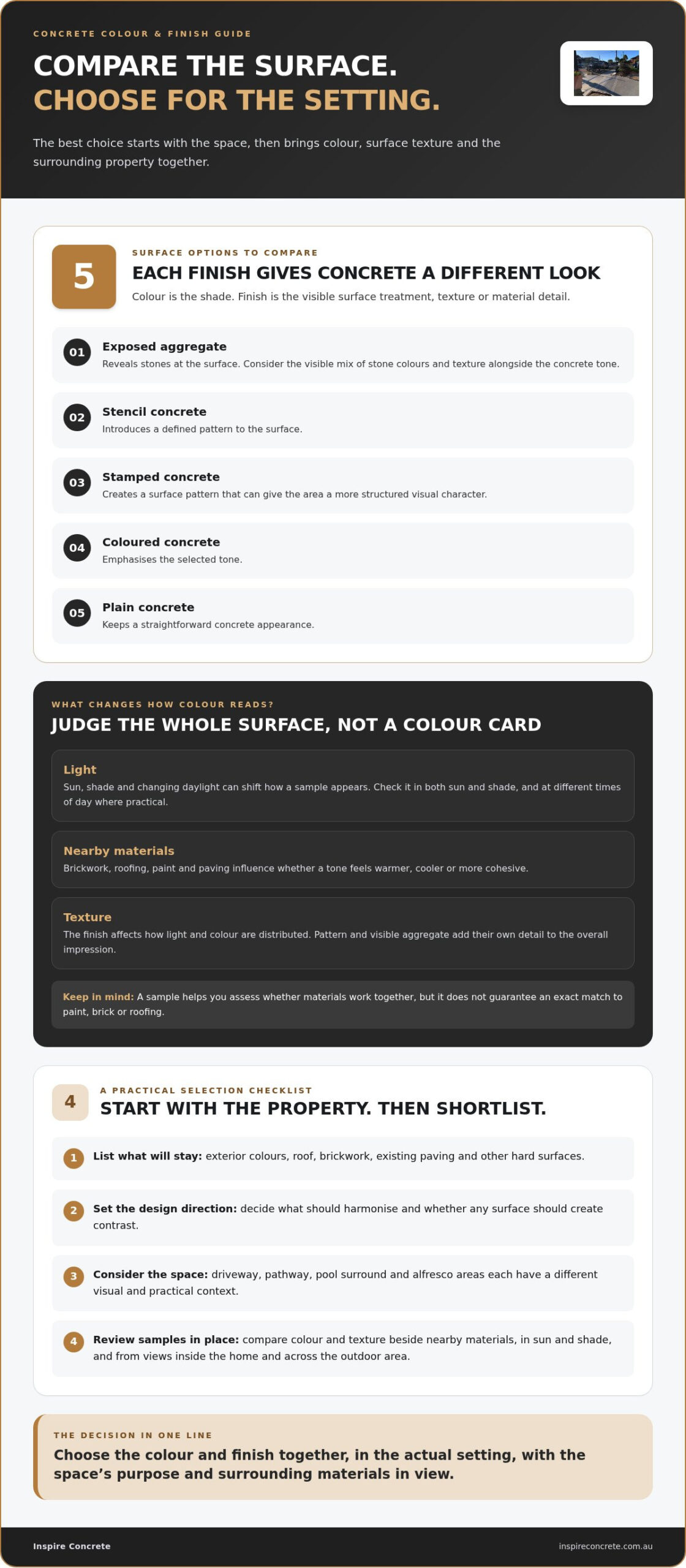
Colour is the shade or tone selected for the concrete. Finish describes the visible surface treatment, texture or material detail. Coloured concrete emphasises tone, while plain concrete keeps a straightforward concrete appearance. Exposed aggregate reveals stones at the surface; stencil concrete introduces a patterned effect, and stamped concrete creates a defined surface pattern. For background on concrete and its range of appearances, see Concrete: Composition, Colors, and Finishes.
These choices work as a pair, not as separate decorating decisions. A patterned finish can make a colour feel more expressive, while visible aggregate adds its own mix of tones and texture. Think about the combined effect across the full area, rather than judging the colour and finish as isolated features.
Start with the property, not a sample card
Take stock of the fixed colours around the proposed concrete: the home exterior, roof, brickwork, existing paving and other hard surfaces. Then consider nearby landscape features and the visual character you want for the space. Exterior design firms such as Landscape By Design Of Palmetto often emphasise how coordinating structural elements with outdoor features creates a unified look. Decide which materials the concrete should harmonise with and which, if any, it should contrast against. This gives your selection a clear design direction before you compare specific options.
For Sydney projects, assess the actual property rather than assuming one local style. Homes and outdoor settings vary, and the same shade can read differently beside different materials or in sun and shade. Look at samples beside the surfaces they’ll meet, and consider the view from both inside the home and across the outdoor area.
- List the exterior colours and materials that will remain in place.
- Note whether the concrete should blend with those surfaces or create a deliberate contrast.
- Consider the space’s purpose and the visual character you want before shortlisting finishes.
- Compare colour and texture together in the setting, not only on a sample card.
This property-first approach makes choosing concrete colours and finishes more considered. It connects the look you want with the character and use of the space, giving your next design decisions a practical starting point.
How light, texture and materials change concrete colour
A concrete shade doesn’t appear in isolation once it’s laid across a driveway, path or entertaining area. Daylight, shade and neighbouring surfaces influence how the tone is perceived, while the finish changes how light and colour are distributed across the surface. A warm-toned sample beside red brick, for example, may feel more cohesive than the same sample beside cool grey paving. The effect depends on the materials around it, not just the colour name.
View a sample in the intended setting and in both sun and shade, because changing light and nearby materials can shift how its colour and texture appear. This gives you a more useful impression than viewing a small piece under one set of conditions.
Why concrete samples can look different on site
A small sample viewed alone gives you a limited reference. Place it beside the home’s brickwork, roofing, paint and nearby paving to see how those colours interact. A neutral shade might look balanced against one material but cooler or warmer beside another. The sample won’t guarantee an exact match to paint, brick or roofing, but it helps you judge whether the combination feels harmonious.
Check it in direct sun and shade, and at different times of day where practical. The direction and strength of daylight change, as do shadows cast by the house, fences and trees. For an area used in the evening, consider how its appearance relates to nearby lighting as well. The American Concrete Institute: A Leading Authority offers broader educational resources on concrete materials and construction, while viewing a sample on site helps you assess the visual result in your own setting.
How texture and aggregate influence the finished look
Surface detail affects how a colour reads across the whole area. Exposed aggregate makes stone visible as part of the surface, so the overall impression comes from the concrete tone alongside the exposed pieces. Look at the mix of visible colours and texture, not just the base tone. From a distance, the surface may read as a blended field; close up, the individual stones become more noticeable.
Stencil and stamped finishes introduce pattern in different ways. Stencil concrete creates a defined pattern, while stamped concrete forms a surface pattern that can give the area a more structured visual character. Plain concrete offers a simpler surface appearance, and coloured concrete puts greater emphasis on the selected shade. These are visual distinctions; colour and texture alone shouldn’t be taken as a measure of slip resistance or other performance.
As you continue choosing concrete colours and finishes, compare the sample’s tone and surface detail together. A patterned or textured finish can change the visual balance of a colour, so judge the complete combination against the property rather than choosing each element separately. For a project-specific design direction, Inspire Concrete’s concrete design and construction can help translate your ideas into a considered outdoor surface.
Compare concrete colours and finishes by setting and intended use
Use the role of the area to narrow the visual direction, then compare finishes against the home’s architecture and surrounding materials. A driveway may call for a surface that visually connects the street frontage to the house, while a backyard or alfresco area might suit a pattern or tone that helps define an outdoor living zone. These are starting points, not universal rules. The right choice depends on the specific project.
| Concrete option | Visible character | Possible setting to consider |
|---|---|---|
| Exposed aggregate | Visible stones create a textured, varied appearance. | Driveways, pathways or pool surrounds where a stone-rich look suits the setting. |
| Stencil concrete | A patterned surface with a defined, repeatable visual effect. | Driveways or backyard areas where a pattern can complement the home. |
| Stamped concrete | A formed surface pattern that gives the concrete a more structured look. | Alfresco areas or pathways where pattern is part of the design direction. |
| Coloured concrete | The selected tone takes visual focus across the surface. | Driveways, paths or entertaining areas where a particular colour helps coordinate the palette. |
| Plain concrete | A straightforward, understated concrete appearance. | Areas where a simpler visual treatment suits the property. |
Which finish suits a driveway, pathway or backyard area?
Think about how each space relates to the home. A restrained exterior may pair naturally with a quieter concrete treatment, while a more detailed facade could support a textured or patterned surface. For a driveway-specific perspective, the Sydney concrete driveway guide explores the project in more detail. An exposed aggregate driveway can also be considered in context through the exposed aggregate driveway guide.
For a pathway, consider how its visual treatment connects the house to the garden or entertaining area. In a backyard, concrete can either sit quietly alongside other features or help define a distinct zone. Pool surrounds are another setting to consider as part of the overall property design. The American Society of Concrete Contractors’ decorative concrete resources offer broader industry context on decorative finishes. Use comparisons to narrow your design direction, not as a fixed prescription.
How to compare colour combinations without overcomplicating the palette
Choose a primary concrete tone that relates to fixed exterior materials such as brickwork, roofing or existing paving. Then decide whether you want the surface to blend with those elements or provide deliberate contrast. Contrast can create a focal point, but it isn’t automatically an improvement; too many competing tones and patterns can make an outdoor area feel visually busy.
Compare the options as complete surfaces, not just colour names. A single tone may read differently across plain concrete, visible aggregate or a patterned finish. Keeping the palette focused helps each material have a clear role. Use this comparison to shortlist possibilities, then assess the final direction against your project’s design and setting.
A practical checklist for choosing concrete colours and finishes
A clear sequence turns a broad collection of colour and finish options into a manageable shortlist. Record the purpose of the area, note the materials that will remain, then compare a few visual directions in context. This keeps the decision connected to your property rather than letting a sample or trend set the direction on its own.
Five steps from inspiration to a shortlist
- Define the space. Write down whether the concrete is for a driveway, pathway, alfresco area or another outdoor zone. Note how you want it to look and how it should relate to the rest of the property.
- Identify fixed colours. List the exterior materials that aren’t changing, such as brickwork, roof, paint, existing paving and nearby structures. Mark which should harmonise with the concrete and whether any contrast is intentional.
- Choose a colour family. Use those fixed materials to narrow the visual direction. A small, coherent family of related tones can help the concrete sit comfortably with the home; contrast can also work when it has a clear purpose.
- Shortlist finishes. Compare plain, coloured, exposed aggregate, stencil and stamped concrete by the surface appearance each creates. Decide whether you’re drawn to a simpler look, visible aggregate, a defined pattern or stronger colour emphasis.
- View samples and confirm the design. Place samples in or beside the intended area, next to the materials they’ll meet. Review the colour and finish together before settling on a direction for the project.
Define the space, map its fixed materials, shortlist finishes, view samples in place and confirm the design as a whole.
Questions to resolve before finalising a design
Before you settle on a colour, ask: does the sample work beside the home in both sun and shade? Does the finish feel consistent with the look you want across adjoining spaces, or does it create a deliberate change in character? If the concrete will connect a driveway to a pathway or alfresco area, consider how the surfaces will appear together from the main viewpoints around the home.
Keep the comparison focused. A shortlist of a few considered combinations is easier to assess than a large collection of unrelated samples. Don’t assume a sample will exactly match paint, brick or roofing; use it to judge the overall relationship between materials and visual tones.
Also resolve any planning or project-specific requirements that apply to your property before the design is finalised. Requirements can depend on the project and its location, so refer to relevant local council guidance and project documentation where applicable. Keep those considerations alongside the design decisions, rather than treating them as an afterthought.
Inspire Concrete brings design, planning and construction together to help shape concrete areas around your property and intended use. A Free No Obligation Quote gives you a starting point for discussing your shortlist and project direction.
Bring your concrete colour and finish ideas to life with Inspire Concrete
A clear visual idea is a strong starting point. Turning it into a concrete project calls for design, planning and construction to work together. Inspire Concrete brings those stages into one process, shaping a project solution around your preferred look, the space’s intended use and the property itself. This keeps colour and finish decisions connected to the overall project plan.
From colour inspiration to a finished concrete project
Whether you’re considering decorative concrete for a driveway, pathway or alfresco area, your preferred tones and textures help guide the design direction. Inspire Concrete considers those preferences alongside how you plan to use the area, then carries the project through planning and construction with turnkey delivery. This gives the project a tailored approach, with choices connected to the property and the space rather than a generic design.
Inspire Concrete has 24 years construction experience and has completed over 600 projects. This experience supports a considered process from early planning through to construction, helping translate a visual brief into a concrete project. The work is backed by a 10 Year Workmanship Warranty.
What Sydney property owners can expect from Inspire Concrete
Inspire Concrete brings together 14 years of concreting experience and 4 years of architectural drafting expertise. That combination informs how design preferences and construction planning come together, whether the project is a concrete driveway, pathway or another outdoor area. Clear communication and turnkey project delivery help keep the process connected from the initial concept through construction.
For homeowners in Sydney and surrounds, including inner Sydney and the Western Suburbs, the process includes a Free No Obligation Quote by a qualified estimator. Inspire Concrete has no hidden or extra charges. Its work follows relevant building standards, business operating requirements and safety regulations, supporting a project approach grounded in careful planning and responsible construction.
If you’re still choosing concrete colours and finishes, bring your ideas, reference images and notes about the space together. Consider which existing materials should harmonise with the concrete and where you’d like contrast. Those details give the project discussion a useful starting point, while the design and planning process can shape them into a solution suited to your property and intended use.
Ready to explore your ideas? Discuss your concrete project with Inspire Concrete.
Make your concrete vision the next step
Your outdoor concrete can do more than complete a practical surface. A considered colour and finish can help tie the property together and give the space a character that feels distinctly yours. Once you’ve started choosing concrete colours and finishes, turn your preferred look into a project plan shaped around your home and how you’ll use the area.
Inspire Concrete brings 24 years construction experience and over 600 projects completed to its work, with turnkey project delivery and a 10 Year Workmanship Warranty. A Free No Obligation Quote by a qualified estimator is a straightforward starting point for your project.
Request a free, no-obligation quote from Inspire Concrete and take the first step towards concrete that feels right for your property. Your vision can become a welcoming, well-considered part of home.
Frequently Asked Questions
Can concrete colour be matched exactly to my home’s paint or roof?
An exact match shouldn’t be assumed, as concrete and painted or roofing surfaces have different textures and can appear different under changing light. Instead, aim for a coordinated relationship: choose a concrete tone that sits comfortably beside those fixed finishes or creates an intentional contrast. In Sydney homes, compare samples alongside the actual exterior materials, and judge the overall combination rather than relying on a colour name alone.
Does concrete colour look different in sunlight and shade?
Yes, the same concrete tone can appear different as sunlight shifts or shade falls across it. For example, a section beside a house or under a covered alfresco area may look different from concrete in open sun. Check the proposed colour in the parts of the space that receive different light, including areas shaded by trees or structures. This gives you a more realistic sense of how the surface may look throughout the day.
How do I choose a concrete finish for a driveway or outdoor area?
Choose by considering the space’s role, the home’s architecture and the visual effect you want. Plain concrete may suit a restrained design, while stamped or stencil concrete can introduce pattern; exposed aggregate brings visible stone detail. For a driveway, consider how the surface relates to the home’s frontage. For an alfresco area, think about how it will sit alongside adjoining outdoor spaces. The best direction depends on the property and project.
Is exposed aggregate available in different colours and appearances?
Exposed aggregate can have different visual appearances because the visible stones contribute their own colour, size and texture to the surface. The overall impression also depends on how those stones sit alongside the concrete tone. If you’re choosing concrete colours and finishes for a Sydney driveway or pathway, compare examples as complete surfaces rather than focusing on one stone or shade. This helps you consider the combined look in context.
Can existing concrete be given a different colour or finish?
Existing concrete can sometimes be visually updated through options such as concrete resurfacing or respraying. The right approach depends on the surface and the change you want, such as refreshing its appearance or giving it a different finish. Be clear about the result you’re aiming for and consider the existing concrete as part of the design decision. Inspire Concrete provides concrete resurfacing and maintenance services for existing surfaces.
What should I look for when viewing concrete colour samples?
Look beyond the shade name. Check how the sample’s tone and surface detail work together, and compare it beside the brick, roofing, paint or paving that will remain near the concrete. View it in both sun and shade, and consider the visual effect from the main viewpoints around the property. A sample helps guide your decision, but it shouldn’t be treated as a promise of an exact match to another material.
