
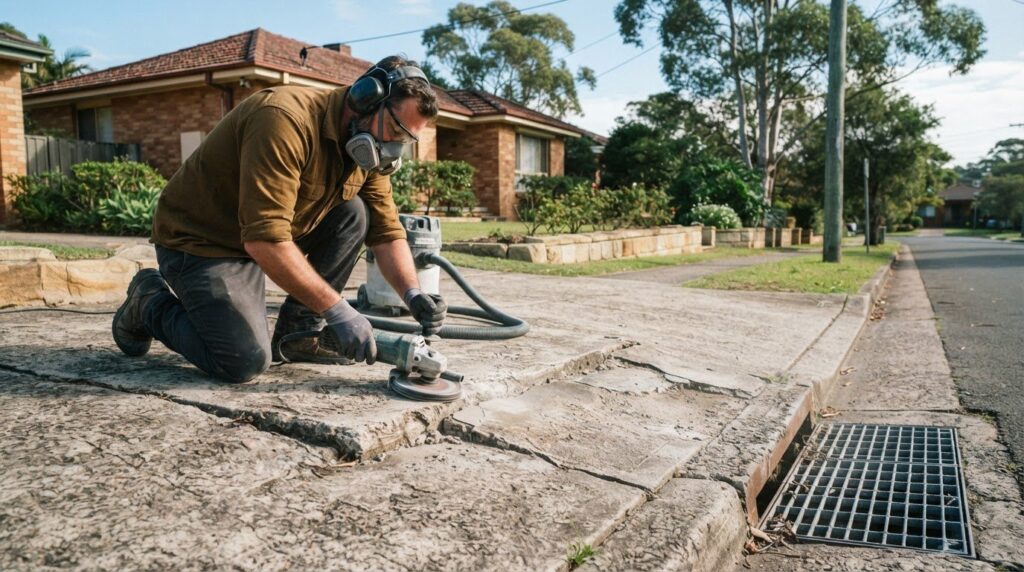
A tired concrete surface doesn’t always need replacing. Concrete resurfacing in the Sutherland Shire can refresh worn concrete, but cracks, loose sections, drainage problems or pronounced unevenness may need repair or preparation first. The cost depends on the area, the concrete’s condition, the preparation required and the finish selected. A quote provides the project-specific price.
It’s understandable to want a clear idea of cost before deciding what to do. Start by assessing the existing surface: a new finish can improve its appearance, but it won’t resolve every underlying problem.
This guide explains what affects resurfacing costs, how damaged or uneven concrete can be addressed, and what to consider when choosing a finish. You’ll also learn when resurfacing may suit your project and how Inspire Concrete’s services can help renew a worn outdoor area in Sydney.
Key Takeaways
- Look closely at cracks, bumps and depressions before choosing resurfacing; the surface’s condition helps determine the right repair and preparation.
- For a clearer project estimate, define the area and desired finish, then account for the preparation the existing concrete needs.
- Consider how water drains from the surface and how the area is used when assessing a resurfacing finish for a driveway or outdoor space.
- Compare resurfacing options with driveway finishes such as exposed aggregate, stencil, stamped or coloured concrete to find the right fit for your property.
Looking for concrete resurfacing on the Sutherland Shire?
Concrete resurfacing can refresh a sound driveway without removing the whole slab. The result depends on the existing concrete, preparation, drainage and chosen finish.
Driveway Resurfacing Options
Across the Sutherland Shire, resurfacing can update a concrete driveway by preparing the existing slab and applying a new surface finish. It can avoid demolition when the slab is suitable to retain, but it won’t correct every underlying structural problem. Look for cracks, loose areas, bumps and depressions before choosing the approach. In Oatley, a driveway’s spray coating was about 10 years old when cracking appeared around the stairs, showing why condition matters as much as appearance.
Approvals and Local Rules
For driveway resurfacing in the Sutherland Shire, consider whether the work changes more than the surface finish. Check whether it affects the driveway crossover, drainage, levels or public footpath, and whether the work remains within the property. Changing these features may involve different requirements from coating an unchanged private slab. Confirm the project scope and site conditions before work begins.
Installation and Curing Time
Installation time depends on the driveway’s area, surface preparation and chosen coating. A steep driveway resurfacing project in Oyster Bay was completed in two days. Concrete generally needs 24 to 48 hours to dry after finishing, while guidance for new concrete advises avoiding heavy use for at least seven days. These are general concrete timings, not a guaranteed resurfacing cure schedule; keep vehicles off until the applied finish is ready for use.
Lifespan and Surface Risks
A resurfaced driveway or patio has no single lifespan: traffic, UV exposure, ground movement, preparation and maintenance all affect wear. Spray coatings in highly exposed, trafficked areas may show wear after 3-5 years. Poor bonding can contribute to peeling, while movement in the slab can lead to renewed cracking. A finish may also become slippery when wet; textured anti-slip coatings are intended to improve walking security in wet and dry conditions, but surface care remains important.
Concrete project pricing and reliability
Reliable pricing starts with a clear scope, not just a colour sample. A resurfacing quote depends on the concrete’s condition, preparation, repairs, access, area and selected finish. A site assessment can help identify uneven sections, drainage concerns and edges that affect the work.
Make a quote easier to assess by asking for a clear sequence of work: surface preparation, repairs, coating application and finishing. Compare the scope and any exclusions, not just the final figure. Before the site visit, note the driveway area, access limits and finish you prefer. These details help explain differences between proposals and reduce surprises during the project.
A Sydney example adds detail beyond the finish itself. The Oatley resurfacing project, installed on 17-09-2020, covered a total area of 125 and used 6 mm Koonunga stone. This gives readers a local reference for how a decorative aggregate can shape the surface. It isn’t a current price guide; the concrete’s condition and project scope determine what a new quote includes.
Good planning includes the areas beside the slab. If landscaping is changing next to a driveway or patio, decide on finished levels, drainage paths and edge treatments before concrete work begins. Plan access and nearby work so soil, tools or later grading don’t damage the prepared surface. A colour choice matters less if water collects along the edge.
For Sutherland Shire task listings, the reported average was 3 offers per concreting task, with an average offer response time of 33 minutes. Treat response speed as only one signal; a useful proposal also explains preparation, finish and project boundaries. For a project-specific overview, explore concrete resurfacing project guidance and note the details that will shape your site discussion.
Repairing bruised, bumpy and depressed concrete
Resurfacing can renew worn concrete, but effective repairs start by identifying the cause of the damage. Preparation depends on whether the problem is surface wear, cracking or deeper movement.
Grinding and Surface Cleaning
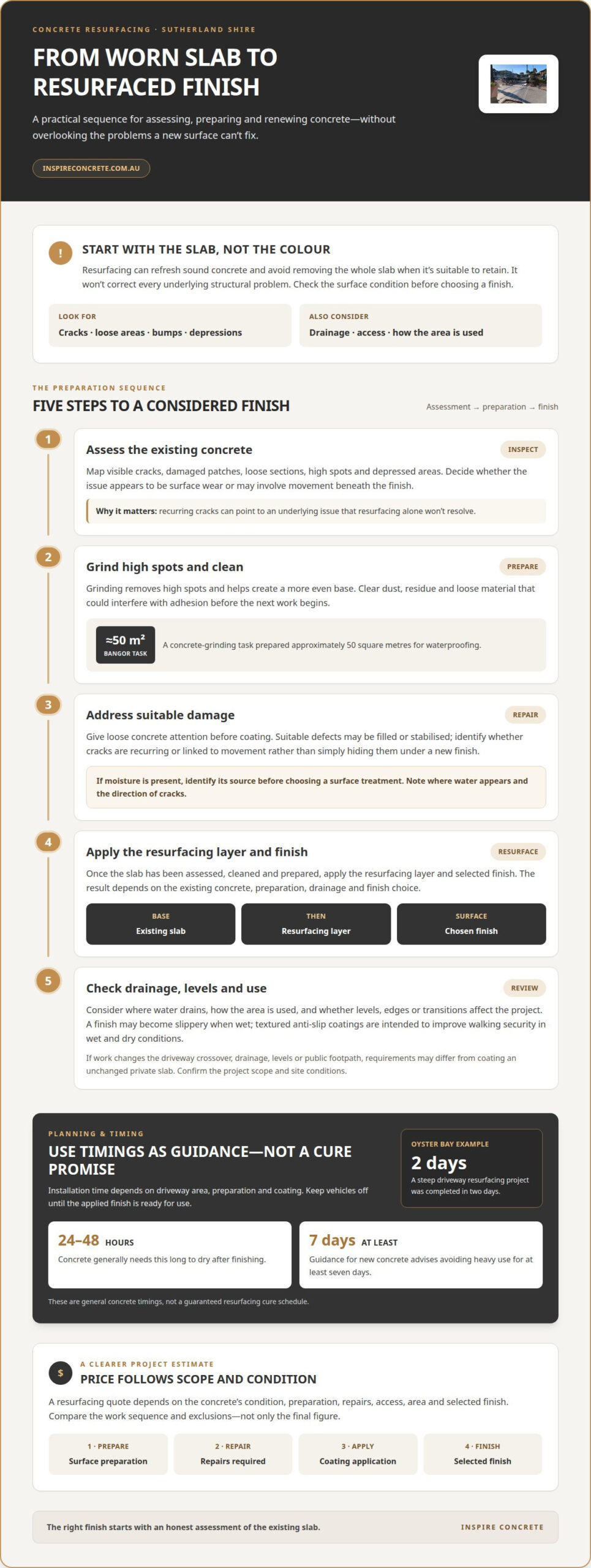
Grinding removes high spots and helps create a more even surface for subsequent work. Cleaning clears dust, residue and loose material that could interfere with adhesion. In Bangor, a concrete-grinding task prepared approximately 50 square metres for waterproofing on 9 February 2025. Before work, note where bumps occur and whether they affect drainage, access or the transition between the driveway and adjoining areas.
Surface Preparation and Crack Repairs
Preparation should address the slab’s condition, not simply hide visible defects. Mark cracks, damaged patches and depressed areas, then distinguish local surface damage from movement that may continue beneath the finish. Loose concrete needs attention before coating. Repairs can fill or stabilise suitable defects, while recurring cracks may point to an underlying issue that resurfacing alone won’t resolve. A clear quote should set out the preparation and repair work.
Resurfacing Process
Concrete resurfacing adds a new finish over existing concrete after assessment, cleaning and preparation. The work typically involves removing loose material, grinding uneven areas, addressing suitable cracks, clearing dust, then applying the resurfacing layer and chosen finish. Each step helps support adhesion and an even result. Resurfacing may restore bruised, bumpy or depressed areas when the existing slab is a suitable base.
Waterproofing is a related but distinct repair consideration. When moisture is present, identify its source before choosing a surface treatment. For concrete resurfacing in the Sutherland Shire, note where water appears, the direction of cracks and whether depressions collect water. These observations help define the repair scope and quote.
Concrete resurfacing services in Cronulla and the Sutherland Shire
For Cronulla homeowners, choose a finish to suit the outdoor area’s use, drainage and garden setting. A driveway needs a different surface feel from a patio or entertaining area, so weigh appearance against practical needs.
Australian concrete finishes include spray-and-seal coatings, textured or anti-slip surfaces, and decorative options such as coloured, stencil or stamped concrete. Spray-and-seal resurfacing is described as a 1-2 mm coating. A resurfaced surface may also receive an anti-slip coating intended to improve walking security in wet and dry conditions. The right choice depends on the existing slab and the look and function you want.
In Cronulla, plan the finish alongside nearby paths, garden edges and water runoff. Outdoor concrete should slope slightly to help water drain away. Consider how people enter the home, where furniture will sit and whether the surface connects to a pool surround or alfresco area. These details help you choose a finish that works across the space, not just in a sample.
Epoxy is a separate coating category, not another name for concrete resurfacing. Check whether a proposal is for an epoxy coating or a resurfacing system, then consider the existing surface and intended use of the area. Clear terminology makes it easier to compare the work without treating different finishes as interchangeable.
Cronulla’s early-1900s history included dirt tracks and surf shacks, while housing growth surged by mid-century as the train line extended south. Today, the focus for a resurfacing project is practical: assess the slab, select a suitable finish and plan drainage before work starts. For a considered finish across your outdoor concrete, discuss your concrete resurfacing project.
Inspire Concrete: Exposed Aggregate Driveways
Inspire Concrete installs exposed aggregate driveways for property owners seeking a decorative concrete finish. If your existing driveway needs more than surface renewal, or you’re planning a new one, compare exposed aggregate with stencil, stamped and coloured concrete. The right option depends on the look you want and how the driveway connects with your home and outdoor areas.
For a project focused on refreshing existing concrete, resurfacing may be more suitable. For a new driveway, the available finishes offer different ways to shape the result. Contact Inspire Concrete to discuss your driveway and choose a finish that suits your property.
Shape the next stage of your concrete project
Start by deciding how you want to use the space, then match the finish to that purpose. A driveway intended to make a strong first impression may call for a different treatment from a practical path or outdoor entertaining area. For concrete resurfacing in the Sutherland Shire, decide whether you’re renewing a suitable existing surface or planning a new driveway.
Inspire Concrete offers Exposed Aggregate Driveways, Stencil Concrete Driveways and Stamped Concrete Driveways. These options let homeowners shape a driveway’s appearance to suit their property. Discuss the existing surface, intended use and preferred finish to develop a clear direction for the project.
Take the next step when you’re ready to discuss the design and scope of your concrete work. Contact Inspire Concrete to discuss your project, and move forward with a finish that feels right for your home.
Frequently Asked Questions
How much does concrete resurfacing cost per square metre in Sutherland Shire?
There isn’t one fixed rate per square metre for every driveway or patio. The price depends on the project and is set out in a quote. An estimate considers the measured area, access, concrete condition, repairs, drainage and chosen finish. Two surfaces of the same size may need different preparation, so compare the written scope as well as the total.
Which concrete resurfacing contractors serve Sutherland Shire?
Inspire Concrete provides concrete resurfacing in the Sutherland Shire as part of its Sydney service area. Related maintenance services include concrete cleaning and sealing. For a new driveway, available finishes include exposed aggregate, stencil, stamped, coloured and plain concrete. Decide whether you’re renewing an existing surface or creating a new one, then choose the service that fits.
How do I choose a reliable concrete resurfacing contractor in Sutherland Shire?
Choose a concreting company that clearly explains the scope, preparation, repairs and finish. For concrete resurfacing in the Sutherland Shire, a site assessment can identify access constraints and how the work meets adjoining surfaces. Inspire Concrete provides a free, no-obligation quote from a qualified estimator. Request a quote to discuss your project and review the proposed scope.
Can cracked, damaged or stained concrete be resurfaced, and what repairs are needed first?
Yes, worn or stained concrete can be resurfaced if the existing slab is suitable for a new finish. Preparation may include cleaning, grinding high spots and repairing suitable cracks or loose areas. A crack that continues to move or a depression linked to a deeper problem needs more than a surface covering. Identify the defect and its likely cause before choosing a repair method.
How does concrete resurfacing compare with concrete replacement, painting and epoxy coating?
Resurfacing renews retained concrete with a new surface layer; replacement removes and rebuilds the concrete. Painting adds a surface finish, while epoxy is a distinct coating system. The right option depends on the slab’s condition, intended use and desired appearance. Compare the preparation and finished result, not just the name of the coating or treatment.
What maintenance is required after concrete resurfacing?
Keep the surface free of loose grit and dirt, and clean spills before they mark the finish. Choose cleaning methods suited to the particular surface. Inspect periodically for new cracks, lifting or worn patches so changes can be addressed early. Concrete cleaning and sealing can also help maintain existing concrete, including areas used regularly outdoors.
