
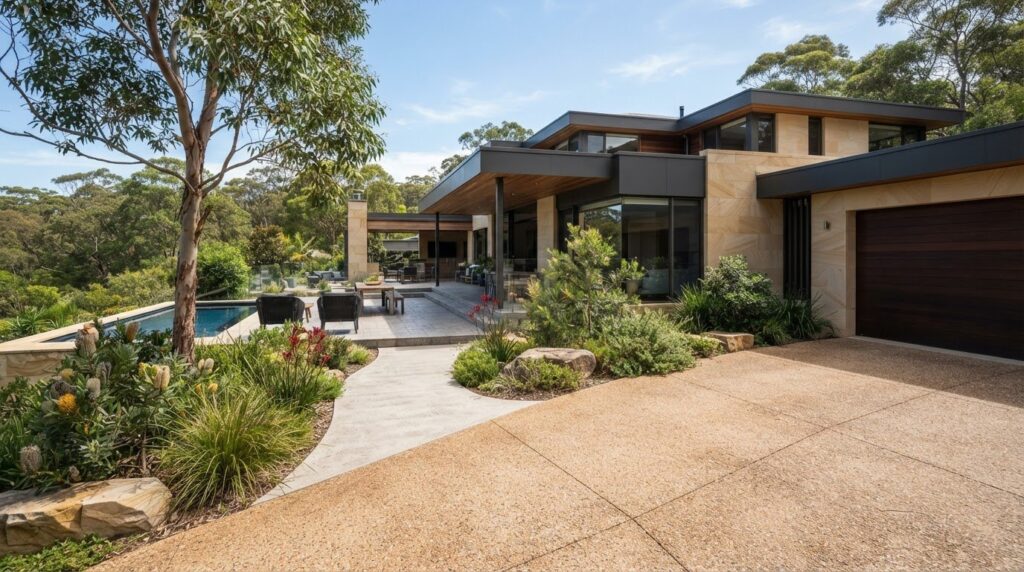
A decorative finish isn’t automatically the right finish for every outdoor space. The best finish for an outdoor concrete area depends on how you’ll use it, the look you want, local conditions, your budget and the level of slip resistance needed. Stamped and stencilled concrete can add visual character, while textured finishes may better suit areas where grip is a priority.
It’s natural to want a surface that looks considered and stands up to everyday use. The key is to match the finish to the space, rather than choosing on appearance alone.
This guide compares outdoor concrete finishes by function, appearance, climate, budget and slip resistance. See where stamped and stencilled options fit, how exposed aggregate and brushed finishes differ, and what to consider for driveways, paths, entertaining areas and pool surrounds in Sydney.
Key Takeaways
- Match the surface to its job, traffic and exposure to weather, then weigh appearance and upkeep alongside grip.
- Compare stamped and stencilled finishes to see how decorative patterns can shape the look of driveways and entertaining areas.
- Consider exposed aggregate where a textured appearance and added traction are priorities for outdoor use.
- Use the comparison of brushed, stamped, honed and exposed aggregate finishes to narrow down options for your space.
1. Choosing a finish by function, aesthetics, climate and budget
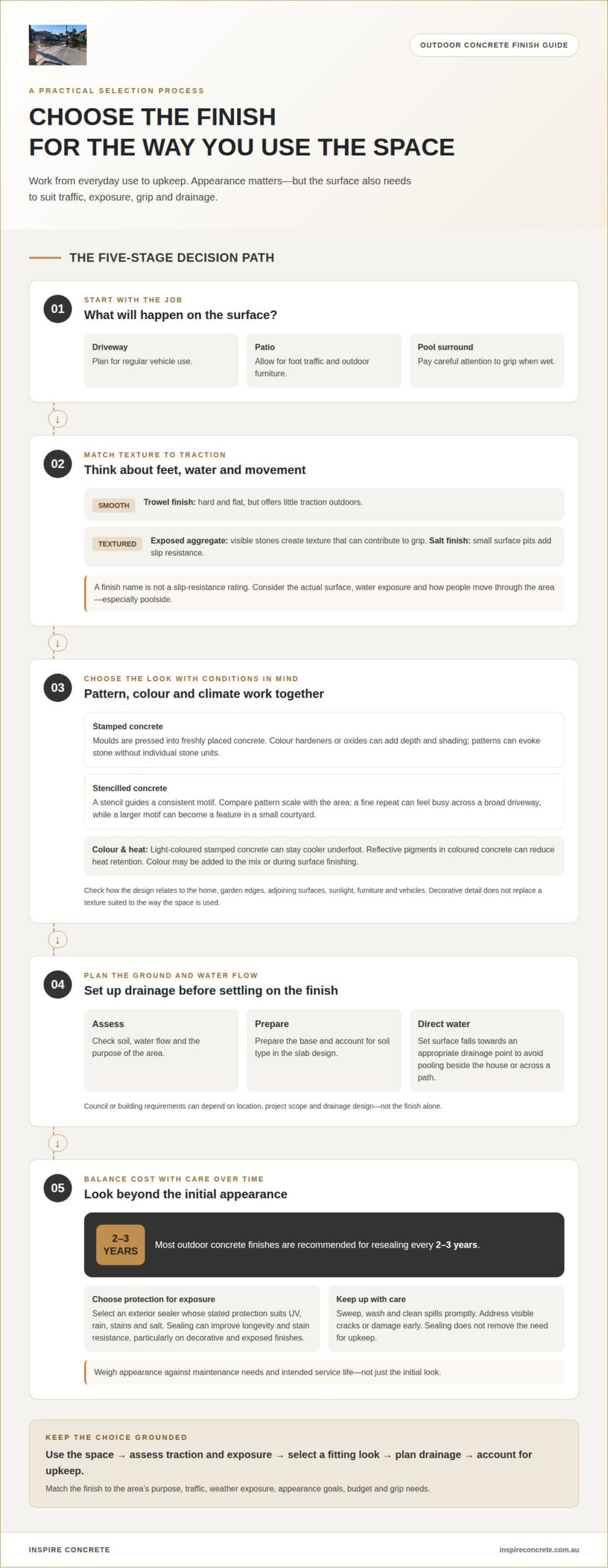
The best finish for an outdoor concrete area depends on its purpose, traffic and exposure. A driveway must suit regular vehicle use; a patio needs to accommodate foot traffic and outdoor furniture. Pool surrounds call for careful attention to grip when wet. A smooth trowel finish creates a hard, flat surface but offers little traction outdoors. Start by matching the surface texture to how people will use the space.
Appearance and climate matter, too. Light-coloured stamped concrete can stay cooler underfoot, while reflective pigments in coloured concrete can reduce heat retention. Colour can be added to the concrete mix or during surface finishing. Compare these choices with your home’s exterior and surrounding materials. When planning your budget, weigh the finish’s appearance against its maintenance needs and intended service life, rather than focusing on its initial look alone.
For UV, rain, stains and salt, choose an exterior concrete sealer whose stated protection suits those exposures and the surface. Sealing can improve longevity and stain resistance, particularly on decorative and exposed finishes. It doesn’t remove the need for upkeep: sweeping, washing and prompt spill clean-up help maintain the surface. Most outdoor concrete finishes are recommended for resealing every 2-3 years.
Australian council or building requirements can affect a project, but the finish alone doesn’t determine approval needs. Location, project scope and drainage design are relevant considerations. Treat drainage as part of the surface plan, not a detail to leave until after choosing a colour or pattern.
Before pouring, assess the soil, water flow and purpose of the area. Prepare the base and set the surface falls so water moves towards an appropriate drainage point instead of pooling beside the house or across a path. The slab design should account for soil type and drainage. These practical steps help narrow your finish options while keeping function, appearance and upkeep in view.
2. Decorative stamped and stencilled concrete
Stamped concrete brings pattern and colour into a continuous concrete surface. The finish is formed by pressing moulds into freshly placed concrete. Colour hardeners or oxides can add depth and shading, giving the pattern more definition. This approach can evoke stone without using individual stone units, making it a design option for outdoor entertaining areas and pool surrounds.
Stencilled concrete offers another way to introduce a planned pattern. A stencil guides the design across the surface, creating a consistent motif on a driveway or pathway. Compare the pattern’s scale with the size of the area: a fine, repeating design can feel busy across a broad driveway, while a larger motif can become a strong feature in a smaller courtyard. Consider how the pattern meets edges, steps and adjoining surfaces.
For either finish, choose a colour and pattern that suit your home’s exterior and the space’s purpose. A stamped stone-like pattern may complement a garden setting, while a restrained stencil can sit comfortably beside a modern façade. Around a pool, the appearance must work alongside traction for wet use. Decorative detail doesn’t replace the need for a surface texture suited to how people will use the space.
Sealing can improve longevity and stain resistance on decorative outdoor concrete. Most outdoor concrete finishes are recommended for resealing every 2-3 years. Keep the surface swept and washed, clean spills promptly, and address visible cracks or damage early. These practical steps help preserve the finish between resealing.
Before choosing, compare pattern, colour, texture and upkeep together. Consider how sunlight changes the appearance throughout the day, and how furniture or vehicles will sit on the design. A visual review of decorative concrete driveway finishes can help you narrow the style that fits your property. Stamped and stencilled finishes suit spaces where a tailored pattern matters as much as a durable concrete base.
3. Exposed aggregate appearance and slip resistance
Exposed aggregate gets its character from the stones and pebbles within the concrete. Removing the top layer reveals this embedded material, creating a textured, varied appearance. It suits driveways, pathways and outdoor entertaining areas where a plain surface may feel too understated. Stone size and colour influence the finished look, so consider how the exposed pattern will sit beside garden edges and your home’s façade.
That texture can also contribute to grip. Exposed aggregate is commonly described as slip-resistant and durable, making it an option for outdoor areas with regular foot traffic. For a pool surround, assess the surface for wet use as well as appearance. A finish name alone doesn’t tell you how a particular surface will perform underfoot: texture, water exposure and how people move through the space all matter.
There isn’t one slip-resistance rating that applies to every outdoor concrete area based only on its finish. The appropriate classification depends on the application and expected conditions, especially whether a poolside surface will be wet. Consider the area’s actual use and need for traction, rather than treating “exposed aggregate” as a rating in itself.
Slippery surfaces can make walking less secure, while hot concrete can feel uncomfortable underfoot. Uneven cracks or damage can also interrupt a walking route. Light-coloured stamped concrete can stay cooler underfoot, while textured finishes such as exposed aggregate can provide more grip than a smooth trowel finish. These differences make surface choice important for pool paths, entry routes and other areas used barefoot.
To compare options, look at the aggregate’s visible texture and how it feels underfoot, then consider the area’s traffic and water exposure. Salt finishing is another textured option: it leaves small pits in the surface and adds slip resistance. For a pool deck or patio, compare its subtle texture with the more visible stones of exposed aggregate before choosing a finish that balances appearance and practical use.
4. How do exposed aggregate, brushed, stamped and honed concrete compare outdoors?
Each finish balances texture and appearance differently. Exposed aggregate reveals stones and pebbles in the concrete, giving driveways, pathways and entertaining areas a distinct, textured look. Broom-finished concrete has small parallel ridges that add slip resistance, making it a practical choice for footpaths, driveways, patios and pool decks. Both finishes suit outdoor areas exposed to weather and wear.
Stamped concrete gives a surface a patterned appearance, with moulds pressed into freshly placed concrete. Colour hardeners or oxides can add depth and shading, bringing decorative detail to an outdoor entertaining area. Its visual character contrasts with broom’s straightforward ridged texture and exposed aggregate’s visible stones. Around a pool, consider the surface texture alongside the pattern.
Honed concrete is ground to create a smooth, matte finish. It’s described as slip-resistant even when wet and is used around pools because it resists oils and other pool chemicals. This makes it a different consideration from the more visibly textured broom or aggregate finishes. Compare how each option feels and looks in the specific space, especially where people walk barefoot or water may reach the surface.
For a high-traffic outdoor area, broom or exposed aggregate finishes are recommended for safety. Around pools, salt, broom or exposed aggregate finishes are also recommended. These are useful starting points, not a substitute for matching the finish to the area’s use and conditions. A driveway may call for a robust, legible texture, while an entertaining space may place more emphasis on pattern and visual continuity. Compare the four finishes by grip, appearance and intended use, then explore concrete finish options for your outdoor project.
Inspire Concrete: Exposed Aggregate Driveways
Inspire Concrete offers Exposed Aggregate Driveways for homeowners seeking visible stone texture and a distinctive driveway finish. Exposed aggregate is a durable, slip-resistant option for outdoor use, making it worth considering when appearance and traction both matter. If you prefer a patterned surface, Stamped Concrete Driveways and Stencil Concrete Driveways provide decorative alternatives. Coloured Concrete Driveways offer another way to shape the finished look. Choose based on your driveway’s use, the appearance you want and how the surface connects with the rest of your property. To compare finishes for your Sydney home, request a free, no-obligation quote from Inspire Concrete.
Turn your ideas into a finished design
A concrete surface shapes how you move through and experience your home. Before settling on a design, picture the finished space in use: the route from driveway to entrance, where outdoor furniture sits and how the surface connects with your home’s architecture. These everyday details can help turn a preferred look into a decision that suits your property.
Choosing the best finish for an outdoor concrete area is also an opportunity to create continuity across different spaces. A considered palette or texture can connect a driveway with a path or entertaining area without making every surface identical. Bring your priorities together in a clear project brief, including the areas involved, your preferred appearance and practical needs. This gives the design conversation a useful starting point.
For a considered next step, contact Inspire Concrete to discuss your outdoor concrete project. A well-planned finish can make the space feel distinctly yours.
Frequently Asked Questions
Are These Finishes Suitable For All Outdoor Spaces?
No. Match the finish to the space’s use, traffic and exposure rather than applying one style everywhere. A decorative pattern may suit an entertaining area, while a frequently used route needs a surface with practical traction. In Sydney, consider how the area connects with nearby surfaces and where water may collect before settling on a finish.
Can I Customise The Colour Of My Concrete Finish?
Yes, concrete colour can be customised to complement your home and outdoor design. Before deciding, compare the intended shade with nearby exterior materials, such as the façade, fencing and garden edges. Think about the overall effect across connected areas, too. A consistent colour palette can link a driveway and path, while distinct tones can help define separate zones.
What are the best finishes for outdoor concrete in Australia?
There’s no single best finish for every Australian outdoor space. Exposed aggregate and broom finishes suit areas where texture matters, while stamped and stencilled concrete create decorative patterns. For a Sydney driveway, consider vehicle use and the look you want; for a pool surround, prioritise suitability for wet use. Choose according to the space’s main purpose.
Which outdoor concrete finishes provide the best slip resistance when wet?
Salt, broom and exposed aggregate finishes are recommended options for poolside concrete, while honed concrete is described as slip-resistant even when wet. For a wet route between a pool and the house, focus on the surface people will walk across, not just the surrounding design. Choose a finish whose texture suits that use and the area’s exposure to water.
Which sealers protect outdoor concrete from UV, rain, stains and salt?
Choose an exterior concrete sealer whose stated protection covers relevant exposures, including UV, rain, stains and salt. Sealing can improve longevity and stain resistance, especially on decorative and exposed finishes.
