
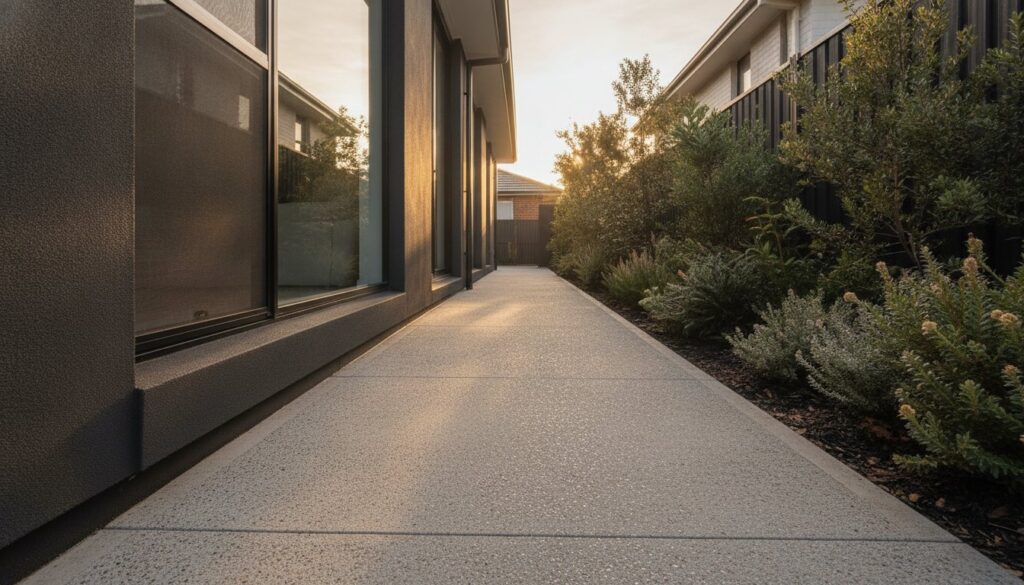
The narrow strip along your home is often the most neglected part of a property, yet it is arguably the most critical for protecting your structural foundations. Many homeowners are surprised to find that the cost to concrete side of house sydney projects can vary significantly compared to a standard open-space pour. It’s not just about laying a path. It is a strategic engineering task designed to stop mud from ruining your interior carpets and to prevent dangerous water pooling against your home’s slab.
You likely already know that a soggy, uneven side access is more than just a minor inconvenience. It’s a functional failure that compromises your daily lifestyle and property health. This guide promises to clarify the real-world investment, technical hurdles, and design possibilities for transforming these tight, difficult spaces. We will explore how professional site preparation, specialized drainage requirements, and premium finishes like exposed aggregate or coloured concrete turn a basic utility zone into a durable, high-value asset for your Sydney residence.
Key Takeaways
- Understand why narrow access and manual labor create a unique pricing structure that differentiates the cost to concrete side of house sydney from standard driveway pours.
- Learn how site access constraints and precision excavation protect your home’s foundations while ensuring a clean, stable path.
- Compare functional plain concrete with premium options like exposed aggregate to find the perfect balance of budget, slip resistance, and aesthetic transformation.
- Discover the technical necessity of correct surface “fall” and integrated drainage pits to steer water safely away from your house slab.
- See how a professional end-to-end process, including architectural drafting and final sealing, guarantees a result that adds lasting value to your property.
Evaluating the Cost to Concrete the Side of Your House in Sydney
Sydney homeowners often view side access as an afterthought, yet this narrow strip is a primary defense for your home’s structural health. Concreting this area provides a clean, slip-resistant transition that prevents soil erosion and suppresses weeds. It’s a high-value improvement that yields immediate functional benefits. However, calculating the cost to concrete side of house sydney requires understanding that these projects don’t follow the same pricing logic as expansive driveways or open slabs. You are investing in precision engineering within a confined space.
Most small residential paths fall under what industry experts call a “Side Path Surcharge.” This isn’t an arbitrary fee; it reflects the logistical reality of working in tight quarters. Large machinery often cannot fit through a standard side gate, which forces teams to move material manually. Concrete is a heavy, time-sensitive material. When every cubic meter must be transported by wheelbarrow from the street to the rear of the property, the labor component naturally increases. This manual handling ensures your existing landscaping and fences remain undamaged, but it requires more man-hours than a machine-assisted pour.
Thickness also plays a decisive role in your project’s final investment. For standard foot traffic, a 75mm thickness is the baseline. If you intend to store heavy equipment, trailers, or bins in that space, you will likely need a 100mm pour reinforced with steel mesh. Increasing the depth doesn’t just add material costs. It also requires deeper excavation and more spoil removal from the site. Every extra centimeter of depth adds to the volume of earth that must be carted away and the amount of raw product required to fill the forms.
Understanding the Sydney Market in 2026
The NSW construction landscape is currently defined by a persistent labor shortage that has shifted how contractors quote small residential jobs. Many professionals now implement “minimum day rates” for any area under 30 square meters. It takes the same amount of time to set up, travel, and clean the site for a small path as it does for a medium patio. In the Sydney Metro area, the cost to concrete side of house sydney projects is also influenced by the grade of the mix. While 25MPa is standard, many homeowners are opting for 32MPa concrete to ensure maximum durability against Sydney’s varied weather patterns.
The Value of Professional Installation
Sydney’s reactive clay soils are notorious for shifting as moisture levels change. A poorly installed path can trap water against your slab, leading to foundation cracks that are incredibly expensive to repair. Professional installation ensures the correct “fall” is established to move water safely away from the house. This precision engineering protects your property valuation and provides peace of mind. A sealed, professional finish doesn’t just look better; it prevents the surface from absorbing oils and stains, offering long-term maintenance savings over untreated surfaces.
Key Factors Influencing Side Path Pricing: Access and Area
Sydney’s residential landscape is defined by its diversity, but one commonality is the challenge of narrow side access. This single factor often dictates the total project investment more than the choice of finish itself. If your side gate is less than a meter wide, standard machinery is off the table. This constraint forces a shift from mechanical efficiency to manual labor, which is the primary reason the cost to concrete side of house sydney can fluctuate between two seemingly identical properties. We don’t just look at the square meterage; we evaluate the logistical path from the street to the pour site.
Excavation is the next critical variable. Removing old soil, stubborn tree roots, or layers of cracked pavers requires precision. In established Sydney suburbs, we often find decades of “patchwork” landscaping that must be cleared to create a blank canvas. Waste disposal fees in Sydney are strictly regulated, and the price varies based on whether the spoil is classified as “clean fill” or if it contains contaminants from previous builds. Every ton of earth moved by hand adds time, and every load of waste sent to the tip adds to the bottom line. Complex shapes, such as paths that curve around bay windows or incorporate steps to manage a sloping block, also require more intricate formwork and finishing time.
Narrow Access Logistics
When a mini-excavator can’t fit, hand-digging becomes the only path forward. This is labor-intensive and slower than machine work. For the pour itself, we often weigh the benefits of manual wheelbarrowing against using a concrete pump. While a pump adds an equipment hire fee, it’s frequently the more cost-effective choice for long, narrow runs. It ensures the concrete is placed quickly before it begins to set, which is vital for achieving a flawless finish around utility meters and narrow gates. Choosing a team that understands these local nuances ensures your concrete pathways remain stable for decades.
Soil Types and Ground Preparation
The reactive clay soils found throughout Western Sydney and the Hills District demand a rigorous approach to subgrade preparation. Clay expands when wet and contracts when dry, which can easily snap a poorly supported concrete path. We mitigate this by installing a heavily compacted road base to create a stable foundation. Addressing invasive tree roots from neighboring properties is also essential. We carefully manage these obstacles to ensure they don’t heave your new path in the future, maintaining the structural integrity of the installation without compromising the health of the local canopy.

Choosing the Right Finish: Comparing Aesthetics and Durability
Once the logistical challenges of access and preparation are resolved, the focus shifts to the final texture and appearance. This decision is more than just an aesthetic choice; it’s a functional one that directly influences the total cost to concrete side of house sydney. Plain concrete remains the hardworking, budget-friendly standard for utility areas. It provides a clean, level surface that is easy to maintain, making it ideal for those who prioritize utility over design. However, a side path doesn’t have to be purely functional. It can be a sophisticated extension of your home’s architectural identity.
Exposed aggregate has become a premier choice for Sydney homeowners who want to balance high-end aesthetics with maximum slip resistance. By revealing the natural stones and pebbles within the mix, we create a tactile surface that is as durable as it is beautiful. For those seeking a specific color palette, coloured or stencilled concrete offers endless customization. These finishes allow you to replicate the look of premium pavers or slate while maintaining the structural integrity of a solid pour. This transformation turns a narrow bypass into a deliberate design feature that enhances the overall appeal of your property.
The final step in any professional installation is the application of a high-quality sealer. Sydney’s intense UV rays and high humidity can be brutal on untreated surfaces. Sealing is a critical investment that protects the concrete from moisture penetration, prevents staining from garden debris, and preserves the vibrancy of coloured finishes. It ensures that your side path remains a low-maintenance asset for decades, rather than a surface that quickly succumbs to the elements.
Performance in Shaded Areas
Many side passages in Sydney are south-facing or shielded by high boundary fences, meaning they stay damp for longer periods. In these shaded zones, slip resistance is the most important factor. While a smooth trowelled finish might look sleek, it can become dangerously slippery when wet. We often recommend a stippled or broom finish for these areas. These textures provide essential “grip” underfoot without compromising the clean lines of the path. Regular maintenance, such as a quick pressure clean, will keep these textured surfaces free from algae and moss in damp Sydney winters.
Matching Your Home’s Architecture
A successful project should feel like it was always part of the original build. If your property features exposed aggregate driveways, using a matching aggregate mix for your side path creates a cohesive visual flow from the front to the back of the home. For more traditional Sydney residences, stencil patterns can provide a heritage look that mimics classic brickwork or cobblestones. Modern facades benefit from the minimalist elegance of charcoal-toned coloured concrete, providing a sharp contrast against green landscaping and contemporary cladding.
Navigating Sydney-Specific Challenges: Drainage and Council
Concreting a side passage is a precision drainage project disguised as a paving job. In Sydney, the primary objective is managing the “fall,” ensuring that every drop of rainwater is directed away from your home’s foundations. A minimum drainage grade of 1 in 100 is the standard requirement to prevent water from pooling against your external walls. While aesthetics are important, the structural integrity of your drainage plan is what truly justifies the cost to concrete side of house sydney. Without this calculated slope, even the most beautiful path becomes a liability during a typical Sydney downpour.
Effective water management often requires integrating strip drains and pits directly into the path design. These elements capture surface runoff before it can penetrate the subgrade. We also pay meticulous attention to utility access. Many Sydney properties have sewer inspection points or water meters located in these narrow corridors. Burying these points is a costly mistake. We expertly pave around or install recessed covers over these access points, ensuring your property remains compliant with utility provider regulations while maintaining a seamless visual finish.
Foundation Protection
Improperly installed side paths are a leading cause of rising damp and slab heave in Sydney residential properties. When water is allowed to sit against the house, it saturates the soil and puts immense stress on the concrete slab. We install specialized expansion joints between the new path and the house wall to allow for natural movement without causing structural damage. Hydrostatic pressure refers to the force exerted by stagnant water against your home’s foundation walls, which can lead to structural seepage and cracking if drainage is inadequate. By managing this pressure, we safeguard the long-term health of your entire building.
Council and Regulatory Compliance
Navigating the Local Environmental Plans (LEPs) of various Sydney councils is essential for any external work. Most councils enforce strict permeable surface ratios to manage urban runoff. If your project exceeds these limits or requires significant boundary offsets, you may need a formal permit or a Complying Development Certificate (CDC). We recommend hiring professional concreters in Sydney who understand these localized regulations. This expertise prevents stop-work orders and ensures your project adds genuine, legal value to your home. If you’re ready to secure your foundations with a compliant, high-performance path, explore our range of concrete pathways designed for Sydney’s unique conditions.
The Inspire Concrete Difference: Quality Side-House Solutions
For over two decades, Inspire Concrete has mastered the art of transforming Sydney’s most challenging residential corridors. We understand that a side path is more than a simple walkway; it’s a vital structural element that requires a blend of trade grit and architectural precision. Choosing a partner who understands the specific cost to concrete side of house sydney projects means looking beyond the surface. It’s about finding a team that views your property as a long-term investment. Our end-to-end process removes the guesswork, guiding you from the initial architectural drafting through to the final, protective seal.
Project management is where we truly differentiate ourselves, especially in the high-density suburbs of Sydney. We take full responsibility for the logistics of narrow-access pours, coordinating everything from council compliance to specialized equipment hire. This comprehensive oversight ensures that the technical requirements discussed earlier, such as correct drainage fall and subgrade stability, are executed without compromise. By treating every side path with the same rigor as a primary concrete slab foundation, we provide a result that stands up to the reactive soils and intense weather patterns of the NSW coast.
Our Precision Approach to Side Paths
Excavation in tight spaces is a delicate operation that requires a steady hand and the right tools. We utilize specialized narrow-access machinery and manual techniques to clear your site without risking damage to your home’s external skin or your neighbor’s fence line. Every property has a unique topography, which is why we never use a “one size fits all” drainage plan. We design custom solutions that integrate seamlessly with your existing stormwater infrastructure. To combat the shifting nature of Sydney clay, we utilize high-grade reinforcement and premium mix designs, ensuring your path remains crack-resistant and structurally sound for decades.
Get Your Professional Sydney Concrete Quote
Securing an accurate estimate for your project starts with transparency. When you reach out to us, providing details about your gate width, the length of the run, and any existing utility meters helps us provide a “no-surprise” quote. We believe in honest communication and logical pricing that reflects the true craftsmanship required for narrow-access work. Our commitment is to deliver a transformation that enhances your lifestyle and boosts your property’s market value. If you’re ready to replace that muddy side track with a sophisticated, durable path, Request a professional quote from Inspire Concrete today and experience the certainty of working with licensed masters of the craft.
Transform Your Property with Precision Side Access
A professionally installed side path is the silent guardian of your home’s structural integrity. By prioritizing correct drainage fall and robust subgrade preparation, you’re doing more than just eliminating a muddy track; you’re preventing the long-term risks of rising damp and foundation instability. While the specific cost to concrete side of house sydney projects reflects the intricate manual labor required for narrow corridors, the return on investment is found in both daily convenience and enhanced property valuation.
Choosing a partner who respects the engineering behind the aesthetics ensures your vision lasts for decades. Inspire Concrete brings over 20 years of Sydney experience and a team of licensed, insured master concreters who specialize in the most difficult narrow-access sites. We turn basic utility into a refined design statement that complements your home’s architecture. Transform your side access with a professional Sydney concrete quote from Inspire Concrete and enjoy the peace of mind that comes with expert craftsmanship. Your property deserves a foundation built to last.
Frequently Asked Questions
How much does it cost to concrete the side of a house in Sydney?
The total investment for your project depends on site access constraints, the depth of excavation required, and your choice of decorative finish. While large open areas benefit from mechanical efficiency, side paths often involve manual labor surcharges due to the narrow workspace. Factors such as the removal of existing soil and the integration of custom drainage systems will influence the final cost to concrete side of house sydney. We provide transparent estimates that reflect these specific logistical challenges.
Do I need council approval for a concrete path on the side of my house?
Most residential side paths are classified as Exempt Development, provided they meet specific criteria regarding boundary offsets and total non-porous surface ratios. However, regulations vary between local government areas, especially if your property is heritage-listed or located in a sensitive environmental zone. It is essential to review your local council’s Environmental Plan to ensure your path doesn’t exceed the allowable limit for hard surfaces on your block.
Can you concrete right up to the house wall?
You can concrete up to the wall as long as a professional expansion joint is installed to manage thermal movement. This joint acts as a buffer, preventing the concrete path from expanding against your home’s external skin and causing structural stress. We also ensure the concrete level remains below your damp-proof course and weep holes. This precision prevents moisture from bridging into your wall cavity and maintains necessary sub-floor ventilation.
How long does it take to concrete a side passage?
A standard side-access project typically requires three to five working days to complete from start to finish. The process begins with a day of excavation and formwork, followed by the pour and specialized finishing on the second day. After the concrete has sufficiently cured, we return to perform a final clean and apply a high-grade protective sealer. Complex drainage requirements or difficult site access can occasionally extend this timeframe.
Why is the per-metre rate higher for side paths than driveways?
The higher rate for side paths is driven by the necessity of manual labor over machine use. When standard earthmoving equipment and concrete trucks cannot access the area, every kilogram of spoil and wet concrete must be moved by hand or pump. This labor-intensive approach, combined with the precision required to navigate around utility meters and narrow gates, increases the time investment per square meter compared to an open driveway.
What is the best concrete finish for a narrow side path?
Exposed aggregate is the premier choice for narrow corridors because it combines high-end aesthetics with exceptional slip resistance. For utility-focused areas, a non-slip broom finish on plain concrete provides a durable and budget-friendly surface. If you want to match a modern architectural palette, coloured concrete in charcoal or earth tones offers a sleek, uniform look that performs well in the shaded, damp conditions often found in side passages.
How do you handle drainage for a concrete side path?
We handle drainage by engineering a precise “fall” that directs all surface water away from the house foundations. In confined Sydney side-lots, we often integrate strip drains or collection pits that connect directly to your existing stormwater system. This proactive management captures heavy rainfall before it can saturate the subgrade. This protects your home from hydrostatic pressure and ensures your side access remains dry and safe immediately after a storm.
Can a concrete path cause slab heave in Sydney clay?
A poorly installed path that allows water to pool can contribute to slab heave, but a professional installation actually protects against it. By sealing the soil and directing runoff into a dedicated drainage system, we stabilize the moisture content in the reactive clay soils found across Western Sydney. This consistency prevents the soil from expanding and contracting violently, which is the primary cause of foundation movement and structural cracking.
