
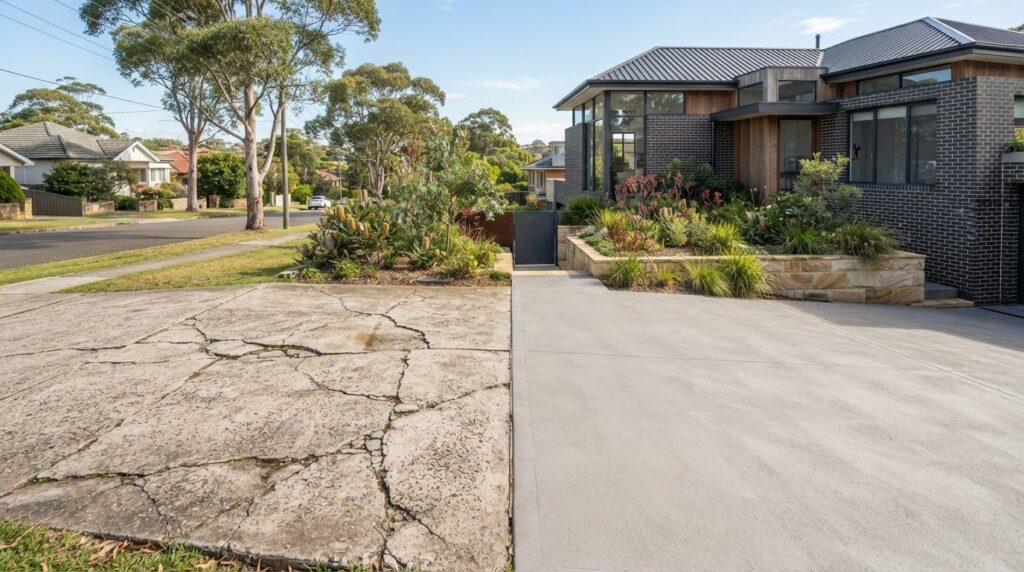
A crack on the surface may not reveal why a driveway is failing. If you’re searching for “dealing with a cracked driveway sydney”, it can be hard to tell whether a small split is harmless, getting worse or linked to movement beneath the concrete. A patch may improve the appearance, but it won’t address an underlying cause that remains unresolved.
Before choosing repair or replacement, consider the driveway as a whole. A crack’s shape, width and location can offer useful clues, but they can’t confirm the condition of the concrete base. The right approach depends on the extent of the damage and what may be contributing to it.
This guide covers common crack patterns, when a localised repair or resurfacing may be suitable, and when partial or full replacement may be more practical. It also explains how to prepare for an on-site assessment. Family-owned Inspire Concrete has more than 20 years of industry experience and helps Sydney property owners consider restoration options based on the condition of their concrete.
Key Takeaways
- A visible crack doesn’t automatically mean a driveway needs replacing. Its appearance alone can’t confirm the cause or the condition beneath the surface.
- Water movement, ground conditions, roots, vehicle loads and concrete shrinkage may all contribute to cracking.
- Compare localised repair, resurfacing and replacement by considering the damage, the concrete beneath it and whether movement is ongoing.
- If you’re dealing with a cracked driveway in Sydney, record visible changes, observe drainage and note how the driveway is used before requesting an assessment.
- A site-specific assessment can help identify likely causes and determine whether resurfacing or another approach may be suitable.
Cracked Driveway in Sydney? Start by Assessing the Damage
A visible crack doesn’t necessarily mean you need a new driveway. Some cracks affect only the surface, while others may occur alongside movement or deterioration beneath it. Treat the line as a clue, not a diagnosis: its appearance alone can’t establish the cause or the condition of the concrete base.
Look for changes and other signs around the crack. A fine surface line differs from one that appears to be widening, has loose edges or crosses an uneven section. A height difference can create a trip hazard, and water entering a crack may contribute to further deterioration. These signs warrant attention, but an appropriate site assessment is needed to evaluate the driveway’s condition.
What can a concrete driveway crack tell you?
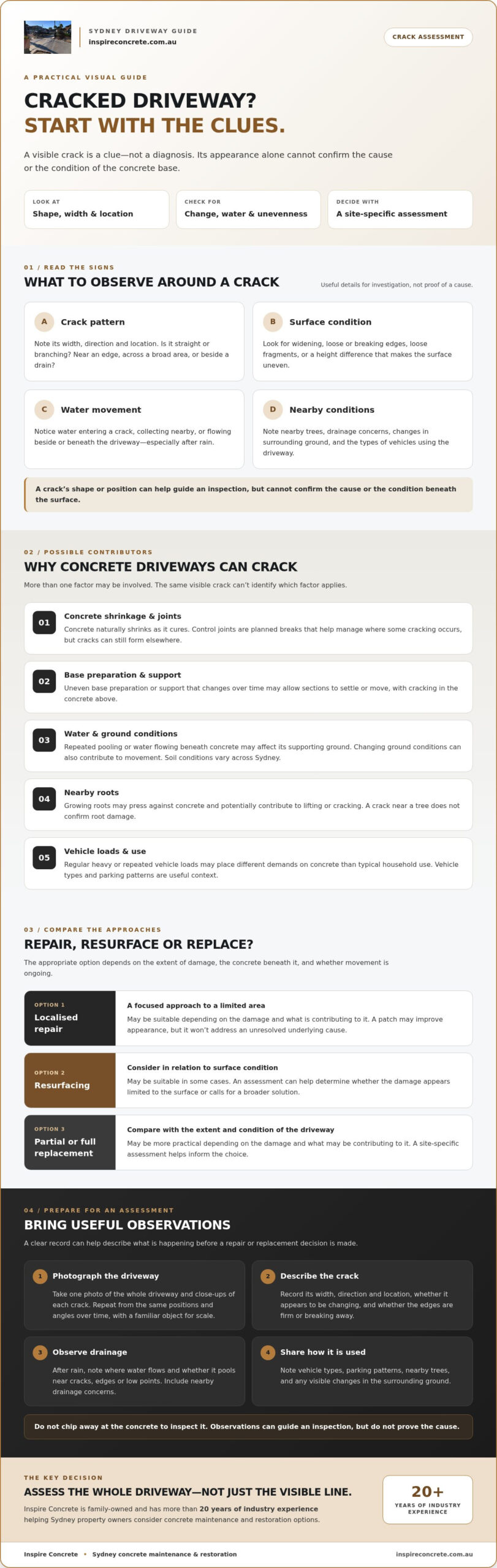
Note the crack’s width, direction and location. Is it straight or branching? Does it run near an edge, across a broad area or beside a drain? Check whether one side sits higher and whether the edges are firm or breaking away. These details can help a concreter investigate, but they don’t prove the cause. Concrete can also break down through chemical processes over time. For background, see this overview of chemical causes of concrete degradation.
Take a photo of the whole driveway, then close-ups of each crack. Repeat the photos from the same positions and angles over time, including a familiar object for scale. This makes visible changes easier to compare and helps you describe the issue. Don’t chip away at the concrete to inspect it.
When should a Sydney driveway crack be assessed?
Arrange an assessment if a crack appears to be changing, creates an uneven walking surface, sheds loose fragments or lets water collect or enter. Pooling water may point to a drainage concern. Nearby tree roots or changing ground conditions may also be relevant, but these observations don’t prove a cause or establish whether the driveway is safe or unsafe.
If you’re dealing with a cracked driveway in Sydney, record what you can observe before choosing a repair based on appearance alone. Note where water flows after rain and whether the driveway regularly carries heavier vehicles. An on-site assessment can help determine whether the damage appears limited to the surface or calls for a broader solution.
Why Concrete Driveways Crack: Ground, Water, Roots and Loads
A crack is a visible symptom, not a diagnosis. It may be related to how the concrete cured, the support beneath it, water movement, nearby roots or the loads it carries. Factors can combine, so appearance alone won’t confirm what caused the damage or whether it’s still progressing.
Concrete naturally shrinks as it cures. Control joints are planned breaks that help manage where some cracking occurs, but cracks can still form elsewhere. If the base wasn’t prepared evenly, or its support changes over time, sections may settle or move and the concrete above can crack. For general information on concrete materials and practices, consult Cement Concrete & Aggregates Australia.
How ground movement and drainage can affect a driveway
Pay attention to water. If it repeatedly collects beside a damaged area or flows beneath the driveway, it may affect the ground supporting the concrete. Changing ground conditions can also contribute to movement. Reactive clay is a possible factor at some Sydney properties, but soil conditions vary across the region, so don’t assume it’s the cause at every home.
After rain, observe where water runs and whether it pools near cracks, edges or low points. Note nearby drainage problems and changes in the surrounding ground. These details can guide an inspection, but they don’t prove the cause. A site assessment is needed to evaluate the driveway and its setting.
How roots, joints and vehicle loads contribute
Growing roots may press against concrete where they meet or pass beneath a driveway, potentially contributing to lifting or cracking. A crack near a tree is a useful detail to report, but it doesn’t confirm root damage. Similarly, a crack along a control joint may reflect movement at a planned break in the slab. Cracks elsewhere need to be considered in context.
Consider how the driveway is used. Regular heavy or repeated vehicle loads may place different demands on the concrete than typical household use. Vehicle types, parking patterns and the crack’s location are useful details to share during an assessment, along with visible water movement, possible root pressure and uneven sections.
Every Sydney property has its own conditions, so assess the driveway individually. Inspire Concrete has more than 20 years of industry experience in concrete maintenance and restoration in Sydney. To discuss the condition of your concrete and possible restoration options, learn about driveway maintenance and restoration.
Driveway Crack Repair, Resurfacing or Replacement: Compare the Options
A crack doesn’t automatically mean the whole driveway must be removed. The practical choice depends on how far the damage extends, whether the concrete and its support are stable, and whether movement is continuing. Resurfacing can renew a suitable existing surface, but it won’t resolve an unstable base or ongoing movement. The U.S. Federal Highway Administration outlines different causes of cracks in concrete, which helps explain why the visible line alone isn’t enough to select a treatment.
Use this comparison as a starting point, not a diagnosis. Disruption also depends on the affected area, site access and project scope.
| Option | Damage and substrate | Movement | Appearance and disruption |
|---|---|---|---|
| Localised repair | May suit contained damage where surrounding concrete is sound. | Ongoing movement needs investigation; a surface patch may not address it. | Targets a small area, though the finish may look different. Work is usually limited to the repair area. |
| Resurfacing | May suit surface-level wear if the existing concrete is suitable. | Unstable concrete or support can undermine the result. | Renews a broader surface; preparation and access affect disruption. |
| Partial replacement | May be considered if damage is concentrated in a section that can be replaced. | Investigate the cause first, especially if the section has shifted or failed repeatedly. | Replaces part of the driveway, and the new area may look different. Work focuses on that section. |
| Full replacement | May be considered for widespread damage or broader concrete failure. | Underlying movement or support issues still need attention in the project plan. | Creates a new driveway surface, with work across the full area and greater site disruption. |
When might a localised repair or partial replacement suit?
If the damage is contained and the surrounding concrete remains sound, a localised repair may be worth considering. Cracks that keep returning, displaced edges or an unstable section need investigation beyond covering the visible line. If one area has deteriorated but the rest of the driveway appears suitable, partial replacement may be an option after the cause and extent of the damage have been assessed.
When might resurfacing or full replacement be considered?
Resurfacing may suit a driveway if an assessment confirms the existing concrete can support a new surface. It isn’t a universal fix for deep cracking, loose sections or unresolved movement. If damage is widespread, or the concrete and its support are no longer suitable for restoration, replacement may need to be considered. The scope should be based on a project-specific assessment.
When dealing with a cracked driveway in Sydney, compare the cause and extent of the damage, not just the apparent size of a crack. Inspire Concrete provides concrete resurfacing and driveway construction in Sydney. Explore its driveway maintenance and restoration services to discuss options for your site.
How to Prepare for a Cracked Driveway Assessment in Sydney
A few careful notes can make an assessment more useful. If you’re dealing with a cracked driveway in Sydney, record what you can see and how the driveway is used, but leave diagnosis and repair decisions to an on-site assessment. Photos help explain the issue; they can’t confirm the condition beneath the concrete.
What should you document before requesting advice?
Use this simple process to build a clear picture without disturbing the driveway:
- Map the damage. Note where each crack starts and ends, its approximate length and any visible changes you’ve noticed over time.
- Check nearby conditions. After rain, observe where water flows or pools. Note nearby root growth, uneven areas or loose fragments without digging or removing concrete.
- Take consistent photos. Photograph the entire driveway, then take close-ups of the cracks. Use similar lighting and angles for future photos so changes are easier to compare.
- Describe driveway use. Note the types of vehicles that use it, access needs and whether it serves a private home or shared property. Mention when you first noticed the cracks and whether they appeared alongside visible drainage or ground changes.
Don’t chip away at the slab or attempt structural repairs to get a better look. Leaving the area undisturbed helps the concreter assess its visible condition.
What should you ask a Sydney concreter?
Ask how the recommended approach relates to the evidence on site. Useful questions include:
- What observations support the proposed repair method, and was possible underlying movement considered?
- Were localised repair, resurfacing, partial replacement and full replacement considered? Why is the recommended scope more suitable for this driveway?
- What work is included, what finish should I expect, and how will access be affected during the work?
- Are there any exclusions or site conditions that could change the proposed scope?
Clear answers help you compare recommendations on more than appearance alone. Inspire Concrete is a family-owned Sydney concreting business with more than 20 years of industry experience, providing driveway maintenance and restoration, including resurfacing. For a site-specific discussion about your concrete and possible restoration options, contact Inspire Concrete about driveway assessment.
Choose a Lasting Driveway Solution with a Sydney Concrete Specialist
Make the decision in stages: document the visible damage, investigate what may be contributing to it, then match the work to the driveway’s condition. A narrow surface crack, a loose section and widespread movement aren’t the same problem. Treating them all alike risks focusing on appearance while overlooking what the concrete needs.
For a cracked driveway in Sydney, conditions need to be considered on site. Photos and observations can start the conversation, but they can’t confirm the state of the concrete or its support. Inspire Concrete is a family-owned Sydney concreting business with more than 20 years of industry experience, offering driveway maintenance and restoration options such as cleaning, sealing and resurfacing. The suitable scope depends on the existing concrete and the cause and extent of the damage.
What a considered driveway restoration plan should cover
A useful plan should connect the proposed work to the observed condition, how the driveway is used and any contributing factors identified during assessment. Ask whether the scope involves cleaning, sealing, resurfacing or concrete replacement, and what each step is intended to address. If the support is unstable or movement remains unresolved, a surface treatment alone may not be appropriate.
Appearance matters, but it should follow a sound repair decision. If the concrete is suitable for resurfacing, discuss how the finish could complement the home and existing outdoor areas. When comparing methods, consult a concrete resurfacing guide and confirm suitability for your driveway through an on-site assessment.
When to speak with Inspire Concrete
Consider seeking advice if cracks are changing, creating access concerns or affecting the driveway’s appearance. Inspire Concrete serves Sydney Metro, including the Western Suburbs and the Blue Mountains. Check whether service is available in your suburb, then describe what you’ve observed and ask how the recommended work relates to the site. This can help clarify the options without assuming every crack calls for full replacement.
For a site-specific discussion about your driveway and suitable restoration options, Discuss your cracked driveway with Inspire Concrete.
Take the Next Step Towards a Driveway That Works
Choosing what to do with a cracked driveway starts with more than the visible line. Track any changes, consider how water, ground conditions and driveway use may contribute, then compare repair, resurfacing or replacement against the condition of the concrete and its support. If you’re dealing with a cracked driveway in Sydney, an on-site assessment can help turn your observations into a practical plan for the property.
Inspire Concrete is a family-owned and operated Sydney concreting business with more than 20 years of industry experience. Its driveway restoration services include resurfacing, cleaning and sealing. The suitable approach depends on the existing surface and the cause and extent of the damage. Ask how the proposed scope addresses conditions at your property, since no single option suits every driveway.
Ready to discuss what you’ve noticed and explore a suitable next step? Discuss your cracked driveway with Inspire Concrete. A clear assessment can help you understand the options and plan the work.
Frequently Asked Questions
Can a cracked concrete driveway be repaired, or does it need replacing?
A cracked concrete driveway may be repairable, but the right option depends on the damage and the condition of the concrete beneath it. A contained surface crack in otherwise sound concrete may call for a different approach than a displaced, unstable or widely damaged section. An on-site assessment can help determine whether localised repair, resurfacing, partial replacement or full replacement is suitable for your Sydney property.
What causes concrete driveways to crack in Sydney?
Concrete driveways in Sydney may crack for several reasons, including concrete shrinkage, uneven support beneath the slab, water movement, changing ground conditions, nearby roots and repeated vehicle loads. Reactive clay may contribute at some properties, but soil conditions vary across Sydney, so don’t assume it’s a factor everywhere. These are possible contributors, not a diagnosis. A site inspection can help identify which conditions may be relevant to your driveway.
Is it safe to drive over a cracked driveway?
A crack’s appearance alone can’t establish whether a driveway is safe to drive over. Take extra care if concrete is loose, edges sit at different heights, a section shifts or the damage affects vehicle access. Avoid loading areas that appear unstable and seek an appropriate on-site assessment. Don’t test the slab by driving over a visibly loose or displaced section, as its condition can’t be confirmed from appearance alone.
Can you resurface a cracked concrete driveway?
Resurfacing may be suitable if the existing concrete can support a new surface and the underlying cause of the damage has been considered. It isn’t a universal fix for unstable, displaced or continually moving concrete. A professional assessment can establish whether the surface is suitable or whether localised work or replacement is more appropriate. The recommendation depends on the driveway’s condition and the extent of the cracking.
How do I know if a driveway crack is getting worse?
Look for visible changes such as a crack widening or extending, loose edges or a height difference between sections. Take overview and close-up photos from the same positions and compare them over time. Note when you first noticed the crack and any changes in nearby water pooling or ground conditions. Photos document visible changes, but they can’t confirm the cause or establish the driveway’s structural condition.
Should I repair a cracked driveway before getting a quote?
Avoid patching, removing concrete or attempting structural repairs before an assessment. These changes may make it harder to understand the original condition or investigate what’s contributing to the crack. Instead, record its location, take clear photos and note drainage and driveway use, then discuss your observations with a concreter. If you’re dealing with a cracked driveway in Sydney, an on-site assessment can help clarify a suitable scope before work begins.
