
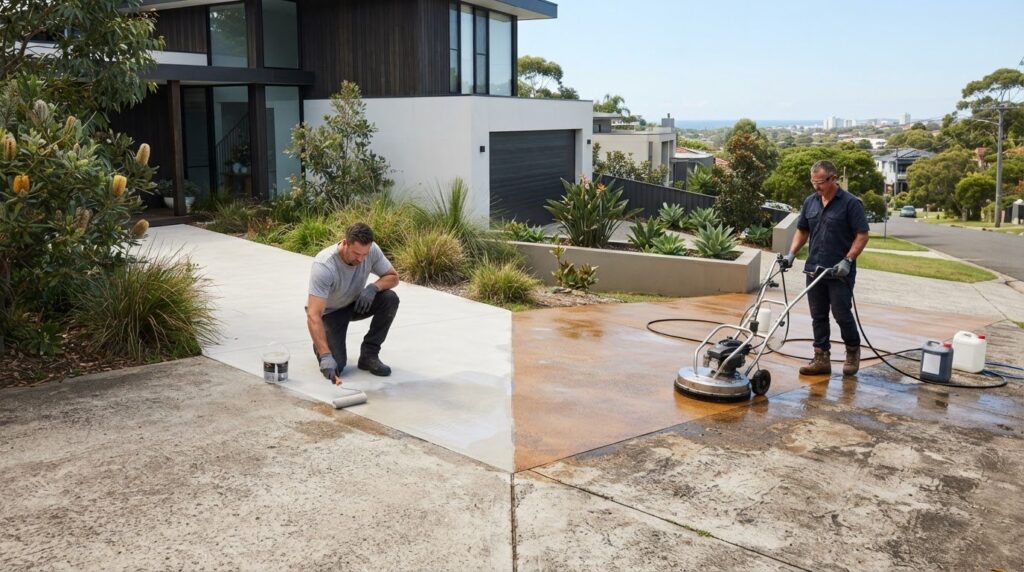
What if the hardest part of sealing concrete isn’t applying the sealer, but knowing whether the surface is ready for it? That’s the key to the DIY vs professional concrete sealing decision. A clean, sound surface may suit a careful DIY approach, while old coatings, staining or uneven concrete can make preparation and the finish less predictable.
It’s understandable to weigh the appeal of doing the job yourself against the risk of patchiness, peeling or extra work if preparation is missed. The right choice depends on more than the size of the area: surface condition, desired appearance, suitable tools and the time you can give the job all matter.
This guide compares the effort, risks and likely finish of DIY and professional sealing, so you can choose a practical approach for your Sydney property. You’ll see what preparation involves, when a surface may need more than cleaning and sealing, and how concrete resurfacing fits into the decision. Inspire Concrete provides concrete cleaning and sealing across Sydney Metro, drawing on more than 20 years of concreting experience.
Key Takeaways
- Choose between DIY vs professional concrete sealing by weighing your available time, confidence with preparation and the finish you want.
- Before sealing, assess whether the concrete needs cleaning, repairs or a more substantial treatment such as resurfacing.
- For DIY work, follow the selected sealer’s label and technical instructions for application and drying rather than relying on generic timings.
- Professional assessment and cleaning can help address surface-specific preparation needs before chemical sealing.
- If the concrete is worn or dated, consider whether resurfacing may be a better next step than sealing alone.
DIY vs Professional Concrete Sealing: What Changes the Decision?
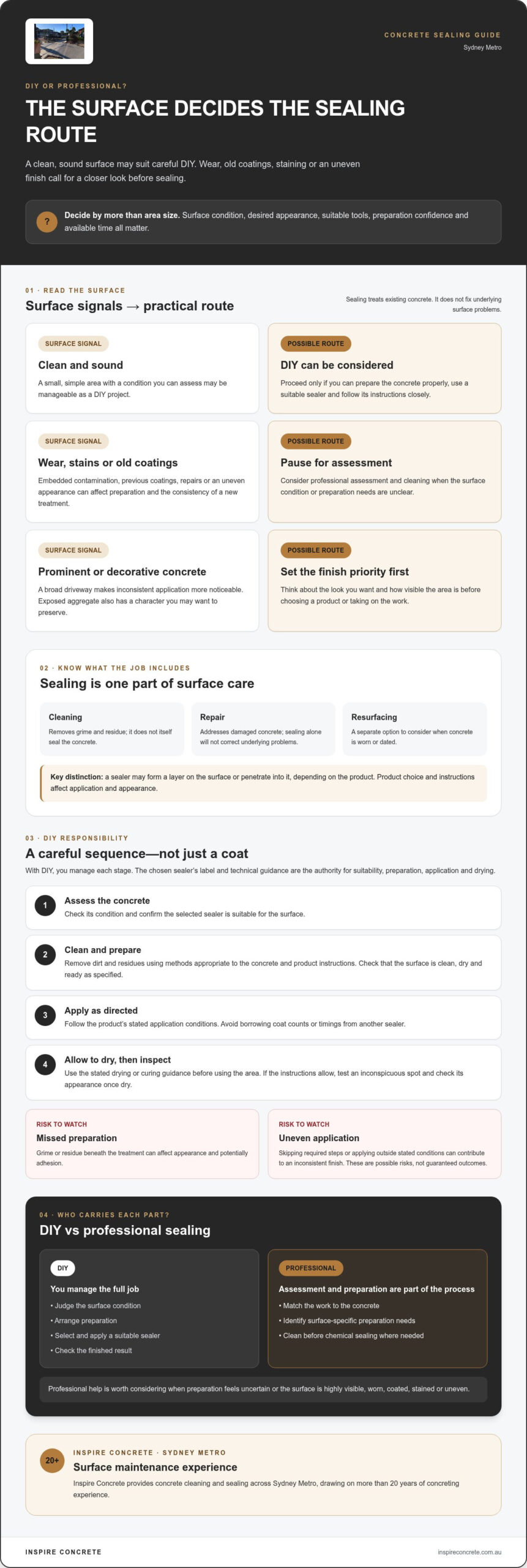
Sealing a small, clean area of concrete can be a manageable DIY project if you can identify the surface’s needs, prepare it properly and follow the sealer instructions closely. A larger or more visible surface, or one with existing wear or coatings, may call for experienced help. The right choice in DIY vs professional concrete sealing depends on the concrete’s condition and the finish you want, not on a blanket rule.
Concrete sealing means applying a suitable product to an existing surface. It isn’t the same as cleaning away grime, repairing damaged concrete or resurfacing a worn finish. Those tasks may need to happen before sealing, and sealing alone won’t correct underlying surface problems. The work involves assessment, preparation, application and a final inspection. With DIY, you’re responsible for each step; professional cleaning and sealing brings assessment and preparation into the process.
What does sealing do for an existing concrete surface?
A sealer treats concrete and can either form a layer on the surface or penetrate into it, depending on the product. The distinction matters because the product and its instructions affect application and the resulting appearance. For an overview of concrete sealers, including these broad types, see the linked reference. Always follow the chosen sealer’s label and technical guidance for the specific surface.
Finish priorities vary, too. On exposed aggregate, you may want to preserve the character of the stones. A driveway’s appearance contributes to the home’s street frontage, while an alfresco area may call for a finish that suits the surrounding space. Decide on the desired look before work begins.
Which surfaces call for more careful assessment?
Pause to assess concrete with visible wear, embedded contamination, old coatings or an uneven appearance. These conditions can affect preparation and how consistently a new treatment sits across the surface. A small, simple area is often easier to manage than a prominent driveway, where inconsistent application may be more noticeable across a broad expanse.
Decorative finishes deserve particular attention because preparation and the intended appearance need to work together. If you’re considering sealing an exposed aggregate driveway, explore this Sydney exposed aggregate driveway guide for more on the finish. Where concrete is worn or dated, cleaning and sealing may not be the only consideration. Resurfacing is a separate option to consider for the surface itself.
DIY Concrete Sealing: Preparation, Application and Common Risks
A DIY sealing job is a sequence, not just a coat of product. First assess the concrete and check that the selected sealer is suitable. Then clean the surface, complete any preparation the product requires, apply it as directed and allow the stated drying or curing time before using the area. The product label and technical instructions are the authority for application conditions, coverage and timing. Generic advice may not suit your sealer or surface.
Preparation gives sealer a sound, even surface to work with. Rushing this stage can leave grime or residue beneath the treatment, affecting its appearance and potentially how well it adheres. A preparation mistake won’t always cause failure, but it can make the result less consistent or create problems that could have been avoided.
What preparation does a DIY sealing job involve?
Start by checking whether the concrete is clean, dry and compatible with the chosen product. Remove dirt and surface residues using methods appropriate to the concrete and sealer instructions, then allow the surface to dry as specified. Don’t assume a surface that looks clean is ready to coat. Follow the manufacturer’s preparation guidance.
Look closely for previous coatings, repairs and contamination. Old coatings may affect whether a new product can be applied as intended, while repaired or stained areas can respond differently from the surrounding concrete. If the surface condition is unclear, professional high-pressure cleaning and assessment can help identify preparation needs before chemical sealing. Inspire Concrete brings more than 20 years of concreting experience to its surface maintenance work.
What DIY application mistakes can affect the finish?
Uneven coverage, applying outside the product’s stated conditions or skipping a required preparation step can contribute to an inconsistent appearance or other application issues. A sealer may also make the surface look different from what you expected. These are possible risks, not guaranteed outcomes. If the instructions allow it, test a small, inconspicuous area and check the appearance once it has dried as directed before proceeding across a prominent surface.
Work methodically and follow the product’s instructions for application and drying. Avoid improvising coat numbers or timing based on another sealer’s directions. Uneven application can be more noticeable on a driveway, pathway or entertaining area, so consider the surface’s visibility as well as its size when deciding whether to take on the job.
If preparation feels uncertain, concrete cleaning and sealing is a practical next step for your surface.
Professional Concrete Sealing Compared with DIY
With DIY, you manage the full job: judging the surface, arranging preparation, selecting and applying a suitable sealer, and checking the finished result. Professional concrete sealing shifts much of that responsibility to an experienced team. The value is not simply in applying a product. It’s in matching the work to the concrete, preparing it carefully and managing the application as one coordinated process.
The comparison below shows where the approaches differ. Neither is automatically right for every property. Surface condition, access, visibility and your finish expectations all affect how demanding the job will be.
| Consideration | DIY | Professional |
|---|---|---|
| Preparation | You assess, clean and prepare the concrete, including identifying old coatings or contamination. | Assessment and preparation can be managed as part of the sealing work. |
| Equipment | You source and operate the tools needed for cleaning and application. | The work is planned around the surface and its preparation requirements. |
| Application control | You follow the product instructions and work to achieve consistent coverage. | An experienced team manages preparation and application as connected stages. |
| Suitability | Often more manageable for a simple, sound surface and a modest finish expectation. | May suit complex, worn or highly visible surfaces where preparation and appearance need closer attention. |
What can professional sealing bring to a concrete project?
Professional work starts with the surface, not a one-size-fits-all application. Inspire Concrete provides high-pressure cleaning and chemical sealing, with the process shaped around the concrete’s condition and the project’s requirements. For example, a driveway with built-up grime may need a different preparation approach from a relatively clean entertaining area. More than 20 years of industry experience informs this practical, surface-focused work.
When may sealing be only one part of the solution?
Sealing can treat a surface, but it doesn’t rebuild worn concrete or correct structural defects. If the surface is visibly damaged, deteriorated or dated, assess its condition before deciding whether sealing is appropriate. Resurfacing is a distinct treatment that can address the appearance of worn concrete; it isn’t the same as applying a sealer. Read the Sydney concrete resurfacing guide to understand how the options differ.
The practical choice in DIY vs professional concrete sealing comes down to what your surface needs. A straightforward area may be within reach if you can prepare and apply the sealer carefully. Where the condition, finish or preparation is less clear, professional assessment can help bring the stages together.
How to Decide Whether to Seal Concrete Yourself
Use a simple sequence before you buy a sealer or start cleaning. Identify the concrete and its condition, consider the size and visibility of the area, then compare the finish you want with the preparation and application you can manage. If cracks, deterioration, persistent staining or an existing coating make the surface hard to assess, pause before sealing. A coating can change the appearance, but it won’t fix underlying damage.
A simple surface and project assessment
Begin with the surface itself. Is it plain concrete, exposed aggregate or another finish? Is it sound and consistently clean, or does it have worn patches, repairs or a previous coating? Then consider the area you’ll cover, whether access is straightforward and how noticeable the finished surface will be. A small, unobstructed area may be manageable; a prominent driveway leaves less room for visible inconsistency.
- Surface: Identify the concrete type and any existing coating or repair.
- Condition: Look for cracks, wear, persistent stains or uneven areas that need assessment.
- Scale and access: Decide whether you can prepare and coat the whole area consistently.
- Finish: Be clear about the appearance you want, then check that the selected sealer is suitable.
Before starting, read the sealer’s label and technical instructions. Confirm the specified preparation, application method and suitable conditions for the work. Don’t rely on generic drying times or instructions for a different product. If the surface needs extensive cleaning or preparation beyond the tools and experience you have, reconsider whether DIY is the right approach.
When does professional help make practical sense?
Professional help may be a sensible choice for a large, highly visible or complex surface, especially when the concrete is uneven in condition or the preparation requirements are unclear. If contamination, coatings or repairs make it difficult to judge whether the surface is ready, the chance of an unsatisfactory finish can increase. A careful assessment helps determine whether cleaning and sealing suit the surface or whether another treatment deserves consideration.
For more guidance on engaging concreting expertise in Sydney, read this guide to hiring professional concreters in Sydney. For experienced help with your surface, explore Inspire Concrete’s cleaning and sealing service.
Professional Concrete Cleaning and Sealing in Sydney: What Happens Next?
Once you’ve weighed up DIY vs professional concrete sealing, match the work to your surface. Inspire Concrete approaches existing concrete by considering its condition and preparation needs before sealing. That means looking beyond the final coat: the right process depends on the surface, its current state and the appearance you want for the finished area.
How professional cleaning and sealing fit together
High-pressure cleaning can be part of preparation where it’s appropriate for the concrete. It helps address surface dirt and build-up before chemical sealing is considered as a separate stage. Cleaning isn’t a substitute for repairs, and sealing won’t correct underlying damage, so assess the surface as a whole. Preparation and finish are tailored to the project rather than assumed to be the same for every driveway, pathway or entertaining area.
Inspire Concrete provides concrete cleaning and sealing across Sydney Metro, including the Western Suburbs and Blue Mountains. As a family-owned Sydney concreting business with more than 20 years of industry experience, the team takes a practical, surface-focused approach to residential and commercial concrete. For worn or dated concrete, resurfacing is a separate consideration if cleaning and sealing alone don’t suit the surface condition.
Choose a next step for your concrete surface
A small, sound area may be suitable for DIY if you can handle the preparation, choose a compatible sealer and follow its instructions closely. Professional help can make practical sense for a large or prominent surface, uneven condition, old coatings or preparation that’s difficult to judge. First be clear about what the concrete needs, then decide how to treat it.
To discuss your project, describe the surface type, its condition and any visible staining, wear, repairs or previous coating. Include the area’s intended use and the finish you have in mind. These details help frame the conversation around your concrete’s needs.
Discuss your concrete cleaning and sealing project with Inspire Concrete.
Choose the Right Finish for Your Concrete
The choice between DIY vs professional concrete sealing comes down to the surface, the preparation it needs and the finish you’re aiming for. A clean, sound area may be manageable as a DIY project if you can follow the sealer’s instructions carefully. For larger, prominent or uneven surfaces, professional assessment and preparation can help clarify the right next step.
Remember that sealing isn’t a substitute for cleaning, repairs or resurfacing. If the concrete is worn, stained or coated, assess its condition before deciding how to treat it. Careful preparation is central to achieving a considered finish.
Inspire Concrete is a family-owned and operated Sydney concreting business with over 20 years of industry experience. Its concrete cleaning and sealing services include high-pressure cleaning and chemical sealing, with work tailored to the surface and project. Service coverage includes Sydney Metro, the Western Suburbs and Blue Mountains.
Share what type of concrete you have, its condition and the result you’d like to achieve. Discuss your concrete cleaning and sealing project with Inspire Concrete and take the next step towards a well-considered surface.
Frequently Asked Questions
Can I seal concrete myself?
Yes, DIY sealing can suit a small, sound surface if you can prepare it properly and follow the sealer’s instructions. First check for old coatings, stains, damage and signs of moisture, as these can affect product suitability and the finished appearance. Consider the area’s size and visibility, too. If you’re unsure whether the concrete is ready or which preparation it needs, professional assessment can help clarify a practical next step.
Is professional concrete sealing worth it?
Professional sealing may be worthwhile for a large, prominent, uneven or difficult-to-prepare surface. The work involves more than applying a coating: assessment and preparation also influence the finish. A professional service can manage those stages as part of the project, which may suit homeowners short on time or unsure how to prepare the concrete. For Sydney properties, the choice depends on surface condition, your desired finish and the work you’re comfortable undertaking.
What happens if concrete is sealed before it is properly cleaned?
Applying sealer over dirt, residue or an existing coating can affect how the treatment looks or performs. You may end up with an uneven finish or a result that doesn’t match your expectations, although the outcome depends on the surface and product. Preparation methods aren’t universal, so assess the concrete and follow the selected sealer manufacturer’s instructions. If contaminants or old coatings are difficult to identify or remove, have the surface assessed before proceeding.
How do I prepare concrete before applying sealer?
Start by identifying the concrete type and checking for dirt, stains, damage and previous coatings. Then follow the sealer manufacturer’s instructions for cleaning, preparation and suitable application conditions. Allow the surface to dry as directed, rather than relying on generic drying or curing times, which can vary by product and conditions. If the concrete has complex wear, persistent contamination or an old coating, professional assessment can help determine the appropriate preparation.
Can I seal exposed aggregate concrete myself?
It may be possible to seal exposed aggregate yourself, provided the concrete is suitable and you can apply the chosen product as instructed. Its distinctive appearance makes product compatibility and consistent application important to the final look. Check the surface condition first, and consider testing a small, inconspicuous area if the product guidance allows it. A large, worn or previously coated driveway may need professional cleaning and sealing for more considered preparation.
How often should concrete be resealed?
There isn’t one resealing interval that suits every concrete surface. The appropriate timing depends on the sealer, the surface’s exposure and traffic, and the condition of the existing finish. Check the manufacturer’s care guidance and inspect the concrete for changes rather than following a fixed timetable. If the coating appears worn or uneven, assess the surface before adding another layer. Applying sealer over an unsuitable or poorly prepared finish may affect the result.
Can concrete be sealed if it is cracked or worn?
Concrete can sometimes be sealed when it shows wear, but sealing shouldn’t be treated as a repair for structural cracks or deteriorated concrete. Assess the condition first, since the surface may need a different treatment before sealing is considered. Minor marks and deeper damage aren’t the same. For worn or dated concrete, Inspire Concrete provides resurfacing as a separate option to consider alongside cleaning and sealing for Sydney residential and commercial surfaces.
