
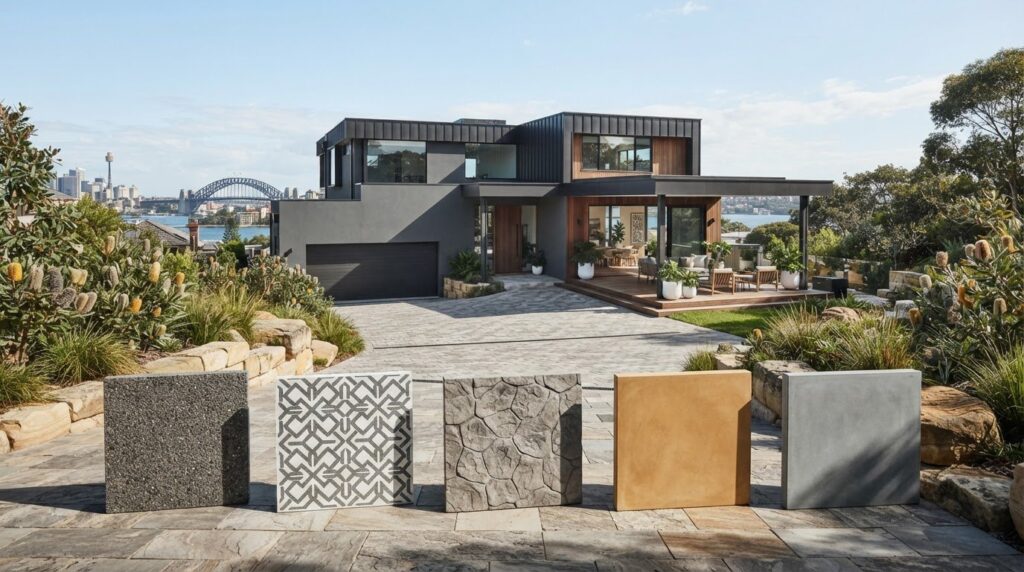
What if the most striking concrete pattern isn’t the right one for your home? It’s easy to focus on colour or appearance when picturing a finish across a large driveway or outdoor area. But knowing how to choose a concrete pattern means balancing the look you want with the space’s purpose, everyday access and site conditions.
The right finish should suit your property and the way you use the space. A driveway has different practical needs from a pool surround or alfresco area, so a design choice needs to work beyond the sample. Scale matters too: a texture or pattern that looks subtle up close may have a stronger effect across a broad surface.
This guide compares exposed aggregate, stencil, stamped, coloured and plain concrete, then helps you narrow down options for your project. You’ll learn what to consider about your home’s style, intended use and maintenance preferences, and what details to bring to a design discussion. Sydney-based Inspire Concrete brings design, construction and project management together to help connect the finish with the site and its intended use.
Key Takeaways
- Learn how to choose a concrete pattern by matching the finish to your property’s style, the area’s function and the site’s practical needs.
- Compare exposed, stencil, stamped, coloured and plain concrete to identify visual directions worth exploring for your project.
- Consider how pattern scale reads across the full surface, since a design can feel different on a narrow pathway than on a broad driveway.
- Use a step-by-step shortlist to organise your priorities and prepare useful details for a project design discussion.
- See how drafting and project management can connect your preferred appearance with the wider design and construction plan.
How to Choose a Concrete Pattern That Fits Your Project
A concrete pattern describes the surface’s appearance, including its texture, colour treatment or decorative design. It’s separate from the shape of the area itself. For example, you might choose a finish for a driveway, then decide its width, curve and connection to the street as part of the broader design.
A good choice balances your home’s style with the area’s purpose, the site conditions and the level of care you prefer. A finish that looks striking in a small sample may read differently across a broad driveway. Likewise, a highly detailed design may not suit every part of a busy outdoor space. This guide focuses on decorative choices for driveways and outdoor concrete, rather than installation methods or pricing.
What does “concrete pattern” mean?
Think of the finish in three parts: texture, colour and motif. Exposed aggregate reveals stone at the surface, creating a visibly textured appearance. Stencil concrete uses a stencil to create a repeated design, while stamped concrete presses a design into the surface to create an impression. Stamped concrete techniques offer an overview of how impressions create decorative effects.
Colour can contribute to a design, but it isn’t a pattern by itself. Plain concrete can also be a deliberate choice: its restrained appearance may suit a home where simplicity and a clean visual line matter more than a decorative motif.
Start with the area, not a sample image
First, define the space: are you planning a driveway, pathway, alfresco area or pool surround? Each has a different role, and that should guide the finishes you consider. Then look at the area’s size and visibility. Fine detail may feel busy across a large surface, while a broad, simple design could lose impact on a narrow path.
Consider how the concrete will connect to the home and nearby outdoor spaces. The façade, entry and transition from indoors can all influence whether a finish feels cohesive or competes with the architecture. A useful pattern suits both the property and the way you intend to use the space.
That’s the starting point for how to choose a concrete pattern: define what the surface needs to do before settling on how it should look. With the function, setting and maintenance preferences in view, you can compare finishes as part of a considered design-and-build decision, rather than treating the choice as a colour selection alone.
Which Factors Matter Most When Choosing a Concrete Finish?
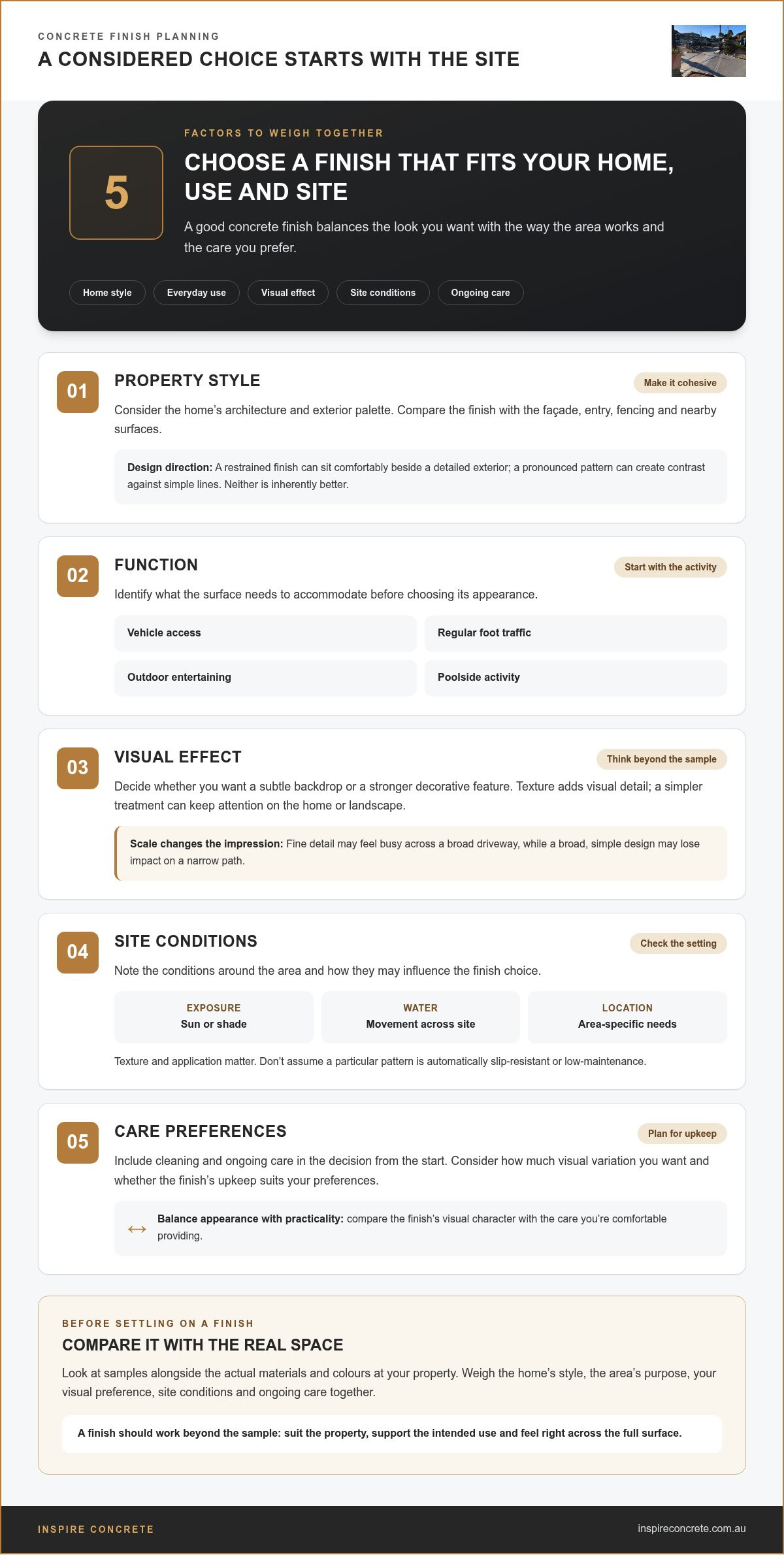
A finish needs to look right, suit its use and work with the site. To make a considered choice, weigh five factors together: your home’s style, how the area will be used, the visual effect you prefer, site conditions and the care you’re comfortable providing. No decorative finish is automatically right for every project.
Match the finish to your home and landscape
Start with the home’s architecture and exterior palette. Look at the colours and textures of the façade, entry, fencing and nearby surfaces. A restrained finish can sit comfortably beside a detailed exterior, while a pronounced pattern may create deliberate contrast against simple lines. Neither approach is inherently better; the aim is a cohesive result.
Compare samples with the actual materials and colours at your property, rather than relying on a small image viewed on its own. Pattern scale matters as well. Fine details can feel busy across a broad driveway, while the same design may look more balanced in a compact area. On a narrow pathway, a large-scale motif can have a different visual weight than it does across a wide surface.
Plan around use, exposure and maintenance
Think about what the surface needs to accommodate. Vehicle access, regular foot traffic, outdoor entertaining and poolside use all raise different practical considerations. Note whether the area is exposed to sun or often shaded, how water moves across the site, and whether the finish’s texture and upkeep suit its location. Don’t assume a particular pattern is automatically slip-resistant or low-maintenance; the finish and its application matter.
Include care preferences in the decision from the start. Consider the cleaning and ongoing care associated with your preferred finish, as well as how much visual variation you want. Texture can create a more detailed appearance, while a simpler treatment can keep attention on the home or surrounding landscape.
- Property style: Does the finish complement the home’s lines, colours and neighbouring materials?
- Function: Is the surface for cars, walking, entertaining or poolside activity?
- Visual preference: Do you want a subtle backdrop or a stronger decorative feature?
- Site and care: How do exposure, drainage and maintenance preferences affect the choice?
These practical questions help you decide how to choose a concrete pattern. Bringing them into the design discussion connects appearance with everyday use. For a project where both need to align, concrete design and project planning can help turn your priorities into a considered brief.
Concrete Pattern Options Compared: Exposed, Stencil, Stamped, Coloured, and Plain
Each finish creates a different visual effect. Compare its surface character with the look you want and the practical questions relevant to your driveway or outdoor area. Use the table as a starting point, then consider how each option fits your specific project.
| Finish | Visual character | Design goal | Consider |
|---|---|---|---|
| Exposed aggregate | Visible stone gives the surface a distinct, textured appearance. | Add natural-looking texture and visual variation. | How does the visible aggregate sit with the home’s exterior and the area’s use? |
| Stencil | A stencil creates a defined, repeating surface design. | Introduce a decorative motif with a structured look. | Does the pattern scale suit the full surface? |
| Stamped | A design is pressed into the concrete to create an imprinted effect. | Give the surface a more pronounced patterned appearance. | Will the impression complement nearby materials? |
| Coloured | Colour becomes a key part of the finished surface. | Coordinate concrete with the home’s exterior palette. | How does the colour look beside the actual façade and adjoining surfaces? |
| Plain | A restrained, uncomplicated concrete finish. | Keep the surface understated and let other features lead. | Does a simple look suit the property and your design intent? |
When does exposed aggregate suit the brief?
Exposed aggregate makes the stone within the surface part of the design, creating visible texture rather than a uniform appearance. Its overall look depends on the aggregate you see, so consider how it relates to your home’s exterior and the intended use of the driveway or outdoor area. For a closer look at this option, read Exposed Aggregate Driveways Sydney: The Ultimate 2026 Homeowner’s Guide.
How do stencil, stamped, coloured, and plain finishes differ?
Stencil and stamped concrete are both decorative, but they create their effects differently: stencil shapes a design across the surface, while stamping presses an impression into it. They aren’t interchangeable descriptions. Coloured concrete makes colour a key part of the appearance, while plain concrete keeps the finish deliberately simple. Explore Stencil Concrete Driveways: Top Patterns for Sydney Homes for stencil examples, and Coloured Concrete Driveways: A Sydney Colour Chart for colour guidance.
As you decide how to choose a concrete pattern, compare each finish across the whole area, not just in isolation. Consider how texture, colour and design will look alongside the home, and whether the effect suits the surface’s purpose. A clear shortlist makes it easier to discuss the right direction for your project.
How to Shortlist a Concrete Pattern: A Step-by-Step Process
A clear shortlist turns inspiration into a practical design brief. Use these steps to ground your preferred look in the area’s purpose, access needs and setting before discussing your project.
- Define the area and its job. Note whether you’re planning a driveway, pathway, alfresco area or pool surround. Describe how people or vehicles will use it, how they’ll access it, and how it connects with nearby outdoor spaces.
- Write down site considerations. Describe the area and relevant conditions, such as shade, sun exposure, drainage, nearby edges and transitions. These details help make the finish discussion specific to your property.
- Collect references with a reason. Save images that appeal to you, then identify what you like in each: the colour, visible texture, repeated motif or overall level of contrast. This is more useful than relying on an image alone to describe the look you want.
- Set your practical preferences. Note how much cleaning and ongoing care you’re comfortable with, and whether you want the concrete to blend in or make a stronger visual statement.
- Narrow the visual direction. Compare finish categories against your brief. Keep a focused shortlist and note what each option contributes to the design, rather than choosing solely by name or trend.
- Review samples in context. View samples alongside your home’s exterior materials, nearby surfaces and landscaping. Consider the light where the concrete will sit and how the finish reads across an area similar in scale to your project. Small screen images can’t reliably show the full effect.
Build a useful design brief
Bring together the area’s function, size, access requirements and relationship to adjoining spaces. Add reference images, the qualities you’re drawn to, and practical preferences such as cleaning expectations and desired contrast. This gives the design discussion a clear starting point and connects the appearance you want with the project’s real conditions.
Compare options against the actual property
Start with use, then consider style and review the shortlist against the site. A finish that looks appealing in isolation may feel different beside your façade or across the full surface. Looking at those details together helps refine the choice into a design that suits the property.
Bring your shortlist and project vision to discuss your concrete project with Inspire Concrete. The team’s design, architectural drafting and project management support can help connect your brief with project planning.
Bring Your Concrete Pattern from Inspiration to a Finished Project
A preferred finish is one part of a complete concrete project. It needs to work alongside the area’s dimensions, intended use, access, site conditions and connection to the home. A clear brief helps bring those elements together, so the chosen look is considered as part of the design and construction scope, not as a last-minute colour decision.
Turn your shortlist into a project brief
Gather your preferred finish direction and reference images, then note what you want the space to achieve. Include how it will be used, how people or vehicles will reach it, and what surrounds it. If a reference catches your eye, explain whether it’s the colour, texture, motif or overall feel you want to carry into the design.
Inspire Concrete’s design and architectural drafting support can help translate your vision and requirements into project planning. For a driveway, the brief can consider how the selected finish relates to the driveway’s shape, access and connection to the home. For a pathway, alfresco area or pool surround, the design should reflect that space’s role and relationship with the rest of the property.
For more context on planning a driveway, read The Ultimate Guide to Concrete Driveways in Sydney: 2026 Homeowner’s Edition.
Plan the next step with Inspire Concrete
Inspire Concrete works with residential and commercial clients across Sydney Metro, including Western Sydney and the Blue Mountains. The family-owned business brings design, construction and project management together to help connect a project brief with its planned scope.
Before a project discussion, gather your shortlist, reference images, intended use and any key site details. You don’t need every design decision finalised. A clear sense of what matters most gives the planning conversation a practical starting point, whether you’re considering a driveway, pathway, alfresco area or pool surround.
Choosing how to choose a concrete pattern is ultimately about matching the finish to the property and the way the space needs to work. Share your concrete project vision with Inspire Concrete to explore a solution tailored to your home and site.
Bring Your Concrete Design to Life
The right concrete finish balances your home’s character with the surface’s purpose, site conditions and care requirements. Compare exposed, stencil, stamped, coloured and plain options, then consider how each will look across the full area, not just in a sample. A shortlist based on your project’s use and setting makes the design discussion more focused.
That’s the practical approach to how to choose a concrete pattern: begin with what the space needs to do, then refine the visual direction to suit your property. Your preferred finish becomes part of a wider plan for the concrete area, from design through to construction.
Inspire Concrete is a family-owned Sydney business led by licensed concreters. The team brings experience in residential and commercial concrete projects, with architectural drafting and project management support to connect your brief with project planning.
Share your concrete project vision with Inspire Concrete and explore a solution tailored to your home and site. A considered finish can make everyday concrete a cohesive part of your property.
Frequently Asked Questions
What is the difference between a concrete pattern and a concrete finish?
A concrete pattern describes the surface’s visual design, while a finish is the broader treatment that gives it its appearance and texture. For example, exposed aggregate reveals stone at the surface; stencil and stamped concrete use different methods to create decorative designs. Colour may also shape the finish, while plain concrete offers a restrained look. In everyday conversation, people sometimes use “pattern” and “finish” interchangeably.
Which concrete pattern is best for a driveway?
There’s no single best pattern for every driveway. The right option depends on how the driveway will be used, your home’s exterior, the site and the look you prefer. Exposed aggregate brings visible stone texture, while stencil and stamped concrete create distinct decorative effects. Coloured or plain concrete may suit a simpler visual direction. To decide how to choose a concrete pattern, compare options in context and consider the whole driveway, not just a small sample.
Is exposed aggregate a good choice for outdoor concrete?
Exposed aggregate can be a good visual choice for outdoor concrete if you like visible stone texture and variation. It’s used for applications such as driveways and can also be considered for other outdoor areas. Compare its appearance with your home’s exterior and the intended use of the space. The result depends on the project, so don’t assume every exposed aggregate surface will look or perform the same way.
Can concrete be patterned to suit the style of my home?
Yes, you can select a concrete finish to complement your home’s architectural character and exterior materials. A subtle surface may sit comfortably beside a detailed façade, while a more pronounced design can create contrast against simpler lines. Look at samples alongside your actual exterior colours, nearby paving and other materials. Also consider how the pattern will read across the full area, since scale can change its visual impact.
How do I choose between stencil and stamped concrete?
Compare how each decorative approach creates its effect. Stencil concrete uses a stencil to form a defined surface design, while stamped concrete presses a design into the concrete to create an impression. They can produce different visual characters, so don’t treat the terms as interchangeable. Consider the appearance you prefer, how the pattern will look at the project’s scale and how it relates to the home’s exterior.
Does a decorative concrete pattern need more maintenance than plain concrete?
Maintenance depends on the selected finish, its application and the way the area is used, so a decorative pattern isn’t automatically harder to care for than plain concrete. Before choosing, consider your cleaning preferences and any ongoing care associated with the finish. Include how the surface should be looked after in your project planning, and weigh that against the visual effect you want. Care needs can differ between finishes and projects.
Can I use the same concrete pattern for my driveway and alfresco area?
You can carry a consistent finish direction across both areas to create a visual connection, but the same pattern may not suit each space in exactly the same way. A driveway has vehicle access needs, while an alfresco area is shaped by how you entertain and move between indoor and outdoor spaces. Consider whether the pattern’s scale, texture and overall appearance work for both applications, and tailor the design to each area where needed.
