
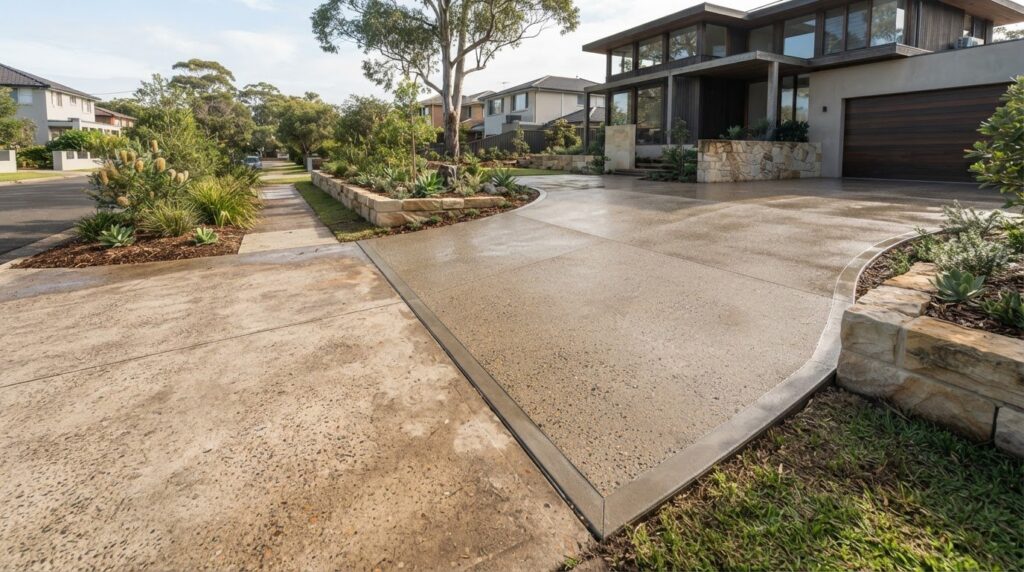
A perfect colour match between new and old concrete is rarely guaranteed. If you’re wondering how to match new concrete with old, the most reliable approach is to plan the transition rather than expect a fresh pour to look identical to a weathered surface.
A new section can stand out like an obvious patch because the original mix, aggregate, exposure to weather, curing conditions and surface texture all affect the finished appearance. Some factors can be managed through careful mix and finish selection. The age of existing concrete, however, can’t simply be recreated in a new pour.
This guide explains what influences colour and texture, which matching options are realistic, and how to choose between an extension, resurfacing or replacement. You’ll see how each approach can create a cleaner, more deliberate transition, and why the condition of the existing slab matters. Inspire Concrete helps Sydney property owners plan concrete installation and restoration with durability and finish in mind.
Key Takeaways
- Matching new concrete to old means coordinating colour, texture and finish, not promising an identical result.
- Mix choices, aggregate, finishing and years of exposure all shape the difference between surfaces.
- Compare a direct extension, separated pour, resurfacing and replacement against the condition of your existing concrete.
- For how to match new concrete with old, document the surface and compare it in consistent lighting before settling on a transition.
- Considered planning, concrete installation and resurfacing can help create a more unified, durable finish.
How to Match New Concrete with Old: Set Realistic Expectations
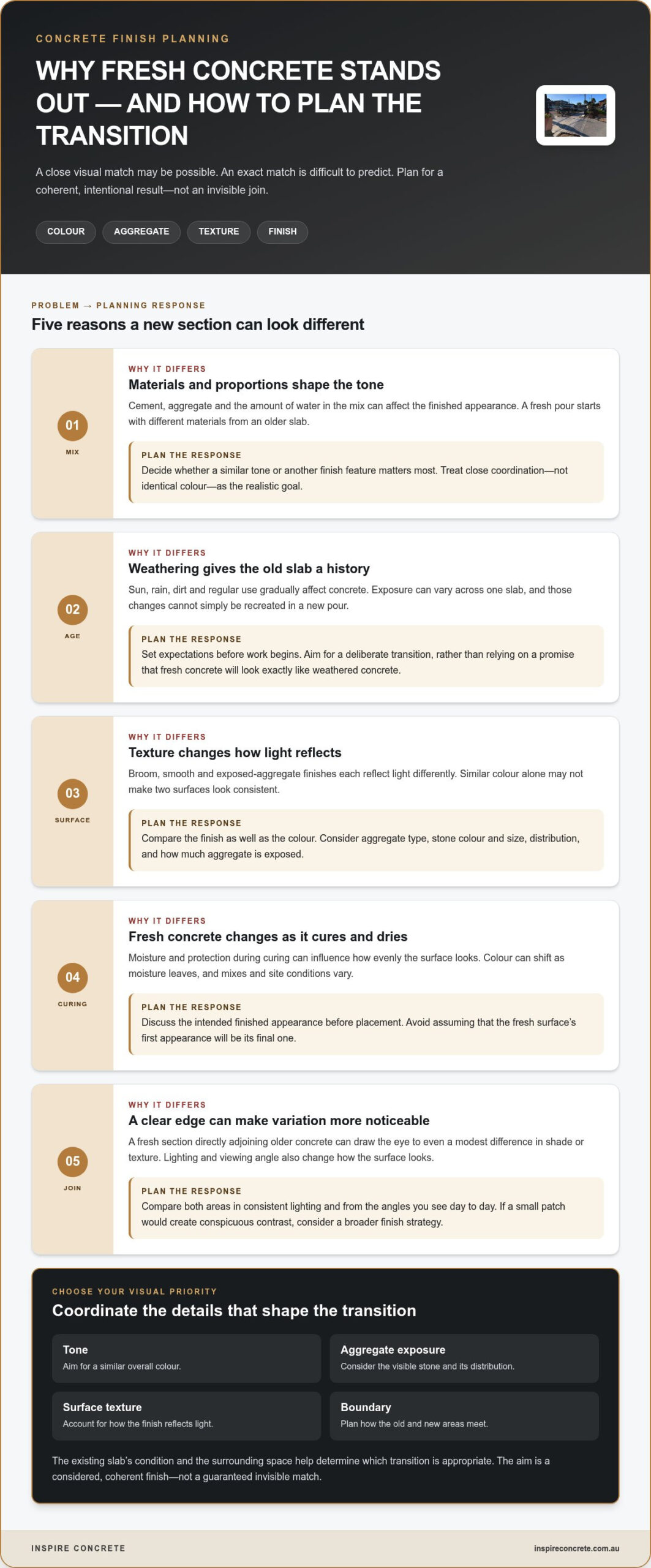
An exact match is difficult because existing concrete has aged, while a new pour starts with a different mix and a fresh surface. In practice, how to match new concrete with old means coordinating colour, texture, aggregate exposure and finish, then planning how the two areas meet. The goal is usually a coherent, intentional result, not an invisible join. Concrete’s appearance is part of its design: Architectural concrete describes how finish and surface treatment contribute to the visual character of a structure.
Fresh concrete and weathered concrete commonly differ because their materials, curing conditions and exposure histories are different. Set expectations about the overall transition before work begins. Focus on the appearance you want rather than relying on a promise of identical colour or texture.
Can new concrete ever look exactly like old concrete?
A close visual match may be possible, but an exact one is difficult to predict. Fresh concrete changes in appearance as it cures and dries, and its colour can shift as moisture leaves the surface. After placement, exposure to sun, rain, dirt and regular use gradually affects its appearance too. Existing concrete has already been through those changes, often unevenly across the slab.
Discuss the intended finished appearance before work starts. Decide what matters most: a similar tone, matching aggregate exposure, consistent surface texture, or a deliberate boundary between the areas.
Why a new concrete patch can stand out
Visible variation can come from differences in cement and aggregate, the amount of water in the mix, and how the surface is finished. Even with a carefully planned pour, a new section won’t share the old slab’s curing and exposure history. A broom finish, smooth finish or exposed aggregate surface each reflects light differently, so matching colour alone may not make two areas look consistent.
Edges draw the eye. A modest difference in shade or texture can appear stronger where fresh concrete directly adjoins an older surface, especially across a driveway or pathway with a clear, straight joint. Lighting matters too: direct sun, shade and viewing angle can change how the surface looks. Compare the areas in consistent lighting and from the angles you’ll see them day to day, not only up close.
A successful result starts with choosing a realistic priority. If the existing slab is sound and some variation is acceptable, a close match may suit the project. If a small patch would create a conspicuous contrast, a broader finish strategy may look more deliberate. The right decision depends on the surface condition and how the new work fits into the surrounding space.
What Makes New Concrete Look Different from Old Concrete?
A concrete surface gets its appearance from what’s in the mix and what happens during placement, curing and use. A fresh pour can differ from an adjoining slab even when the intended finish is similar. To work out how to match new concrete with old, identify which differences come from the original materials and workmanship, and which have developed over time.
Concrete appearance is shaped by cement and water proportions, aggregate type and exposure, finishing technique, curing conditions, weathering and any surface treatment. The Design and Control of Concrete Mixtures guide from the Portland Cement Association explains how mix components contribute to concrete properties.
How age, curing, and weathering affect concrete colour
Curing is part of how fresh concrete develops. Moisture conditions and how the slab is protected during curing can influence how evenly the surface looks. There is no uniform colour timeline because mixes and site conditions vary. Older concrete may also have changed through sunlight, dirt, foot or vehicle traffic, and previous sealing. These influences can leave different tones across the same slab.
In Sydney, sun, rain and shaded sections expose different parts of a surface to different conditions. A covered alfresco area, for example, may weather differently from an exposed driveway. That history is difficult to reproduce in a new pour.
How aggregate, texture, and sealer change the finish
Finish affects more than texture. Smooth plain concrete reflects light differently from exposed aggregate, where visible stones add variation. Coloured concrete introduces pigment into the mix, while stamped or stencil finishes create patterns and texture on the surface. For a convincing transition, consider the type of finish and the character of the aggregate as well as colour.
Aggregate size, colour, distribution and degree of exposure all influence how continuous two sections appear. Even similar aggregate can look different if one surface reveals more stone than the other. Existing sealers or coatings matter too: they can change sheen and apparent colour, so an untreated new pour may contrast with a sealed old surface.
Before choosing a finish, assess the existing concrete as it is, including coatings and areas of wear. Inspire Concrete provides concrete cleaning and sealing, which can inform the condition and appearance of an existing surface. Installation and resurfacing planning can bring the old surface and proposed finish into the same conversation. Explore concrete installation and resurfacing options to understand how the work can be planned together.
Should You Extend, Resurface, or Replace Concrete to Match It?
The best way to manage a visible transition depends on more than colour. Check the existing concrete’s condition, signs of deterioration, and how water drains across the area. A finish strategy won’t solve an unstable base or poor drainage, so these practical issues should guide the choice alongside appearance.
| Approach | Best suited to | Likely transition | Project scope |
|---|---|---|---|
| Direct extension | A sound existing slab where the new area continues its use | A visible joint between old and new concrete | Adds a new section adjoining the existing surface |
| Separated pour | A sound slab where a distinct boundary is preferred | A deliberate gap or separation makes the change more apparent by design | Adds a new section with a planned separation |
| Resurfacing | An existing surface suitable for restoration | Can create a more consistent finish across the treated area | Renews the surface without replacing the whole slab |
| Replacement | Concrete with more extensive damage or deterioration | Allows a fresh finish across the replaced area, though adjoining concrete may still differ | Removes and repours the affected concrete |
When a new pour beside old concrete makes sense
An extension can suit a sound driveway, path or entertaining area when you need extra space and a visible join is acceptable. Decide how the edge should look before the pour: a clean, intentional boundary often reads better than a join that appears accidental. The detail between adjoining pours should also account for movement and site conditions, rather than assuming both sections will behave as one uninterrupted slab.
A separated pour takes a different visual approach. Instead of trying to disguise the boundary, it makes the break part of the layout. This can work where a clear division suits the space, provided drainage and the edge detail are included in the overall design.
When resurfacing or replacement may create a more unified finish
If the existing concrete is suitable for restoration, resurfacing can renew a broader area rather than leaving a small patch beside a weathered slab. The concrete resurfacing guide offers more detail on how restoration can refresh an existing surface. Where cracking, movement or deterioration is more extensive, replacement may be a more considered option than building onto concrete that won’t provide a sound foundation.
For a driveway project, the overall layout and finish matter as much as the join itself. The concrete driveway guide provides broader context for planning a new or updated driveway. When deciding how to match new concrete with old, weigh the slab’s condition, drainage, desired finish and acceptable visibility of the transition together. For property owners planning wider structural additions alongside concrete improvements, full-service building resources such as theblackbearbuilds.com offer guidance on how general contractors coordinate site preparation and durable construction across major projects.
How to Plan a Better Match Before the Concrete Is Poured
A deliberate match starts before the new concrete arrives. A clear record of the existing surface helps align the finish, layout and expectations, while bringing practical site details into the plan. Use this process to turn “make it blend” into decisions you can discuss and agree on.
Document the existing concrete and the surrounding space
Record what’s there, not just its general colour. Note texture, aggregate exposure, sheen, cracks, stains and worn areas. Photograph the surface in consistent lighting and from normal viewing angles, then take additional photos in sun and shade. Include nearby paving, walls and landscaping, since these affect how the concrete looks within the space.
Next, map the site conditions. Identify where rainwater flows, changes in level, shaded sections and areas exposed to direct Sydney sun. Note how the new surface will be used, such as for vehicle access, a garden path or an entertaining area. These details can influence both the finish choice and where the new pour should meet the existing concrete.
Agree on the finish and transition before work starts
Compare practical finishes with the existing surface. Plain concrete, coloured concrete and exposed aggregate each create a different visual character. Stamped or stencil finishes introduce their own pattern and texture. A similar finish may reduce contrast, while a distinct border or separated edge can make the change look intentional. Consider the whole layout, not just the colour at the join.
A small sample or finish discussion can help clarify texture, tone and sheen, but it can’t guarantee an exact match across a larger pour. Natural variation in materials, placement and curing means the finished surface may differ. Use the discussion to agree on priorities and acceptable contrast.
- Record: Capture the existing surface’s colour, texture, condition and sheen.
- Photograph: Take comparison photos in consistent lighting, including sun and shade, from everyday viewing angles.
- Assess the site: Note levels, drainage paths, exposure and the planned use of the new area.
- Compare finishes: Discuss how surface type, texture and aggregate exposure could sit beside the old concrete.
- Agree on the transition: Set out the edge, joint and overall layout, and confirm that the goal is a considered finish rather than a guaranteed identical match.
Inspire Concrete coordinates concrete design, installation and restoration with the site and intended finish in mind. This planning brings the existing surface, proposed work and expected appearance into focus.
Create a Deliberate Concrete Transition with Inspire Concrete
A considered transition brings three decisions together: the condition of the existing concrete, the finish selected for the new work, and how the boundary between them will look. No finish can erase the age of an old slab, but sound planning can help the new and existing areas feel purposeful as part of the same space. That’s the practical answer to how to match new concrete with old: coordinate the work without promising identical results.
How a project team coordinates old and new concrete
Inspire Concrete starts with the surface and the purpose of the project. A pathway extension, driveway addition and alfresco area each have different functional demands. Existing concrete may be in good condition or may need restoration. Considering both helps shape a plan for the finish, layout and construction approach, rather than treating the new pour as an isolated patch.
Design and project management help align these choices, including how a join or edge fits the overall space. Inspire Concrete brings over 20 years of concreting experience to residential and commercial projects across Sydney Metro, the Western Suburbs and the Blue Mountains. The focus is a durable, carefully planned result, with visual expectations grounded in the natural variation between fresh and weathered concrete.
Choose the next step for your concrete surface
If the existing slab is sound and a visible join suits the layout, an extension may be a practical way to add usable space. If the surface is suitable for restoration, resurfacing can give a broader area a refreshed finish. Where damage or deterioration is more extensive, replacement may be the more considered option. The right direction depends on the slab’s condition, drainage, intended use and the transition you want to create.
Inspire Concrete provides concrete design, installation, resurfacing, cleaning and sealing, bringing restoration and new work into the same project conversation. Whether you’re planning a small extension or rethinking a larger concrete area, consider the surface condition and intended finish together. The Sydney concreters guide provides broader context for planning your project.
Ready to plan a considered transition? Discuss your concrete project with Inspire Concrete.
Plan a Concrete Transition That Feels Intentional
The most effective way to approach how to match new concrete with old is to plan for a considered transition, not an identical colour. Mix, finish and years of exposure all shape how adjoining surfaces look. Assess the existing slab’s condition and drainage, then decide whether an extension, resurfacing or replacement best suits the space and the finish you want.
Inspire Concrete brings over 20 years of experience to concrete installation and restoration. As a family-owned Sydney business, the team provides concrete installation, resurfacing, cleaning and sealing across Sydney Metro, the Western Suburbs and the Blue Mountains. Careful project planning helps coordinate the existing surface, new work and intended finish, while keeping expectations realistic.
If you’re considering a new pour or a refreshed concrete surface, talk with Inspire Concrete about your concrete project. Start with the surface you have and the space you want to create.
Frequently Asked Questions
Can new concrete be made to match old concrete exactly?
An exact match is difficult because existing concrete has aged and weathered. You can aim for a close visual relationship by coordinating colour, texture, aggregate exposure and finish, but the new surface won’t share the old slab’s mix or history. Set expectations before work begins: decide whether the priority is similar colour, consistent texture or a clearly designed boundary between the two areas.
Why does new concrete look different from old concrete?
New and old concrete can differ because of the mix ingredients, water content, aggregate and finishing method. Curing conditions affect how the fresh surface develops, while existing concrete may have changed through sunlight, rain, dirt, wear or sealing. A smooth finish also reflects light differently from exposed aggregate. Shade, viewing angle and surrounding surfaces can make adjoining sections look even more distinct.
How long does new concrete take to look like the existing concrete?
There’s no reliable set period for new concrete to take on the appearance of an existing slab. Fresh concrete changes as it cures and dries, but its appearance depends on the mix and site conditions. Weathering happens gradually and unevenly, so waiting won’t guarantee a match. Instead, plan around the expected finish and assess the new surface in similar lighting and from the angles you’ll normally see it.
Can you pour new concrete directly against old concrete?
New concrete can be placed beside an existing slab, but plan the join rather than treating it as an afterthought. The edge detail and joint design need to account for the site, how each area will be used, and potential movement. Consider levels and rainwater flow too, so the new section doesn’t create an unwanted drainage path. The result will usually have a visible transition, even if the finishes are coordinated.
Is resurfacing a better way to match old concrete?
Resurfacing may create a more unified appearance than adding a small patch when the existing concrete is suitable for restoration. It renews the surface over a broader area, which can reduce the visual contrast between sections. It isn’t right for every slab: the underlying condition matters. If the concrete has more extensive damage or deterioration, replacement may be worth considering as part of the plan.
Can concrete colour be matched after the new pour?
Some surface treatments, such as stains or coatings, can alter concrete’s appearance after pouring, but they won’t necessarily produce a uniform or exact match. The existing surface’s texture, wear and any sealer can affect the result. A finish discussion or sample can help set expectations before treating a larger area. For a durable visual plan, consider the intended colour and finish before the pour rather than relying on a later adjustment.
What is the best way to make a concrete extension look intentional?
Plan the extension’s boundary as part of the design. A direct join can suit a continuous layout if a visible transition is acceptable; a separated pour can make the change read as a deliberate feature. Coordinate the finish, levels and drainage with the existing area, and consider how the extension will be used. In Sydney, compare the surfaces in sun and shade, since lighting can change how colour and texture appear.
