
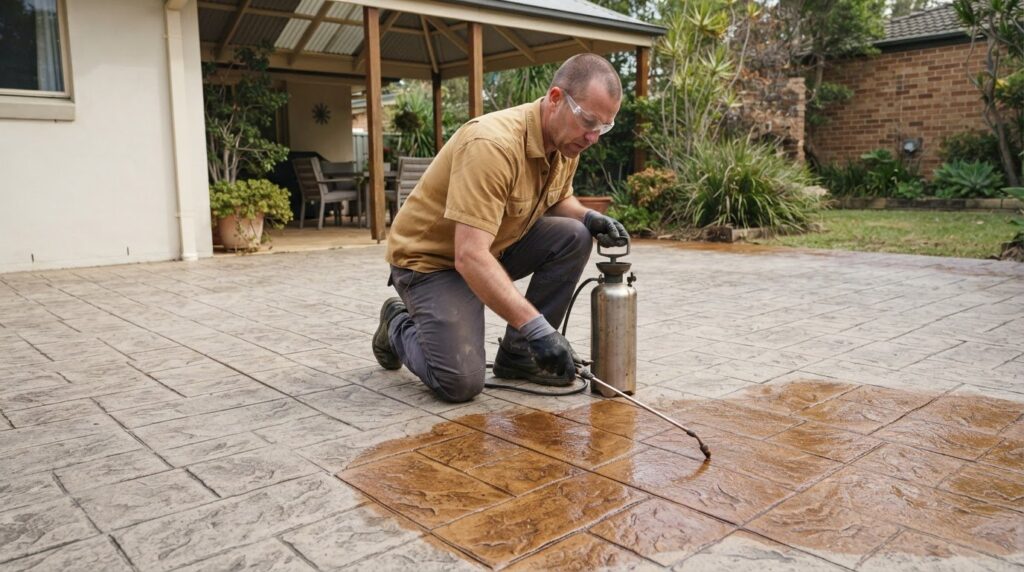
Faded stamped concrete isn’t automatically a replacement job. It can be recoloured with stain, and antiquing stain is available in over 24 colours. How to fix faded coloured concrete depends on whether the colour has dulled, the sealer has worn away, or the surface itself needs attention.
A tired finish can make a driveway or entertaining area look older than it is. If you’re wondering how to fix faded coloured concrete, a fresh sealer may restore its appearance, but only if it suits the existing finish. Peeling or cloudy sealer may need to be removed before a new treatment can adhere properly.
This guide explains how to assess the surface, decide whether stripping is needed, and prepare concrete for recolouring or resealing. You’ll also learn what to consider before applying stain, so the refreshed finish suits the concrete’s texture and condition.
Key Takeaways
- Look for peeling, cloudiness or uneven wear to judge whether the existing sealer may need stripping before a fresh treatment.
- Stamped concrete can be recoloured; the right approach depends on the existing finish and the texture you want to preserve.
- Clean and prepare the surface carefully, repair visible damage, and test the chosen colour in an inconspicuous area before treating the whole slab.
- Sun exposure, spills and unsuitable cleaners can dull colour. Regular sweeping and gentle washing help keep the finish looking its best.
Assessing whether existing sealer needs stripping
- Inspect the concrete in daylight before choosing a treatment. Look for peeling, whitening, patchy gloss or tacky areas. Compare a sheltered edge with a sun-exposed section. A glossy strip beside a dull patch, for instance, may indicate uneven sealer wear rather than fading alone. Note where the changes appear.
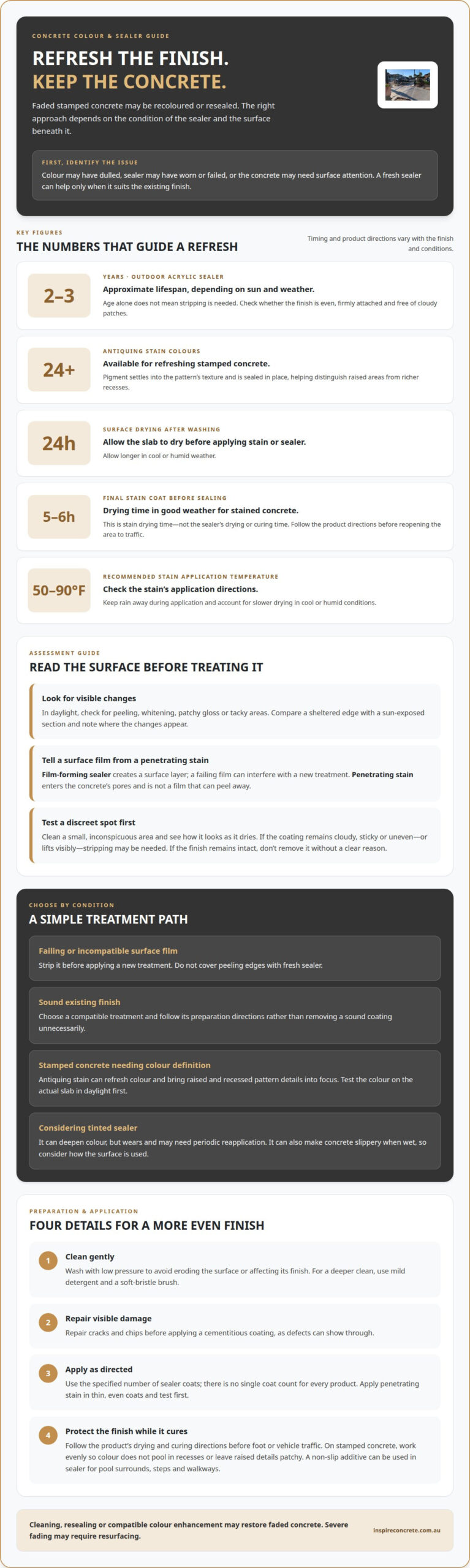
- Consider the sealer’s age and exposure. Outdoor acrylic sealer lasts about 2 to 3 years, depending on sun and weather. Age alone doesn’t mean stripping is needed. Check whether the finish remains even, firmly attached and free from cloudy patches. These signs help determine how to fix faded coloured concrete without removing a sound coating unnecessarily.
- Work out whether the colour treatment sits on the surface or penetrates the concrete. Film-forming sealers create a surface layer, while penetrating stains enter the concrete’s pores. A failing film can interfere with a new treatment, but a penetrating treatment is not a film that can peel away. This distinction helps you choose how to fix faded coloured concrete without damaging the existing finish.
- Test a small, inconspicuous area before removing the finish across the whole surface. Clean the spot and see whether it remains cloudy, sticky or uneven as it dries. If the coating lifts or looks visibly deteriorated, stripping may be needed to prepare a sound surface. If it remains intact, don’t remove it without a clear reason.
- Choose the next step based on what you find. Strip a failing or incompatible film before applying a new treatment, rather than covering peeling edges with fresh sealer. If the existing finish is sound, select a compatible treatment and follow its preparation directions. This helps avoid trapped defects and an uneven appearance.
Restoring colour over a previous treatment
In many cases, you can restore faded concrete without replacing it: clean the surface, assess the existing treatment, then apply a compatible colour treatment or sealer. On stamped concrete, antiquing stain can refresh the colour while emphasising the pattern’s raised and recessed details.
- Identify the existing finish before choosing a product. Integral colour is blended into the concrete mix before pouring, while stains and sealers treat the surface in different ways. A driveway with a tinted sealer may need a compatible refresh, not an unrelated coating layered over it.
- Choose a treatment that suits the concrete’s texture. Antiquing stain is available in over 24 colours for stamped concrete. Its pigment settles into the texture and is sealed in place, creating lighter raised areas and richer recesses that bring the pattern into focus.
- Test your chosen colour on a discreet area of the actual slab. A screen image cannot show exactly how a stain will look against the existing colour, aggregate or stamped texture. Let the test dry and assess it in daylight before treating the full surface.
- Use tinted sealer when you want to deepen the colour with a surface treatment, but bear in mind that it wears and may need periodic reapplication. It can also make concrete slippery when wet. Consider how the surface is used, especially if people walk across the driveway.
- Apply the compatible treatment evenly, follow its product directions, and protect the finish as it cures. On stamped concrete, work consistently across the pattern so colour does not pool in recesses or leave raised details patchy. Depending on the finish selected, a final sealer can enhance colour and add sheen.
For a worn surface that needs professional preparation and resealing, concrete cleaning and sealing can be a practical next step.
Surface preparation and application considerations
Prepare the concrete before applying stain or sealer. After washing, allow the slab to dry for 24 hours, or longer in cool or humid weather.
-
Prepare the Concrete Surface
Wash away dirt and residue using low pressure, as excessive pressure can erode the surface or affect its finish. For a deeper clean, use mild detergent and a soft-bristle brush. Repair cracks and chips before applying a cementitious coating, as defects can show through. Thorough preparation also helps the coating adhere and creates a more uniform finish.
-
Apply Concrete Sealer Coats
Use the number of sealer coats specified for the product and concrete surface. There is no single coat count for every sealer, so follow its application directions instead of adding extra layers. Apply penetrating stain in thin, even coats and test the colour on a discreet patch first. For pool surrounds, steps and walkways, a non-slip additive can be used in the sealer.
-
Allow the Sealer to Dry
Follow the product’s drying and curing directions before reopening the area to foot or vehicle traffic. Drying time varies with the sealer and conditions, so don’t treat the stain’s drying time as the sealer’s. For stained concrete, allow the final stain coat to dry for about 5 to 6 hours in good weather before sealing. Keep rain away during application, and account for slower drying in cool or humid conditions.
In the described concrete refresh, the surface was pressure-washed at 4,000 psi. The recommended application temperature for the stain is between 50 and 90°F. In the described deck restoration, Two light earth-colour water-based transparent stains were applied to the field areas.
Cleaning, resealing or applying a compatible colour-enhancing sealer can restore faded coloured concrete in many cases. Severe fading may require resurfacing.
Why does coloured concrete fade in Australia?
Before choosing a maintenance step, consider what caused the colour change. UV exposure, spills, cleaners and worn or missing sealer can all affect the finish.
- Compare exposed and sheltered areas to assess the effect of UV exposure. A sunlit section may look duller than concrete beneath an awning. Check whether the change is widespread or confined to one area. The pattern can help distinguish gradual colour loss from a local spill or cleaning mark.
- Look for oil spills on driveways and entertaining areas. Oil can leave a dark mark that differs from fading across the whole slab. Note where the stain is and whether it has defined edges. Treating a local mark as general colour loss can leave the refreshed surface looking uneven.
- Check for leaf deposits and tannin marks, particularly beneath trees. Leaf tannins can stain coloured concrete, creating patches rather than uniform fading. Clear accumulated leaves, then assess the clean surface. The location of each mark can help identify whether foliage is the cause.
- Review which cleaning products have been used on the surface. Acidic cleaners can damage coloured concrete and dull its appearance. De-icing salts can also harm the finish, so avoid using them. If dulling appeared after cleaning, consider which product was used before choosing a colour treatment.
- Check whether the surface has a protective sealer and whether it looks worn. Without sealing, coloured concrete is more exposed to stains, moisture and UV damage. A compatible sealer can protect the surface and enhance colour. Match the treatment to the existing finish rather than covering up an unidentified problem.
If you’re planning a considered colour refresh, discuss your concrete project.
Inspire Concrete: Exposed Aggregate Driveways
Inspire Concrete can help plan a driveway project around the finish and condition you want. If the existing surface needs more than colour restoration, discuss whether a new stamped or coloured concrete driveway suits your property and design goals.
For a different look, exposed aggregate and stencil concrete driveways offer distinct decorative finishes. The right option depends on the appearance you want and how the driveway connects with your home. A considered design can bring colour and texture together in a cohesive result.
Contact Inspire Concrete to discuss your driveway project and the concrete finish that fits your plans.
Give your concrete a considered next chapter
Choose a finish based on how you want the space to look and function, not just the colour you want to restore. A driveway, entry or outdoor area can retain its existing character or become part of a broader design refresh. This helps you decide whether to restore the surface or plan a new look.
Knowing how to fix faded coloured concrete gives you a starting point. Next, decide how the finished space should complement your home. Inspire Concrete can help plan a driveway design around the appearance you want, with options suited to different styles and settings.
Contact Inspire Concrete for advice about your concrete project. A well-considered finish can bring fresh purpose and presence to the space you use every day.
Frequently Asked Questions
How do you maintain coloured concrete?
Sweep and hose coloured concrete regularly to remove grit, leaves and surface dirt. For a deeper clean, use mild detergent and a soft-bristle brush instead of an aggressive cleaner. Wipe up oil or leaf deposits promptly to reduce staining. Protective pads under heavy outdoor furniture or equipment can help limit wear when items are moved or repositioned.
Can you recolour concrete with a concrete stain, dye or tinted sealer?
Concrete stain and compatible tinted sealer can both refresh colour, but they work differently. Penetrating stain enters the concrete’s pores, while tinted sealer forms a coloured surface treatment that wears over time. Don’t assume a dye is suitable for an existing coating. Check compatibility and test the chosen colour on the actual concrete, as a sample image may look different.
What preparation is needed before recolouring or sealing concrete?
Start by removing dirt, residue and loose material so the new treatment meets a clean surface. Repair cracks or chips before a cementitious coating, as defects can remain visible through it. After washing, let the concrete dry fully; staining generally needs 24 hours, with longer drying in cool or humid weather. Test the intended colour in a discreet spot first.
How often should coloured concrete be resealed in Australian weather?
Outdoor stained concrete should be resealed every 2 to 3 years. Sun exposure and weather affect how the surface wears, so inspect for patchy gloss, dullness or areas where water no longer beads as expected. The sealer type and the concrete’s condition also matter. Follow the product directions when planning maintenance, rather than adding coats over a failing finish.
Which concrete colour-restoration products are suitable for driveways, patios and pool surrounds?
For a driveway or patio, consider a compatible penetrating stain or colour-enhancing sealer that suits the existing finish and desired appearance. Tinted sealers can add colour but may become slippery when wet. For pool surrounds, steps and walkways, a non-slip additive can be used in the sealer. Test the colour on the concrete before treating the full area.
Is it better to DIY or hire a concrete restoration professional?
If the surface is sound, clean it, test a compatible treatment on a discreet area and follow the product directions. If it is worn and needs professional preparation and resealing, Inspire Concrete provides concrete maintenance and restoration services. Contact the team for a free, no-obligation quote.
