
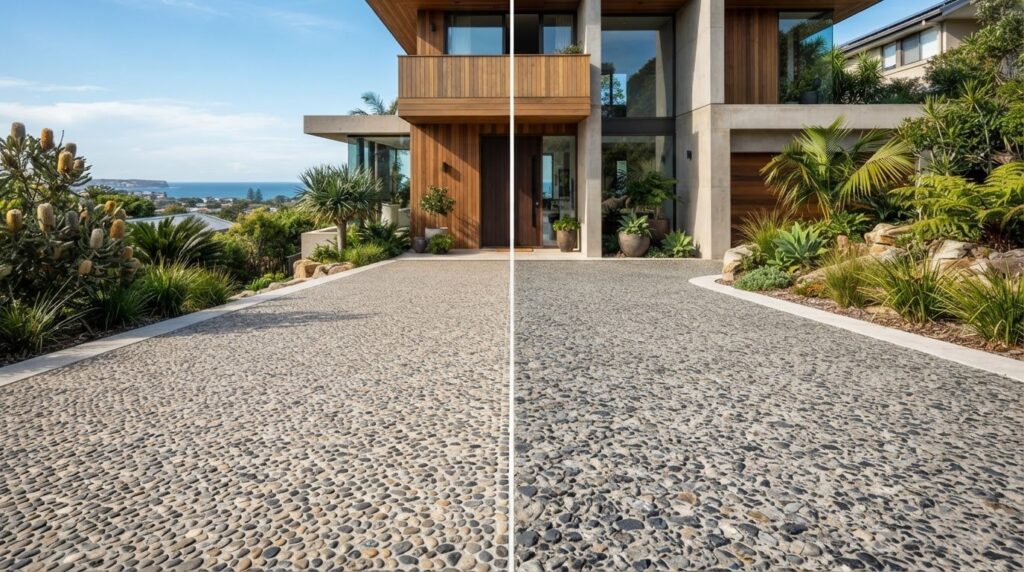
The finish you call pebblecrete may be the same surface another concreter calls exposed aggregate. In Australia, the terms are often used interchangeably, which can make pebblecrete vs exposed aggregate a confusing choice when planning a driveway, pathway or outdoor entertaining area. The label alone won’t tell you how the finish is made or how its texture and stone will look on your property.
The practical differences depend on the surface system, the aggregate selected and how the area needs to perform. A driveway, pool surround and alfresco space each have different design considerations. Comparing the intended use, site conditions and actual finish gives you a better basis for choosing than relying on a name.
This guide explains how the finishes are made and how their appearance can differ, then compares the factors that matter for use, care and site planning. With more than 20 years of concreting experience, Inspire Concrete helps Sydney property owners plan exposed aggregate designs around the space and its intended use.
Key Takeaways
- In Australia, “pebblecrete” and “exposed aggregate” are often used interchangeably, so compare the actual finish and application, not just the label.
- Understanding pebblecrete vs exposed aggregate starts with how the surface is made and how aggregate choice and workmanship shape its final appearance.
- Match a finish to the area’s intended use, traffic, drainage and gradient before settling on a look for your driveway, path or alfresco space.
- Use a practical checklist to weigh appearance, care needs, site conditions and project planning together.
- For suitable Sydney projects, architectural drafting and project management can help shape an exposed aggregate driveway around your property and how you use it.
Pebblecrete vs Exposed Aggregate: What Is the Difference?
Pebblecrete commonly describes a concrete finish with visible pebbles at the surface. Exposed aggregate describes concrete finished to reveal decorative stones within its surface. In Australia, trade and consumer usage of “pebblecrete” varies, and the terms may refer to similar-looking finishes or be used interchangeably.
The practical difference is often how the terms are being used: “pebblecrete” tends to describe a pebble-like appearance, while “exposed aggregate” describes a concrete surface treatment that reveals selected aggregate. Neither label alone tells you the full construction specification. One term may name a look, another a finishing process, and in some contexts both may describe the finished appearance.
This distinction matters when comparing options. The aggregate’s size, colour and distribution, the concrete mix, the finishing method and the quality of the work all affect the result. For a driveway, for example, a sample image labelled “pebblecrete” may not show whether the finished surface will match the stone or texture you want.
In broad terms, exposed aggregate is a form of decorative concrete, not a separate paving material laid over a base like individual pavers. The stone is part of the concrete finish. Pebblecrete may describe a similar surface, but the term doesn’t always identify one precise system across Australian suppliers and trades. For a clear comparison, focus on the proposed surface and its construction rather than treating the names as exact technical synonyms.
How pebblecrete creates its distinctive surface
In common Australian usage, pebblecrete refers to a concrete finish where pebbles are visible across the surface. The stones are embedded in the concrete and exposed as part of the finished face, creating a rounded, stone-rich appearance. The term describes the look in many conversations, but it doesn’t establish one universal substrate, mix or installation method. Those details can vary.
How exposed aggregate concrete reveals stone
With exposed aggregate concrete, decorative stones in the concrete are revealed at the surface by removing some of the cement paste before it fully hardens. The selected aggregate influences the visible pattern, colour balance and texture, while timing and workmanship affect how evenly the stones appear. Exposed aggregate is concrete with a designed stone finish, not a separate paving material.
That’s why the useful question isn’t simply “Which name is better?” It’s “What finish is being proposed, and how will it look and function in this location?” In Sydney, a sloping driveway, garden path and outdoor entertaining area can each require different design decisions. Describe the look you want, consider the site and intended use, and compare the actual finish rather than relying on a label alone. This makes pebblecrete vs exposed aggregate a more practical decision, even where local usage overlaps.
How Pebblecrete and Exposed Aggregate Differ in Appearance and Build
Once you move beyond the label, compare what you can see and how the finish is specified. Pebblecrete is commonly associated with a pebble-rich look, while exposed aggregate describes a concrete surface where decorative stones are visible. Because Australian usage of “pebblecrete” varies, the name alone doesn’t establish a particular construction method or guarantee a specific result.
| Consideration | Pebblecrete | Exposed aggregate |
|---|---|---|
| Surface appearance | Often understood as a surface with visible pebbles; the stone size and distribution depend on the particular finish. | Visible aggregate forms part of the concrete surface; its look varies with stone selection and exposure. |
| Design variation | Colour and texture depend on the stones and how they appear in the finished surface. | Aggregate choice and exposure influence the pattern, colour balance and texture. |
| Project fit | Judge the actual finish against the area’s intended use and site conditions. | Can be considered for driveways and other concrete areas, with design shaped around the project. |
| Care considerations | Cleaning and any sealing needs depend on the system and its surface. | Cleaning and any sealing needs depend on the finish, sealer and site conditions. |
Texture, colour and design flexibility
Stone selection makes a visible difference. Smaller or more prominent aggregate, varied stone colours and the degree of exposure can shift a surface from visually subtle to strongly textured. Materials, application and workmanship all play a part, so results vary between projects. The history of the finish is also part of its appeal: the history of exposed aggregate concrete reflects its established place in concrete design.
Before deciding, compare representative samples and completed work in natural light, ideally beside materials similar to your home’s exterior. Check how the stone colours sit with the façade, garage door and surrounding finishes. A small sample helps with selection, but a larger completed area gives a more realistic sense of how pattern and texture read across a driveway or entertaining space.
Construction approach and ongoing care
Exposed aggregate is produced by revealing decorative stones at the surface of concrete. “Pebblecrete,” by contrast, may describe a pebble-like appearance without consistently naming one process. The specific application can vary, so related-looking finishes don’t necessarily have the same build-up. Exposed aggregate is a concrete finish, not a separate paving material.
Separate ordinary cleaning from resealing or specialist restoration. Routine cleaning addresses surface dirt; whether sealing is suitable, and how often it may be needed, depends on the specific finish, products used and site conditions. Don’t assume either label means the surface is maintenance-free or requires the same care schedule. Inspire Concrete plans exposed aggregate driveways around the property and project. Explore Sydney exposed aggregate driveway projects.
Which Finish Suits a Driveway, Path or Outdoor Area?
The right choice depends on what the surface needs to do, not just the name attached to the finish. A driveway carries vehicles and connects to the street; a path needs to work with its route and surrounding garden; an alfresco area should sit comfortably beside the home. In the pebblecrete vs exposed aggregate decision, assess traffic, drainage, gradients and design together.
Finish suitability depends on use, substrate and installation details. A decorative surface can only perform as intended when its foundation and construction respond to the site. Consider existing paving, levels and water flow, as well as the finish itself. Where “pebblecrete” describes a particular look rather than a consistent system, compare the proposed surface and application, not the label alone.
Choosing a finish for a Sydney driveway
Start with how the driveway will be used. Consider the vehicles it needs to carry, turning movements, and where cars enter or park. A sloping driveway calls for close attention to gradient and drainage, while a level site may bring different layout decisions. The connection to the footpath, garage and existing paving also affects how a new surface fits the property.
Exposed aggregate can give a driveway a decorative, stone-textured finish. Its final character depends on the aggregate, exposure and workmanship, so review the design in relation to the home’s exterior and the site’s practical demands. For a closer look at project planning and finish decisions, see this Sydney exposed aggregate driveway guide.
Paths, entertaining areas and pool surrounds
Pool surrounds need a distinct assessment. Water exposure makes surface performance especially relevant, but neither “pebblecrete” nor “exposed aggregate” alone establishes how a particular finish will perform when wet. Consider the intended use, drainage, surface texture and applicable project requirements together. Any slip-resistance or standards-based claim should be checked against the requirements that apply to the project, not assumed from the finish name.
Before settling on an option, compare the same practical questions across each area:
- Traffic: What vehicles or foot traffic will the surface carry?
- Levels and drainage: Where will water flow, and how does the gradient affect the layout?
- Design: How should the texture and colour relate to the property and adjoining surfaces?
- Use: Does the area need a driveway, pathway, entertaining surface or pool surround specification?
Answering these questions first gives the finish a clear role in the design and helps align appearance with site conditions. For broader inspiration on coordinating different outdoor elements, examining the work of specialists such as J Brewer Surfacing & Landscaping shows how driveway surfacing, patio areas, and garden landscaping can be designed to complement each other seamlessly.
A Practical Checklist for Comparing Pebblecrete and Exposed Aggregate
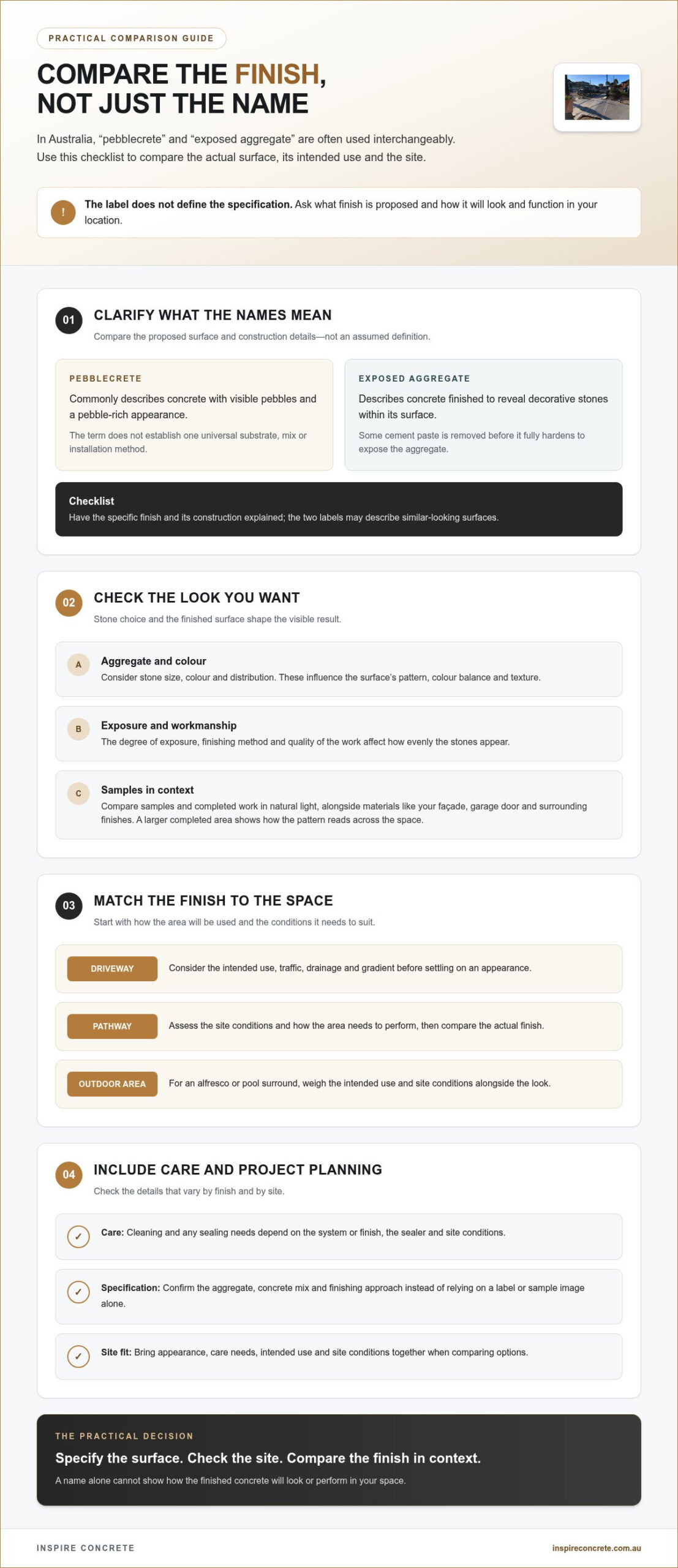
A useful finish decision starts with the project, not a sample colour or a name. Use this checklist to turn the pebblecrete vs exposed aggregate comparison into a brief based on how you’ll use the area, what the site allows and the look you want.
- Define the purpose. Note whether the surface is for a driveway, path, alfresco area or another use. Record the traffic it will carry, such as regular vehicle movements or everyday foot traffic. Separate essential functional needs from preferences about colour and texture.
- Map the site conditions. Write down the proposed area, existing surface, access constraints and any noticeable slope. Think about how the new work needs to meet the garage, footpath, paths or adjoining surfaces. Drainage and levels can affect preparation and layout, so assess these before selecting a finish.
- Set design priorities. Decide whether you want the stone texture to be a subtle feature or a stronger visual element. Compare representative samples with the home’s façade, nearby paving and other exterior materials. Check them in the setting where the finished concrete will sit, since light and surrounding colours can influence how a sample reads.
- Understand care expectations. Distinguish routine cleaning from any sealing or specialist restoration that may be relevant. The right care guidance depends on the selected finish, products and site conditions. Include this in your comparison rather than assuming both finishes have the same maintenance schedule or performance.
- Clarify the project scope. Establish what design, site preparation and construction stages are needed, and how finish decisions fit into the overall plan. For a driveway, layout, access and connections to the property matter alongside the surface choice. This Sydney concrete driveway design and installation guide can help frame those wider planning decisions.
Keep your notes with sample preferences and photographs of the area. This gives the project team a practical starting point for discussing intended use, site conditions and design direction. For example, a steep approach with limited drainage options calls for different planning considerations from a level area beside an existing garage. Consider the finish as part of the whole project, not in isolation.
Inspire Concrete brings more than 20 years of experience, architectural drafting and project management to exposed aggregate projects across Sydney Metro. Plan your exposed aggregate project with Inspire Concrete around the property, site and intended use.
Plan an Exposed Aggregate Project with Inspire Concrete
After comparing pebblecrete and exposed aggregate, connect your preferred look with what the site and project require. Exposed aggregate can suit a Sydney property where a visible stone finish is part of the design, provided the selected finish and installation are appropriate for the intended use and site conditions.
From design direction to finished concrete
Inspire Concrete brings more than 20 years of concreting experience to residential and commercial projects across Sydney Metro, including the Western Suburbs and Blue Mountains. Architectural drafting and project management bring design decisions and construction planning together, so the finish is considered alongside the site, layout and wider property. For broader context on working with a concreter, explore this Sydney concreter hiring guide.
A project conversation is most useful when it starts with the essentials. Share the area you want to concrete, how it will be used, the visual qualities you prefer and the scope you have in mind. For a driveway, that might include vehicle access, the relationship to the garage and how the new surface should connect with existing paving. For an outdoor area, the brief may focus more on the home’s exterior and how the space will be used.
These details give design and planning decisions a practical foundation. A preferred stone colour needs to be considered alongside surrounding materials and the site layout. A design that looks right in isolation still needs to work with levels, drainage and access. Project planning brings these considerations into the same conversation rather than treating the finish as a last-minute choice.
Take the next step with your project
Exposed aggregate may suit your priorities if you want a concrete surface with visible stone and a considered decorative character. The final appearance and suitability depend on the aggregate, installation and project conditions, so tailor decisions to the property rather than relying on a label. This project-specific approach turns a finish preference into a workable design direction.
To start shaping the brief, gather a few reference images, note the area’s intended use and outline any site details you already know. You don’t need every design decision settled before the conversation begins. A clear sense of your priorities and project scope is a strong starting point for planning an exposed aggregate installation with Inspire Concrete.
Discuss your exposed aggregate project with Inspire Concrete.
Shape a Finish Around Your Property
The best choice in the pebblecrete vs exposed aggregate discussion is the one that fits how you want to use the space and the character you want it to bring to your property. Start with your design preferences, then shape them around the site and project scope. A clear brief makes it easier to move from inspiration to a considered concrete design.
As a family-owned Sydney business led by licensed concreters, Inspire Concrete brings practical craftsmanship and design coordination to exposed aggregate projects. Architectural drafting and project management connect the finish you have in mind with the planning needed to deliver it.
Ready to explore how exposed aggregate could work for your property? Discuss your exposed aggregate project with Inspire Concrete and take the next step towards a finish designed around your vision.
Frequently Asked Questions
Is pebblecrete a suitable finish for a driveway?
It can be, but the name “pebblecrete” alone isn’t enough to judge a driveway. In the pebblecrete vs exposed aggregate decision, identify the actual system and assess the substrate, vehicle use and site conditions. A steep entry, frequent turning near a garage or heavy vehicle use may affect preparation and finish selection. A project assessment can establish whether the proposed surface suits the driveway’s gradient, drainage and intended traffic.
Can exposed aggregate be installed over an existing concrete driveway?
Possibly, but an existing concrete driveway needs assessment before deciding whether a new finish can be applied over it. Visible cracking, for example, may point to movement that surface appearance alone can’t explain. The driveway’s condition, available height at the garage and adjoining paths, drainage and preparation requirements all matter. Those factors help determine whether a new installation or another concrete treatment is more appropriate for the site.
How do you choose the stones in exposed aggregate concrete?
Choose aggregate by considering the overall colour and texture you want, then judge how it relates to the property and the area’s use. A stone that looks balanced beside a house façade may read differently across a broad driveway. Samples are a useful starting point, but the finished appearance can vary with the concrete and exposure process. Bring design references and priorities into project planning so the selection is considered in context.
Does pebblecrete come in different colours and textures?
Different pebble appearances and textures may be used, but options depend on the particular system and project. In Australian trade and consumer conversations, “pebblecrete” isn’t always used consistently, so the word doesn’t identify a standard range of colours or stone sizes. Compare actual samples and completed examples rather than relying on a label or photo alone. This helps set realistic expectations for how the finish may look across your proposed area.
What causes stones to loosen from a decorative concrete surface?
Loose or missing stones can have more than one cause, including the original installation, the surface’s condition or later wear. A few isolated spots may call for a different response than widespread aggregate loss, but appearance alone can’t establish the cause. Assessment should consider the affected area and the surface’s history, including any previous work or maintenance. That information helps determine whether local repair or broader restoration is appropriate.
How soon can you drive on a new exposed aggregate driveway?
Follow the access instructions provided for your specific installation, because the time before vehicle traffic is suitable depends on the project, materials and conditions. Don’t rely on a general online estimate to decide when to park or turn on a new surface. If access is needed during the work, include that in your planning so the handover guidance can be understood and followed. Keep vehicles off the driveway until the project-specific instructions allow use.
Can exposed aggregate and pebblecrete be combined in one outdoor design?
Different concrete finishes may be considered together, but their compatibility depends on the design and site. A transition from a driveway to an entertaining area, for example, needs to account for how each space is used, how levels meet and whether colours and textures work together. Planning should also address joints, drainage and construction details at the boundary. A project-specific design assessment can show whether the finishes form a coherent layout.
