
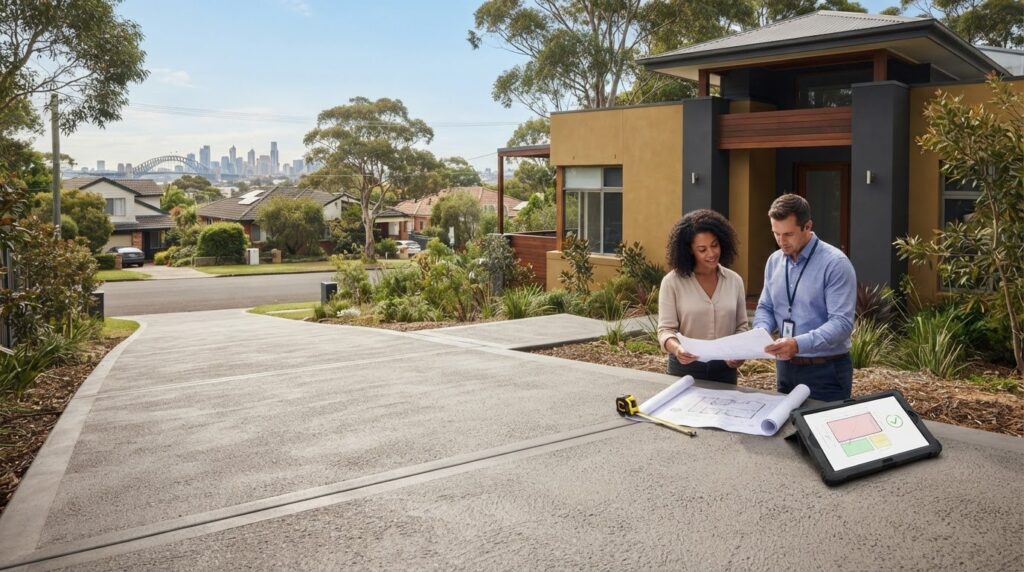
Searching “how to get a DA for a driveway sydney” usually starts with one practical question: does your project need a DA at all? The answer depends on the work, the property and the relevant council controls. Assuming every driveway follows the same pathway can lead to avoidable revisions. Also check the driveway crossover, where your property meets the public road, because it may need separate council approval.
Before construction, identify whether your project may qualify as exempt development, need a Complying Development Certificate (CDC), or require a Development Application (DA). This guide covers the information to prepare, how to check the relevant requirements with your council and the NSW Planning Portal, and how to account for crossover approval. With more than 20 years of Sydney concreting experience, Inspire Concrete brings design, construction and project management together to help carry a driveway project from planning into construction.
Key Takeaways
- Learn how to get a DA for a driveway sydney by checking how the property and proposed work affect the approval pathway.
- Understand the differences between a Development Application, a Complying Development Certificate and separate council approval.
- Use a practical checklist to prepare site-specific plans and supporting details, allowing for requirements that vary between councils.
- Follow the steps for lodging and tracking an application, and verify current requirements with your council and the NSW Planning Portal.
- Read approval conditions carefully and check whether driveway crossing or road-reserve work needs separate approval before construction.
Does a Sydney driveway need a DA? Check this before planning the work
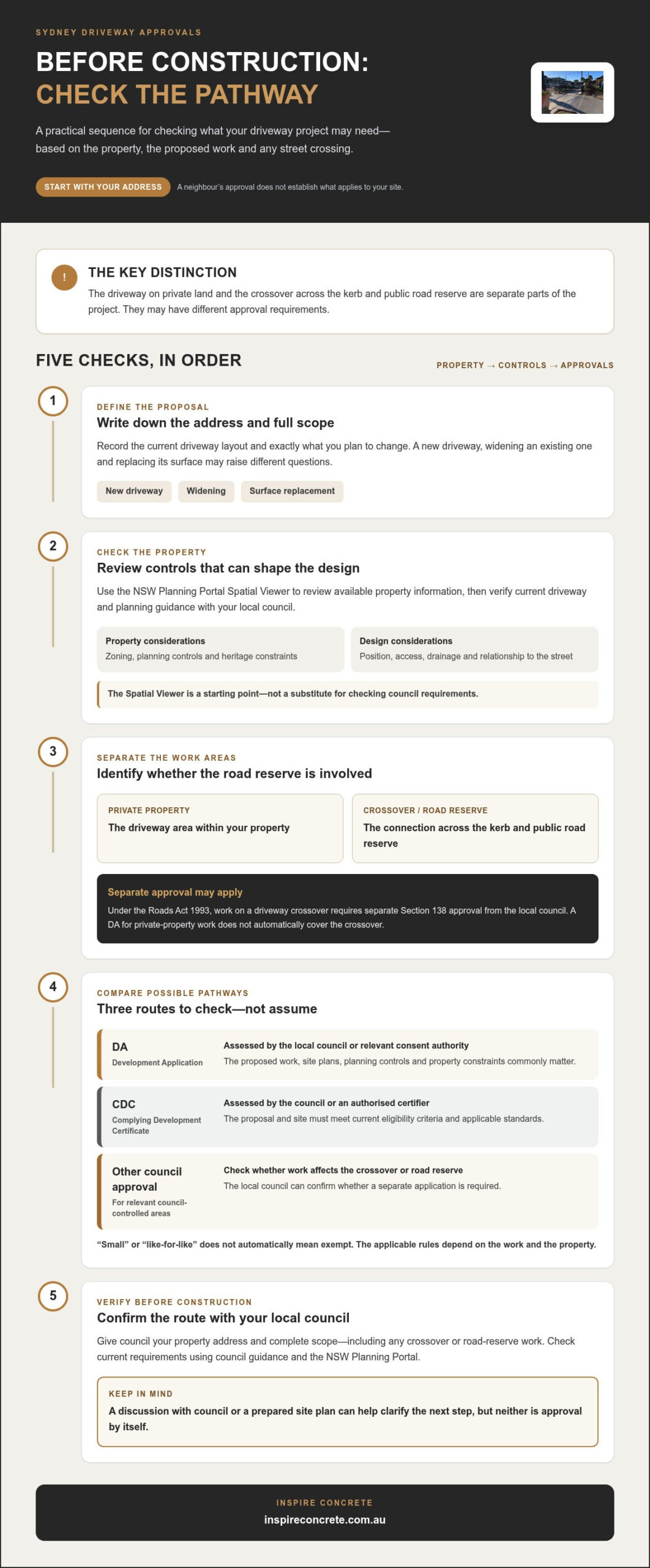
A driveway project doesn’t automatically require a Development Application (DA). The right pathway depends on the property and the proposed work, so a neighbour’s approval doesn’t establish what applies to your site. Zoning, planning controls, heritage constraints and the driveway’s position can all affect what you need to check before construction.
A DA is a formal application for proposed development, assessed by the relevant consent authority against applicable planning controls. Some driveway projects may instead use a Complying Development Certificate (CDC) or require another approval. If you’re researching how to get a DA for a driveway sydney, start with your property address and the full scope of work, not a general rule of thumb.
What details can change the approval pathway?
Write down the property address, the current driveway layout and exactly what you plan to change. A new driveway, widening an existing one and replacing its surface may raise different questions. Use the NSW Planning Portal Spatial Viewer to review available property information, then read your local council’s current driveway and planning guidance. The viewer is a starting point, not a substitute for checking council requirements.
Check for property-specific controls rather than assuming your block is unrestricted. Clarify how heritage considerations, drainage, vehicle access and the connection to the street affect your proposal. These details can shape the driveway’s position and design, as well as the information needed to assess the work.
Separate the driveway from the street crossing
Be clear about where the work will take place. The driveway on private land is distinct from the crossover, the section across the kerb and public road reserve that connects the property to the street. A project may involve both. Because private-property work and road-reserve work can have different approval requirements, include both areas when describing the project to council.
Under the Roads Act 1993, work on a driveway crossover requires separate Section 138 approval from the local council. A DA for work on private property doesn’t automatically cover the crossover. Check the council’s current process for the road-reserve component before scheduling that work.
Is a DA the only approval route?
No. A CDC is a separate pathway that may suit a proposal only if it meets the relevant eligibility criteria. Some minor work may also be subject to different requirements, but “small” or “like-for-like” doesn’t automatically mean exempt. The applicable rules depend on the work and the property.
Before construction, describe the full proposal to your local Sydney council and confirm the applicable pathway, including any separate crossover approval. Doing this early helps you prepare the right information and avoid revising plans after lodging. Use the NSW Planning Portal and council guidance to verify current requirements for your property.
DA or Complying Development: Driveway Pathways in Sydney
A driveway proposal can follow different approval routes. The size of the concrete area alone won’t determine which one applies. The correct pathway depends on the proposal, the land and the applicable planning controls. Check current NSW requirements and the details of your property before finalising a design or preparing to lodge.
The comparison below is a starting point, not a decision for every site. It outlines who is generally involved and what information can help clarify the route.
| Pathway | Who assesses it | What commonly matters |
|---|---|---|
| Development Application (DA) | The local council or relevant consent authority | The proposed work, site plans and how the design responds to applicable planning controls and property constraints. |
| Complying Development Certificate (CDC) | The council or an authorised certifier | Whether the proposal and site meet the current eligibility criteria and applicable standards, supported by the required plans and details. |
| Another council approval | The relevant local council | Whether part of the work affects a council-controlled area, such as the driveway crossing or road reserve, and what separate application is required. |
A council discussion or a prepared site plan can help clarify the next step, but neither is approval by itself. Approval comes through the applicable formal process. The required documents and assessment depend on current NSW controls, council guidance and the property details.
When might a driveway proposal need a DA?
A DA is a pathway to investigate if the proposal doesn’t meet the criteria for an alternative route. No single feature automatically means a DA is required. Use possible constraints as prompts for a property-specific check:
- Heritage status or other land-specific planning controls
- Driveway position, access and relationship to the street
- Drainage changes or effects on neighbouring land
- Work proposed near the kerb or within the road reserve
Look up the property in the NSW Planning Portal, then verify the relevant controls and application guidance with the local council. If you’re researching how to get a DA for a driveway sydney, give the address and complete scope of work when making an enquiry instead of relying on a general example.
Could complying development apply instead?
Complying development is a separate assessment route, not an informal shortcut. The proposal must meet the applicable eligibility criteria, and the site can affect whether this route is available. Don’t assume a standard driveway always qualifies or is always excluded. Confirm current NSW requirements and council guidance before relying on a CDC.
Once the likely pathway is clear, a coordinated design can carry those requirements into the finished driveway. Inspire Concrete’s driveway design and construction connects practical planning with the concrete work that follows.
Prepare a Sydney driveway DA: plans, site details and supporting information
A clear, site-specific application shows the assessment team what you propose to build and where. Requirements vary by council and approval pathway, so use the items below as a preparation checklist, not a universal document list. Check your local council’s current guidance and the NSW Planning Portal before lodging.
Start by documenting the full scope. A plan that shows only the new concrete may leave key questions unanswered, such as how vehicles will enter from the street or where surface water will go. Explain what will change, what will remain and whether the project includes work at the driveway crossing.
What should a driveway site plan show?
Make the property layout and proposed footprint easy to understand. Show boundaries, existing buildings, the driveway’s location and dimensions, the access point and its relationship to the street. Include site features that could affect the design. Make sure the survey information and level of detail meet the council’s requirements for your application.
Common information to gather, subject to council requirements:
- A site plan showing property boundaries, existing structures, the proposed driveway footprint, dimensions and street access
- Recent photographs of the property, existing driveway, frontage and proposed access area
- Available survey information that helps explain boundaries, levels or other relevant site features
- A concise written scope stating whether the work is a new driveway, an alteration or a replacement, and describing what the project involves
- Details or drawings explaining proposed levels, drainage, surface materials and the connection to the street, where relevant
Which supporting details may help explain the proposal?
Photographs can show existing conditions that a plan may not make clear. A concise scope helps the assessor understand the intended work. If levels or drainage could affect the design, explain the proposed approach using the detail your council requests. Describe the street connection clearly, especially if the work may extend beyond private property.
Keep the plans and written description consistent. If the scope says the driveway will be widened, the plan should show the full proposed width. If the design changes while you prepare the documents, update the relevant material so it accurately represents the proposal you intend to lodge. Check the council’s drawing standards and supporting information requirements before submitting, since missing or unclear details can prompt follow-up questions.
Driveway position, levels, drainage and surface finish all affect how the finished concrete works with the property and street frontage. A concrete driveway guide can help you consider design and construction choices alongside the site information needed to explain your proposal. Inspire Concrete’s architectural drafting and project management experience supports a coordinated approach from driveway design through construction, while the council remains responsible for assessment and approval.
Lodge the driveway DA and respond to Sydney council assessment
Once you’ve confirmed that a DA is the appropriate route and gathered the required material, lodge a complete, consistent application. Council requirements, fees and processing times vary, so follow the current instructions for your area rather than relying on another property’s experience. Lodging an application doesn’t authorise construction. Wait until the required approval is in place, then review its conditions before work begins.
How do you lodge and track a DA?
Use the NSW Planning Portal to check the current application and tracking steps. Before submitting, confirm the application type and supporting documents against the relevant council’s instructions. For homeowners researching how to get a DA for a driveway sydney, this sequence avoids a common mistake: preparing drawings before confirming which application is needed.
- Confirm the pathway. Verify that a DA applies to the proposed work and check whether a separate approval is needed for any driveway crossing or road-reserve work.
- Complete the forms. Follow the current portal and council instructions, keeping the property and proposal details consistent.
- Upload the documents. Attach the plans and supporting information required for your application. Check that the written scope and drawings describe the same design.
- Lodge and track. Submit through the nominated process, save the lodgement confirmation and reference details, then follow progress through the portal or the council’s stated method.
Keep copies of every submitted form, plan and supporting document. Save council correspondence in the same project file, noting when it arrived and any response method or date it specifies. A clear record helps you respond accurately and ensures everyone involved is working from the current information.
What happens if council asks for changes or more information?
During assessment, council may ask for clarification or revised material. Read the request closely, identify each item and follow the nominated submission process. Check any dates or instructions in the correspondence, and keep revised plans and descriptions aligned. If a response affects the driveway layout, levels, drainage or street connection, review all related documents before resubmitting.
The assessment may result in approval with conditions, a request for more information or refusal. The outcome and next steps depend on the application and council’s assessment, so don’t assume a decision timeframe or result. If approval is granted, read the conditions carefully before coordinating construction. They may affect the final design or work sequence.
Clear design information helps connect planning with the concrete work that follows. Inspire Concrete can coordinate your driveway design and construction as part of a Sydney project.
After driveway approval: turn council conditions into a build-ready plan
Approval is a key milestone, but the decision notice and approved plans still need to guide the work on site. Read them together before finalising the construction sequence. Conditions may affect driveway dimensions, levels, drainage or the connection to the street. Treat the approved documents as the project reference, not an early concept that can be changed without checking.
How should you use approval conditions before work starts?
Keep the decision notice, conditions and approved plans together in an accessible project file. Review each condition alongside the part of the design it relates to, then note any actions required before or during construction. If you’re unsure how a condition applies, seek clarification from the relevant council before proceeding.
- Check that the plan used for construction matches the approved version.
- Identify conditions that affect design details, site preparation or construction sequencing.
- Ask council whether a proposed change to dimensions, layout or materials affects the approved scope.
- Keep written council responses with the approval documents and project records.
A seemingly small adjustment can matter if it changes what council assessed. Moving the driveway access point or altering its width, for example, may affect the approved layout. Don’t assume a change is acceptable because the project still looks similar. Confirm its implications before updating drawings or starting that part of the work.
Keep the driveway crossing and road reserve in view
Planning approval for work on private property doesn’t automatically cover work on public land. If the project includes construction or alteration of the driveway crossover, the section between the property and public road, separate Section 138 approval from the local council is required under the Roads Act 1993. Address the crossover details and any council requirements before arranging work in the road reserve.
How does the approval plan connect to driveway construction?
Translate the approved design into a practical build plan. Levels affect how the driveway meets the garage, footpath and street. Drainage needs to follow the approved approach, access dimensions should remain consistent, and the concrete finish should suit the approved details. Bring these elements together before construction so the finished surface reflects the documented scope and design.
Inspire Concrete’s architectural drafting and project management experience helps connect driveway plans with the realities of concrete construction. When considering how to get a DA for a driveway sydney, remember that approval and construction are linked stages: a clear handover from the approved concept to the build helps keep the design and site work aligned. The Sydney concreters guide offers broader context on how planning carries through to a finished project.
Ready to turn an approved plan into a well-built driveway? Discuss your Sydney concrete driveway project with Inspire Concrete.
Shape your next step into a driveway you’ll be proud of
Approval gives your driveway project a defined framework, helping keep the finished layout connected to the plans and conditions. As you consider how to get a DA for a driveway sydney, carry that clarity into the design and construction stage, where practical details and the finish come together.
Inspire Concrete works across Sydney Metro, including Western Sydney and the Blue Mountains, on driveway projects from planning through concrete construction. The team also provides architectural drafting and project management to help coordinate the project.
Plan your Sydney concrete driveway with Inspire Concrete.
Frequently Asked Questions
Do I need council approval to replace an existing driveway in Sydney?
Possibly. Replacing an existing driveway doesn’t automatically mean approval is unnecessary. The answer can depend on whether the work changes its size, position, levels, drainage or street connection, as well as the property’s controls. For a surface replacement, describe what will stay the same and what will change, then check the applicable requirements with your local council before arranging construction.
Can I build a driveway in Sydney without a DA?
Yes, a DA isn’t the only possible route, but that doesn’t mean you can start without checking the requirements. Depending on the proposal and property, the work may qualify for complying development or be subject to other requirements. Some minor work may have different rules. To understand how to get a DA for a driveway sydney, check the current NSW controls and council guidance for your address and scope.
How do I check which council is responsible for my Sydney property?
Search your property address using the NSW Planning Portal Spatial Viewer, then use the location to identify the relevant local council. If the result isn’t clear, search the address on the council website or contact the council directly. Confirm the correct council before relying on planning guidance or application forms, especially if your property is near a local government boundary.
Does a driveway DA also approve the kerb crossing?
No. A DA covering work on your property doesn’t automatically authorise work on the crossover, the part connecting the driveway to the public road. Under the Roads Act 1993, crossover work requires separate Section 138 approval from the local council. Include crossover repairs or changes in your project description and verify the council’s process before arranging work in the road reserve.
What plans do I need for a driveway DA in Sydney?
The exact documents vary, but a site plan commonly distinguishes existing conditions from the proposed driveway. Show property boundaries, buildings, the driveway footprint, dimensions and street access. Include relevant levels and drainage details where required. For example, mark whether the access point is moving or widening. Check your council’s current checklist for any additional survey information, photographs or supporting plans.
Can I change the driveway design after council approval?
Don’t assume you can change an approved design without checking first. A new finish may be different from shifting the access point, changing dimensions or altering levels, but the effect depends on the approval and its conditions. Compare the proposed revision with the approved plans and ask the council whether it changes the approved scope. Keep written guidance and revised documents with your project records.
