
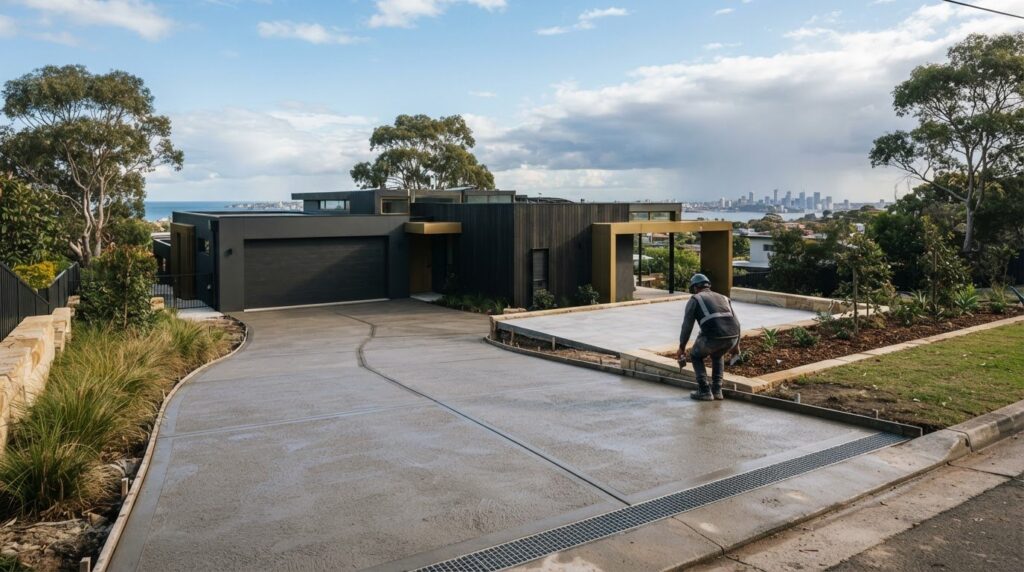
The best time of year to pour concrete in Sydney isn’t a season, it’s a suitable weather window. Spring and autumn are often practical choices, but a sudden downpour, strong wind or unexpected heat can make the forecast more important than the calendar.
If you’re deciding when to schedule a driveway, slab or entertaining area, it’s understandable to want a clear answer. The best time of year to pour concrete in Sydney depends on how seasonal conditions meet your site, the type of project and the forecast around pour day. Moderate temperatures can make planning easier, while hot, cold, wet or windy conditions may affect placement and finishing.
This guide explains why spring and autumn are often considered favourable, what to watch for in Sydney through the year, and how to plan around changing weather. You’ll also find practical points to consider when arranging your project, from site preparation to checking the forecast, so the timing supports a well-planned result.
Key Takeaways
- The best time of year to pour concrete in Sydney depends on the site and forecast, not a guaranteed ideal month. Spring and autumn can offer practical planning windows when conditions are moderate.
- Temperature, rain, wind and sun can all influence pour-day placement and finishing conditions.
- Seasonal weather patterns are useful for planning, but local conditions can vary. Use the forecast to help assess a suitable window.
- Plan in sequence: define the project, review access, exposure, drainage and preparation, then coordinate timing around the forecast.
- Inspire Concrete brings 24 years construction experience and over 600 projects completed to residential and commercial concrete projects, with design, planning and turnkey delivery.
What Is the Best Time of Year to Pour Concrete in Sydney?
There’s no guaranteed best month to pour concrete in Sydney. Spring and autumn are often practical planning windows because temperatures are generally milder than in the height of summer or winter. However, a seasonal label can’t tell you whether conditions will suit a particular pour. The best time of year to pour concrete in Sydney depends on the forecast, the site and the work being done.
That distinction matters for everything from a concrete driveway to a house slab. A clear, moderate day may make planning easier, but site preparation, the intended use of the finished area and the conditions during placement also shape the decision. With planning suited to the conditions, a pour may be possible outside spring and autumn too.
Why spring and autumn are often practical windows
In spring and autumn, milder conditions can make it easier to coordinate site preparation and concrete placement without the extremes that may come with hotter or colder periods. These are useful seasons to consider, not promises of ideal weather. A run of rain or a sudden temperature change can still affect a scheduled pour, so review the forecast as the planned date approaches.
The project and its exposure matter too. An open driveway with little shade may face different sun and wind conditions from a sheltered slab. The size and intended use of the area also influence planning. A seasonal preference is a starting point, while the site assessment helps determine whether the proposed window is suitable.
Why the forecast matters more than the calendar
Temperature, rain, wind and direct sun are all worth considering before a pour. They can affect working conditions and the time available for placement and finishing. Concrete hardens through hydration, a process influenced by temperature. The Concrete reference outlines its composition and basic properties. For project-specific decisions, conditions need to be considered alongside the planned work.
Seasonal averages describe general patterns, not the weather your site will experience on the day. Check the Bureau of Meteorology forecast as the pour approaches, and consider the conditions expected during the work, not just at the start. If the forecast changes, the timing or preparation may need to be reassessed.
Season is a guide, while the site and forecast shape the plan. That principle applies across Sydney and its surrounds, including inner Sydney and the Western Suburbs. Conditions can vary between locations, and factors such as elevation, aspect, shelter and exposure may influence the site’s weather. A general Sydney forecast may not fully reflect a more exposed or elevated location.
Pours can be planned in other seasons when preparation suits the conditions, rather than assuming the calendar rules them out. Consider the site and intended use, then choose a window with the forecast in view. The next step is to compare seasonal tendencies and understand what summer, winter, spring and autumn may mean for practical scheduling.
How Sydney Weather Can Affect a Concrete Pour
Weather influences more than the choice of a date. Temperature, moisture, wind and direct sun all affect the conditions crews work in while placing and finishing concrete. Their combined effect matters. A warm, breezy day may create different challenges from a warm, humid one, even if the air temperature is similar.
Concrete gains strength as it cures, and weather can affect the pace of that process. This section focuses on planning the pour and finish. For detailed timelines after placement, see our existing guide to concrete curing time. The best time of year to pour concrete in Sydney still comes down to the conditions expected at the site, rather than a season alone.
Heat, sun and wind during warmer weather
Hot, dry conditions and wind can increase surface-drying pressure, while direct sun may expose parts of a slab more than others. This can make the working window more demanding, particularly on open sites with little shade. The project team can assess suitable timing or protection, with the right approach depending on the mix, finish and site layout.
There isn’t one technique that suits every pour. A driveway exposed to afternoon sun, for example, may need different planning from a sheltered pathway. Consider the forecast alongside the slab’s size, access and finish requirements so the placement and finishing plan matches the conditions.
Cold, rain and moisture during cooler weather
Cold conditions can slow progress and affect how much practical working time is available. Rain needs similar care: a forecast shower before work begins is different from rainfall during placement or early surface finishing. Timing, intensity and site exposure all matter, so check conditions close to the scheduled pour rather than relying on a broad seasonal outlook.
Ground condition is another part of the picture. If the site is wet or drainage is poor, access and preparation may need attention before concrete is placed. Water collecting around the work area can complicate the pour, so site drainage and surface readiness should form part of the planning discussion.
Weather shapes the plan, but it can’t guarantee a particular finish or outcome. A useful pre-pour review considers the conditions expected during the work, not just the day’s high or low. Look at:
- Temperature and the likelihood of rapid changes during the work period.
- Rain timing, including whether the ground is already wet.
- Wind and direct sun across the area being poured.
- Site access, exposure, drainage and the finish being installed.
These factors help guide scheduling and preparation, with project-specific recommendations based on the site and mix requirements. For a driveway or slab in Sydney and surrounds, Inspire Concrete’s project planning takes the intended use and changing conditions into account as the work is coordinated.

Sydney Seasons Compared: When Is a Pour Easier to Plan?
Each season brings different planning considerations, but none guarantees a suitable day for concrete placement. The table below offers a broad guide to seasonal tendencies in Sydney, not a fixed forecast for every suburb or site. Use it to frame the project plan, then base the schedule on the actual conditions expected where the work will take place.
| Season | Common weather considerations | Planning response |
|---|---|---|
| Summer | Heat, strong sun and dry or gusty conditions may increase surface-drying pressure. | Review the forecast and site exposure. The project team can assess whether timing or suitable protection needs adjusting. |
| Autumn | Temperatures may be milder, though rainfall and day-to-day changes remain possible. | Use the moderate conditions as a planning advantage, but check the forecast close to the pour. |
| Winter | Cooler conditions and shorter daylight hours may affect the practical work window. | Allow the project plan to account for temperature, available daylight and site readiness. |
| Spring | Milder weather may be useful, but rain or changing conditions can still disrupt a chosen date. | Keep the schedule responsive to the forecast and the specific demands of the site and finish. |
Summer and winter: manage heat or allow for cooler conditions
Summer can bring strong sun and dry wind, particularly on exposed areas such as an open driveway. These conditions may call for careful coordination of placement and finishing. The appropriate response depends on the project, rather than a single method being applied to every mix or surface.
Winter brings a different set of considerations. Cooler conditions can slow progress, and shorter daylight may narrow the practical work period. That doesn’t automatically rule out a winter pour. Preparation suited to the site and forecast can matter more than excluding a season outright.
Spring and autumn: useful windows, not automatic answers
Spring and autumn are often easier to plan around because milder weather can reduce some of the extremes associated with summer and winter. They may offer a more comfortable starting point for scheduling, but neither season guarantees rain-free or stable conditions. Check the forecast as the date approaches, especially if the work area is highly exposed or drainage needs attention.
The best time of year to pour concrete in Sydney is therefore a project decision, not a calendar rule. Conditions can differ across Sydney, inner Sydney and the Western Suburbs. Elevation, aspect and exposure can all affect the immediate site, so broad regional patterns shouldn’t replace a local assessment.
Use seasonal tendencies to help plan ahead, then refine the timing around the site and expected weather. A spring or autumn date alone can’t promise a better finish. The work still needs preparation that suits the forecast and the surface being installed.
How to Plan a Sydney Concrete Pour Around the Weather
A reliable pour plan starts well before the scheduled day. Define the project, assess the site, then coordinate preparation and timing around the forecast. This sequence keeps the intended use, access needs and finish in view while leaving room to respond if conditions change.
A simple pre-pour weather and site checklist
Work through these points with the project team as the date approaches:
- Define the work. Be clear about whether the project is a driveway, house slab, pathway or entertaining area, and how the finished surface will be used.
- Review the site. Discuss access for equipment and materials, ground condition, drainage, slope, shade and exposure to sun or wind.
- Check the forecast. Review expected temperature, rain, wind and sun exposure for the location, then check again close to the planned pour.
- Confirm preparation. Make sure site preparation and the finishing plan suit the project and the conditions expected.
- Agree on a change-of-weather plan. Establish how a significant forecast change will affect the work, so the decision isn’t left until the pour is underway.
Access deserves particular attention. A narrow entry or limited space may affect how the crew can work, while poor drainage or wet ground may influence whether preparation is ready to proceed. Talk through these details early. For a driveway project, the Sydney concrete driveway guide can help you consider the surface and its intended use. For a house, granny flat or shed project, the Sydney concrete slab guide provides related planning context.
Plan the project timeline, not just the pour day
The pour is one stage in a broader sequence. Allow time for design, site preparation, construction and finishing, and keep the project’s purpose central to scheduling. A driveway that needs vehicle access has different practical considerations from a slab planned for a building. Building flexibility into the timeline can help the team respond to changing forecasts without treating a provisional date as a guarantee.
For driveway owners, planning also includes understanding when the surface can be used after placement. Weather and project conditions can affect that timeline, so factor access needs into your arrangements. Our concrete curing-time guide explains what to consider before driving on a new driveway.
The best time of year to pour concrete in Sydney becomes easier to judge when the project, site and forecast are considered together. For coordinated planning from design through construction, discuss your Sydney concrete project with Inspire Concrete.
Plan Your Sydney Concrete Project with Inspire Concrete
Choosing a workable pour window is only one part of a successful concrete project. Design, site preparation, construction and finishing need to fit together, with the site and its intended use guiding the plan. Inspire Concrete provides residential and commercial concreting in Sydney and surrounds, coordinating project stages through turnkey delivery.
A project planned around your site and intended use
Start with what you want the finished space to do. A driveway needs to serve vehicle access, while a house, granny flat or shed slab has a different purpose. A concrete pathway, alfresco area or pool surround also brings its own layout and site considerations. Understanding those requirements helps shape a design and construction plan that suits the property.
Site conditions matter just as much. Access, ground condition, drainage, slope and exposure to sun or wind can affect preparation and scheduling. Inspire Concrete takes these factors into account as the project is planned, including how changing weather may affect the proposed work window. Discussing practical details early keeps the project’s intended use in view, rather than treating the pour date as a decision on its own.
The best time of year to pour concrete in Sydney is ultimately the time that works for the project and its site conditions. Spring and autumn may offer useful planning opportunities, but a suitable date still depends on the forecast and the work involved. Clear coordination helps align preparation, construction and finishing as the project moves forward.
Get a clear starting point for your project
Inspire Concrete brings 24 years construction experience and has completed over 600 projects. The team also draws on 14 years of concreting experience and 4 years of architectural drafting expertise, supporting a considered approach from design through to construction. Clear communication helps you understand the project stages and how decisions relate to your site and requirements.
A qualified estimator provides a free, no-obligation quote, giving you a practical starting point for discussing the scope of your project. Inspire Concrete’s approach includes no hidden or extra charges, so you can move into planning with clearer expectations. Completed work is backed by the 10-Year Workmanship Warranty.
Whether you’re planning a driveway, slab, pathway or outdoor entertaining area, discuss the project, the site and your preferred timing. A coordinated plan can account for preparation and changing weather without treating any season as a guarantee of suitable conditions. Request your free, no-obligation quote from Inspire Concrete and start planning your Sydney-area concrete project.
Turn Your Concrete Plans Into a Clear Next Step
The best time of year to pour concrete in Sydney isn’t a date you can choose from the calendar alone. It’s a project window shaped by your site, intended use and the conditions expected around the pour. Start by deciding what you want your driveway, slab or outdoor area to achieve, then bring those priorities into the planning conversation.
A few details can help make that conversation productive: the area you want to concrete, how you’ll use it, any access or drainage considerations, and your preferred timeframe. From there, the project can be planned with seasonal conditions and the changing forecast in mind, without assuming that any particular month guarantees suitable weather.
Inspire Concrete supports Sydney-area projects with turnkey delivery, backed by 24 years construction experience, over 600 projects completed, a free, no-obligation quote from a qualified estimator, and the 10-Year Workmanship Warranty.
Request a free, no-obligation quote from Inspire Concrete and take the next step towards a concrete project planned around your property. With a clear brief and thoughtful planning, you can move forward with confidence.
Frequently Asked Questions
What is the best month to pour concrete in Sydney?
There isn’t a guaranteed best month; conditions on pour day matter more than the calendar. Spring and autumn can be practical starting points, but a sunny forecast alone doesn’t establish that a site is ready. A shaded backyard and an exposed driveway can face different working conditions on the same day. The best time of year to pour concrete in Sydney is the window that suits the project, its preparation and the local forecast.
Can concrete be poured in Sydney during winter?
Yes, concrete can be poured in Sydney during winter if the project plan accounts for cooler conditions. Lower temperatures can slow setting, so placement and finishing may need careful coordination. Rather than automatically abandoning a winter date, review the site’s exposure and expected overnight conditions as part of the project plan. For a slab or driveway, also consider how the work sequence fits available daylight and site access.
What temperature is too cold to pour concrete?
Temperatures below 10°C are a caution point because concrete can take longer to set in cooler conditions, but this isn’t a universal cut-off for every pour. Decisions should follow the project specifications, mix design and site conditions. Consider expected air and ground temperatures, including overnight conditions, as part of the concreting plan. A forecast low alone doesn’t determine suitability; the plan needs to reflect the concrete and work involved.
Can you pour concrete if rain is forecast?
A rain forecast doesn’t automatically rule out a pour, but its timing and expected intensity matter. Showers before work may leave the ground wet or affect access, while rain during placement or early surface finishing can interfere with exposed concrete. Check the location-specific forecast and site drainage, then plan how a change in conditions will be handled. A dry start may not be enough if rain is expected during the work.
How long after rain should you wait before pouring concrete?
There isn’t a fixed waiting period after rain. The site may be ready once standing water has cleared and the ground and prepared base are suitable for the planned work, but drainage, soil condition and layout affect that assessment. A sloping or poorly drained area may remain wet longer than a sheltered, free-draining one. The project team should review ground condition and access before confirming the pour.
Does hot weather affect the finish of freshly poured concrete?
Yes. Hot conditions, especially with direct sun or dry wind, can make moisture leave the concrete surface quickly. This may shorten the practical window for placing and finishing, so the surface appearance can be harder to manage if timing and site exposure aren’t considered. The appropriate response depends on the mix and finish, rather than one method applying to every project. A project-specific plan helps the crew assess conditions as work progresses.
How far ahead should I plan a concrete pour in Sydney?
Start planning once you can describe the project and its intended use, rather than waiting for a preferred weather week. The scope, design decisions, access arrangements and site preparation need coordination before a pour date is meaningful. No single booking lead time applies to every Sydney project, and changing forecasts can affect the final window. Share your preferred timeframe early, then keep the schedule flexible as preparation and forecast updates develop.
