
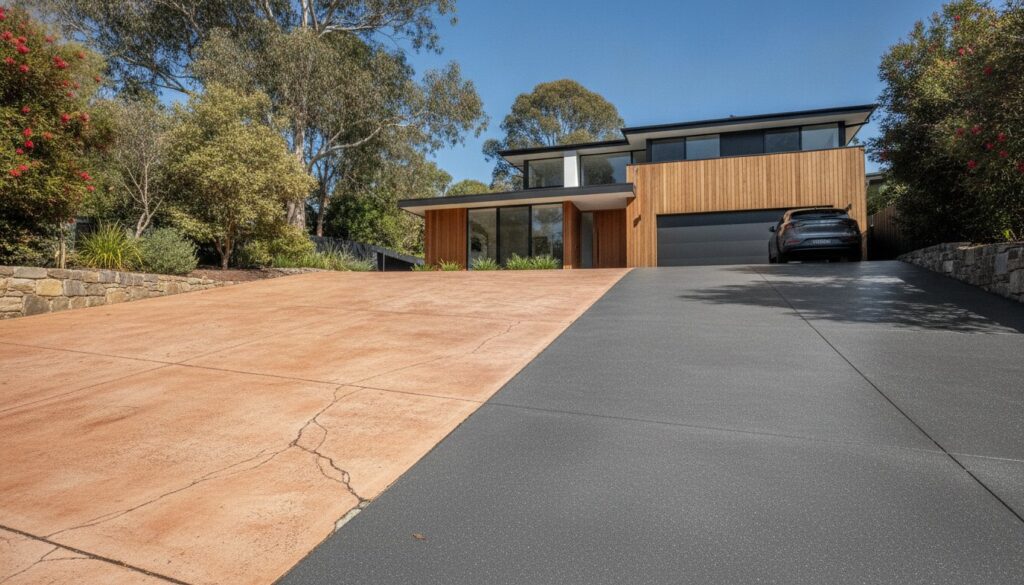
What if that faded, peeling pattern on your driveway isn’t a demolition sentence, but a canvas for a high-end architectural transformation? Most homeowners look at worn-out grout lines and slippery, dated textures and assume a jackhammer is the only way forward. It’s a common concern, especially when you’re weighing the high cost of total concrete demolition against the desire for a modern, refined aesthetic.
You can reclaim your property’s curb appeal without the mess of a full tear-out, because the answer to can you resurface stencilled concrete is a resounding yes. By utilizing professional polymer-modified overlays, we neutralize old patterns and create a durable finish that rivals the look of a fresh pour. This 2026 restoration guide breaks down the latest methods for renewing your surfaces, from meeting the latest EN1504 standards for concrete repair to managing silica dust safety. You’ll discover how to achieve a resilient finish that thrives in Sydney’s climate while gaining a clear understanding of the long-term value this craftsmanship provides.
Key Takeaways
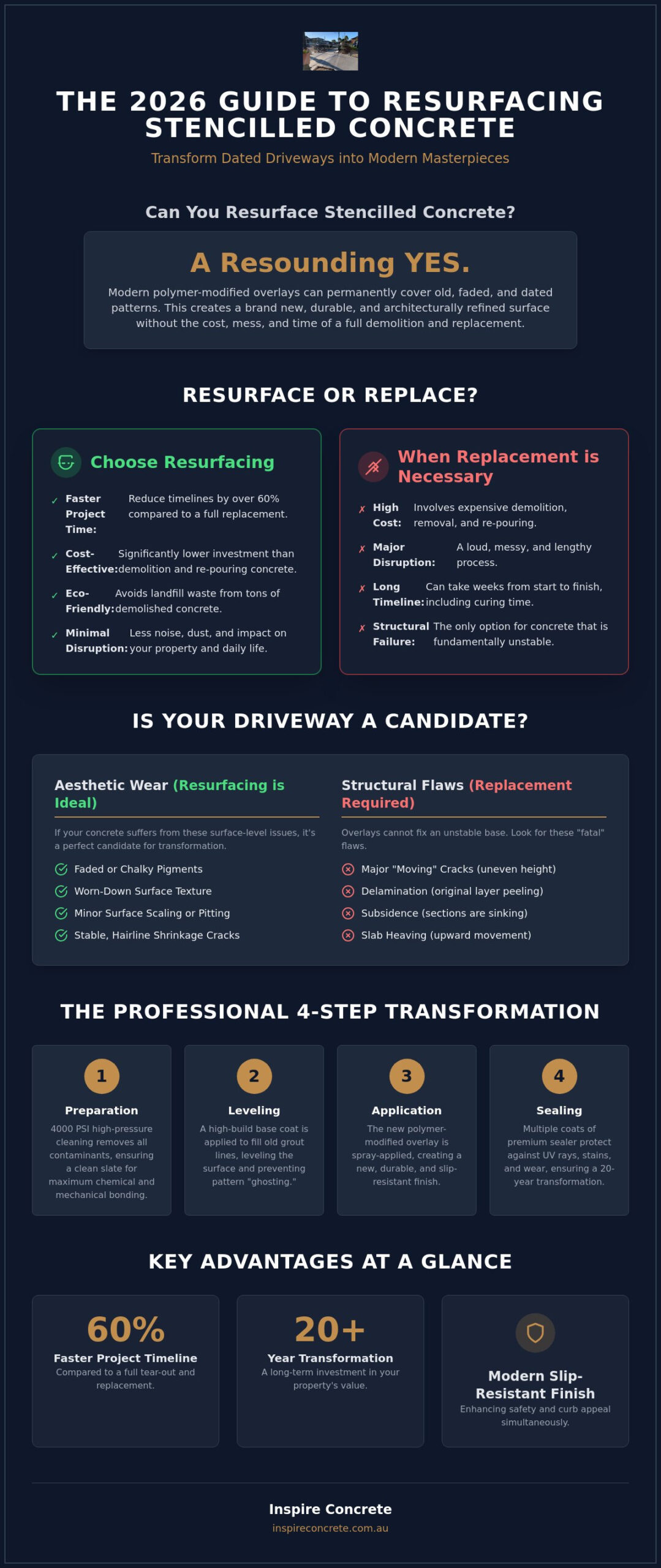
- Learn how the latest polymer-modified coatings provide a definitive answer to can you resurface stencilled concrete, provided the underlying slab is structurally sound.
- Discover the professional criteria for evaluating structural integrity versus aesthetic wear to ensure your restoration stands the test of time.
- Explore the 2026 range of spray-on finishes that offer a modern, slip-resistant alternative to dated patterns without the cost of demolition.
- Understand why a meticulous preparation process, including 4000 PSI high-pressure cleaning, is the key difference between a temporary fix and a 20-year transformation.
- Compare the environmental and logistical advantages of resurfacing, which can reduce project timelines by over 60% compared to a full replacement.
Can You Resurface Stencilled Concrete? The Professional Verdict
Transforming a dated, worn-out driveway doesn’t always require a jackhammer. The professional verdict is clear: you can absolutely restore these surfaces using specialized polymer-modified cementitious coatings. This process allows you to bypass the high cost and environmental waste of a full concrete replacement while achieving a finish that looks entirely new. However, the viability of the project isn’t a universal guarantee. Success depends on two critical factors: the structural integrity of your base slab and the specific depth of the existing stencil pattern.
Modern 2026 restoration techniques have evolved beyond simple “cover-ups.” We now utilize high-performance overlays that chemically and mechanically bond to the original surface. This means you aren’t just painting over an old design; you’re essentially fusing a new, durable layer of concrete to the old one. This allows for a complete architectural shift in colour, texture, and pattern, turning a tired utility space into a high-end design feature for your property.
The Technical Challenge of Stencilled Textures
The primary hurdle when homeowners ask can you resurface stencilled concrete involves the “highs and lows” of the existing surface. Unlike a flat slab, stencilled concrete features recessed grout lines. If a contractor applies a standard thin coating, you will likely experience “ghosting.” This is a phenomenon where the old pattern telegraphs through the new finish, leaving a faint, unattractive outline of the previous design. To prevent this, a master craftsman uses a high-build base coat to level the topography of the slab. Within the broader industry of Decorative concrete, this leveling phase is essential for ensuring the new overlay has a uniform thickness. We prioritize mechanical bonding, where the surface is ground or etched to open the pores, allowing the new polymer-modified material to “lock” into the original concrete structure.
Why Homeowners are Moving Away from Traditional Stencilcrete
In recent years, we’ve seen a definitive shift in Sydney’s design preferences. The busy, multi-coloured brick patterns of the past are being replaced by cleaner, more minimalist aesthetics. Many clients are opting for the rugged elegance of Exposed Aggregate Driveways Sydney or sleek, plain-coloured finishes. This isn’t just about fashion; it’s about longevity. Traditional stencilled surfaces are prone to aesthetic wear-and-tear, as decades of harsh Australian UV exposure cause pigments to fade and chalk. Furthermore, the deep grout lines of old stencilcrete are notorious for collecting debris and hosting weeds. Resurfacing provides a seamless, easier-to-maintain surface that better reflects a modern lifestyle and increases the long-term value of the home.
Evaluating Your Driveway: Structural Integrity vs. Aesthetic Wear
Before you decide if you can you resurface stencilled concrete at your home, you must perform a clear-eyed assessment of the foundation. Aesthetic wear, such as fading pigments, worn-down textures, or minor surface scaling, is exactly what modern overlays are designed to fix. However, structural failure is a different beast altogether. A visual inspection is your first step in determining if the slab is a candidate for a high-end restoration or if it has reached the end of its functional life.
In Sydney, the health of your concrete is often dictated by the reactive clay soils beneath the surface. These soils expand significantly when wet and contract during our dry spells, putting immense pressure on rigid concrete slabs. If your driveway has shifted or tilted due to this movement, simply covering the pattern won’t solve the underlying issue. You need to distinguish between hairline shrinkage cracks, which are narrow and stable, and structural “moving” cracks. If one side of a crack is higher than the other, it indicates a loss of sub-grade support that a resurfacing layer cannot bridge.
Delamination is another critical factor. This occurs when the original stencil layer or a previous coating begins to lift away from the base slab. If the foundation layer is failing to stick to the concrete, any new material applied on top will eventually peel away too. Ensuring the original bond is still intact is vital for a durable, long-term result.
Identifying “Fatal” Concrete Flaws
Major subsidence or slab heaving — which is the upward movement of a slab caused by expanding sub-grade soils — often signals that the concrete requires replacement rather than repair. To check for hidden issues, we recommend a simple chain-drag test. Dragging a heavy metal chain across the surface produces a clear “ring” on solid concrete, while a “hollow” thud reveals areas where the slab has detached from the sub-base or where internal voids exist. If you find extensive hollow spots, the structural integrity is likely compromised beyond the scope of a standard resurface.
The Importance of Surface Porosity
For a resurfacing project to succeed, the new polymer-modified material must penetrate the pores of the old slab to create a permanent bond. Most stencilled driveways were originally treated with heavy acrylic sealers that act as a barrier to new coatings. Following ASCC’s technical documents regarding surface preparation ensures that we achieve the correct profile for adhesion. You can test your surface by pouring a small amount of water on it; if the water beads up, an old sealer is still active and must be removed through grinding or chemical stripping. If the water soaks in and darkens the concrete, the surface is ready for the next phase. If you’re unsure about the stability of your driveway, a professional assessment for concrete resurfacing can provide the certainty you need before investing in a transformation.
The Best Resurfacing Methods for Stencilcrete in 2026
Once you’ve confirmed that your slab is structurally sound, the creative transformation begins. When homeowners ask can you resurface stencilled concrete, they’re often surprised by the sheer variety of architectural finishes available in 2026. You aren’t merely restricted to a fresh coat of the same dated pattern. Modern polymer-modified overlays allow for a complete aesthetic overhaul, moving from busy, traditional designs to sleek, contemporary statements that enhance your property’s value.
The choice of method depends on your desired final texture and the level of traffic the area receives. For many, the goal is to move away from the “stencil look” entirely, opting instead for solid colour overlays that create a burnished or honed appearance. These high-build coatings are engineered to be tougher than the original concrete, providing a resilient surface that handles the weight of heavy SUVs and daily wear without cracking or delaminating.
Spray-On Paving and Texturing
Decorative spray-on coatings remain the most cost-effective way to update colour and slip-resistance for Sydney Concrete Driveways. This system involves spraying a polymer-cement base coat followed by a textured top layer. One of the most popular 2026 trends is the use of “faux-aggregate” spray-ons. By applying multiple colours in a fine mist, we can mimic the sophisticated look of premium stone or granite at a fraction of the cost. The addition of “flecks” or multi-toned speckles is particularly effective at masking minor surface imperfections that might still be visible after the base coat. These systems are highly UV-stable, ensuring your new charcoal or slate grey finish doesn’t fade under the intense Australian sun.
Hand-Applied Micro-Toppings
When a project demands a smoother, more refined finish, we turn to hand-applied micro-toppings. This method involves trowelling on ultra-thin layers of high-strength polymer cement to create a seamless, minimalist look. It’s the premium choice for those wanting to completely hide old stencil lines and achieve a “honed” concrete aesthetic. Because these coatings are applied by hand, they offer a level of customization that spray-on systems can’t match. You can achieve subtle marbling or a uniform, industrial-chic finish that feels modern and elegant. While more labour-intensive, hand-applied coatings provide a high-build durability that is ideal for commercial-entry driveways or high-end residential alfresco areas where the visual finish must be flawless.
Choosing the right method is about balancing your creative vision with the technical requirements of the site. Whether you opt for a rugged spray-on texture or a refined micro-topping, the result is a durable, long-lasting surface that leaves the old stencil pattern firmly in the past. For homeowners extending these renovations to their aquatic spaces, you can discover Rod Cameron Pools to see how professional pool construction and renovation can complement your new concrete aesthetic.
The Professional Process: How to Resurface Stencilled Concrete
Achieving a flawless restoration is a matter of technical precision rather than a simple aesthetic update. While many homeowners ask can you resurface stencilled concrete, the longevity of the result depends entirely on the preparation phase. A shortcut in the prep work is the difference between a finish that peels in two years and one that remains resilient for twenty. We begin with a high-pressure clean using a minimum of 4000 PSI. This isn’t just a wash; it’s a deep-cleaning process designed to blast away decades of accumulated oil, dirt, and loose particles of old sealer that would otherwise compromise the bond of the new coating.
Once the surface is clean, we move to mechanical diamond grinding. This is a non-negotiable step for stencilled surfaces. The grinding process levels the “peaks” of the old pattern and opens the pores of the concrete, creating a molecular-level profile for the new polymer to grip. Following the grind, we address any structural vulnerabilities. We utilize epoxy injection or specialized polymer fillers to bridge cracks, ensuring they don’t “reflect” through to your new surface. This multi-stage application involves a dedicated base coat, a texture coat, and a high-performance top-tier sealer to lock in the transformation.
Neutralizing the Old Stencil Pattern
The most common failure in amateur resurfacing is “ghosting,” where the old grout lines become visible under the new layer. Mechanical grinding is essential here because it reduces the depth of the existing profile. Our specialized base-and-fill technique involves flooding the old grout lines with a high-strength polymer mix to create a perfectly level foundation, ensuring the old design never telegraphs through your new finish. Crucially, the slab must be bone dry before we apply the first coat. Any moisture trapped within the concrete can lead to bubbling or delamination as it tries to escape under the Sydney sun.
Sealing for Longevity and Shine
The final layer is where the artistry meets engineering. We help you choose between solvent-based sealers, which offer a deep, wet-look gloss, and water-based sealers, which provide a more natural, matte finish with lower odour. Safety is paramount, so we always integrate anti-slip additives into the final sealer coat to ensure the surface remains slip-resistant even during heavy rain. To maintain this high-end finish, we recommend a professional re-seal every three to five years, depending on traffic volume. If you’re ready to see how these professional steps can revitalize your property, our team specializes in high-precision concrete resurfacing that stands the test of time.
Resurface or Replace? A Guide for Sydney Homeowners
Deciding between restoration and demolition is a pivotal moment for any property owner. While the technical answer to can you resurface stencilled concrete is almost always yes, the final decision rests on a balance of time, budget, and structural reality. Resurfacing is remarkably efficient. A professional crew can often complete a high-end transformation in just 3 days, whereas a full replacement involves heavy demolition and significant site disruption that typically stretches beyond 10 days. Beyond the timeline, resurfacing is the “greener” choice for the environmentally conscious, as it keeps tonnes of old concrete waste out of Sydney landfills by utilizing the existing slab as a foundation.
In the competitive Sydney property market, the return on investment for a driveway restoration is often substantial. A modern, sleek finish instantly refreshes a home’s exterior, potentially adding thousands to the perceived value ahead of a sale. However, you must know when to cut your losses. If the underlying slab has suffered major subsidence or is tilting due to severe sub-grade failure, an overlay is merely a temporary mask. In these rare cases, the most responsible path forward is to invest in a new, structurally sound Concrete Slab that provides a permanent solution for the decades ahead.
The Cost-Benefit Analysis
Several variables influence the final price of a restoration project, including the total square meterage, the difficulty of the preparation phase, and the complexity of the chosen finish. It’s vital to look beyond the initial quote. The “cheapest” quote in the market often signals a lack of mechanical grinding or the use of inferior resins, which inevitably leads to delamination and costly repairs down the track. Investing in a premium resurfacing process ensures that the can you resurface stencilled concrete question results in a durable, long-term asset rather than a recurring maintenance headache. A high-quality finish doesn’t just look better; it performs better under the daily pressure of heavy vehicles and the harsh Australian sun.
Achieving a Premium Result with Inspire Concrete
Success in concrete restoration requires more than just the right materials; it demands the steady hand of a master craftsman. Hiring licensed Concreters in Sydney ensures your project adheres to the latest Australian standards and safety regulations. At Inspire Concrete, we bring a sophisticated blend of rugged professionalism and refined craftsmanship to every driveway. We don’t just apply a coating; we engineer a transformation that reflects your creative vision and enhances your lifestyle. Our commitment to excellence means we leave no room for guesswork, providing a final result that is both technically grounded and aesthetically aspirational. Transform your old stencilled driveway with Inspire Concrete today.
Begin Your Property Transformation Today
Updating your home’s exterior doesn’t have to involve the chaos of a full demolition. The answer to can you resurface stencilled concrete lies in a high-precision approach that prioritizes meticulous preparation and advanced polymer technology. By choosing a professional restoration, you’re opting for a modern, durable finish that withstands Sydney’s unique environmental pressures while significantly reducing project timelines and environmental waste compared to a total replacement.
At Inspire Concrete, we bring over 20 years of Sydney concreting expertise to every project. Our team of fully licensed and insured local craftsmen specializes in decorative restoration and high-end finishes, ensuring your creative vision is realized with technical excellence. We don’t just fix surfaces; we master the engineering and artistry required to turn basic utility into a lasting lifestyle asset. Get a Professional Quote for Your Concrete Resurfacing Project and experience the difference of refined craftsmanship. Your property deserves a finish that reflects its true value, so let’s start building your vision today.
Frequently Asked Questions
Will the old stencil pattern show through the new resurfacing?
No, the old pattern will not show through if the surface is correctly leveled using a high-build base coat. This neutralizing layer fills the recessed grout lines to prevent “ghosting,” where the previous design telegraphs through the new finish. By utilizing mechanical diamond grinding to reduce the stencil profile, we create a smooth foundation that ensures your new architectural finish looks like a fresh, seamless pour.
How long does concrete resurfacing typically last on a driveway?
A professionally applied resurfacing system typically lasts between 10 to 20 years with proper maintenance. The longevity depends on the quality of the polymer-modified materials and the precision of the initial preparation. Regular re-sealing every three to five years protects the surface from UV degradation and tyre marks, ensuring the finish remains durable and visually striking for decades.
Can I change my stencilled driveway to an exposed aggregate look?
Yes, you can achieve a “faux-aggregate” look using specialized spray-on texturing techniques. While it isn’t a traditional poured aggregate slab, we apply multi-toned flecks of polymer-cement to mimic the sophisticated, rugged appearance of stone. This is a popular option for homeowners who want to modernize their property’s aesthetic and improve slip resistance without the cost of a full replacement.
Is resurfacing stencilled concrete a DIY project?
Professional installation is highly recommended when asking can you resurface stencilled concrete, as the process requires industrial-grade equipment like diamond grinders. Achieving a permanent bond on dated, sealed surfaces is technically demanding and leaves no room for guesswork. Mistakes in surface preparation or polymer mixing ratios often lead to premature delamination, making it a high-risk project for those without specialized trade experience.
How long after resurfacing can I drive my car on the driveway?
You can usually walk on the surface after 24 hours, but you should wait at least 7 days before driving a vehicle on it. This timeframe allows the polymer-modified coatings and final sealers to reach their full structural hardness. Driving too early can cause permanent indentations or compromise the bond between the new layer and the original slab, especially during warmer weather.
Does resurfacing fix large cracks in my concrete slab?
Resurfacing is an aesthetic restoration and will not fix major structural cracks or slab subsidence. While we use specialized epoxy injections to treat minor surface cracks, large “moving” cracks indicate a foundation issue that will eventually reflect through the new coating. If your slab has significant structural failure or heaving, we recommend a full replacement to ensure long-term stability and safety.
What maintenance is required for a resurfaced concrete surface?
Maintenance is straightforward and involves regular cleaning and periodic re-sealing to preserve the finish. You should wash the surface with a mild detergent and water to remove dirt, leaves, or oil spills that can cause staining. To maintain the protective barrier and vibrant colour, we recommend applying a fresh coat of high-quality sealer every three to five years depending on traffic volume.
Is resurfaced concrete slippery when it rains?
Resurfaced concrete is not slippery when it rains because we integrate anti-slip additives into the final sealer coat. We utilize textured spray-on finishes or fine-grain grit to provide essential traction for both vehicles and pedestrians. This ensures your driveway remains safe and functional during Sydney’s heavy rainfall while maintaining the refined, high-end aesthetic you expect from a professional restoration project.
