
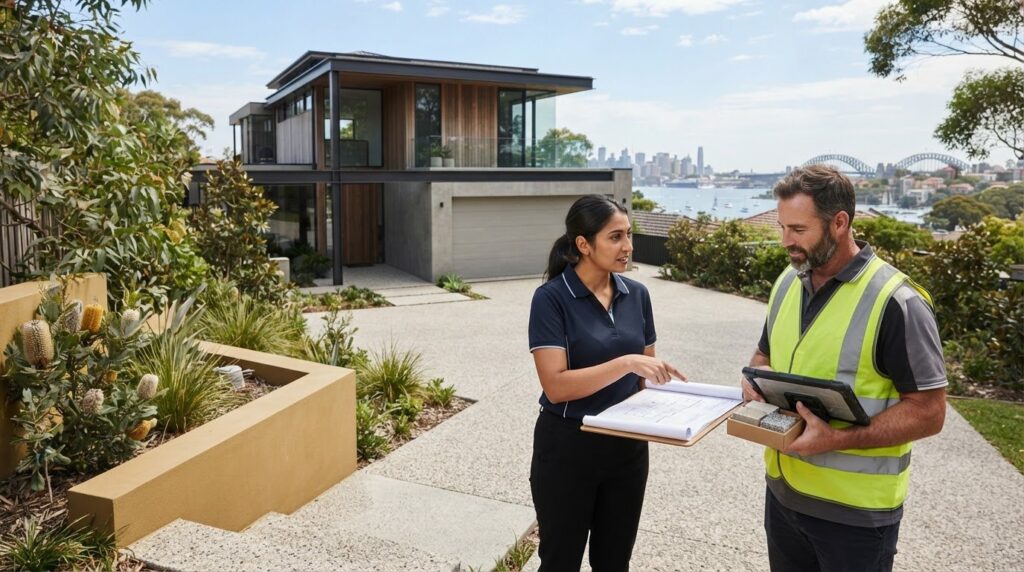
A concrete pour is only one part of a well-managed project. Effective concrete project management in Sydney brings budgeting, procurement, planning, approvals, coordination, feedback and handover into one connected process. Each stage helps keep decisions, materials and site work aligned with the finished result.
It’s natural to focus first on the visible work and budget. But the scope, site conditions, access, chosen finish and timing all shape how a concrete project is planned and delivered. Considering these details early helps you make informed choices and manage changes as work progresses.
This guide explains how to set a practical budget, organise procurement and plan the work from the initial brief to handover. You’ll also see how approvals and communication fit into the process, what can affect costs, and how experienced project management can help coordinate residential or commercial concrete work.
Key Takeaways
- Map the scope, approvals, site coordination and handover steps early so decisions stay connected throughout the project.
- Match the planning approach to the concrete work, whether it’s a driveway, slab, pathway or outdoor living area.
- Know which licence, insurance and certification details to review when assessing a project manager’s credentials.
- Plan timelines around the project’s scope, site access, preparation and finish rather than relying on a one-size-fits-all estimate.
- Review contract responsibilities, risk controls and warranty terms before work begins, and understand how feedback will be handled.
Project planning, approvals, coordination and handover
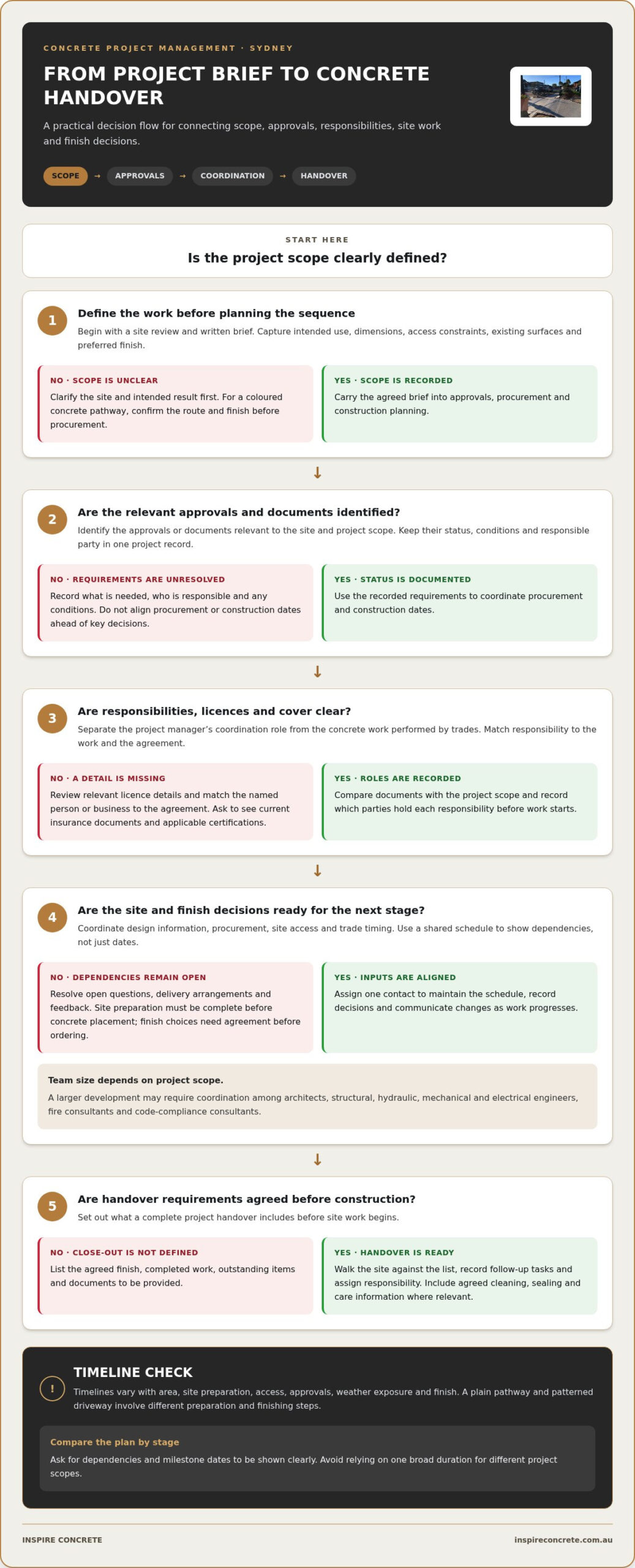
Start with a defined scope, then connect approvals, site work and finish decisions. A written sequence makes clear what must happen before each next stage.
Licences, Insurance and Certifications
Separate the project manager’s coordination role from the trades performing concrete work. Review the relevant licence details for the work being carried out, and match the named person or business to the agreement. This helps clarify who is responsible for site tasks and specialist work.
Ask to see current insurance documents and applicable certifications, then compare their details with the project scope. For example, a driveway project involving excavation and a decorative finish may require different work stages from a simple resurfacing job. Record which parties hold each responsibility before work starts.
Planning and Approvals
Begin with a site review and written project brief. Record the intended use, dimensions, access constraints, existing surfaces and preferred finish. For a coloured concrete pathway, confirm the route and finish before procurement. These details shape the work sequence and help avoid late design changes.
Next, identify the approvals or documents relevant to the site and scope. Keep the approval status, responsible party and any conditions in one project record. Align procurement and construction dates with those requirements, so materials or crews are not scheduled before key decisions are resolved.
Project Coordination
Coordination links design information, procurement, site access and trade timing. Assign one contact to maintain the schedule, record decisions and communicate changes. For a larger development, Awesim describes coordination among architects, structural, hydraulic, mechanical and electrical engineers, fire consultants and code-compliance consultants. The exact team depends on project scope.
Use a shared schedule to show dependencies, not just dates. Site preparation must be complete before concrete placement, while finish choices need to be agreed before ordering. Track open questions, delivery arrangements and feedback in the same record to spot clashes and resolve them before they disrupt the sequence.
Handover and Project Timelines
Set handover requirements before construction begins. List the agreed finish, completed work, outstanding items and documents to be provided. At handover, walk the site against that list, record follow-up tasks and assign responsibility for each. For concrete cleaning and sealing, include the agreed scope and care information in the close-out record.
Timelines vary with the area, site preparation, access, approvals, weather exposure and finish. A plain pathway and patterned driveway involve different preparation and finishing steps, so compare schedules by stage instead of relying on one broad duration. Ask for key dependencies and milestone dates to be clearly shown in the project plan.
What types of concrete construction projects does Concrete Project Management handle?
Concrete project management covers residential and commercial work, from defining the scope through site delivery. The approach depends on the structure, location, access and finish. A Sydney home driveway, for example, needs a different work sequence from a commercial slab. Define the intended use first, then match planning and coordination to the site.
Residential projects often focus on practical improvements around the home. A driveway requires attention to vehicle access, surface levels, drainage paths and finish. A concrete pathway needs a clear route between entry points, while an alfresco area should connect comfortably with adjacent outdoor spaces. Recording these requirements in the initial brief gives design and construction decisions a shared reference.
Slab projects require close alignment between plans, site preparation and concrete placement. A house slab, granny flat slab or shed slab serves a different purpose, so the scope should identify its intended use and relevant design information. Coordinate drawings, site access, material deliveries and the work sequence before construction starts. Clear responsibilities help prevent gaps between planning and site activity.
Commercial concrete work may involve more interfaces than a small residential project. For a multi-consultant development, Awesim identifies coordination among architects, structural, hydraulic, mechanical and electrical engineers, fire consultants and code-compliance consultants. The project manager’s task is to connect relevant inputs, track decisions and keep the schedule aligned. A commercial slab, for example, needs design and site requirements communicated before the pour is scheduled.
Existing concrete creates different project needs. Resurfacing updates the appearance and use of an existing surface, while cleaning and sealing focus on its care. First assess the surface condition and intended outcome, then define the work area, preparation requirements and finish. A clear scope distinguishes a surface treatment from a project requiring broader construction work.
Compare project types by asking what must be built, what already exists and which finish matters. A driveway with a decorative pattern involves finish decisions that a plain access path may not. A slab project depends on its building purpose and design coordination. These differences affect procurement, sequencing and the information the project team needs to manage.
For a driveway or outdoor surface, consider the intended use alongside its visual finish. A defined brief helps turn those preferences into practical project decisions. Explore concrete project support for a considered path from scope to finished surface.
What licences, insurance, and certifications should a Sydney concrete project manager have?
In Sydney, assess credentials against the work the project manager will personally perform. Project coordination and concrete construction are distinct responsibilities. Ask who supervises site activities, who carries out the trade work, and which qualifications apply to each role. This distinction matters for a driveway project involving excavation, concrete placement and a decorative finish.
Licensing depends on the specific work and the responsibilities assigned. Before signing, request the licence details relevant to the contracted tasks and confirm that the named person or business matches the agreement. If a project manager engages specialist trades, clarify how their credentials are recorded and who checks them. Keep this information with the scope, drawings and contract documents.
Insurance deserves the same practical review. Request current certificates of currency and read the insured party, policy period and covered activities. Compare those details with the project, such as work at a residential property or a commercial site. Ask how subcontracted work is covered and who is responsible for coordinating claims or incident reporting. Record the answers in writing.
- Licence details: Match the licence holder and work category to the contracted tasks.
- Public liability cover: Review the policy document and its stated coverage.
- Workers’ compensation: Clarify how workers engaged on the project are covered.
- Professional credentials: Check qualifications relevant to planning, supervision or technical duties.
These items are review prompts, not a substitute for matching credentials to actual duties. For example, a person coordinating a coloured concrete pathway may manage scheduling and communication, while separate workers handle preparation and placement. The agreement should name these roles clearly. That lets you assess each credential against a real responsibility, rather than relying on a broad job title.
Certifications can also show training or technical competence, but their relevance depends on the project. Ask what the credential covers, who issued it and how it relates to the work. A qualification in project coordination, for instance, doesn’t by itself describe a trade worker’s concrete skills. Consider the whole team’s credentials alongside plans, supervision arrangements and quality records.
Use a simple review sequence before work starts: match roles to tasks, inspect licence and insurance documents, then file copies with the contract. Note expiry dates and the person responsible for any updates during the project. For a resurfacing job, also record who oversees surface preparation and finish checks. Clear documentation helps keep accountability visible from appointment through completion.
Where a project includes balustrades, ask the project manager to explain how the relevant system will be checked and what records will be kept. Gallagher Jeffs states that changes in Australian standards have required adjustments to some balustrade systems to bring them into compliance. Ask whether any such adjustment is relevant to the proposed work, who will verify the system, and what documentation will support that decision. Include the answers in the project records and clarify who is responsible for addressing any issue identified before completion. This helps connect technical credentials and quality checks to the actual scope, rather than treating a certificate as evidence of competence for every element of a concrete project.
How long do common concrete projects take in Sydney?
There’s no single timeline for every Sydney concrete project. A useful schedule separates planning, site preparation, construction and readiness for use. Each stage has different dependencies. A clear pathway site may need less preparation than a driveway with demolition, restricted access or complex levels. Ask for stage milestones, not just start and finish dates.
For a driveway, the schedule should account for existing-surface removal, access arrangements, ground preparation, formwork, placement and finishing. A stamped or stencil finish also needs to be decided before work begins. Changing the pattern late can affect preparation and sequencing. Agree on the design, access plan and work boundaries before setting construction dates.
A concrete pathway follows a similar sequence, but its route and connections shape the work. Steps, garden edges, drainage details and existing surfaces can add preparation or coordination. Mark the route and adjoining surfaces during planning to identify where work starts, how access will be managed and which areas need protection.
Resurfacing follows a different timeline from new construction. The existing concrete must be assessed, and preparation depends on its condition and the chosen finish. Cleaning and sealing also require suitable surface preparation and coordination around use of the area. Define the treatment, boundaries and access restrictions before scheduling. The sequence should reflect the actual surface, not a generic concrete schedule.
For a slab, the project plan needs to connect design information, site readiness and material delivery. A house slab and a shed slab serve different purposes, so their scope and coordination needs differ. Identify dependencies such as completed preparation and delivery access, then schedule those milestones before concrete placement.
Use these steps to review a proposed timeline:
- Confirm the scope: Name the project type, finish and work boundaries.
- Map dependencies: List approvals, site preparation and decisions that must precede construction.
- Set milestones: Show planned start points for each stage, including handover.
- Plan access: Record delivery routes, occupied areas and any restrictions affecting site work.
Weather exposure, site access, design changes and coordination with other trades can shift individual stages. A Sydney property with narrow access may need different delivery planning from an open site. Record changes against the relevant milestone, so the schedule shows what changed and which later tasks depend on it.
Before work starts, agree how progress updates will be shared and how schedule changes will be recorded. For example, note a revised finish selection alongside its effect on procurement and sequencing. A stage-based plan makes it easier to understand progress and prepare for each part of the project.
What risks and warranties should I check before hiring a concrete project manager
Review the written scope before agreeing to a concrete project. It should describe the work area, surface preparation, finish, exclusions and responsibilities. For example, a driveway resurfacing scope should distinguish preparation from the new surface treatment. Clear boundaries make changes easier to identify and their effect on the agreed work easier to understand.
Site conditions create practical challenges. Uneven ground, restricted access, existing concrete and nearby structures can affect preparation and construction. Make sure the project plan records these conditions and explains who manages changes if they differ from initial assumptions. For a narrow Sydney accessway, document delivery arrangements and work zones before scheduling.
Check how the agreement addresses quality concerns and defects. It should explain how to report an issue, who receives the notice and how inspection or rectification is handled. Review the written warranty terms, including what work they cover, when coverage begins, exclusions and the claims process. Don’t rely on a verbal summary.
Keep warranty responsibilities clear in the project documents. Workmanship, supplied materials and manufacturer-backed products may have different terms. For a coloured or stamped surface, record the agreed finish and the documents that describe it. A written record gives both parties a clear reference if the finished appearance or completed work is disputed.
- Scope changes: Record how proposed variations are described, approved and reflected in the schedule.
- Site protection: Identify access routes, nearby surfaces and areas requiring protection during work.
- Quality checks: Specify which stages are inspected and how observations are recorded.
- Warranty process: Keep the coverage terms, claim contact and required evidence together.
Payment terms should connect to identifiable project stages. Check what evidence of completion accompanies each payment request and how unresolved items are recorded. A handover list, for example, can distinguish incomplete work from accepted items. This creates a traceable record and clarifies responsibilities at project close.
Keep project communications, approved changes, photographs and handover notes in one file. If a concern arises, note its location, date and description, then follow the agreed reporting process. For a pathway, a clear photograph of the affected section can help identify the issue during review. Documentation supports a precise conversation about next steps.
Before appointing a project manager, compare the scope, risk controls and warranty terms as one package. To discuss the requirements of your concrete project, outline your concrete project and its intended finish.
Where diamond grinding is proposed, make sure the scope identifies it clearly and states how it relates to the agreed finish, so any later quality concern can be assessed against the written work description. George Vorobieff introduced diamond grinding into Australia 20 years before the directory text was written. Keep any method-related explanation and approval with the rest of the project record, rather than relying on an informal description.
Inspire Concrete: Exposed Aggregate Driveways
Inspire Concrete helps turn driveway ideas into considered concrete finishes. When planning an exposed aggregate driveway, consider its appearance alongside your property’s access and use. Stencil, stamped and coloured concrete driveways offer other finish options to include in the design brief.
Before planning, note the driveway layout, existing surface and preferred look. These details help shape a focused conversation about the project and its finish. A well-defined brief connects practical requirements with the visual character you want at your home’s entrance.
To discuss an exposed aggregate driveway or another concrete finish, contact Inspire Concrete.
Shape your project’s next stage
Turn your preferred look into a clear design direction by considering how the concrete will connect with your home, how the area will be used and which finish suits the setting. A considered brief gives the project a purposeful starting point, linking practical needs with the character you want to create.
For concrete project management in Sydney, choose a team whose work aligns with your project’s scope and finish. Inspire Concrete offers exposed aggregate, stencil and stamped concrete driveways, each providing a distinct design direction for a driveway that complements its surroundings.
Bring your ideas and project requirements together in a conversation with Inspire Concrete. Contact Inspire Concrete to discuss your driveway plans. Your next step can bring the vision into sharper focus and help you move towards a well-considered concrete finish.
Frequently Asked Questions
How much does concrete project management cost in Sydney?
The price depends on the project and is provided after a quote request. Key factors include the work scope, excavation, site preparation, access, dimensions and selected finish. Inspire Concrete offers a free, no-obligation quote from a qualified estimator. For a driveway, describe the existing surface and preferred finish so the estimate can reflect the actual work involved.
What are the steps in managing a concrete construction project in Sydney?
Concrete project management in Sydney starts by defining the intended result and documenting site requirements. Organise the design information, approvals pathway and procurement, then confirm access and responsibilities before scheduling site work. During construction, record decisions and changes, and inspect the completed work against the agreed scope. For a driveway, specify the layout and finish before materials are organised.
What Sydney council approvals and Australian Standards apply to concrete work?
Applicable approvals and standards depend on the property, project scope and proposed work. Describe the work, such as a new driveway or a change to an existing surface, and identify the relevant council planning pathway. Then specify the technical standards that apply in the project documents. Keep approval conditions and standard references with the plans and agreement, so the team can work to the same requirements.
