
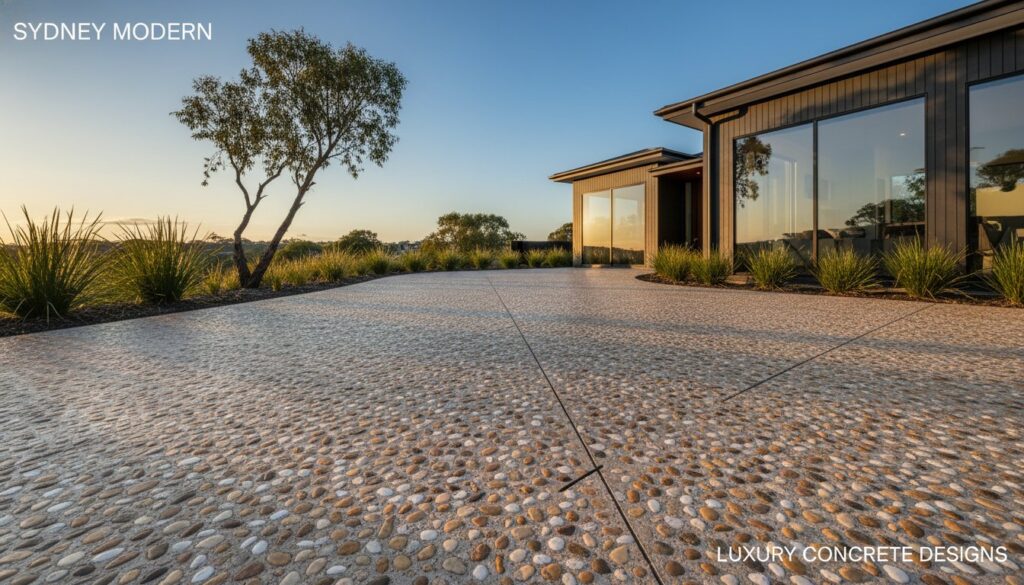
In 2023, record-breaking temperature fluctuations across Greater Sydney put thousands of residential slabs to the ultimate test. Most homeowners understand that our local reactive clay soils and punishing summer sun aren’t kind to basic trade work. It’s stressful to watch a significant investment develop spiderweb cracks because a contractor ignored the technical requirements of the site. You want a result that balances rugged durability with a bespoke, elegant finish that enhances your lifestyle.
Selecting the right finish for your project involves balancing visual impact with the practical demands of the Sydney climate. Homeowners must choose between purely functional surfaces and decorative statements that elevate a property’s market value. Modern concreting has evolved beyond the basic grey slab; it now serves as a primary design element. Integrated colour pigments allow us to match contemporary palettes, with charcoal and basalt tones currently dominating 22% of new residential driveway installations in the Eastern Suburbs. While minimalist designs have sparked a resurgence in refined plain concrete, most high-end builds benefit from the added texture and depth of specialized treatments; for example, the decorative finishes showcased by Diamond Concrete Designs illustrate the sophisticated aesthetic that modern surfacing can achieve.
We agree that structural integrity shouldn’t be sacrificed for style. Discover how professional concreting transforms Sydney properties through expert engineering, bespoke design, and local environmental mastery. We’ll show you how to achieve a crack-resistant driveway that elevates your curb appeal and provides a seamless project management experience from start to finish. This case study explores the precision craftsmanship and structural engineering required to turn a standard pour into a lasting architectural statement that inspires confidence for decades.
Key Takeaways
- Master the complexities of Sydney’s reactive clay soils through expert engineering and sub-grade preparation to prevent structural failure.
- Identify the technical requirements for a durable slab, focusing on high-MPa mixes that ensure your investment withstands the test of time.
- Navigate the selection of architectural finishes to find a bespoke balance between aesthetic elegance and practical maintenance requirements.
- Learn how professional concreting transforms your property’s value by prioritizing long-term durability over the false economy of cheap quotes.
- Gain insights from a Western Sydney case study on achieving a seamless, high-end transition between functional driveways and refined outdoor living spaces.
The Sydney Concreting Challenge: Engineering for Reactive Soils
Professional concreting is far more than a simple trade. It’s a sophisticated balance of structural engineering and aesthetic design that must respond to the specific environmental demands of the local landscape. In Sydney, the ground beneath our feet is rarely static. Achieving a result that lasts for decades requires a deep understanding of the fundamental properties of concrete and how they interact with our unique geography. While many see a finished slab as a static object, it’s actually a dynamic structure that must breathe and flex with the earth.
At Inspire Concrete, we distinguish ourselves through a “Superior” pour methodology. A standard pour might satisfy basic building codes, but it often fails to account for the long-term stressors of the Australian environment. We approach every project as an architectural craft, ensuring the sub-grade preparation is as refined as the decorative finish. This commitment to excellence transforms a simple utility into a long-term asset for your property.
Understanding Reactive Clay in Western Sydney
Western Sydney suburbs, from Blacktown to the foothills of the Blue Mountains, are notorious for highly reactive clay soils. These soils act like a sponge. They expand significantly when wet and contract during dry spells. This constant movement creates a “heave and subside” effect that can snap a poorly engineered slab in two. We don’t accept the 100mm industry standard as a universal solution. Many sites require thicker profiles or specialized reinforcement to counteract soil movement. Our process integrates detailed architectural drafting to identify site-specific drainage requirements, ensuring water is diverted away from the slab’s edge to maintain soil stability.
The Science of Curing in the Sydney Heat
Sydney’s humid-subtropical climate is a double-edged sword for concreting
Mastering the Pour: The Technical Anatomy of a Durable Slab
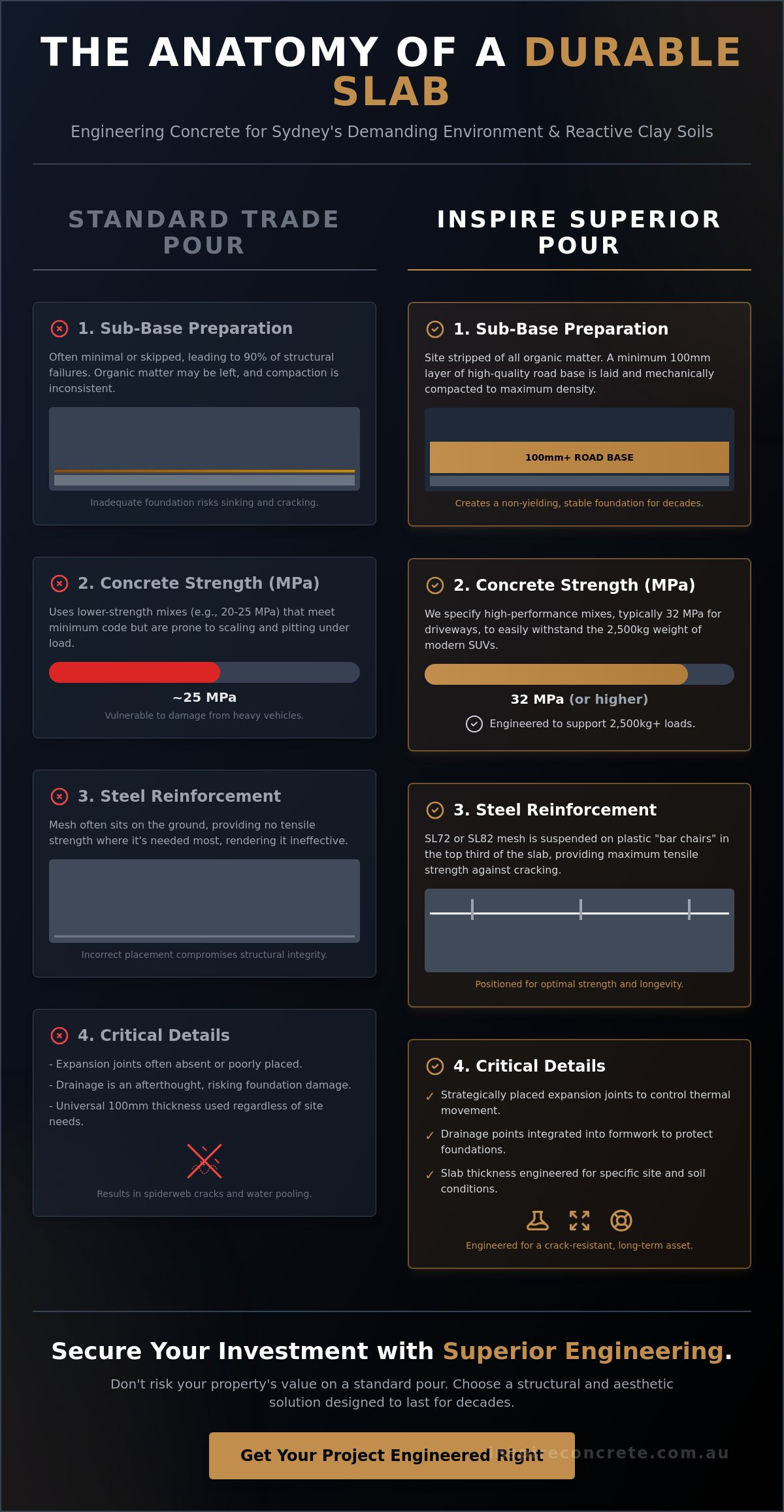
Achieving a flawless finish in Sydney’s varied terrain requires more than just a steady hand; it demands an obsession with the invisible layers that dictate a slab’s lifespan. The process of professional concreting follows a rigorous sequence designed to combat the reactive clay soils common across the Greater Sydney region. We prioritize high-performance mixes, typically utilizing a 32 MPa (Megapascal) concrete for driveways to ensure the surface withstands the 2,500kg weight of modern SUVs without scaling or pitting over time.
The “Invisible Work” defines the quality of the final product. This includes precise excavation to the required depth, the installation of sturdy timber or steel formwork, and the application of a moisture barrier where necessary. Every millimetre of the site is surveyed to ensure the finished level promotes natural water runoff, protecting your home’s foundations from pooling liquid.
Sub-Base Preparation: The Foundation of Success
Industry data indicates that 90% of structural concrete failures originate before the first truck arrives on site. We mitigate this risk by stripping back organic matter and introducing a minimum 100mm layer of high-quality road base. This material is processed with mechanical plate compactors to achieve maximum density. Sub-grade compaction serves as the critical barrier against driveway sinking by eliminating air pockets and creating a uniform, non-yielding surface for the load.
Steel Reinforcement and Expansion Joints
Steel reinforcement transforms brittle concrete into a resilient composite. In Sydney, SL72 or SL82 mesh is the recognized standard for residential projects, providing the tensile strength needed to hold the slab together under pressure. We use plastic bar chairs to suspend this mesh precisely in the top third of the slab, ensuring it’s positioned where tension forces are highest rather than sitting uselessly at the bottom.
- Bar Chairs: These small supports prevent the mesh from sinking, ensuring the steel is fully encased in concrete for maximum structural integrity.
- Expansion Joints: These are strategically placed “control points” that direct natural thermal movement, preventing unsightly random cracking.
- Drainage Integration: We map out drainage points within the formwork design to ensure water moves away from the structure seamlessly.
Our team treats every pour as a permanent addition to your property’s legacy. We don’t just pour liquid stone; we engineer a platform that enhances your lifestyle and adds measurable value. If you’re looking for a result that blends engineering precision with aesthetic appeal, explore our bespoke concrete solutions to see how we transform local properties. This technical rigor ensures that your investment remains as striking in ten years as it is on the day the forms are stripped away.
Architectural Finishes: Choosing the Right Aesthetic for Your Property
Selecting the right finish for your project involves balancing visual impact with the practical demands of the Sydney climate. Homeowners must choose between purely functional surfaces and decorative statements that elevate a property’s market value. Modern concreting has evolved beyond the basic grey slab; it now serves as a primary design element. Integrated colour pigments allow us to match contemporary palettes, with charcoal and basalt tones currently dominating 22% of new residential driveway installations in the Eastern Suburbs. While minimalist designs have sparked a resurgence in refined plain concrete, most high-end builds benefit from the added texture and depth of specialized treatments.
Exposed Aggregate: The Premium Choice for Sydney Driveways
Exposed aggregate remains the gold standard for durability and safety. It provides superior slip resistance, achieving P4 or P5 ratings that are essential for the steep gradients found across the North Shore and Northern Beaches. Our “Inspire Mix” allows you to customise the aesthetic by selecting specific stone sizes, such as 7mm or 10mm rounded river pebbles, blended with bespoke colour pigments. To maintain that signature wet-look finish and protect the stones from Sydney’s harsh UV rays, you’ll need to re-seal the surface every 24 to 36 months. This simple maintenance cycle ensures the structural integrity remains uncompromised while the colours stay vibrant.
Stencil and Stamped Concrete: Texture and Pattern
You can achieve the sophisticated look of hand-laid cobblestone or European slate without the prohibitive costs of individual pavers. Stamped concrete uses heavy-duty mats to press patterns into wet concrete, while stencilling utilises disposable paper templates to create intricate brick or tile designs. The process involves applying a double strength colour hardener to the surface, which creates a wear-resistant layer significantly harder than standard concrete.
- Cost-Efficiency: Provides a high-end look at a fraction of the price of natural stone.
- Weed Suppression: Unlike traditional pavers, the continuous slab prevents weed growth through the “joints.”
- Durability: Colour hardeners increase the surface MPA (megapascals), making it ideal for high-traffic vehicle areas.
In high-traffic areas, stencilled surfaces show impressive resilience. Data from local infrastructure assessments indicates that professionally applied stencilled concreting maintains its pattern clarity for over 15 years when correctly maintained. We invite you to inspire your next renovation by choosing a texture that complements your home’s existing masonry. Every project we undertake is a partnership in craftsmanship, ensuring your investment stands the test of time.
Case Study: Transforming a Western Sydney Residence with Exposed Aggregate
In the Hills District, a 20-year-old driveway had become a structural liability for a local family. The steep gradient and original unreinforced slab led to significant cracking and sub-soil instability. This project required more than a simple replacement; it demanded a complete architectural overhaul to ensure long-term durability. The homeowners sought a sophisticated, seamless transition that connected their garage to the rear alfresco area, opting for a bespoke charcoal exposed aggregate to modernize the entire property.
Phase 1: Demolition and Site Correction
Our team began by removing 12 tonnes of old, failing concrete and hauling it off-site for recycling. This phase focused on engineering the ground for the next 50 years rather than just the next five. We corrected the fall across the 150sqm area to prevent water pooling against the home’s foundation. To manage the heavy Sydney storm runoff typical of the Western suburbs, we installed a custom kerb and gutter system. We also redrafted the site layout to widen the vehicle turning circles, significantly improving daily functionality for the residents.
Phase 2: The Architectural Pour and Finish
Precision is vital during high-end concreting projects of this scale. We coordinated a 22-cubic-metre pour using a specialised concrete pump to navigate the difficult site elevations. Timing is everything with decorative finishes. Once the concrete reached the ideal set point, we meticulously washed off the surface retardant to reveal the premium charcoal aggregate. This process requires a steady hand to ensure the texture remains consistent across the entire expanse. We completed the transformation with a high-grade chemical sealer to protect the surface from oil penetration and UV damage.
The final result is a striking entrance that provides immediate curb appeal and massive value to the residence. The deep charcoal tones contrast beautifully with the manicured lawns, proving that structural integrity and refined aesthetics can coexist. We didn’t just replace a driveway; we engineered a lifestyle upgrade that handles the pressure of heavy vehicles while looking like a piece of architectural art.
Ready to elevate your property with Sydney’s most durable decorative finishes? Let us inspire your next project with a bespoke concreting solution tailored to your home.
Securing Your Investment: Maintenance and Professional Selection
High-quality concreting delivers more than just a functional path; it provides immediate equity to your Sydney home. Real estate data suggests that professional hardscaping can boost a property’s market value by up to 12% by enhancing curb appeal and usable space. While a low-cost quote might seem attractive, the total cost of ownership often tells a different story. Substandard mixes and poor reinforcement lead to structural failure, frequently resulting in replacement costs that exceed A$8,000 for a standard driveway within 36 months. Understanding how to select the right concrete for a driveway in Sydney is essential to avoiding these costly mistakes.
Hiring a professional requires due diligence to protect your capital. In New South Wales, any residential building work exceeding A$5,000 requires a written contract and a licensed contractor. Before signing, verify these essentials with the help of our master guide to hiring professional concreters in Sydney:
- NSW Fair Trading License: Ensure the contractor holds a current license specifically for concreting.
- Insurance Coverage: Request proof of Public Liability Insurance with a minimum A$10 million coverage.
- Detailed Specifications: A professional quote must outline slab thickness, MPa strength, and reinforcement mesh types.
- Local References: Ask for addresses of projects completed in the Sydney Metro area over the last 24 months to inspect durability.
The Longevity Factor: Cleaning and Sealing
Precision installation is only the first step. To maintain the aesthetic brilliance of your surface, you should implement a high-pressure cleaning schedule every 12 months. This prevents the buildup of mould and removes stubborn tyre marks that can etch into the surface. For decorative finishes like exposed aggregate or coloured concrete, re-sealing every 2 to 3 years is non-negotiable. Sydney’s intense UV rays and coastal humidity eventually break down protective coatings, leaving the concrete vulnerable to moisture penetration and salt attack. Watch for early warning signs like “dusting” or surface whitening; these indicate the sealer has failed and requires immediate attention before structural wear begins.
Why Inspire Concrete is Sydney’s Trusted Partner
We bring a 20-year legacy of excellence to every project across the Sydney Metro and Blue Mountains regions. Our team understands that a driveway or patio is a permanent fixture of your lifestyle. We provide the “Inspire Guarantee,” which represents our unwavering commitment to structural integrity and architectural design. We don’t just pour slabs; we engineer foundations for your property’s future. Our process is transparent, technical, and tailored to the specific soil conditions of your local area. When evaluating your options, our comprehensive guide to choosing the best concrete contractors in Sydney gives you the definitive checklist to verify licensing, assess soil management strategies, and ensure your chosen professional meets the highest standards.
Build for the Future with Precision Concreting
Superior results in the Sydney Metro area require more than just a standard pour. They demand an expert understanding of the region’s reactive soils and a relentless commitment to structural integrity. You’ve seen how the right architectural finish transforms a residence into a high value asset. It’s about blending engineering precision with a sophisticated aesthetic vision to ensure your slab stands the test of time. Quality concreting is an investment in your property’s long term durability and curb appeal.
Choosing a partner with over 20 years of experience removes the guesswork from your project. Our team manages the entire process through expert architectural drafting and dedicated project management. We’re fully licensed and insured in compliance with NSW Fair Trading regulations; this ensures your peace of mind from the first consultation to the final set. We don’t just deliver a surface; we create a foundation for your lifestyle.
Transform your property with Sydney’s concrete experts, get your bespoke quote today
Let’s bring your vision to life with a finish that truly inspires.
Frequently Asked Questions
How much does professional concreting cost per square metre in Sydney?
In Sydney, professional concreting services typically range from A$65 to A$150 per square metre depending on the complexity and finish. Standard grey slabs often sit at the lower end, while decorative finishes like exposed aggregate or honed concrete reach the higher price bracket. These figures reflect current 2024 market rates for high-quality workmanship and structural integrity.
How long does a new concrete driveway take to cure before I can drive on it?
You should wait at least 7 days before driving a standard passenger vehicle on your new driveway. While the surface feels hard within 24 hours, it takes 28 days to reach its full design strength. Heavy trucks or caravans should stay off the surface for the full 28-day period to prevent structural damage or surface marring that ruins the aesthetic.
Do I need council approval for a new concrete driveway in Sydney?
Most residential driveway replacements in Sydney fall under “Exempt Development” and don’t require formal council approval if they meet specific size and drainage criteria. However, if you’re creating a new crossover or working on a heritage-listed property, you must submit a Section 138 application to your local council. We always recommend checking the State Environmental Planning Policy before starting your project.
What is the best type of concrete for a steep driveway?
Exposed aggregate is the superior choice for steep Sydney driveways because it provides essential slip resistance and traction. The textured surface ensures vehicles can safely navigate inclines during wet weather. For slopes exceeding a 1:5 grade, we often recommend a broom finish or deep scoring to further enhance safety and meet Australian Standards for pedestrian and vehicle access.
Will my concrete driveway crack, and can it be prevented?
All concrete undergoes minor shrinkage, but we prevent visible, structural cracking through strategic placement of expansion joints and internal steel reinforcement. By cutting control joints at intervals of approximately 3 metres, we guide the natural movement of the slab. This meticulous approach ensures that any movement is invisible and doesn’t compromise the elegant finish of your property.
How do I choose between concrete resurfacing and a full replacement?
Choose resurfacing if your existing slab is structurally sound but looks weathered or outdated. If the concrete has deep structural cracks wider than 5mm or shows signs of sinking, a full replacement is the only way to ensure long-term durability. We assess the sub-base stability to determine if a fresh pour is necessary to inspire confidence in your home’s foundation.
What is the difference between MPa ratings in concrete?
MPa stands for Megapascals, which measures the compressive strength of the concrete after 28 days. For standard Sydney footpaths, 20 MPa is sufficient, but driveways require a minimum of 25 MPa to handle vehicle loads. High-performance projects often utilize 32 MPa or 40 MPa to provide the rugged professionalism needed for heavy-duty commercial environments or coastal areas.
Can I pour concrete over an existing slab?
You can pour new concrete over an existing slab, but it requires a minimum thickness of 100mm and a specialized bonding agent. This method isn’t always recommended because existing cracks often reflect through to the new surface. It also raises the ground level, which can interfere with door clearances and existing drainage systems around your Sydney home. High-quality concreting usually demands a fresh start for the best results.
