
Your driveway is the first impression your home makes, yet industry data suggests sub-standard pours lead to visible cracking in 20% of Sydney residential projects before the second year. You likely want a grand entrance that reflects your pride of ownership rather than a recurring maintenance headache. Choosing the right concrete for a driveway is a balance of engineering precision and refined craftsmanship. It’s about more than just a grey slab; it’s about creating a bespoke foundation that withstands the unique Sydney climate and enhances your property’s long-term valuation.
We’ll demystify the technical jargon that often stalls projects, from 32 MPa strength ratings to the necessity of SL82 steel mesh. This 2026 guide ensures you master both the aesthetic finishes and the structural integrity needed for a 30 year lifespan. You’ll gain absolute clarity on Sydney Council permit regulations and the exact installation steps required to transform your home’s exterior. Let’s move beyond simple utility to inspire a design that elevates your lifestyle and provides total peace of mind.
Key Takeaways
- Learn why 25MPa to 32MPa strength grades and a 100mm minimum thickness are non-negotiable for a durable residential surface.
- Discover how to navigate Sydney’s reactive clay soils and extreme temperature fluctuations to prevent structural cracking and ensure longevity.
- Elevate your property’s curb appeal by selecting the most sophisticated concrete for a driveway, featuring premium finishes like bespoke exposed aggregate.
- Understand the critical 7-day curing timeline and essential council requirements to ensure a seamless transition from excavation to your first park.
- Identify the hallmarks of a master craftsman and protect your investment by verifying licensing and insurance for all projects over A$5,000.
Technical Specifications: What is the Best Concrete for a Driveway?
Selecting the right concrete for a driveway involves more than picking a finish. It requires a deep understanding of structural requirements that ensure your investment lasts for 30 years or more. While many homeowners focus on the surface, the secret to longevity lies in the subgrade. A base compacted to 98% relative density prevents the shifting and cracking that ruins a premium finish. Before you consider the aesthetics, you must master the mix. To understand the raw materials involved, you can explore the fundamental question: What is Concrete? and how its composition affects performance. We aim to inspire confidence through technical precision, ensuring your driveway is built to withstand Sydney’s variable climate.
Understanding MPa: Strength Grades Explained
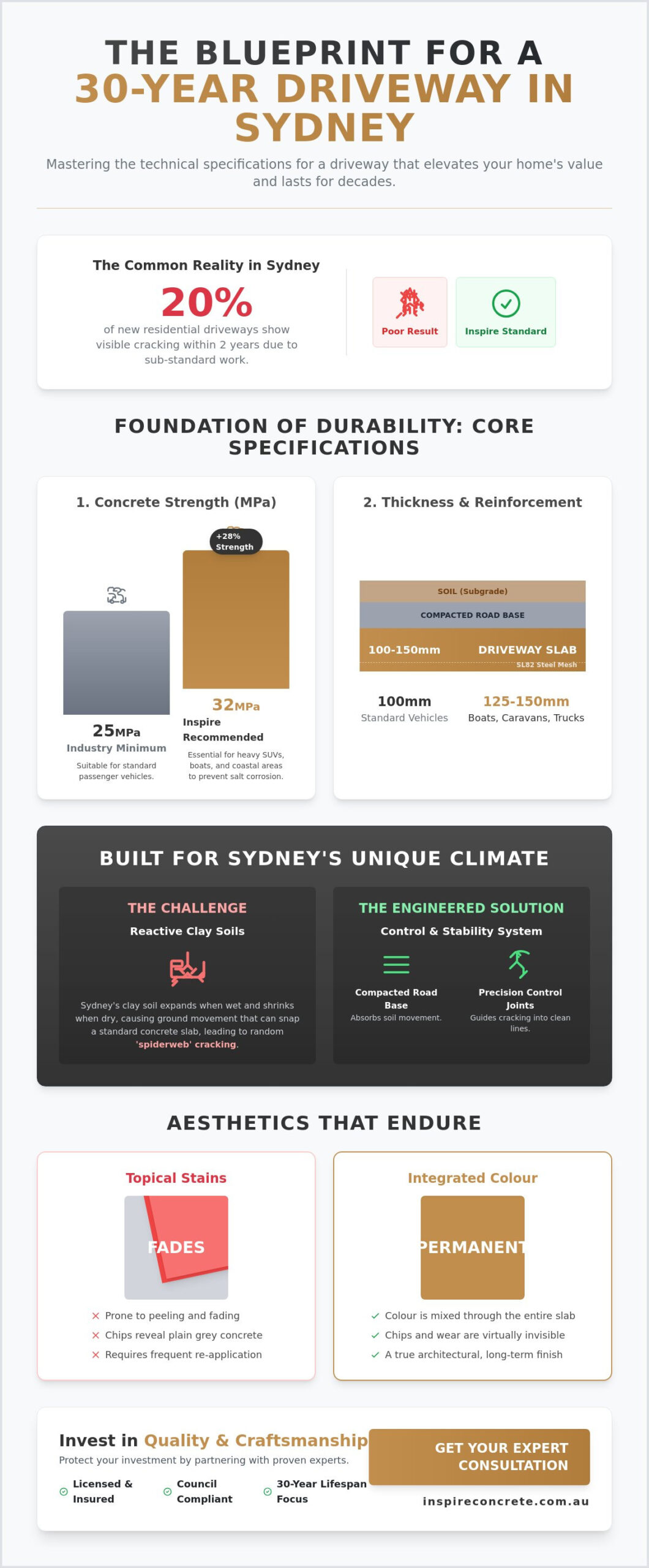
MPa stands for Megapascals, which is the metric unit used to measure the compressive strength of the mix. MPa represents the force required to crush a specific concrete sample. For a standard residential Sydney driveway, 25MPa is the industry minimum. However, we recommend 32MPa for properties with heavy SUVs or those located in coastal areas like Bondi or Cronulla. The higher 32MPa rating provides 28% more strength and better resistance to salt-induced corrosion. This protects the internal steel from rust and ensures the slab maintains its structural integrity over decades of use.
Thickness and Reinforcement Standards
Standard passenger vehicles require a minimum thickness of 100mm. If you plan to park a boat, a caravan, or a small delivery truck, you should increase this to 125mm or 150mm to distribute the weight effectively. Strength isn’t just about depth; it’s about managing internal tension. We utilize SL72 or SL82 steel mesh to provide the necessary tensile strength that concrete lacks on its own. Proper placement of this steel, combined with concrete paving Sydney experts’ techniques for base preparation, ensures your driveway won’t buckle under pressure. It’s the difference between a temporary fix and a permanent transformation.
Standard grey concrete serves as a functional, cost-effective canvas. If you want a more bespoke look, integrated colour mixes are the superior choice. Unlike topical stains that can peel or fade, integrated pigments are mixed through the entire batch at the plant. This means even if the surface chips slightly over time, the colour remains consistent throughout the slab. It’s a choice between simple utility and a lasting architectural statement that enhances your property’s value. We don’t just pour slabs; we create durable foundations for your lifestyle.
Structural Integrity: Why Sydney’s Soil Matters for Your Driveway
Many homeowners believe that cracks are an inevitable part of aging concrete. That’s a misconception. In reality, the longevity of your driveway depends almost entirely on how well it interacts with the ground beneath it. Sydney presents a unique set of geological challenges. From the intense 45-degree heatwaves in Western Sydney to the persistent moisture levels found near the Blue Mountains, the local climate dictates how your slab cures and settles.
Professional concreters sydney don’t just pour liquid stone; they engineer a system that accounts for subterranean movement. Choosing the right concrete for a driveway means looking past the surface finish and focusing on the foundation. We prioritize structural resilience by analyzing your site’s specific soil profile before the first truck arrives. This technical foresight ensures your investment stands the test of time and temperature.
The Challenge of Reactive Clay Soils
Sydney’s geography is dominated by reactive clay. This soil type is notoriously volatile. It expands when wet and contracts as it dries, creating a rhythmic shifting that can easily snap a poorly prepared slab. We combat this by installing a heavy-duty road base or a specialized sand bed. This layer provides a flexible cushion that absorbs soil movement. Additionally, we use precision-cut control joints. These joints act as intentional weak points, guiding any natural expansion into straight, controlled lines rather than allowing random, spiderweb cracking to ruin your aesthetic. This approach transforms a potential structural flaw into a managed design feature.
Designing for Sydney’s Drainage Requirements
Poor water management is the fastest way to undermine your driveway’s foundation. Sydney’s council regulations are strict regarding stormwater runoff, and for good reason. We design every project with a minimum 1:100 fall to ensure water never pools on the surface. This specific grade directs rain toward integrated spoon drains or drainage pits, protecting both your driveway and your home’s footings from erosion.
If you’re planning a new build, you can inspire your next project by prioritizing these technical details early in the design phase. A well-drained slab stays stable, looks better, and maintains its value for decades. Selecting the best concrete for a driveway requires this balance of engineering precision and local environmental knowledge. We ensure every millimetre of fall is calculated to handle Sydney’s intense storm events, which often see over 100mm of rain in a single afternoon.
Aesthetic Transformations: Choosing Your Driveway Finish
Your driveway serves as the visual handshake of your property. It’s the first thing visitors see and the last thing you experience when leaving for the day. While structural integrity is non-negotiable, the transition from simple utility to high-end design is where your investment truly matures. Choosing the right concrete for a driveway involves balancing the rugged demands of Sydney’s climate with a finish that complements your home’s architectural DNA. In a 2026 market where curb appeal can influence property valuations by as much as 5 to 10 percent, the aesthetic choice you make today defines your home’s future market position.
Plain concrete offers a clean, minimalist look, but decorative finishes provide the sophistication required for premium Sydney suburbs. While plain slabs are durable, they lack the depth and texture that mask everyday wear and tear. By contrast, decorative options integrate colour and texture directly into the surface, ensuring the finish remains vibrant despite the harsh Australian sun.
Exposed Aggregate: The Gold Standard
For homeowners seeking the pinnacle of durability and style, exposed aggregate driveways remain the premier choice across Sydney. This finish involves stripping away the top layer of cement paste to reveal a beautiful bed of natural stones. This texture isn’t just for show; it provides superior slip resistance, which is essential for the steep gradients often found in the Eastern Suburbs and Northern Beaches.
- Bespoke Stone Selection: You can customise your mix using smooth river pebbles for a coastal feel or crushed quartz for a sharp, contemporary edge.
- Structural Grit: The exposed stones create a hard-wearing surface that hides tyre marks and oil drips better than any other finish.
- Professional Sealing: We apply high-grade sealants to achieve that coveted “wet look.” This protective layer prevents moisture penetration and keeps the colours vivid for years.
Stencil and Stamped Concrete: Patterned Sophistication
If you desire the look of traditional masonry without the high maintenance of individual pavers, stencil and stamped finishes offer an elegant solution. Stencil concrete uses disposable paper templates to create patterns like herringbone brick or cobblestone. It’s a smart way to get a premium look at a more accessible price point. Because it’s a single continuous slab, you won’t have to worry about weeds growing through the cracks or pavers shifting over time.
Stamped concrete takes this further by pressing three-dimensional textures into wet concrete. While it offers incredible realism, it’s vital to work with experts who understand Sydney’s unique soil movements. In high-traffic areas, stencilled surfaces often prove more resilient as they maintain the flat profile of the slab. For a look at how these finishes integrate into high-end projects, explore our work on Concreting in Sydney. Selecting the best concrete for a driveway means looking beyond the pour; it’s about crafting a surface that will inspire pride every time you pull into your garage.
The Installation Process: Council, Curing, and Care
A premium driveway installation isn’t just about pouring liquid stone. It’s a structured engineering project. Most Sydney projects follow a 10 to 14 day window from the first shovel hit to the first vehicle parked. Excavation and subgrade preparation happen on day one to ensure a stable foundation. Steel reinforcement and pouring usually follow within 48 hours. While the surface looks solid by sunset, the internal chemistry is just beginning. You’ll need to keep all vehicles off the concrete for a driveway for at least 7 days to prevent structural cracking.
Navigating Sydney Council Requirements
Your driveway consists of two distinct zones: your private land and the council-owned verge. The section between your property boundary and the street is the “crossover.” Sydney local councils, like Bayside or Northern Beaches, require specific permits for any work on public land. Proper kerb and gutter alignment is mandatory to ensure street drainage remains functional. Only contractors with specific public liability insurance and council accreditation can legally perform these works. We handle the red tape to ensure your crossover meets every local regulation.
The First 28 Days: Curing and Protection
Concrete doesn’t “dry” by evaporation; it hardens through a chemical reaction. This hydration process occurs when water molecules bond with cement particles to create a permanent crystalline structure. By day 7, your slab reaches approximately 70% of its design strength. It takes a full 28 days to achieve 100% structural capacity. If a sudden Sydney downpour hits immediately after the pour, we use waterproof silane-based covers to protect the finish. Once cured, maintenance is simple. Plan to apply a high-quality sealer every 24 to 36 months to protect against oil stains and UV fading. This small investment preserves the aesthetic of your concrete for a driveway for decades.
Ready to start your transformation? Contact Inspire Concrete today for a professional consultation.
Investing in Quality: Finding the Best Concreters in Sydney
Selecting the right concrete for a driveway is a significant financial decision, but the material is only as good as the hands that pour it. In Sydney’s competitive construction market, distinguishing between a ‘cowboy’ operator and a master craftsman is essential for long-term durability. A cowboy often skips the vital sub-base preparation or thins out the mix to save on costs, leading to premature cracking and structural failure. A master craftsman, however, views your driveway as a piece of engineered art. They prioritise precise levels, correct reinforcement placement, and meticulous drainage solutions to ensure your investment stands the test of time.
Homeowners must be vigilant regarding compliance. In New South Wales, any residential building work valued at over A$5,000 requires the contractor to hold a valid license and appropriate insurance. This isn’t just a legal formality; it’s your primary protection against subpar work and site accidents. Always verify credentials through the NSW Fair Trading online portal before any contracts are signed or deposits are paid.
Checklist for Hiring a Sydney Concreter
Don’t leave your property’s curb appeal to chance. Use this checklist to vet potential contractors:
- Verify the License: Ensure the contractor holds a current NSW Fair Trading license for structural landscaping or concreting.
- Local Portfolios: Request to see completed projects in your specific area, whether that’s the Hills District, Western Sydney, or the Blue Mountains. Local experience matters because soil types vary significantly across the basin.
- Detailed Quotes: A professional quote should break down excavation, base material, concrete strength (MPa), and finish types. Before signing any agreement, learn how to get an accurate concrete quote in Sydney to ensure no hidden costs or scope gaps catch you off guard. When evaluating multiple bids, it also helps to review a dedicated guide to choosing the best concrete contractors in Sydney so you can assess each candidate’s technical rigour and soil management strategies with confidence.
For a comprehensive breakdown of what to look for, read our Hiring a Concreter in Sydney essential guide.
The Inspire Concrete Difference
With over 20 years of experience, we’ve refined a process that merges rugged trade professionalism with high-end design. We understand that concrete for a driveway needs to do more than just support a vehicle; it needs to elevate the entire aesthetic of your home. Our team utilises architectural drafting and dedicated project management to handle complex Sydney sites, including those with steep gradients or difficult access.
We treat every project as a bespoke transformation. By balancing the technical requirements of structural engineering with a refined eye for detail, we create surfaces that are as beautiful as they are resilient. We don’t just provide a service; we partner with you to bring a specific vision to life.
Ready to transform your property with a premium entrance? Contact Inspire Concrete for a professional site assessment and quote today. Let us show you how we combine 2026 design trends with timeless craftsmanship.
Secure the Future of Your Sydney Entrance
Investing in a new driveway is a decision that balances structural engineering with high-end curb appeal. You’ve learned that navigating Sydney’s reactive clay soils requires specific 25 to 32 MPa strength ratings to ensure long-term stability. Selecting the right concrete for a driveway isn’t just about utility; it’s about choosing a finish that complements your home’s architecture while meeting strict local council standards. With over 20 years of Sydney-specific trade experience, our team understands the unique geological and regulatory landscape of the NSW region.
We don’t just pour slabs. We craft durable assets. As licensed and insured master concreters, we specialize in architectural exposed aggregate and decorative finishes that turn a standard path into a design statement. You deserve a result that stands up to the Australian sun and heavy vehicle traffic for decades. Let’s build something that reflects your standards and enhances your lifestyle through expert craftsmanship.
Transform your home entrance with a bespoke driveway from Inspire Concrete
Your vision for a perfect home starts at the curb. We’re ready to help you bring that vision to life with precision and pride.
Frequently Asked Questions
How thick should concrete for a driveway be in Australia?
A standard residential driveway requires a thickness of 100mm for regular passenger vehicles. If you plan to park heavy trade utes, caravans, or light trucks, we increase this depth to 125mm or 150mm to ensure long-term structural integrity. This precise measurement provides the necessary strength to support daily loads without the risk of the slab buckling under pressure.
What is the best concrete grade (MPa) for a residential driveway?
The industry standard for a residential driveway is 25 MPa, but we recommend 32 MPa for homeowners seeking superior durability. This higher compression strength resists surface scaling and handles the weight of modern SUVs more effectively than lower grades. Selecting the right concrete for a driveway ensures your investment withstands Sydney’s fluctuating temperatures and intense weather cycles.
How long after pouring a concrete driveway can I park my car on it?
You can typically park a light passenger vehicle on your new surface 7 days after the pour is completed. While the concrete feels hard to the touch within 48 hours, the internal chemical reaction takes 28 days to reach its full design strength. Don’t drive heavy machinery or large delivery trucks onto the slab for at least the first month to prevent structural stress.
Do I need council approval to replace my existing driveway in Sydney?
You generally require council approval for any work on the “crossover” section that connects your property boundary to the public road. While replacing an existing internal driveway often falls under exempt development, specific Local Environmental Plans in areas like the Northern Beaches or Inner West have unique drainage constraints. We always advise checking your specific 2026 local council guidelines to ensure your project remains fully compliant.
How much does a concrete driveway cost per square metre in Sydney?
Current market data for 2026 indicates that a concrete driveway in Sydney costs between A$65 and A$150 per square metre. Plain concrete sits at the lower end of this scale, while bespoke finishes like honed aggregate or decorative stencils represent the premium tier. These figures reflect the material and labour costs, though final quotes depend on your specific site access and the amount of preparation required. To avoid surprises, it pays to understand how to secure an accurate concrete quote in Sydney before committing to any contractor.
Why is my concrete driveway cracking and can it be fixed?
Concrete cracks due to ground movement, thermal expansion, or shrinkage during the initial drying phase. While hairline fissures are common, any gap wider than 3mm needs professional attention to prevent water from damaging the sub-base. We use high-grade polymer resins and colour-matched fillers to repair these areas, which helps inspire confidence in the longevity and safety of your home’s entrance.
Is exposed aggregate better than plain concrete for a steep driveway?
Exposed aggregate is the superior choice for steep inclines because the textured stones provide essential slip resistance for vehicle tyres. Plain concrete can become dangerously slick during Sydney’s heavy rain, whereas the rugged finish of aggregate offers 40 percent more traction on average. This choice doesn’t just improve safety; it transforms a difficult gradient into an elegant, high-end feature for your property.
How often should I seal my concrete driveway to prevent staining?
You should reseal your concrete driveway every 2 to 3 years to maintain its protective barrier against oil and UV damage. Driveways in high-exposure areas might require a fresh coat every 24 months to keep the decorative finish looking vibrant and new. Regular sealing is a simple maintenance step that protects the structural integrity of the slab and ensures the surface remains easy to clean.
