
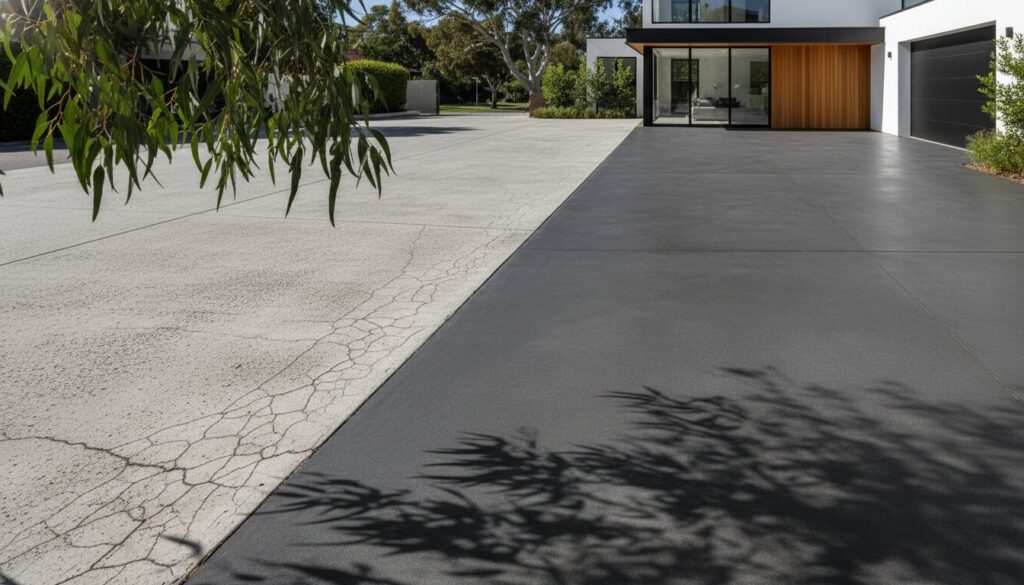
What if the greatest threat to your new driveway isn’t the weight of your car, but the first 40-degree afternoon of a Sydney summer? Watching a premium investment spider-web with fractures is a homeowner’s nightmare, yet learning how to prevent concrete cracking in sydney heat involves much more than just spraying a bit of water. It requires a sophisticated “Thermal Defense” strategy that accounts for our city’s notorious reactive clay soils and extreme temperature spikes.
We understand the anxiety of potentially wasting money on a finish that won’t last. You want a result that mirrors the elegance of your home, not a surface that succumbs to plastic shrinkage or structural failure. This 2026 expert guide masters the professional techniques used to protect your property, ensuring your concrete remains as resilient as it is beautiful.
We’ll walk you through the critical AS 1379 standards regarding delivery temperatures, the importance of subgrade engineering, and the chemical retarders that buy precious time during a heatwave. You’ll gain the technical certainty to lead the conversation with your contractor and secure a high-end finish that stands the test of time.
Key Takeaways
- Understand why Sydney’s reactive clay soils require specialized subgrade preparation to prevent moisture loss in your new driveway or entertaining area.
- Learn how to prevent concrete cracking in sydney heat by mastering the “Goldilocks” pour, where precision timing and chemical shields protect against rapid surface evaporation.
- Discover the critical 72-hour recovery phase and why wet curing is the gold standard for maintaining structural stability when temperatures soar.
- Grasp the science of hydration and plastic shrinkage to identify the specific moments your project is most vulnerable to the intense Sydney sun.
- Gain the confidence to ask your contractor the right questions about thermal defense and long-term durability for your concrete investment.
The Science of Sydney Heat: Why Concrete Cracks in the Sun
Understanding the chemistry of your slab is the first step in learning how to prevent concrete cracking in sydney heat. Concrete doesn’t just “dry” in the traditional sense; it cures through a chemical reaction known as hydration. This process is exothermic, meaning the concrete generates its own internal heat as it hardens. When you combine this internal energy with a 38°C Sydney afternoon, the temperature differential becomes a recipe for disaster. If the core of the slab remains hot while the surface cools or dries too quickly, the resulting tension tears the material apart from the inside out.
The fundamental Properties of concrete dictate that the material will expand as it heats and contract as it cools. In our harbor city, we frequently experience diurnal temperature swings of 20 degrees or more. This constant “breathing” puts immense pressure on a fresh pour. Without precision engineering, these thermal shifts lead to structural instability. We view every project as a balance of physics and artistry, ensuring the mix is tailored to survive these rapid environmental changes.
Geography also plays a massive role. A pour for a pool surround in coastal Bondi benefits from higher humidity and tempering sea breezes. However, a project in Blacktown or Penrith faces the “Heat Island” effect, where urban surfaces trap and radiate heat, creating a much harsher environment. This microclimate variation means a standard mix that works on the coast might fail in the west without specific adjustments to the retarders and water ratios.
Plastic Shrinkage vs. Drying Shrinkage
Plastic shrinkage occurs while the concrete is still in its plastic state, usually within hours of pouring. You’ll recognize this as “map cracking,” a series of shallow, web-like fractures on the surface. This happens when surface water evaporates faster than the “bleed water” can rise to replace it. In the Blue Mountains, high wind speeds are often more dangerous than the sun, as they accelerate this evaporation. Conversely, a sudden “southerly buster” can shock the concrete with a rapid temperature drop, causing the surface to contract before it has the tensile strength to hold together.
The Western Sydney Heat Factor
In Western Sydney, temperature peaks often exceed the Sydney Basin average by significant margins. While the Australian Standard AS 3600 provides the minimum requirements for structural concrete, we believe the minimum is rarely enough for a premium residential finish. Direct UV exposure is particularly aggressive on high-end finishes like Coloured Concrete Driveways or dark Exposed Aggregate. These darker pigments absorb more thermal energy, leading to higher surface temperatures. We mitigate this by utilizing specialized curing compounds that act as a barrier, reflecting heat and locking in the moisture necessary for a slow, controlled cure.
Pre-Pour Engineering: Designing for 40°C+ Days
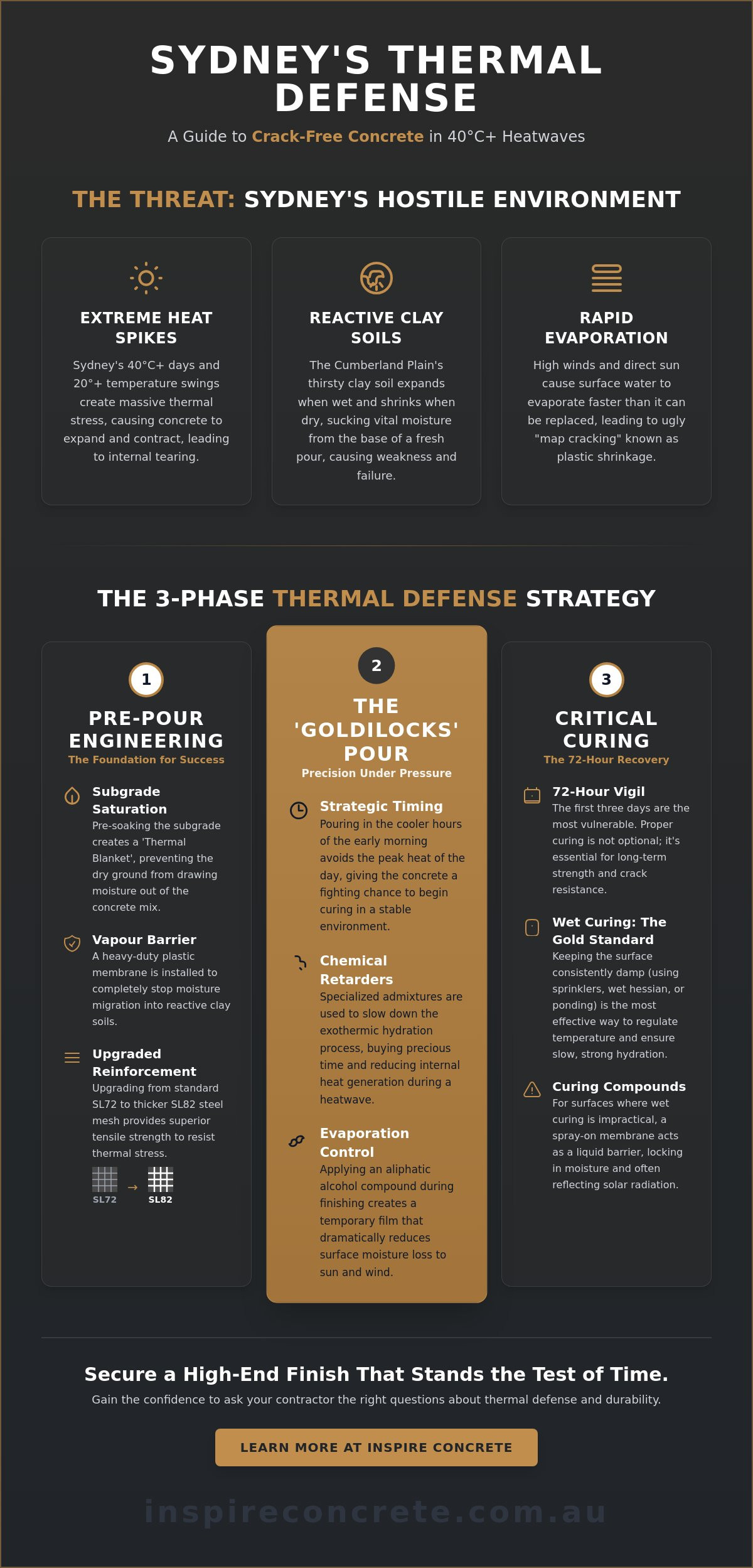
Success in the Sydney summer starts long before the first agitator truck arrives on site. While many focus solely on the mix design, true durability is engineered from the ground up. In our experience, the foundation is where you truly learn how to prevent concrete cracking in sydney heat. The Cumberland Plain is notorious for its reactive clay soils, which expand when wet and contract when dry. If you pour directly onto this thirsty soil during a heatwave, the ground will literally suck the moisture out of your wet concrete, leading to premature failure and structural weakness.
To combat this, we implement what we call the ‘Thermal Blanket’ effect. This process involves thoroughly pre-soaking the subgrade and non-reactive roadbase the night before and again just before the pour. This saturation ensures the ground is cool and won’t compete with the hydration process for water. We also recommend upgrading steel reinforcement from the standard SL72 to SL82 mesh. The thicker 8mm bars provide the extra tensile strength needed to bridge the challenges of hot weather concreting, keeping your slab unified when thermal stress peaks. For projects requiring maximum moisture control, a heavy-duty vapour barrier can be installed to prevent moisture migration into the subgrade.
Managing Sydney’s Reactive Clay
Soil movement in the Cumberland Plain exacerbates heat-related cracking because the ground moves independently of the slab. This is why we insist on rigorous compaction testing before any work begins. A stable, non-reactive roadbase acts as a buffer between the volatile clay and your finish. This level of preparation is essential for high-stakes projects like concrete slabs in Sydney, where the foundation must support a permanent structure through decades of extreme weather cycles.
Strategic Control Joint Placement
Control joints are essentially “planned cracks” that tell the concrete where to break when it inevitably shrinks. In high-heat zones, the standard spacing is often insufficient. We follow a stricter rule of thumb, placing joints closer together to manage the increased thermal expansion. These joints must be cut to at least 1/4 of the slab thickness to be effective. For premium finishes like exposed aggregate driveways, we can integrate these joints into the geometric design, ensuring they serve a functional purpose without compromising the aesthetic elegance of your property. If you’re ready to start your transformation, consider our professional concrete solutions to ensure your project is engineered for longevity.
The ‘Goldilocks’ Pour: Professional Tactics for High-Heat Days
Timing is the most potent weapon in a craftsman’s arsenal when facing a Sydney summer. We don’t wait for the sun to dictate the terms of the project. A 5:00 AM start is our standard for high-heat days, allowing us to place and finish the material before the ambient temperature hits the 30°C threshold where AS 1379 requires mandatory precautions. By the time the midday heat peaks, the initial set is already established, significantly reducing the window for disaster. This proactive schedule is a cornerstone of how to prevent concrete cracking in sydney heat, ensuring the material isn’t fighting the environment during its most vulnerable state.
A common but fatal error in residential concreting is the temptation to add water to the truck to improve workability. While it makes the mix easier to move, it’s a recipe for structural failure. Every liter of “site water” added dilutes the cement paste and compromises the 25MPa or 32MPa strength you’ve paid for. Instead of extra water, we utilize aliphatic alcohols. This “chemical shield” is sprayed over the wet surface immediately after screeding. It creates a molecular film that prevents surface water from evaporating too quickly, buying our finishers the time needed to achieve a high-end result without ruining the water-to-cement ratio.
For critical high-finish areas like pool surrounds or alfresco entertaining zones, we may even employ temporary shading. Using gazebos or screens to block direct UV radiation prevents “hot spots” on the slab, ensuring the entire surface cures at a uniform rate. It’s this level of meticulous detail that separates a basic utility pour from a lasting transformation of your property.
Chemical Retarders and Evaporation Control
Chemical retarders are often integrated into the mix at the batch plant to slow the hydration process. This is essential when the ideal curing temperature of 23°C is a distant memory. During the finishing stage, we use specialized finishing aids rather than a standard hose. While Sydney Water’s “Water Wise Guidelines” allow for trigger nozzles in construction, using a hose to “wet down” concrete while trowelling is a cardinal sin. It creates a weak, dusty surface layer that will eventually peel and flake. We maintain surface moisture through precision chemistry, not brute force.
Crew Management and Speed
In high-heat conditions, speed is non-negotiable. We deploy larger crews for summer pours to ensure the concrete is “laid to rest” as quickly as possible. This minimizes the risk of “cold joints,” which occur when one batch begins to set before the next truck arrives—a frequent hazard given Sydney’s unpredictable traffic and Boral’s strict delivery windows. We maintain constant communication with the batch plant, often requesting “iced” water in the mix for extreme 35°C+ days to lower the internal temperature of the concrete upon delivery. With labor rates for skilled concreters currently ranging from $49.50 to $67.50 per hour, investing in a larger, more efficient team is the most cost-effective way to protect your long-term property value.
Curing: The Critical 72-Hour Recovery Phase
The first 72 hours are the most volatile period for any new slab. While the finishing team has completed the visible artistry, the internal chemistry is still in a state of flux. If you want to know how to prevent concrete cracking in sydney heat, you must respect the recovery phase. We immediately apply a liquid curing compound or membrane to lock in moisture. This barrier is vital because the ideal temperature for hydration is 23°C, a target often exceeded by double digits in a Sydney January.
For extreme 35°C+ conditions, we recommend the ‘Wet Curing’ method. This involves ponding water or using wet hessian to keep the surface continuously damp. This isn’t just a precaution; it’s the gold standard for structural integrity. This proactive approach is essential for anyone serious about how to prevent concrete cracking in sydney heat when the local forecast looks grim. You also need to manage the first night carefully. As the sun sets and the temperature drops, the slab can suffer from thermal shock. Keeping it covered or damp regulates this transition, preventing the stress that leads to hairline fractures. Finally, discipline is required regarding traffic. Don’t walk on the surface for at least 24 hours, and keep vehicles off for 7 to 14 days to allow the internal structure to reach its design strength.
Curing Compounds vs. Water Curing
Choosing between wax-based and resin-based curing agents depends on your final aesthetic goals. Wax-based compounds offer excellent moisture retention but can interfere with future coatings if not removed. Resin-based agents are often more versatile for residential projects. When water-curing a concrete driveway, consistency is key. Intermittent wetting and drying can cause staining or “crazing” in the finish. The first 24 hours are non-negotiable, as they determine roughly 50% of the material’s ultimate strength.
Sealing for Long-Term Protection
Curing is about moisture retention; sealing is about long-term defense. We follow a strict 28-day rule, allowing all residual moisture to exit the slab before applying a permanent sealer. High-quality sealers do more than just add a sheen; they reflect UV rays and can significantly reduce surface temperatures during peak summer. Establishing a maintenance schedule, typically re-sealing every 2 to 3 years, keeps your concrete resilient against the harsh Sydney climate. If you’re looking for a partner to manage this entire transformation with precision, explore our concrete cleaning and sealing services to protect your investment.
The Inspire Concrete Standard: Craftsmanship Over Utility
At Inspire Concrete, our 20-year history in the Sydney Basin has taught us that shortcuts are the most expensive path a homeowner can take. We don’t just pour driveways; we engineer legacies. Our reputation is built on a sophisticated blend of technical mastery and refined craftsmanship that treats every slab as a structural work of art. This commitment to excellence means we prioritize the long-term value of your property over the convenience of a quick turnaround. Our standardized protocols for how to prevent concrete cracking in sydney heat are integrated into every project we undertake, ensuring your investment remains as flawless as the day it was finished.
One of the hallmarks of the Inspire Concrete standard is our strategic refusal to pour when environmental conditions are unfavorable. While other contractors might push through a 40°C forecast to clear their schedule, we strictly monitor Bureau of Meteorology (BOM) data. If the predicted temperatures or wind speeds exceed our safety thresholds for hydration control, we reschedule. This discipline protects your project from the irreversible damage of plastic shrinkage. When you receive a quote from us, “Heat Defense” isn’t a line-item extra; it’s a fundamental component of our service. This includes the use of premium retarders, specialized curing membranes, and the precision timing discussed throughout this guide.
Why Professional Installation Matters
The hidden costs of “cheap” concreting often manifest within a few short summers as unsightly repairs, resurfacing needs, and diminished property value. We mitigate these risks by utilizing architectural drafting techniques to predict stress points and plan control joints with mathematical precision. Our portfolio of heat-resilient projects across the city showcases why we are the preferred concreters in Sydney for clients who demand both structural integrity and architectural elegance. By managing the intersection of physics and design, we transform basic utility into a realization of your creative vision.
Your Next Steps for a Crack-Free Result
Preparing your property for a summer installation requires more than just clearing the site. It begins with a comprehensive assessment of your specific microclimate, sun exposure, and the reactive nature of your soil. We recommend requesting a site-specific consultation where we can analyze these factors in detail. Our team will guide you through the selection of finishes, from Exposed Aggregate to Stencil Concrete, ensuring the chosen aesthetic is matched with the appropriate thermal defense strategy. Contact Inspire Concrete today to partner with a team that views durability as the ultimate expression of luxury. We’re ready to show you how to prevent concrete cracking in sydney heat through superior engineering and meticulous attention to detail.
Secure Your Property’s Future Today
Sydney’s extreme climate doesn’t have to dictate the lifespan of your driveway or entertaining area. By prioritizing subgrade engineering for reactive clay and mastering the 72-hour curing phase, you’ve gained the knowledge to protect your high-end investment. Mastering how to prevent concrete cracking in sydney heat is a sophisticated blend of scientific precision and meticulous timing. It’s about ensuring your slab thrives even when the western suburbs hit 40 degrees. You now understand the critical role of chemical retarders, the “Goldilocks” pour window, and why the first three days determine the structural destiny of your project.
With over 20 years of Sydney-specific experience, our team of licensed and insured master craftsmen specializes in high-durability exposed aggregate and architectural slabs. We don’t just pour concrete; we create lasting value through superior engineering and refined artistry. Transform your property with Sydney’s heat-resilient concrete experts. Contact Inspire Concrete today. Your vision deserves a finish that stands firm against the elements for decades to come. Let’s build something beautiful together that remains crack-free and elegant, regardless of the forecast.
Frequently Asked Questions
Is it okay to pour concrete on a 40-degree day in Sydney?
While technically possible with advanced cooling and chemical retarders, we generally advise against pouring when the mercury hits 40°C. Australian Standard AS 1379 stipulates that concrete delivery temperature shouldn’t exceed 35°C. Beyond this, the risk of rapid moisture loss and structural failure increases significantly. We prioritize your property’s long-term value over a schedule, often rescheduling extreme heat days to ensure a flawless, durable result that stands the test of time.
How long should I water my new concrete in hot weather?
You should aim to keep the surface damp for a minimum of three to seven days. In extreme Sydney heat, this wet curing process is the gold standard for achieving maximum design strength. Using a hose with a trigger nozzle to keep the slab moist prevents the surface from drying faster than the core. This simple discipline is a highly effective way for homeowners to assist in how to prevent concrete cracking in sydney heat.
Why did my new driveway get hairline cracks just two days after pouring?
Hairline fractures, often called plastic shrinkage cracks, usually occur when the surface water evaporates faster than the internal bleed water can rise. This is common during Sydney’s “southerly busters” or high-wind days where the humidity drops sharply. While these are often aesthetic rather than structural, they indicate the concrete was “thirsty” during the initial set. Proper use of evaporation retarders and immediate curing during the pour typically prevents this issue.
Do certain concrete colours crack more easily in the sun?
Darker pigments, such as charcoal or deep browns used in coloured concrete driveways, absorb more solar radiation than plain grey mixes. This increased thermal gain leads to higher surface temperatures and more significant expansion and contraction cycles. While the color itself doesn’t cause cracks, the heat it traps requires more rigorous curing protocols and strategic control joint placement to manage the extra thermal stress effectively and maintain the slab’s structural integrity.
What is an evaporation retarder and do I really need it?
An evaporation retarder is a chemical shield sprayed over fresh concrete to form a thin molecular film. This film prevents moisture from escaping into the atmosphere during the finishing process. In Sydney’s harsh summer climate, we consider it a mandatory tool rather than an optional extra. It buys our craftsmen the time needed to achieve a refined, high-end finish without the risk of surface crusting or the web-like fractures known as map cracking.
Can I fix cracks that have already appeared due to the heat?
Minor surface cracks can often be managed through professional concrete resurfacing or specialized epoxy injections that bond the material back together. However, structural cracks caused by reactive soil movement or extreme thermal shock are more difficult to hide. We focus on prevention through superior engineering, but if damage has already occurred, a high-quality sealer or resurfacing treatment can often restore the aesthetic elegance and property value of your entertaining area.
How many days should I wait before driving on my new slab in summer?
You should wait at least 7 to 14 days before allowing vehicles onto a new driveway or slab. While concrete feels hard within 24 hours, it takes weeks to reach its full load-bearing capacity. Driving on it too early can cause structural damage that won’t appear until years later. In high-heat conditions, the curing process might seem faster, but the internal strength development still requires this vital rest period to ensure long-term durability.
Does the type of aggregate affect how concrete handles heat?
The mineral composition of the aggregate plays a subtle role in how a slab manages thermal expansion. Some stones expand more than others when heated. For our high-durability exposed aggregate driveways, we select materials that offer both aesthetic beauty and thermal stability. Using a well-graded mix with the right aggregate size helps distribute internal stresses more evenly, providing another layer of defense in how to prevent concrete cracking in sydney heat.
