
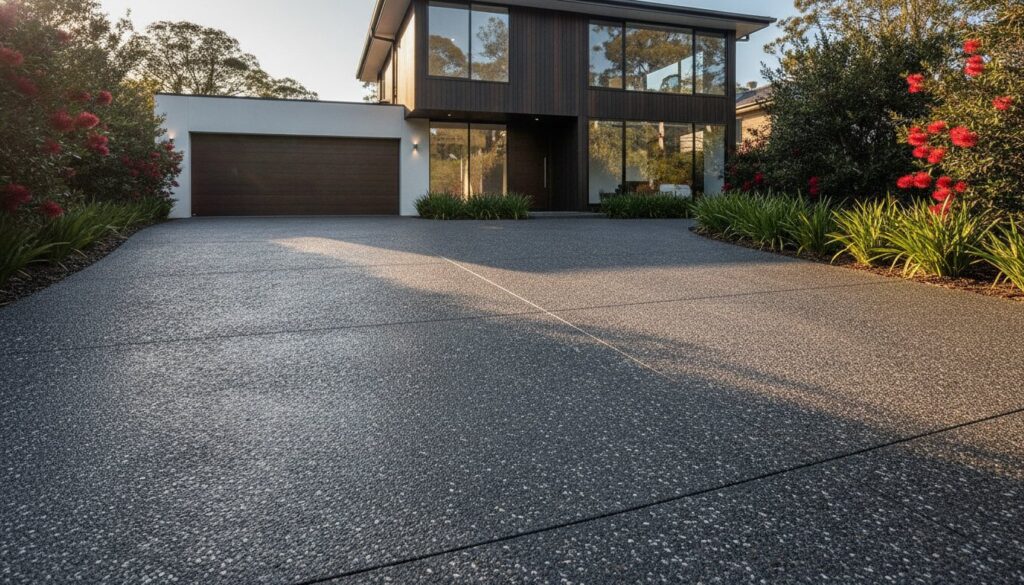
Did you know that over a 10-year period, a concrete driveway in Sydney costs roughly half as much as a paver driveway? It’s a stark reality for homeowners tired of the relentless cycle of weeding joints and resetting sinking sections that plague traditional paving. If you’re currently dealing with uneven surfaces and a dated aesthetic, you’re likely ready for a solution that prioritizes both elegance and longevity. We believe your home deserves a foundation that matches your standards of excellence.
Deciding on replacing pavers with concrete driveway sydney is the first step toward reclaiming your weekends and securing your property’s structural integrity. In this 2026 transformation guide, you’ll discover why sophisticated Sydney residents are moving toward engineered concrete to combat reactive clay soils and maximize kerb appeal. We’ll walk you through the technical requirements of Australian Standards and show you how a masterfully poured slab provides a zero-maintenance, high-end finish that remains flawless for over 20 years.
Key Takeaways
- Discover why replacing pavers with concrete driveway sydney eliminates the maintenance trap of weeding and re-sanding while providing a stable, monolithic surface.
- Learn how specialized engineering, including steel reinforcement and specific slab thickness, protects your driveway against the shifting nature of Sydney’s reactive clay soils.
- Explore modern aesthetic finishes like exposed aggregate and stencil concrete that offer the high-end look of stone with the superior durability of a single concrete pour.
- Understand the professional replacement blueprint, from the eco-friendly disposal of old materials to the precision excavation required for a 20-year lifespan.
- Evaluate the long-term financial benefits, including how a permanent concrete installation significantly reduces total ownership costs and boosts property valuation.
Why Sydney Homeowners are Replacing Pavers with Concrete in 2026
The standard for Sydney streetscapes is shifting. For decades, interlocking pavers were the default choice for suburban driveways, prized for their modular look and perceived ease of repair. However, 2026 has marked a turning point. Homeowners across the region are discovering that the very flexibility once marketed as a benefit is actually a structural weakness. The trend of replacing pavers with concrete driveway sydney has accelerated as residents prioritize long-term value over the endless maintenance cycle of individual stones.
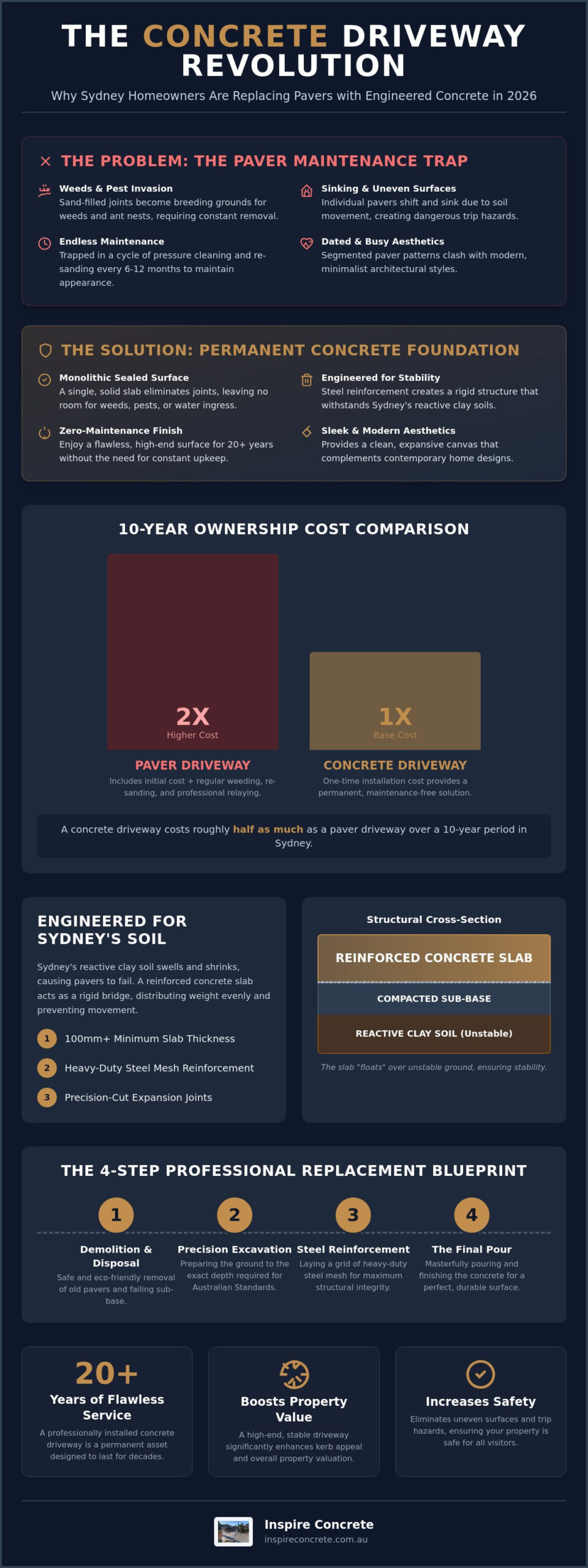
The primary driver for this change is the failure of paved surfaces to withstand Sydney’s environmental pressures. Pavers are individual units that rely on sand-filled joints and a compacted base. Over time, these joints become breeding grounds for resilient weeds and nests for ants, while the sand itself inevitably washes away during our intense seasonal storms. When you transition to an engineered concrete slab, you’re choosing a monolithic structure that seals out these issues entirely. It’s the difference between a temporary surface and a permanent architectural asset.
The Hidden Costs of Maintaining a Paved Driveway
Maintaining a paved driveway is often a losing battle against physics and biology. Homeowners frequently find themselves trapped in a cycle of pressure cleaning and re-sanding every six to twelve months. While pressure cleaning removes grime, it also blasts out the essential jointing sand that keeps the pavers locked together. Without this sand, the pavers lose their friction fit, leading to the “undulation” or “rollercoaster” effect commonly seen in older Sydney drives.
Many property owners realize that the claim of pavers being “easy to repair” is a double-edged sword. If a surface is easy to repair, it’s usually because it requires frequent attention. Professional “lift and relay” services can be expensive, and they only address the symptoms of a failing sub-base rather than the cause. When researching different paving materials, it becomes clear that while modular units offer aesthetic variety, they cannot match the rigid load-bearing capacity of a reinforced concrete slab designed to last 25 to 40 years.
Modern Architectural Demands
Sydney’s residential design language has evolved toward minimalism and sleek, expansive textures. The busy, segmented patterns of 90s-era pavers often clash with the clean lines of contemporary home facades. Developers and designers in high-growth areas, particularly in Western Sydney, are now prioritizing concrete finishes to create a seamless transition from the street to the garage.
A single, textured canvas, such as an exposed aggregate or a sophisticated stencil finish, complements modern architecture far better than the cluttered look of hundreds of small bricks. Beyond aesthetics, safety is a major factor. Shifting pavers create trip hazards as they sink or tilt. By replacing pavers with concrete driveway sydney, you’re eliminating these uneven surfaces, ensuring your property remains accessible and safe for everyone who visits.
Engineering for Sydney’s Reactive Clay and Soil Movement
Sydney’s geology isn’t just a backdrop; it’s a structural challenge. Much of Western Sydney and the Blue Mountains sits on reactive clay soils that behave like a sponge. This soil swells when soaked by rain and shrinks during our intense dry spells. For a paved driveway, this constant movement is catastrophic. Each paver moves independently, causing the sinking and tilting that ruins kerb appeal. When homeowners commit to replacing pavers with concrete driveway sydney, they’re investing in an engineered solution that treats the entire surface as a single, resilient unit.
The strength of the transformation lies in the reinforcement. By utilizing heavy-duty steel mesh and a minimum slab thickness of 100mm, the concrete acts as a rigid bridge. It distributes vehicle weight across the entire footprint rather than concentrating pressure on individual points. This structural stability aligns with the principles found in the CSIRO guide to foundation maintenance, which highlights how consistent moisture management is vital for footing performance. We also utilize precision-cut expansion joints to control movement. These aren’t random lines; they’re calculated points that allow the concrete to breathe without creating visible, uncontrolled cracks.
The foundation matters more than the finish. A professional installation prioritizes the following layers to ensure longevity:
- Steel Reinforcement: Heavy-duty mesh that provides the necessary tensile strength.
- Slab Thickness: A 100mm minimum pour to support modern residential vehicle loads.
- Expansion Joints: Strategically placed cuts that dictate where the slab moves during temperature shifts.
- Compacted Sub-base: 100mm of high-quality road base to prevent future soil subsidence.
Managing Soil Movement in Western Sydney
The wet and dry cycles in the West are notoriously brutal on segmented pavers. A reinforced slab prevents soil heave from creating the dangerous trip hazards common in older properties. When replacing pavers with concrete driveway sydney, homeowners on the sloping blocks of the Hills District must also factor in hydrostatic pressure and drainage to ensure the driveway remains anchored and stable for decades. This technical approach ensures the driveway doesn’t just look good but performs under pressure.
The Importance of Professional Drafting and Site Prep
A DIY approach often fails because it ignores the complex science of water runoff. If water pools against your home’s foundation, you’re facing significant structural risks. Professional drafting ensures a correct fall, seamlessly integrating your new driveway with existing concrete slabs and house footings. This level of precision protects your broader property value. If you’re ready to upgrade, a detailed site consultation is the most reliable way to ensure your vision is built on a solid foundation.
Choosing Your New Aesthetic: Design Options for 2026
The assumption that concrete is merely a utilitarian grey slab is a relic of the past. When you’re replacing pavers with concrete driveway sydney, you’re opening the door to a sophisticated palette of textures and tones that modular stones simply can’t replicate. Modern concrete is a versatile medium. It allows for a seamless integration with your home’s architectural identity, turning a functional entry point into a design-forward statement.
Exposed aggregate has rightfully earned its reputation as the gold standard for Sydney properties. By stripping back the surface paste to reveal a bespoke selection of local river stones and quartz, we create a rugged yet refined finish. This isn’t just about looks. The natural texture provides inherent slip resistance, which is vital during Sydney’s sudden summer downpours. For homeowners seeking a sleeker look, coloured concrete in charcoal or basalt tones offers a minimalist canvas. These deeper shades mirror the popular Colorbond roofing and dark gutters seen across new builds in Greater Sydney, creating a cohesive, high-end aesthetic.
If you love the structured look of masonry but loathe the maintenance, stencil and stamped concrete offer the perfect compromise. You can achieve the aesthetic of European cobblestones or slate without a single weed-prone joint. It’s about capturing the artistry of stone while benefiting from the engineering of a monolithic slab. We prioritize safety alongside style, ensuring every finish meets modern slip-resistance standards without sacrificing the elegance of the design.
Exposed Aggregate: The Premium Transformation
Customization is the hallmark of a premium driveway. We often help clients select specific pebble varieties to match the masonry of their home, ensuring the driveway feels like an intentional part of the property’s footprint. It’s no surprise that exposed aggregate driveways are the top choice for maximizing resale value. The durability of these pebble finishes is unmatched. They hide tyre marks and minor debris while standing up to the daily pressure of heavy vehicle traffic without the chipping or shifting seen in traditional pavers.
Stencil and Coloured Options
Choosing the right finish often involves looking beyond the driveway itself. We recommend selecting a style that complements your alfresco and entertaining areas to create a unified flow throughout the property. Stencil patterns allow you to keep the traditional patterns you might admire while providing the structural integrity of reinforced concrete. We always advocate for full-depth colour rather than surface-applied tints. This ensures that even if the surface experiences heavy wear over twenty years, the rich tone remains consistent throughout the slab, preserving your home’s kerb appeal.
The Replacement Blueprint: From Demolition to the Final Pour
Transformation begins with a precision demolition. Ripping up old pavers isn’t just a matter of brute force; it’s about clearing the site without compromising the surrounding landscape or home foundations. We prioritize eco-friendly disposal, ensuring that old masonry is transported to recycling facilities where it can be crushed and repurposed. Once the surface is clear, the process of replacing pavers with concrete driveway sydney moves into the most critical phase: the earthworks.
Every long-lasting driveway relies on a meticulously prepared sub-grade. We excavate the area to accommodate a 100mm layer of high-quality road base, which is then mechanically compacted to create a non-yielding foundation. This prevents the “undulation” issues common in paved surfaces. Our team then installs the formwork and steel reinforcement mesh, ensuring the steel is suspended correctly to provide maximum tensile strength throughout the slab. We also integrate comprehensive drainage management to ensure water flows away from your home, protecting your property from the heavy storm surges typical of the Sydney basin.
The final pour is where engineering meets artistry. We level the wet concrete with precision, ensuring a consistent fall before applying your chosen finish, whether it’s a rugged exposed aggregate or a sleek coloured surface. Once the concrete reaches the appropriate stage, we apply a high-grade chemical sealer. This isn’t an optional extra; it’s a vital barrier that prevents oil stains and tyre marks from marring your new investment.
Council Compliance and Kerb Integration
Navigating the local bureaucracy is a vital part of any driveway project. In Sydney, any work on the vehicle crossing, where your driveway meets the road, requires a Section 138 approval under the Roads Act 1993. This area is technically council land, and the specifications for the kerb and gutter are strictly enforced. We manage this integration with professional care, ensuring the transition from the street to your property is seamless and legally compliant. Failing to use a licensed professional for this kerb work can lead to expensive rectification orders from your local council.
The Critical First 48 Hours
Curing is a chemical process, not just a drying phase. In Sydney’s fluctuating humidity, managing this process is essential for preventing surface cracks. While you can usually walk on the surface within 24 to 48 hours, we recommend waiting at least seven days before parking a heavy SUV or vehicle on the new slab. This allows the concrete to reach the necessary structural strength to handle significant loads. If you’re ready to start your property’s transformation, book a professional site assessment to ensure every technical detail is handled with craftsman-level precision.
Financial Analysis: ROI and Long-Term Value in the Sydney Market
Shifting from pavers to concrete isn’t just a lifestyle choice. It’s a calculated financial move. When you’re replacing pavers with concrete driveway sydney, you’re trading a high-maintenance liability for a permanent structural asset. The initial outlay is balanced by the immediate removal of recurring costs associated with modular paving upkeep. While pavers often require a “lift and relay” service every few years to fix undulations, a reinforced concrete slab provides a stable surface that remains level for decades.
Verified data from June 2026 indicates that the long-term total cost of ownership for a concrete driveway is significantly lower than that of a paved alternative. While concrete pavers can last over 30 years, the sand base typically requires re-compacting every 5 to 10 years to prevent sinking and shifting. In contrast, a properly installed concrete driveway is expected to last between 25 and 40 years with minimal intervention. You’re effectively paying for a surface that outlasts the mortgage of many homes, providing a “set and forget” solution that pays for itself through maintenance savings alone.
Homeowners often weigh the choice between resurfacing and a full replacement. If your existing sub-base has been compromised by Sydney’s reactive clay, resurfacing is merely a cosmetic fix. Starting fresh by replacing pavers with concrete driveway sydney ensures that the foundation, steel reinforcement, and drainage management are executed to 2026 standards. This holistic approach prevents future cracking and ensures the slab can handle the weight of modern, heavy SUVs without distress.
Energy efficiency is an often-overlooked financial benefit. By selecting light-coloured aggregates or pale finishes, you can reduce the heat absorption of your driveway. In the intense heat of Western Sydney, this helps lower the ambient temperature around your home entrance, potentially reducing the load on your air conditioning system during the peak of summer.
Resale Value and Kerb Appeal
Real estate professionals across Greater Sydney frequently highlight the driveway as the “welcome mat” of a property. A cracked or weed-choked paved drive is a major red flag for potential buyers, suggesting a lack of maintenance throughout the home. A modern concrete driveway provides a sleek, clean aesthetic that signals quality and care. Many agents recommend concrete upgrades as a high-impact pre-sale renovation because it offers an immediate boost to kerb appeal, often returning its cost multiple times over during the final sale negotiations.
The Sustainability Factor
Sustainability in modern construction is defined by longevity. Concrete is a durable building material that minimizes environmental impact by lasting for 40 years rather than needing replacement every decade. By eliminating the joints where weeds thrive, you also significantly reduce the need for chemical herbicides on your property. This creates a cleaner, safer environment for your family and pets. Ready to transform your property? Get a professional concrete quote from Inspire Concrete and start your journey toward a more durable, elegant home foundation.
Invest in a Permanent Foundation Today
The transition from high-maintenance pavers to a monolithic concrete slab is a definitive upgrade for any Sydney home. We’ve detailed how professional engineering and precision finishing solve the structural failures inherent in modular surfaces. By prioritizing a reinforced foundation, you’re securing a maintenance-free entrance that handles reactive clay movement with ease. It’s about moving beyond temporary fixes to a solution that remains flawless for decades, a standard of excellence you can also find when you visit Oxford Driveways And Roofing Ltd. for property maintenance in other regions.
Replacing pavers with concrete driveway sydney is a project that demands technical expertise and a craftsman’s eye. As a fully licensed and insured family-owned business, Inspire Concrete brings over 20 years of Sydney concreting experience to your doorstep. We are specialists in exposed aggregate and decorative finishes, ensuring your new driveway is as elegant as it is durable. It’s time to trade the weeding and sinking for a sleek, engineered result that adds genuine value to your property.
Transform your home with a premium concrete driveway today. Your property deserves a transformation that lasts for a generation.
Frequently Asked Questions
How much does it cost to replace pavers with concrete in Sydney?
The investment for your driveway transformation depends on several site-specific factors. We consider the total area, the complexity of the demolition, and the chosen finish, such as exposed aggregate or coloured concrete. Site access for machinery and the requirements for council crossover integration also influence the final cost. A professional site assessment is the only way to provide an accurate reflection of the work required for your property’s unique conditions.
Can I pour concrete directly over my existing pavers?
No, pouring concrete over old pavers is a recipe for structural failure. Pavers sit on a flexible base of sand and soil that shifts over time. If you pour a rigid concrete slab over this unstable surface, the movement underneath will inevitably cause the new concrete to crack and buckle. A successful project requires the complete removal of old materials and the preparation of a new, compacted road base foundation.
How long does the process of replacing a paved driveway take?
The standard timeline for replacing pavers with concrete driveway sydney is typically five to seven working days. This window covers the entire blueprint, including the demolition of your old driveway, excavation, steel reinforcement installation, and the final pour. While Sydney’s weather can occasionally shift the schedule, we work efficiently to ensure your home’s entrance is restored with minimal disruption to your daily routine.
Do I need council approval to change my driveway from pavers to concrete?
Yes, you’ll need approval for the section of the driveway that meets the road, known as the vehicle crossing. Local Sydney councils require a Section 138 permit under the Roads Act 1993 for any work on this council-owned land. While the work inside your property boundary may be considered exempt development, the crossover must meet strict local specifications for safety and drainage to avoid expensive rectification orders later.
Will my new concrete driveway crack like my pavers did?
While all concrete can experience minor hairline movement, an engineered slab is designed to prevent the significant shifting seen in paved drives. We use heavy-duty steel reinforcement and calculated expansion joints to dictate where the slab moves during temperature changes. This professional approach ensures the concrete acts as a single, stable unit that bridges reactive soil patches rather than sinking in individual sections like old pavers.
How soon can I drive on my new concrete driveway after it is poured?
You can typically walk on the surface within 24 to 48 hours, but vehicles require a longer curing period. We recommend waiting at least seven days before parking a standard car or SUV on your new driveway. This allows the concrete to reach the structural strength necessary to support heavy loads without risking surface depressions or structural damage to the fresh slab.
What is the best type of concrete finish for a steep driveway in Sydney?
Exposed aggregate is the gold standard for steep Sydney driveways because it provides superior natural traction. The revealed stones create a rugged texture that offers excellent slip resistance for vehicle tyres, especially during our intense summer storms. If you prefer a different aesthetic, a cove finish or a specialized stencil pattern can also be engineered to provide the necessary grip while maintaining a sophisticated look.
How do I maintain my new concrete driveway to ensure it lasts 20+ years?
Maintaining your new slab is simple and requires far less effort than the constant weeding of pavers. We recommend a professional clean and re-seal every two to three years to protect the surface from UV rays and oil stains. Keeping the surface clear of organic debris and hosing it down occasionally will preserve the elegance of the finish and ensure your investment remains a structural asset for decades.
