
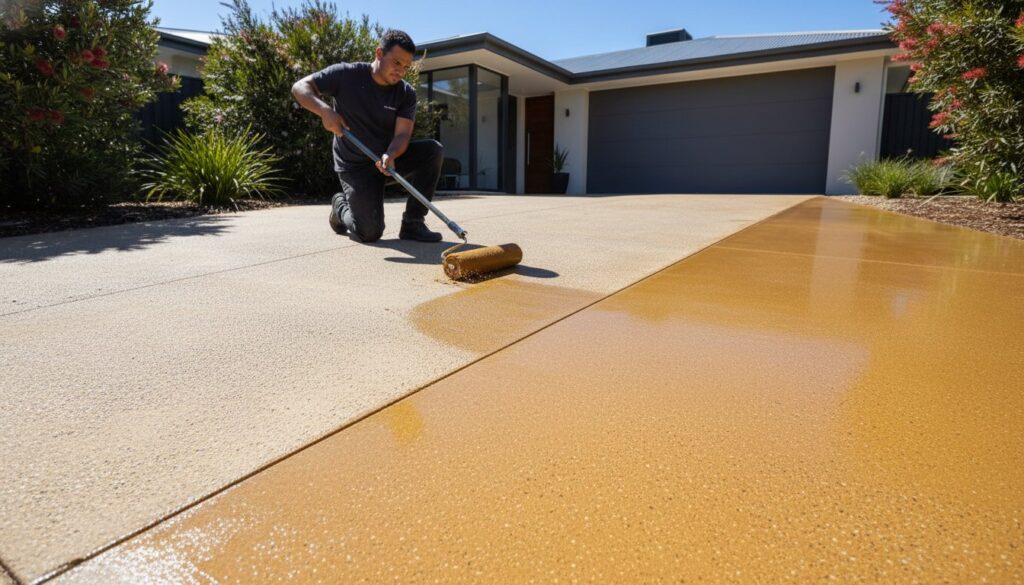
What if your driveway’s faded, patchy appearance isn’t a permanent scar, but a cry for a chemical restoration of its original pigments? Many homeowners watch their investment dull under the relentless Australian sun and assume the only fix is an expensive replacement. However, resealing coloured concrete sydney is less about adding a temporary shine and more about locking in the deep tones that first gave your property its kerb appeal. It’s a precise blend of artistry and engineering that transforms a weathered slab back into a design feature.
It’s frustrating to see your once-vivid alfresco area or pool surround turn white or start to peel because of inferior products. You’ve likely worried that a new coat will just make the patches more obvious or fail within a year. In this 2026 restoration guide, you’ll discover how to reclaim that vibrant, “like-new” colour and secure long-term protection against UV rays and oil stains. We’ll explore the latest trends in penetrating sealers and the essential preparation steps, such as the critical 28-day curing period for new slabs, that guarantee a professional and durable result for your home.
Key Takeaways
- Identify how Sydney’s intense UV radiation causes pigment breakdown and “chalking” on unsealed surfaces.
- Compare the performance of solvent-based acrylics and water-based polyurethanes to select the right finish for your property.
- Master the technical requirements for resealing coloured concrete sydney, including industrial pressure cleaning and pH neutralisation.
- Evaluate the cost-benefit of a protective reseal versus a more extensive concrete resurfacing based on the structural condition of your slab.
- Establish a 2–3 year maintenance schedule to preserve the vibrant finish and protect your investment from harsh environmental factors.
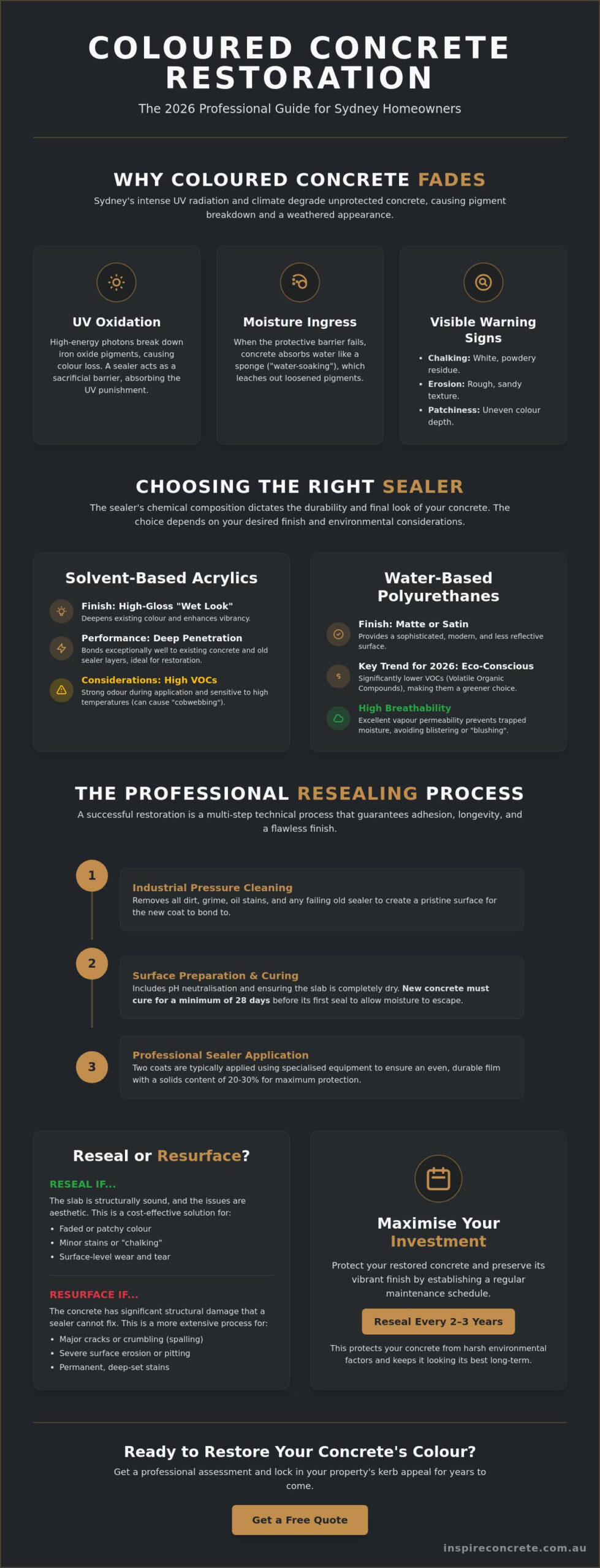
Why Coloured Concrete Fades: The Sydney UV Factor
Sydney’s harsh climate is a relentless test of any building material. While concrete is often viewed as indestructible, the aesthetic finish of your property is surprisingly delicate. Investing in resealing coloured concrete sydney is about more than just a fresh look; it’s about defending the structural and chemical integrity of the slab against the local environment. Without a robust barrier, the vibrant oxides that define your driveway or alfresco area will succumb to the city’s intense radiation and reactive soil conditions.
The Science of Oxide Pigment Degradation
The bond between cement paste and colour oxides is what gives your driveway its character. These pigments aren’t just a surface paint; they are integrated into the matrix of the concrete. UV oxidation is the primary cause of colour loss in Sydney. This chemical reaction occurs when high-energy photons break the molecular bonds of the iron oxide pigments. Once these bonds fail, moisture ingress accelerates the process by leaching the loosened pigments out of the porous surface. Choosing high-quality Concrete sealers acts as a sacrificial barrier, absorbing the UV punishment so your pigments don’t have to.
Sydney’s reactive clay soils add another layer of complexity. These soils expand and contract significantly with moisture changes, which can lead to micro-cracking in the slab. This is why new concrete must cure for at least 28 days before the first sealer application. If the surface isn’t properly protected after this period, the concrete loses its ability to regulate internal hydration. This leads to structural stress that manifests as fine cracks, allowing even more UV and water to penetrate. While plain concrete driveways might survive this with only minor aesthetic impact, decorative surfaces suffer visibly.
Signs Your Concrete Needs Immediate Resealing
Identifying the right time for resealing coloured concrete sydney is critical for maintaining long-term value. One of the most obvious signs is “water-soaking.” When your concrete is wet, does it darken significantly and stay dark for hours? This indicates the protective barrier has failed, and the slab is absorbing water like a sponge. You might also notice surface erosion where individual sand grains become exposed, or a white, powdery residue known as “chalking.” This residue is actually the degraded cement paste and pigment rising to the surface. Differentiating between surface dirt and actual pigment loss is simple: if the colour doesn’t return after a thorough clean, the pigment itself has likely been compromised.
- Chalking: A white residue that rubs off on your hand, indicating top-layer degradation.
- Erosion: A rough texture where the smooth cement paste has worn away to reveal sand.
- Patchiness: Uneven colour depth caused by varying levels of UV exposure and foot traffic.
Choosing the Right Sealer for Coloured Surfaces
Selecting a sealer is a technical decision that dictates the long-term aesthetic of your property. It’s not merely a choice between shiny or matte; it’s about matching the chemical composition of the product to the specific needs of your slab. For resealing coloured concrete sydney, the “solids content” of the sealer is the most critical factor. This refers to the amount of resin left behind once the liquid carriers evaporate. A higher solids content, typically between 20% and 30% for professional-grade acrylics, ensures a thicker, more durable film that can withstand heavy vehicle traffic and Sydney’s erratic weather patterns.
Breathability is another non-negotiable feature. Concrete is a porous material that naturally “breathes” moisture vapour. If you apply a non-breathable sealer, that moisture becomes trapped beneath the surface. This lead to blistering or “blushing,” where the sealer turns an unsightly opaque white. Modern formulations prioritize vapour permeability, allowing the concrete to release internal pressure while remaining impervious to external liquids like oil and rainwater.
Solvent-Based vs. Water-Based Sealers
Solvent-based acrylics have long been the industry standard for achieving a high-gloss, “wet look” that deepens the existing colour of the concrete. They are excellent for restoration because they penetrate deeply and bond well to old sealer layers. However, they carry a strong odour and can be temperamental in Sydney’s 35°C+ summer heat. If applied in direct, midday sun, the solvent can flash off too quickly, creating fine resin strands known as “cobwebbing.”
In contrast, water-based polyurethanes are the leading trend for 2026. They offer a sophisticated matte or satin finish with significantly lower VOCs, making them ideal for eco-conscious builds. They don’t yellow over time and provide superior UV resistance, though they lack the intense colour-deepening effect of their solvent-based counterparts.
Tinted Sealers: The Secret to Colour Restoration
When pigments have faded beyond the help of a clear coat, tinted sealers provide a chemical facelift. Unlike paint, which sits on top and eventually peels, a tinted sealer is a semi-transparent resin that infuses the surface with fresh oxide. A 10% tint is usually enough to revitalize a slightly faded driveway, while a 20% tint can mask significant patches or blend old concrete sections with new extensions. The goal is to restore the hue without losing the natural, rugged texture of the concrete. Over-tinting can lead to a plastic-like appearance that lacks the elegance of a professional finish. If you’re unsure which opacity suits your project, consulting with a specialist in concrete cleaning and sealing can ensure the result looks deliberate rather than DIY.
- Clear Sealers: Best for well-maintained concrete where you want to highlight the existing colour.
- Tinted Sealers: Essential for restoring “chalky” or faded surfaces that have lost their original vibrance.
- Solids Content: Aim for 20-25% for residential driveways to balance durability with breathability.
Reseal or Resurface? Making the Right Choice
Distinguishing between a cosmetic restoration and a structural overhaul is the first step in any property maintenance strategy. While resealing coloured concrete sydney is an exceptional way to protect your investment, it isn’t a universal cure for every ailment. Understanding the threshold where chemical restoration ends and structural resurfacing begins ensures you don’t waste resources on a finish that won’t hold. It’s about evaluating the integrity of the slab beneath the pigment.
From a financial perspective, the gap between these two services is significant. A professional maintenance seal is a small fraction of the investment required for a full restoration. A comprehensive concrete resurfacing Sydney project can cost six to ten times more per square metre. This difference reflects the complexity of the work; one is a protective treatment, the other is the application of an entirely new high-strength wear layer. Choosing the wrong path can lead to premature failure or unnecessary expenditure.
When a Reseal is Enough
If your slab is structurally sound with no major cracks or movement, a reseal is usually the most logical path. It’s the ideal solution when the fading is uniform across the surface and you’re still happy with the original texture of your concrete driveway. This approach focuses on preventative maintenance, locking out moisture and UV rays before they can cause permanent damage to the oxide pigments. It’s a proactive choice for homeowners who want to maintain kerb appeal without the disruption of a major construction project. When the surface “chalking” is caught early, a fresh coat of sealer can bring back the deep, rich tones of the original installation.
When to Consider Full Resurfacing
Resurfacing becomes necessary when the concrete exhibits “spalling” or surface scaling, where the top layer has physically detached from the slab. You should also consider this more intensive route if there’s major oil saturation that has penetrated the pores so deeply that a standard sealer won’t adhere. Beyond repairs, resurfacing allows for a total aesthetic shift. If you want to transition from a basic coloured slab to the premium, textured look of exposed aggregate driveways, resurfacing provides the necessary depth and bonding for that transformation. It’s the right choice when you’re looking for a total property makeover rather than just a protective refresh. Resealing coloured concrete sydney won’t hide major structural defects, so a new wear layer is the only way to achieve a truly flawless result on a damaged slab.
- Structural Integrity: Reseal for sound slabs; resurface for cracked or spalling surfaces.
- Stain Depth: Reseal for surface dirt; resurface for deep oil or chemical saturation.
- Aesthetic Goals: Reseal to maintain the status quo; resurface to change texture or pattern entirely.
The Professional Resealing Process
Execution is where the engineering meets the artistry of restoration. A professional approach to resealing coloured concrete sydney is a calculated five-stage operation that ensures a permanent bond rather than a temporary film. It begins with industrial high-pressure cleaning at 3000+ PSI. This isn’t just a rinse; it’s a deep-clean combined with chemical degreasing to strip away years of automotive oils and environmental grime that would otherwise prevent the sealer from adhering. Once the surface is pristine, we use acid etching or pH neutralizing to open the concrete “pores,” creating the necessary profile for the resin to anchor into the slab.
Complete dehydration is the most critical phase of the process. Even a trace of moisture trapped in the substrate can cause “white bloom,” a cloudy haze that occurs when water vapour tries to escape through the curing sealer. After ensuring the slab is bone-dry, we apply a two-coat system. The first “prime” coat is often thinned to allow maximum penetration into the open pores. The second “finish” coat provides the high-solids wear layer that protects against UV and abrasion. Finally, we integrate anti-slip glass beads or shark grip into the wet sealer to ensure the surface remains safe underfoot, regardless of the weather.
Why DIY Resealing Often Fails
Homeowners often underestimate the volatility of sealer chemistry. Moisture clouding is the most frequent failure, usually caused by sealing too early after rain or even heavy morning dew. Another common pitfall is incompatible sealer reactions. If you apply a solvent-based sealer over an existing water-based product, the chemicals will clash, leading to immediate peeling or a gummy, uncurable mess. Without professional-grade rollers and application techniques, you’re also likely to leave visible “lap lines” or roller marks, which are nearly impossible to fix once the resin has set. These errors often turn a budget-friendly project into an expensive professional correction.
Safety and Slip Resistance
Aesthetics should never compromise safety. Applying a high-gloss sealer can significantly alter the slip-rating (or R-rating) of your driveway, turning a safe surface into a hazard during Sydney’s summer storms. For steep driveways or pool surrounds, we utilize specialized slip-resistive additives like glass beads to maintain traction without dulling the finish. This is a vital legal consideration for pedestrian safety on pathways and alfresco areas. To guarantee a result that is both beautiful and compliant with safety standards, consider our professional concrete cleaning and sealing expertise for your next project.
- Industrial Cleaning: Removes deep-seated oils that standard garden hoses can’t reach.
- Moisture Control: Prevents the opaque “blushing” that ruins the visual depth of the colour.
- Precision Application: Eliminates lap lines and ensures a uniform, high-end finish.
Maximising the Lifespan of Your Coloured Concrete
A high-quality restoration is an investment in your property’s long-term value, but its longevity depends on consistent, intelligent care. While the initial application of resealing coloured concrete sydney provides a robust shield, maintaining that “like-new” vibrance requires a proactive approach. Establishing a 2–3 year maintenance cycle is the industry standard for optimal pigment protection. This timeline ensures the sacrificial acrylic layer is replenished before the underlying oxide pigments are exposed to Sydney’s intense UV radiation and abrasive traffic. It’s about preserving the artistry of the original build through disciplined maintenance.
Protecting the sealer itself is just as important as the concrete it covers. You should avoid harsh chemical cleaners or solvent-based degreasers for routine maintenance, as these can strip the acrylic film and leave the concrete vulnerable. Instead, stick to pH-neutral detergents and soft-wash techniques. One specific challenge for Sydney homeowners is “hot tyre pick-up.” This occurs when high-performance tyres, heated from a long drive, soften the sealer and cause it to peel away as the rubber cools and bonds to the resin. To prevent this, avoid parking on newly sealed surfaces for at least 72 hours, and consider cooling your tyres with water before driving onto the driveway during extreme heatwaves.
Ongoing Maintenance Schedule
Your environment dictates your maintenance needs. For coastal Sydney properties, a monthly soft-wash is essential to remove salt spray and abrasive dust that can act like sandpaper under foot traffic. You should also perform annual inspections specifically focusing on high-traffic tyre tracks. These areas wear faster than the rest of the slab and may require a localized touch-up to maintain the integrity of the barrier. We recommend a professional inspection every 24 months to catch micro-wear early, ensuring that a simple maintenance coat can prevent the need for a more costly full restoration later. This steady rhythm of care keeps the resealing coloured concrete sydney performing at its peak.
The Inspire Concrete Transformation
Transforming a weathered driveway into a sophisticated design feature requires more than just a bucket and a roller. With over 20 years of Sydney-specific expertise, we understand the unique chemical demands placed on local concrete. We exclusively use premium, Australian-made high-solids sealers designed to withstand our specific climate. This commitment to quality ensures your property doesn’t just look better today, but remains protected for years to come. Our role is that of a project partner, guiding you from the initial spark of an idea to a final, durable result that enhances your lifestyle and property value. Ready to restore your home’s exterior? Get a professional concrete quote from Inspire Concrete and experience the precision of expert craftsmanship.
- Maintenance Cycle: Reseal every 2–3 years to maintain maximum UV protection and colour depth.
- Cleaning Protocol: Use pH-neutral cleaners only to avoid degrading the protective resin film.
- Traffic Management: Respect the 72-hour curing window for vehicles to prevent hot tyre pick-up.
Secure Your Property’s Vibrant Future
Reclaiming the original elegance of your home starts with understanding that resealing coloured concrete sydney is a vital technical restoration. You now have the roadmap to combat UV oxidation, distinguish between a simple refresh and a full resurface, and manage the critical 2-3 year maintenance cycle. By prioritizing industrial-grade preparation and high-solids sealers, you ensure your driveway or alfresco area remains a durable asset rather than a weathered liability. It’s about protecting the structural integrity of your slab while realizing a creative vision for your exterior spaces.
The transition from a dull, chalky surface to a sophisticated finish requires a partner who understands the intersection of engineering and artistry. With over 20 years of local expertise, our licensed and insured master concreters specialize in high-end decorative finishes that stand the test of time. We take pride in delivering results that enhance both your lifestyle and your property value through meticulous craftsmanship. Restore Your Coloured Concrete with Inspire Concrete today and let us transform your basic utility into a lasting masterpiece. Your property deserves the certainty of a professional touch.
Frequently Asked Questions
How much does it cost to reseal a coloured concrete driveway in Sydney?
The cost to reseal a coloured concrete driveway in Sydney depends on the total surface area, the type of resin selected, and the intensity of the required cleaning. Professional services factor in industrial-grade pressure washing and the application of multiple high-solids coats to ensure longevity. Because every slab has a different level of wear and porosity, it’s best to request a tailored quote to get an accurate figure for your specific property.
Can I change the colour of my concrete by resealing it?
You can revitalize faded pigments or slightly shift the hue of your slab by utilizing a tinted sealer. While a clear sealer only enhances the existing colour, tinted options introduce fresh oxide pigments to mask patches and uniformize the finish. It’s an effective way to restore vibrance without the cost of a full resurface, though it won’t provide the opaque, total colour change that a new wear layer offers.
How long does it take for concrete sealer to dry before I can drive on it?
You should avoid foot traffic for at least 24 hours and keep vehicles off the surface for a minimum of 72 hours after the final coat is applied. These curing times are essential for the resin to reach its optimal hardness and bond with the concrete. If temperatures in Sydney drop below 10°C, these wait times can effectively double, so it’s vital to monitor the local forecast before starting the project.
Will resealing my concrete make it slippery when wet?
High-gloss topical sealers can reduce traction, but professional application includes specialized additives to maintain safety. We integrate anti-slip glass beads or “shark grip” media into the wet sealer to ensure the surface meets necessary slip-ratings. This is a critical step for steep Sydney driveways and pool surrounds, providing peace of mind for pedestrian safety during our frequent summer storms.
How often should coloured concrete be resealed in the Sydney climate?
Coloured concrete surfaces typically require a fresh seal every 2 to 5 years to maintain their protective barrier against UV rays and moisture. In the harsh Sydney climate, high-traffic areas or coastal properties exposed to salt air may need attention more frequently. Keeping a regular maintenance schedule prevents the oxide pigments from “chalking” and ensures the slab remains resistant to oil and tyre stains.
What is the best time of year to reseal concrete in New South Wales?
The moderate temperatures of spring and autumn offer the most reliable conditions for resealing coloured concrete sydney. Extreme summer heat can cause the solvent to evaporate too quickly, leading to surface bubbling, while winter dampness can trap moisture beneath the film. Aiming for a window of dry, mild weather ensures the sealer cures slowly and evenly, creating a durable and crystal-clear finish.
Can you reseal over old, peeling sealer?
You cannot successfully apply a new coat over sealer that is already flaking or peeling, as the new layer won’t bond to the concrete substrate. The failing product must be chemically stripped or pressure-cleaned away to reveal the raw concrete “pores.” Starting with a clean, porous surface is the only way to guarantee the new high-solids sealer anchors correctly and provides a uniform, long-lasting aesthetic.
Does resealing fix cracks in my coloured concrete?
Resealing is a protective treatment and isn’t designed to repair structural cracks or surface “spalling.” While it can help waterproof hairline fissures, any significant cracks wider than 2mm must be filled with a colour-matched repair compound before the sealing process begins. If your slab has extensive structural damage, a full resurfacing might be a more appropriate solution to restore the integrity and appearance of the driveway.
