
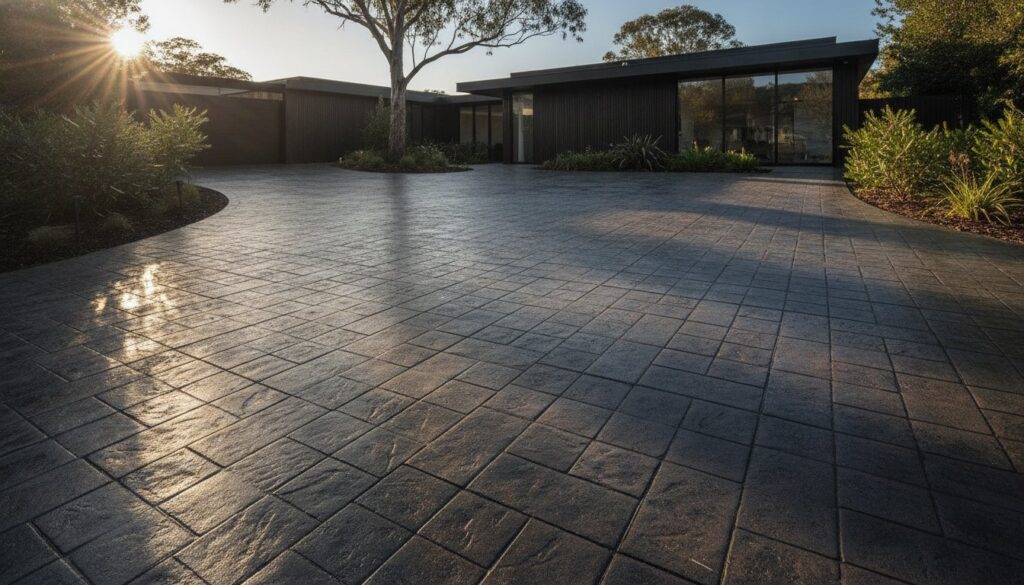
Your driveway is a structural asset that faces a relentless dual assault from Sydney’s scorching UV rays and the shifting reactive clay soils beneath your feet. Maintaining that premium, textured finish isn’t just about curb appeal; it’s about protecting the long-term value of your property. We know the frustration of seeing a once-vibrant surface succumb to fading, oil stains, or a cloudy, peeling sealer. Mastering stamped concrete driveway maintenance requires a strategic approach that balances engineering precision with aesthetic care to combat the unique environmental pressures of 2026.
You deserve a driveway that maintains its “just poured” look for decades, and we’re here to show you exactly how to achieve it. This guide reveals the professional secrets to preserving deep colour and structural integrity through every Sydney season. We’ll help you navigate the complexities of soil movement and provide a clear roadmap for when to DIY versus when to engage a master craftsman. From preventing cracks to identifying the perfect resealing interval for our local climate, you’re about to learn how to transform basic utility into a lasting creative vision.
Key Takeaways
- Protect your investment from Sydney’s intense UV index by understanding how modern sealers prevent colour fading and surface yellowing over time.
- Implement a strategic rhythm of routine care and professional inspections to master stamped concrete driveway maintenance and avoid costly structural repairs.
- Manage the impact of Sydney’s reactive clay soils by keeping expansion joints clear, allowing your slab to move naturally without developing unsightly cracks.
- Identify the technical differences between solvent-based and water-based acrylics to ensure you apply the most durable protective layer for your specific finish.
- Recognise the critical signs that indicate when your driveway requires industrial-grade restoration versus simple DIY cleaning to maintain its premium aesthetic.
Why Stamped Concrete Driveway Maintenance is Essential in Sydney
Owning a high-end driveway in Sydney is a commitment to both engineering and artistry. Stamped surfaces aren’t just single slabs of grey; they’re multi-layered systems designed to mimic stone, slate, or brick. Effective stamped concrete driveway maintenance involves a disciplined approach to preserving the protective sealer, the delicate secondary antiquing colours, and the structural integrity of the joints. In our local climate, neglect doesn’t just lead to a dull look; it leads to a total failure of the surface’s protective barriers.
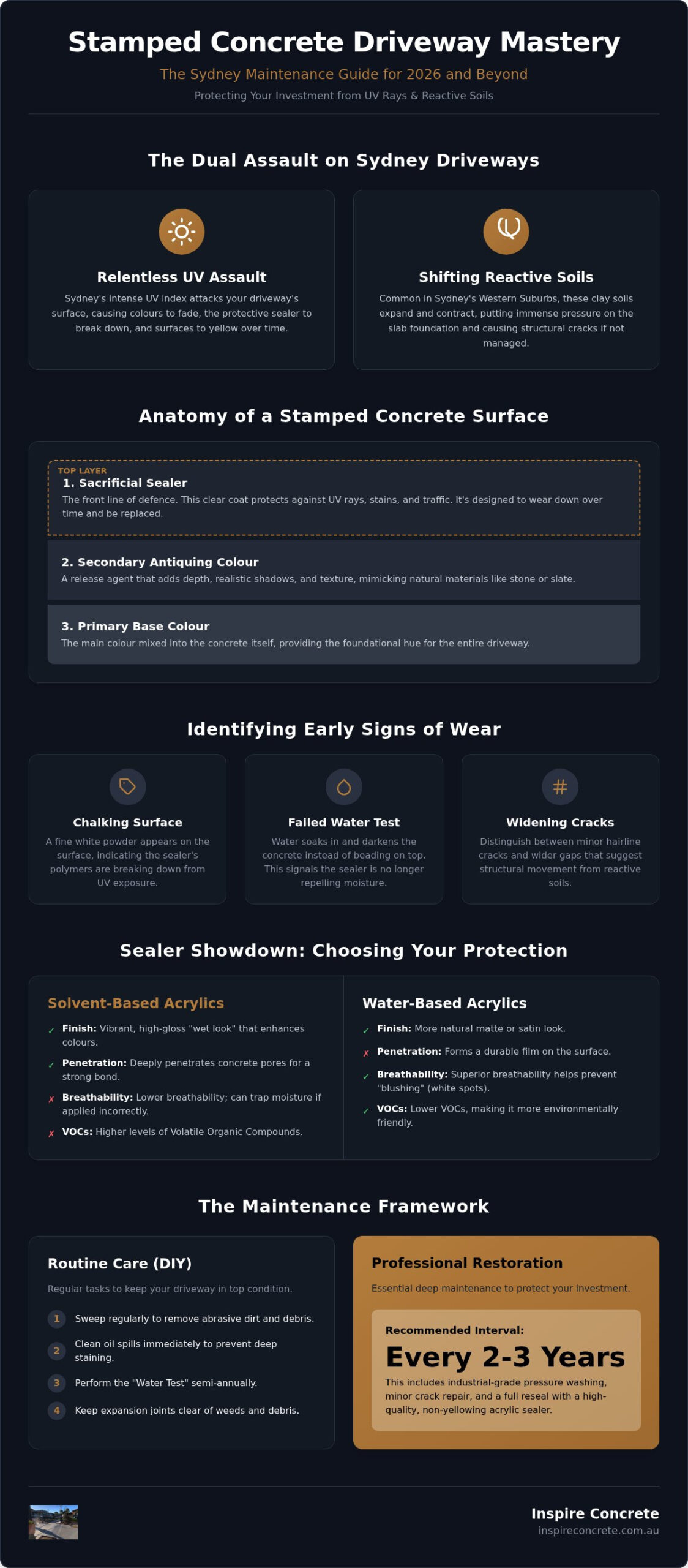
The ‘Sydney Factor’ presents a unique challenge for homeowners. We face a relentless dual assault. High UV indices in the summer months can bleach the life out of concrete pigments, while the reactive clay soils common in the Western Suburbs put immense pressure on the slab’s foundation. Without regular care, these environmental stressors turn minor issues into expensive structural repairs. Investing in a professional reseal every 2 to 3 years is a small price to pay compared to the thousands required for a full driveway replacement. It’s about protecting your property value and ensuring your creative vision remains intact for decades.
The Anatomy of a Stamped Surface
To care for your driveway, you first need to understand its construction. Most people ask, What is Stamped Concrete? at the start of their renovation journey, but few understand its layers. The finish relies on a primary base colour mixed into the concrete, topped with a secondary antiquing release agent that provides depth and realistic shadows. The clear sealer on top acts as a sacrificial layer. It’s the front line of defence that takes the brunt of foot traffic, vehicle tyres, and chemical spills. Because of the deep texture and imprinting, dirt and debris can become trapped in the crevices, making regular cleaning more complex than it is for a standard plain concrete surface.
Identifying Early Signs of Wear
Catching wear early is the difference between a simple refresh and a full restoration. Look for ‘chalking’, which appears as a fine white powder on the surface. This is a clear sign that the UV rays have begun to break down the sealer’s polymers. You can also perform the ‘Water Test’ yourself. Simply pour a small amount of water onto various parts of the driveway. If the water beads on the surface, your protection is still active. If it soaks in and turns the concrete a darker shade, the sealer has failed and moisture is penetrating the slab. You should also distinguish between hairline cracks, which are often superficial, and wider gaps that suggest structural movement from those reactive Sydney soils.
The Science of Protection: Sealers and UV Resistance
The chemical bond between your sealer and the slab is the foundation of effective stamped concrete driveway maintenance. In 2026, we primarily choose between solvent-based and water-based acrylics. Solvent-based options are prized for their ability to penetrate deep into the pores, creating a vibrant finish that makes antiquing colours pop. Water-based acrylics have evolved significantly, offering superior breathability and lower VOC levels. This breathability is vital for preventing “blushing”, which refers to the unsightly white spots caused by trapped moisture. Experts in surface protection, such as Sealwerx, note that without a porous escape route, water vapour becomes trapped beneath the sealer, detaching the film from the concrete surface.
Sydney’s high UV index demands non-yellowing, “non-ambering” formulas. Without these high-quality resins, your clear coat will eventually turn a brittle, yellowish hue, masking the elegance of your chosen pattern. Following the principles in the Guide to Durable Concrete, we prioritise sealers that maintain structural stability against chemical attack and physical wear. Safety is equally paramount. For sloped Sydney driveways, we integrate polymer grit or glass beads into the final coat to provide essential traction during our sudden summer thunderstorms. This ensures your driveway remains as functional as it is beautiful.
Choosing the Right Sealer for Your Pattern
A high-gloss finish provides that classic “wet look” that highlights the deep textures of slate or European fan patterns. Conversely, a matte or satin finish offers a more understated, natural stone appearance that suits modern minimalist home designs. While film-forming sealers provide the best aesthetic boost, penetrating sealers offer longer-lasting protection against oil stains by working below the surface. The choice of sealer directly dictates how much the secondary antiquing colours will stand out against the base slab, turning a simple driveway into a realised creative vision.
The Resealing Timeline
While the general rule for stamped concrete driveway maintenance is to reseal every 2 to 3 years, Sydney’s microclimates dictate a more nuanced approach. A north-facing driveway in Western Sydney receives significantly more solar radiation than a shaded property in the Blue Mountains, accelerating the breakdown of the protective film. Heavy SUV traffic also wears down the sacrificial layer faster in high-friction areas like turning circles. Avoid the temptation to reseal every year, as over-sealing leads to acrylic buildup. This can cause the surface to peel or become dangerously slippery. If you’re unsure about your surface’s current state, our professional cleaning and sealing team can assess the resin levels before you commit to another coat.
The Maintenance Framework: Routine Care vs. Deep Restoration
A disciplined schedule is the backbone of longevity for any high-end surface. Effective stamped concrete driveway maintenance isn’t a reactive chore; it’s a proactive rhythm that prevents the slow accumulation of abrasive grit and chemical contaminants. We recommend a tiered approach: weekly sweeping to remove surface debris, quarterly deep cleans to lift embedded oils, and a biennial professional assessment to check the resin levels of your sealer. By following this framework, you ensure the structural stability of the slab while keeping the aesthetic transformation of your property sharp and vibrant.
Chemical compatibility is critical during the cleaning process. Always utilise pH-neutral cleaners specifically formulated for decorative concrete. Harsh, acidic cleaners or generic household detergents can aggressively strip the chemical bond of your sealer, leaving the antiquing colours vulnerable to the elements. When using high-pressure equipment, adopt a “soft touch” approach. Industrial-grade washers can easily pit the delicate textures of a slate or stone pattern if the pressure is too high or the nozzle is held too close. We focus on high-volume, low-pressure rinsing to protect the surface integrity while ensuring all runoff is managed to protect your surrounding Sydney landscaping and garden beds.
Step-by-Step: The Perfect Routine Clean
Maintaining your driveway’s realised creative vision requires a methodical cleaning process. Follow these steps to ensure a professional-grade result at home:
- Step 1: Clear all abrasive debris and organic matter. This prevents small stones from scratching the sealer under tyre pressure and stops organic tannins from setting in.
- Step 2: Apply a diluted, pH-neutral decorative concrete cleaner. This lifts surface oils and environmental pollutants without compromising the protective film.
- Step 3: Agitate the texture with a medium-bristle broom. Avoid wire brushes at all costs, as they can gouge the imprinting and leave rust-prone metal fragments behind.
- Step 4: Rinse thoroughly with a low-pressure garden hose. Move in steady, overlapping strokes to prevent “wand marks” or streaks from forming as the surface dries.
Dealing with Stubborn Stains
Even with a rigorous routine, Sydney’s environment presents specific challenges. Oil and grease should be treated immediately with poultice cleaners. These specialised pastes draw contaminants out of the concrete pores, preventing permanent discolouration. You may also notice “hot tire pick-up”, where heat from your tyres causes the sealer to soften and bond to the rubber, pulling the film away from the concrete. This is best managed by allowing tyres to cool before parking on fresh sealer. Finally, be vigilant with leaf litter from Sydney’s native Eucalypts. The tannins in these leaves can create stubborn, dark stains if left to sit on a damp surface, requiring a professional-grade oxygenated cleaner for full removal.
Mitigating Damage: Environmental Hazards and Structural Integrity
Sydney’s geological profile is a silent adversary for any homeowner. The reactive clay soils prevalent across the Western Suburbs behave like a sponge, swelling significantly during our heavy rainfall periods and shrinking during dry spells. This constant ground movement places immense pressure on concrete slabs. Effective stamped concrete driveway maintenance must address these underground forces to prevent surface-level failure. If the soil shifts and the slab cannot move with it, you’ll face structural cracks that no amount of sealer can hide. Protecting your investment requires a dual focus on surface aesthetics and foundational stability.
Chemical hazards often go unnoticed until the damage is permanent. Common garden fertilisers frequently contain iron or ammonium sulphate, which can “burn” or stain the pigments in your concrete if they’re not rinsed off immediately. Similarly, aggressive tree roots don’t just lift slabs; they can suck moisture out of the clay beneath the driveway, causing uneven settling. Ensure your stormwater drainage is efficient and directed away from the slab edges to prevent sub-grade erosion, which is the leading cause of driveway sinking in older Sydney suburbs.
Managing Expansion and Control Joints
Expansion joints are the “breathing room” your driveway needs to survive Sydney’s temperature fluctuations. Filling these joints with a high-quality, flexible mastic is a critical maintenance step for stamped concrete. This sealant prevents water from infiltrating the sub-grade and keeps debris from wedging into the gaps. If joints become clogged, the concrete has no room to expand, leading to “joint spalling” where the edges of the pattern begin to chip and crumble. In regions like the Blue Mountains, where steep gradients are common, maintaining clear and sealed joints is vital for managing runoff and slab stability.
Seasonal Hazards in Sydney
Every season in Sydney brings a different threat to your driveway’s realised creative vision. In summer, thermal expansion is at its peak, and UV bleaching is the primary danger to your secondary antiquing colours. Winter brings increased moisture, which can lead to efflorescence, a white, salty bloom that rises to the surface as water evaporates. During spring, pollen and sap from overhanging garden canopies can create sticky residues that trap abrasive dirt. A proactive approach to stamped concrete driveway maintenance involves adjusting your care routine to meet these seasonal shifts before they cause lasting damage.
If you’ve noticed joint wear or signs of salt bloom, our concrete cleaning and sealing experts can assess your driveway’s structural health and restore its protective barriers.
Restoring the Masterpiece: Professional Cleaning and Sealing
There is a distinct line where routine home care ends and professional restoration begins. While a garden hose and a broom are sufficient for weekly upkeep, high-level stamped concrete driveway maintenance requires industrial-grade equipment and chemical precision. Deciding when to DIY and when to call professional concreters in Sydney often comes down to the condition of the sealer. If the surface has become dull, patchy, or has lost its depth of colour, a simple wash won’t suffice. Professionals use high-solids sealers that provide a thicker, more durable protective film than standard retail products, ensuring your driveway survives the next several years of Sydney’s harsh UV exposure.
Beyond simple protection, professional services offer the opportunity for aesthetic transformation. If your pattern has faded due to years of neglect, we utilize tinted sealers to breathe life back into the pigments, restoring the rich contrast between the base colour and the antiquing agent. It’s a common misconception that a worn driveway requires a full replacement or concrete resurfacing. While resurfacing is a powerful tool for damaged slabs, many driveways can be saved through meticulous deep cleaning and resealing. This approach protects your property value without the higher costs associated with a total surface overhaul.
What to Expect from a Professional Service
A professional restoration is a multi-stage process that prioritizes the chemical bond of the new sealer. We begin with a deep-cleaning phase, using industrial degreasers and controlled high-pressure water to strip away environmental pollutants and any old, failed resin without damaging the concrete’s delicate texture. Precision resealing follows, where we ensure even coverage across the entire slab. We pay close attention to the stamped grooves, preventing the sealer from “puddling,” which can lead to cracking or peeling later. Once applied, the curing phase is critical. You’ll typically need to wait 24 hours for foot traffic and up to 72 hours before parking a vehicle on the refreshed surface to ensure the film has fully hardened.
Partnering with Inspire Concrete
With a 20-year commitment to Sydney’s residential and commercial landscapes, we understand the intersection of trade expertise and design-led service. Our team provides tailored maintenance plans that address the specific needs of your property, whether you have a stamped finish or exposed aggregate. We don’t just apply a coat of sealer; we partner with you to ensure your creative vision remains a durable reality. Don’t leave your property’s first impression to chance. Request a professional maintenance quote from Inspire Concrete today and secure the long-term beauty of your driveway.
Securing Your Driveway’s Future
As licensed and insured expert craftsmen with over 20 years of local industry experience, we understand the technical nuances of Sydney’s unique terrain. We specialize in stabilizing foundations against reactive soil stress while restoring the vibrant textures and colours that make stamped finishes so aspirational. Don’t let neglect diminish your investment. Protect your investment with professional cleaning and sealing from Inspire Concrete and enjoy a surface that remains a masterpiece for decades. Your property deserves the certainty of expert craftsmanship.
Frequently Asked Questions
How often should I reseal my stamped concrete driveway in Sydney?
You should generally reseal your driveway every 2 to 3 years to maintain optimal protection against Sydney’s high UV index. Properties in Western Sydney with north-facing exposure may require more frequent attention due to increased solar radiation. Regular stamped concrete driveway maintenance ensures the sacrificial layer remains intact, preventing the secondary antiquing colours from bleaching or wearing away under heavy vehicle traffic.
Can I use a pressure washer to clean my stamped concrete?
Yes, you can use a pressure washer, but you must adopt a “soft touch” approach to protect the texture. Use a wide-angle fan nozzle and maintain a consistent distance from the surface to avoid pitting the imprinting or creating “wand marks.” For routine cleaning, a high-volume, low-pressure rinse is often more effective at removing debris without risking the chemical bond of your sealer.
My stamped concrete sealer is turning white or peeling; what should I do?
This phenomenon, known as “blushing,” usually occurs when moisture becomes trapped beneath the sealer or when the product is over-applied. You shouldn’t simply paint over it, as this traps more moisture and worsens the peeling. The solution typically involves using a solvent-based rejuvenator to re-emulsify the resin or, in severe cases, professionally stripping the failed layer before applying a fresh, breathable coat.
Will salt or fertilizers damage my decorative concrete pattern?
Common garden fertilizers containing iron or ammonium sulphate can aggressively “burn” and stain the pigments in your concrete. While salt is less common in Sydney than in snowy climates, any chemical runoff can compromise the sealer’s integrity. Always rinse your driveway immediately if garden chemicals drift onto the surface to prevent permanent discolouration of the stamped pattern and maintain its realized creative vision.
How do I fix a small crack in my stamped concrete driveway?
Small cracks should be filled with a colour-matched flexible mastic or specialized concrete caulk rather than rigid fillers. Because Sydney is known for reactive clay soils, the slab needs the ability to move slightly without further fracturing. Sealing these gaps is a critical part of stamped concrete driveway maintenance as it prevents water from infiltrating the sub-grade and causing foundational erosion or sinking.
Is it normal for stamped concrete to fade over time?
UV exposure naturally bleaches concrete pigments over years of service, leading to a muted appearance. This fading is often a sign that the protective sealer has worn thin and no longer provides a UV barrier. If your driveway looks dull, a professional deep clean followed by a high-solids, UV-resistant sealer can often restore the original vibrancy and contrast of the antiquing release agent.
Can I change the colour of my stamped concrete during maintenance?
You can certainly shift the tone or refresh the vibrancy of your driveway by using a tinted sealer during the restoration process. This is an excellent way to breathe life back into a faded pattern or update the aesthetic to match a recent home renovation. Tinted sealers provide a translucent layer of colour that enhances the existing textures without masking the natural stone or slate appearance.
How long do I need to stay off my driveway after it has been resealed?
You should wait at least 24 hours for foot traffic and a full 72 hours before parking vehicles on the refreshed surface. Sydney’s humidity levels can influence these curing times, so it’s best to err on the side of caution. Prematurely driving on the surface can cause “hot tire pick-up,” where warm rubber bonds to the fresh sealer and pulls it away from the concrete slab.
