
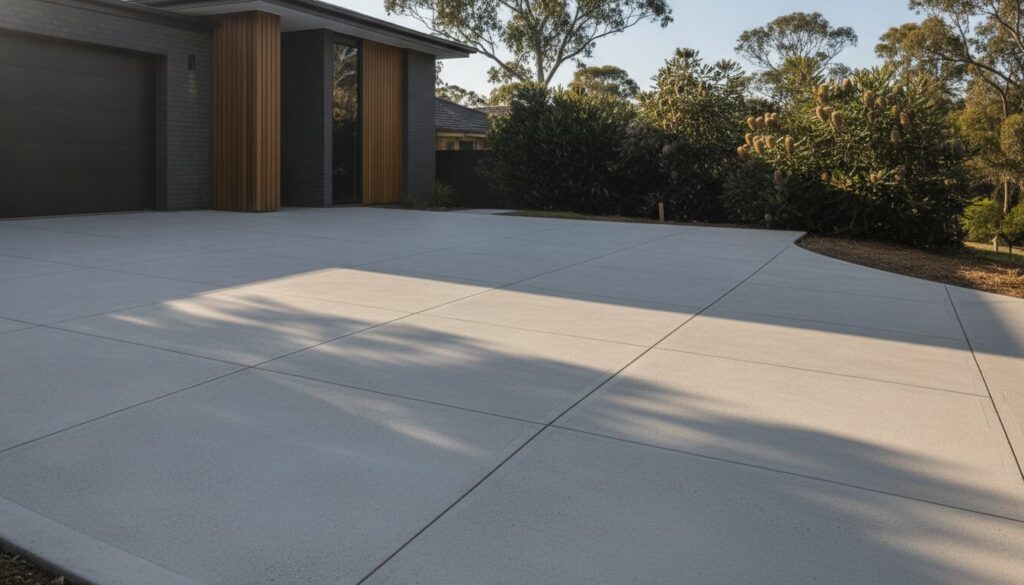
Could your brand-new driveway be a ticking time bomb simply because of the dirt beneath it? In Sydney, the combination of punishing summer heat and highly reactive clay soils creates a volatile environment that can shatter even the most premium concrete surfaces. Many homeowners assume a thick slab is enough, but without the strategic placement of concrete expansion joints residential projects are often doomed to unsightly cracking before the first year is out.
We understand the frustration of seeing a significant investment marred by avoidable damage. It’s common to feel overwhelmed by technical jargon or worry if your project meets the strict requirements of AS 3727.1:2016. This guide will show you how to harness the right expansion strategies to ensure your concrete remains both structurally sound and visually stunning. You’ll learn the vital differences between joint types, the specific spacing needed for Sydney’s reactive clay sites, and how to achieve a finish that blends engineering precision with high-end craftsmanship.
Key Takeaways
- Protect your investment by understanding how Sydney’s reactive soils and extreme heat cycles demand specific structural movement strategies.
- Discover how to select the right compressibility in materials for concrete expansion joints residential slabs require to absorb pressure without buckling.
- Learn the “Rule of Thumb” for joint spacing to ensure your driveway or alfresco area remains crack-free regardless of the slab thickness.
- Master the art of blending structural necessity with design by aligning joints with architectural features for a seamless, high-end look.
- Identify the critical “Goldilocks” window for saw-cutting joints to prevent premature surface damage and ensure long-term durability.
Understanding Concrete Expansion Joints in Residential Settings
Concrete isn’t as static as it looks. It’s a living material that breathes, expands, and contracts with the environment. In the context of concrete expansion joints residential owners often overlook these gaps until a crack appears. Essentially, an expansion joint is a pre-planned gap that allows independent movement between adjacent slabs or structures. To get a technical baseline, you might ask, What is an expansion joint? It’s the structural buffer that prevents your slab from crushing itself when things get tight.
Sydney homes face a unique double threat: extreme temperature swings and notoriously reactive clay soils. Without these joints, your high-end concrete driveway acts like a rigid, brittle sheet under immense pressure. Think of these joints as a low-cost insurance policy. While a control joint is merely a shallow groove designed to “invite” a crack to happen in a straight line, an expansion joint runs the full depth of the slab. It separates the concrete sections entirely, usually filled with a compressible material to absorb physical growth.
Thermal Expansion vs. Drying Shrinkage
Sydney’s 40-degree summer days are more than just uncomfortable for residents; they cause concrete to physically grow. As the sun beats down, the internal temperature of the slab rises, leading to thermal expansion. Conversely, the chemistry of curing involves a natural loss of moisture that causes the material to shrink over time. This push-and-pull creates internal tension. If there isn’t a dedicated space for this movement, the concrete will find its own way to relieve the stress. This usually results in jagged, random cracks that ruin the aesthetic of your property.
The Role of Sydney Soils: Reactive Clay Challenges
The ground beneath your feet in Western Sydney is often composed of highly reactive clay. These soils are prone to “heaving,” meaning they swell significantly when wet and shrink during dry spells. This constant vertical and horizontal movement puts incredible strain on residential slabs. For homes situated on Class H (Highly Reactive) or Class E (Extremely Reactive) sites, standard joint spacing is rarely sufficient. Proper concrete expansion joints residential installations must account for this ground movement to prevent the slab from snapping under the pressure of the shifting earth. We don’t just pour concrete; we engineer it to live in harmony with the local landscape.
Choosing the Right Joint Materials for Your Project
Selecting the right materials for concrete expansion joints residential applications isn’t a task for the uninformed. It’s a precise calculation. You’re looking for the perfect balance between compressibility and durability. If a material is too rigid, it won’t yield when the concrete grows. If it’s too soft, it might degrade under the weight of a vehicle or the intensity of the Australian sun. Closed-cell foam has become the modern gold standard for Sydney driveways because it remains flexible while effectively sealing out moisture. This moisture exclusion is critical. It prevents water from seeping into the sub-base, which could lead to soil erosion and slab failure over time.
Understanding the proper use of isolation and expansion joints is what separates a professional installation from a DIY disaster. UV resistance is another non-negotiable factor. Sydney’s high UV index can turn inferior fillers brittle within a few seasons. We prioritize materials that maintain their structural integrity and color, ensuring your joints don’t become an eyesore as they age. Every component we select is chosen to withstand the specific environmental stressors of the local climate.
Flexible Foam Fillers vs. Bitumen Fibre Board
Foam expansion strips, such as Abelflex, are the preferred choice for most residential paths and alfresco areas. They are easy to install and provide a clean, uniform look that complements modern architecture. Bitumen fibre board remains the rugged alternative. It’s a heavy-duty material often reserved for driveway crossovers where high traffic or heavier vehicles are expected. For those looking to achieve a premium finish on their next project, consulting with a specialist concrete partner ensures every material choice is backed by years of site-specific experience.
Metal Key Joints and Connolly Systems
When dealing with large residential slabs, such as expansive entertaining areas or shed foundations, metal key joints offer unmatched precision. These systems act as permanent formwork, allowing for exact height control across the entire pour. Properly engineered concrete expansion joints residential projects rely on are the backbone of a durable surface. They are particularly effective at preventing differential settlement. This occurs when one section of concrete sinks lower than another, creating a dangerous trip hazard. While they might appear more industrial, their ability to maintain a perfectly level surface is essential for high-end residential builds.

Strategic Placement: Spacing Rules for Maximum Protection
Precision in placement defines the master craftsman. For the concrete expansion joints residential slabs require, we follow a strict mathematical “Rule of Thumb” to ensure longevity. Generally, joints should be spaced at intervals of 24 to 30 times the thickness of the slab. For a standard 100mm residential slab, this translates to a joint every 2.4 to 3.0 metres. If we’re pouring a 125mm slab for heavier vehicle access, those distances increase proportionally to maintain structural integrity. While control joints handle the minor surface tension, full-depth expansion joints are strategically placed every 4.5 to 9 metres as per current Sydney standards to accommodate larger thermal shifts.
Planning a concrete slab involves more than just calculating area. You must identify high-stress points where cracking is most likely to occur. These include internal corners, utility poles, and junctions where the new pour meets an existing wall or structure. If you don’t isolate these points, the concrete will inevitably tear at the corner as it tries to move against a fixed object. We map these stress points during the site preparation phase to ensure every potential crack is pre-empted by a clean, functional joint.
Driveway Spacing and Edge Protection
For a standard 3-metre wide Sydney driveway, we view the project as a series of interconnected panels rather than a single rigid block. One of the most critical placements is where your private property meets the public footpath. Sydney councils are incredibly strict about this junction. You must have a clear expansion joint at the property boundary to protect the public kerb and gutter from the pressure of your driveway’s thermal expansion. Failing to provide this buffer can lead to the council ordering expensive removals and replacements at your expense. We ensure every driveway crossover complies with local Section 138 permit requirements.
Isolation Joints: Protecting the Main House Foundation
Never allow a new concrete pour to touch your home’s brickwork directly. We use isolation joints to decouple your new patio or alfresco area from the main house structure. This is vital in Sydney’s reactive clay zones. When the ground shifts or the soil heaves, the concrete needs to move independently. If it were bonded to the house, that movement could transfer significant force into your foundations, leading to structural damage or moisture ingress. By creating this physical break, we ensure your lifestyle upgrade doesn’t compromise your home’s long-term stability. It’s about moving from basic utility to a sophisticated, engineered result that protects your entire property.
Balancing Durability with Aesthetics in Decorative Concrete
Many homeowners fear that the functional concrete expansion joints residential projects require will look like industrial scars across their property. This is a common misconception. In the hands of a master craftsman, these joints become nearly invisible or even enhance the architectural rhythm of the space. We don’t just cut lines; we align them with the natural geometry of your home. By positioning joints to match the edges of pillars, the alignment of window frames, or the transition between different surface textures, we turn a structural necessity into a design element. This meticulous planning ensures that the expansion gap serves its purpose without compromising the visual flow of your landscape.
Color matching is another tool we use to achieve a high-end finish. Instead of leaving a raw gap or using traditional black bitumen, we can utilize flexible sealants that match the specific hue of your concrete. These sealants fill the void and bridge the visual divide between slabs. For those investing in exposed aggregate driveways, the textured surface provides a natural camouflage. The irregular stones and varied colors break up the visual line of the joint, making it far less noticeable than it would be on a smooth, plain slab. It’s about moving beyond simple utility to create a durable surface that reflects your personal style.
Masking Joints in Exposed Aggregate and Coloured Finishes
Precision is the hallmark of a premium installation. We often employ “hidden” saw cuts or decorative joint covers that sit perfectly flush with the finished surface. The texture of the aggregate itself helps to soften the edges of these cuts, allowing them to blend into the background. In high-end architectural concrete, even a minor wobble in a joint line can ruin the premium feel of the entire project. We use specialized equipment to ensure every line is laser-straight and clean, reinforcing the brand’s position as a high-end solution provider.
Pattern Alignment in Stencilled and Stamped Concrete
Complexity increases when dealing with patterns. For stencilled or stamped surfaces, the expansion joint must be strategically placed to follow the “grout lines” of the chosen design. An unprofessional installer might cut directly across a faux brick or stone pattern, creating a jarring visual break that screams poor workmanship. We plan the stencil layout around the expansion joint map from the very beginning. This ensures the structural break is hidden within the pattern’s own geometry, maintaining the illusion of natural stone or brickwork. If you’re ready to elevate your home’s exterior, speak with our design-oriented team to see how we blend engineering with artistry.
Professional Installation and Long-Term Maintenance
The mastery of concrete lies in the execution of the final details. For the concrete expansion joints residential projects rely on for structural integrity, the installation method is just as critical as the placement. A poorly executed joint isn’t just an eyesore; it’s a failure point that invites moisture and debris into the slab’s core. We approach this phase with a focus on timing and precision. Whether we are hand-tooling or saw-cutting, the goal remains the same: creating a clean, functional break that allows the concrete to breathe without compromising the aesthetic vision of your property.
Timing is everything when it comes to saw-cutting. We refer to this as the “Goldilocks” window. If you cut too early, the saw blade will “ravel” the edges, tearing the aggregate and leaving a ragged, unprofessional finish. If you wait too long, the internal stresses of the curing concrete will have already found a path of least resistance, resulting in random cracks elsewhere. In the Sydney climate, this window is often narrow, dictated by the day’s humidity and temperature. This is why hiring concreters in Sydney with deep local experience is vital. We understand how our specific environment accelerates or slows the curing process, ensuring every cut is made at the exact moment for a sharp, architectural edge.
Tooling vs. Saw Cutting: Which is Better?
The choice between tooling and saw-cutting often comes down to the desired architectural style. Hand-tooling is the traditional approach, creating a rounded, slightly wider groove while the concrete is still wet. It’s a classic look that suits heritage-style driveways and standard pathways. Saw-cutting, performed after the concrete has achieved its initial set, offers a sleek, minimalist line that is perfect for modern, high-end architectural slabs. Regardless of the method, depth is the non-negotiable factor. We ensure every joint is cut to at least 1/4 of the slab thickness to effectively direct movement and prevent surface tearing.
Sealing and Re-Sealing Expansion Joints
Maintenance is the final step in ensuring long-term value. We recommend an annual inspection of your concrete expansion joints residential surfaces to check for debris or sealant failure. Over time, traditional fillers can become brittle or compressed. We often utilize high-grade polyurethane sealants to bridge these gaps. These sealants perform several vital functions:
- Moisture Exclusion: They keep water from reaching the sub-base, preventing soil erosion and slab sinking.
- Biological Protection: A sealed joint prevents weed growth and ant infestations that can undermine the concrete from below.
- Debris Prevention: They stop pebbles and dirt from filling the gap, which would otherwise prevent the joint from closing during thermal expansion.
Replacing old, brittle joint fillers is a simple way to extend the life of your slab significantly. By maintaining these buffers, you ensure your investment remains as durable and beautiful as the day it was poured.
Elevate Your Property with Engineered Precision
Protecting your home from Sydney’s extreme thermal shifts and volatile clay requires more than just a standard pour. It demands the strategic approach to concrete expansion joints residential projects need for lifelong durability. We’ve explored how selecting the right materials and mastering the “Goldilocks” window for installation prevents the unsightly cracking that often plagues lesser builds. By aligning these structural breaks with your home’s unique architecture, you transform a functional requirement into a seamless design feature that adds genuine value to your investment.
As a family-owned team of licensed contractors with over 20 years of Sydney concreting experience, we specialize in the delicate balance between rugged structural stability and refined decorative finishes. We don’t just provide a service; we act as your project partner to ensure your driveway or entertaining area remains a source of pride for decades. Our expertise in both decorative and structural residential concrete leaves no room for guesswork, giving you total certainty in the final result.
Get a Professional Concrete Quote for Your Sydney Project today and take the first step toward a flawless, crack-free transformation. Your vision deserves the certainty of expert craftsmanship.
Frequently Asked Questions
How far apart should expansion joints be in a residential driveway?
Expansion joints should be placed every 4.5 to 9 metres for residential driveways to accommodate significant thermal movement. For standard 100mm slabs, we also integrate control joints every 2.4 to 3.0 metres. This specific frequency ensures the concrete can expand and contract safely during Sydney’s intense summer heat without buckling or crushing the edges of the slab.
Can I use timber or wood as an expansion joint in concrete?
You should avoid using timber or wood as an expansion joint material. Timber is a rigid, organic substance that eventually rots, creates voids for pests, and fails to compress when the concrete expands. Modern concrete expansion joints residential projects require specialized closed-cell foam or bitumen boards; these offer the flexibility needed to absorb pressure without degrading over time.
What is the difference between a control joint and an expansion joint?
A control joint is a shallow groove designed to encourage cracking to happen in a straight, hidden line. In contrast, an expansion joint is a full-depth break that completely separates two concrete sections. While control joints manage surface tension, expansion joints allow the entire slab to move independently; this protects it from structural damage caused by soil heaving or extreme temperature changes.
How deep should a saw-cut joint be in a 100mm slab?
A saw-cut joint must be at least one-quarter of the total slab thickness to be effective. For a standard 100mm residential slab, the cut should be exactly 25mm deep. This depth creates a weakened plane that successfully guides the concrete to crack at the joint rather than randomly across your finished surface.
Do concrete expansion joints need to be sealed?
Sealing your expansion joints is highly recommended to protect the structural integrity of your slab. Using a high-quality polyurethane sealant prevents water from seeping into the sub-base, which can lead to erosion and slab sinking. It also blocks debris and weeds from filling the gap, ensuring the joint remains functional and aesthetically clean for years to come.
What happens if I don’t put expansion joints in my concrete?
Omitting expansion joints will inevitably lead to random, jagged cracking and potential buckling of the concrete surface. Without a dedicated space to grow, the concrete will exert massive pressure against adjacent structures or itself. In Sydney’s reactive soils, this lack of movement often results in permanent structural failure and a significantly shortened lifespan for your driveway or alfresco area.
Can I add expansion joints to an existing concrete slab that is cracking?
You can retroactively saw-cut joints into an existing slab, but this won’t repair cracks that have already formed. Adding joints to an older surface can help relieve internal stress and prevent further damage, though the results are never as effective or visually seamless as joints planned during the initial pour. For severely cracked slabs, we often recommend professional resurfacing or a complete replacement to restore both durability and design.
How wide should a standard residential expansion joint be?
A standard concrete expansion joints residential gap is typically 10mm wide. This width provides sufficient space for the concrete to expand during 40-degree Sydney days while remaining narrow enough to be filled with aesthetic sealants. Maintaining this uniform width is essential for achieving a professional, high-end finish that doesn’t distract from the overall design of your property.
