
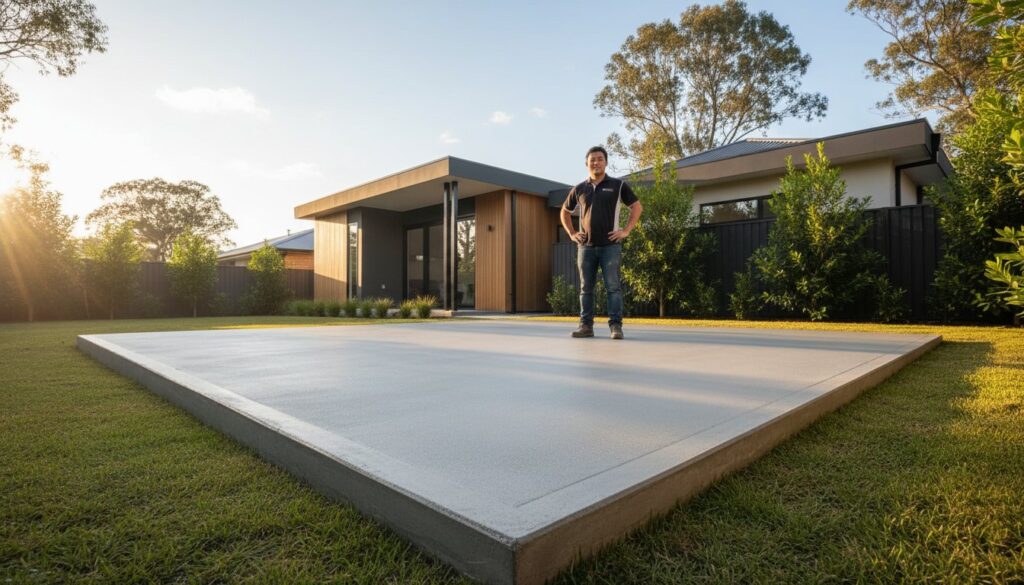
A shed slab in Sydney is not just a flat surface; it’s a precision-engineered barrier against reactive clay, coastal moisture, and local pests. When you’re investing in high-quality shed slabs, you don’t want to see your hard-earned money sink or crack because of an unstable foundation. It’s natural to feel frustrated by drainage uncertainties or the confusing permit rules that vary between Sydney councils. We understand that you want a result that adds genuine value to your property without the headache of future structural failures.
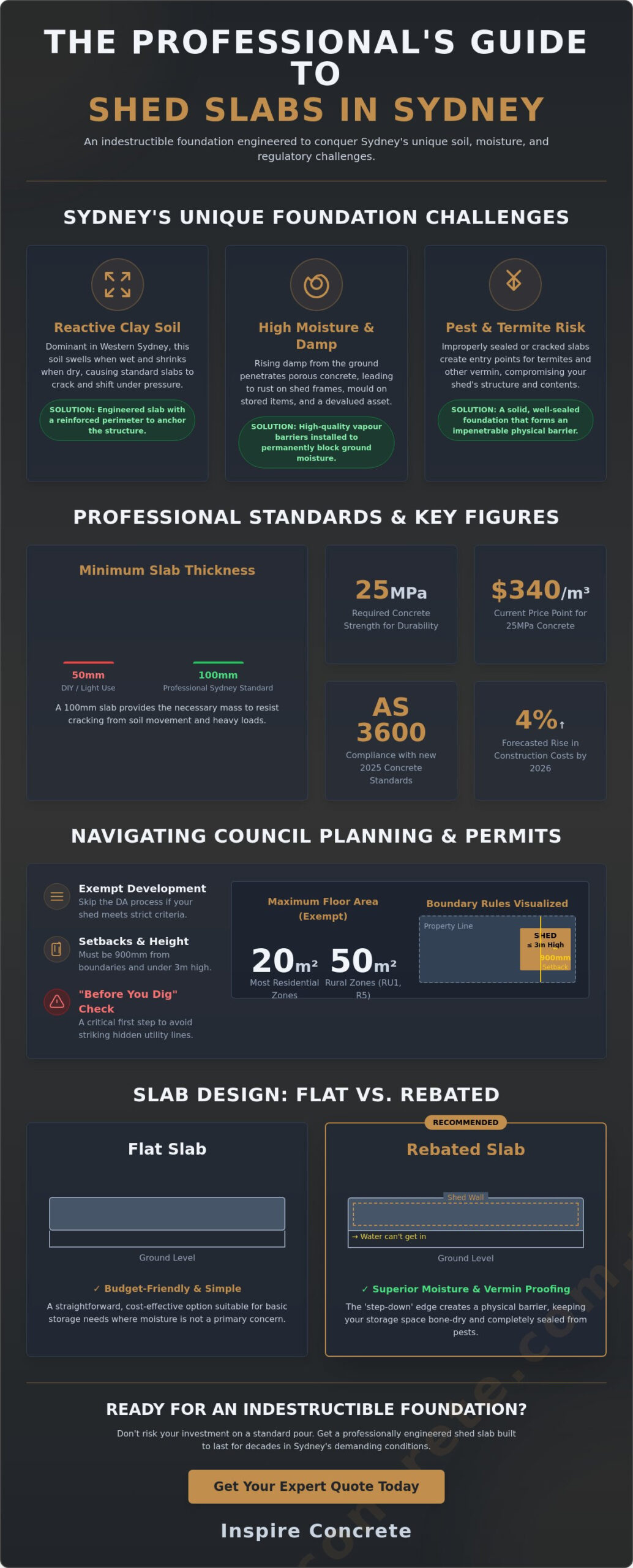
Protect your investment by mastering the essentials of pouring professional-grade foundations tailored for our city’s unique soil profiles. You’ll learn how to create a level, moisture-resistant base that complies with the new AS 3600-2025 standards while navigating the 4% rise in construction costs forecasted for 2026. We’ll preview the latest regulations, such as the 20 square meter exempt development limit and the current $340 per cubic meter price point for 25MPa concrete. By the end, you’ll have the technical certainty to inspire your next project and transform your backyard with a bespoke, indestructible foundation.
Key Takeaways
- Understand why Sydney’s reactive clay demands a professional engineering approach to ensure long-term structural integrity and prevent cracking.
- Navigate local planning rules by identifying when your project qualifies as exempt development under the 20-square-meter floor area limit.
- Choose between a budget-friendly flat slab or a moisture-resistant rebated design to keep your storage space bone-dry and vermin-proof.
- Learn the technical “3-4-5 rule” for perfectly square shed slabs and the critical importance of sturdy formwork during excavation.
- Discover how professional installation manages tight site access in Sydney suburbs while eliminating the hidden expenses of equipment rental and material waste.
Why Your Sydney Shed Slab Needs a Professional Engineering Approach
A professional shed slab represents more than a flat surface to park your mower; it’s a reinforced concrete foundation meticulously designed to distribute heavy loads and block ground moisture. For those unfamiliar with concrete slab basics, these structures act as the primary interface between your building and the earth. While some DIY guides suggest a 50mm thickness is sufficient for light structures, Sydney’s unique environment demands a 100mm professional minimum to ensure long term structural integrity. This depth provides the necessary mass to resist cracking and ensures your shed remains a permanent asset rather than a temporary fix.
Our city sits on a complex geological mix that challenges standard construction methods. In many suburbs, particularly across Greater Western Sydney, reactive clay dominates the landscape. These soils act like a sponge, swelling significantly when wet and shrinking during dry spells. Without a professional engineering approach, standard shed slabs quickly succumb to these subterranean forces. This leads to unsightly cracks, compromised shed warranties, and doors that eventually fail to latch. We treat every pour as a bespoke engineering project, ensuring the foundation is built to withstand local conditions for decades.
Understanding Sydney’s Reactive Clay Soils
Western Sydney’s soil profile requires specific site classification under the current AS 2870 standards. In April 2026, builders must account for the increasing volatility of soil moisture levels. Floating slabs often fail in these zones because they lack the necessary edge thickening to resist ground movement. We ensure every project includes a reinforced perimeter to anchor the structure. This precision prevents the slab from shifting or tilting as the seasons change, keeping your investment level and secure. At Inspire Concrete, we don’t just pour; we engineer for stability.
Moisture Protection and Termite Management
Durable foundations must combat more than just movement. We integrate high quality vapour barriers to stop rising damp from penetrating the concrete. This protection is vital for preventing rust in metal frames and mold in stored items, which is essential for maintaining your shed’s long term value. Additionally, we implement termite management systems for sheds located near garden beds or bushland. A solid, well sealed base creates a permanent barrier that protects your shed’s internal components. By choosing a professional installation, you transform a simple storage area into a secure, vermin proof environment that enhances your lifestyle.
Planning and Permits: Sydney Council Requirements for Sheds
Compliance is the foundation of a successful build. In Sydney, the NSW State Environmental Planning Policy (SEPP) provides the blueprint for what’s known as exempt development. This framework allows you to skip the lengthy Development Application (DA) process if your project meets specific criteria. For most residential zones, your shed’s floor area shouldn’t exceed 20 square meters. If you’re on a larger rural block, such as RU1 or R5 zones, that limit increases to 50 square meters. Staying within these bounds saves months of paperwork and protects your property’s legal standing.
Location is just as critical as size. To remain exempt, your shed must sit behind the existing building line and maintain a 900mm setback from side and rear boundaries. Height also matters; while the maximum height is 3 meters, this drops to 2.4 meters if you’re building within 900mm of a boundary. Before we even consider the shed slabs, we always recommend a “Before You Dig Australia” check. Striking a hidden utility line is an expensive mistake that compromises safety and your project’s timeline. Precision in the planning phase ensures the physical work proceeds without a hitch.
LGA Specific Variations: From the North Shore to Western Sydney
Local Council variations can still override general rules. For instance, councils on the North Shore often have stringent requirements regarding tree protection zones and stormwater runoff. In contrast, Western Sydney councils may focus heavily on Bushfire Attack Level (BAL) ratings. If your property is in a bushfire-prone area, your foundation must incorporate specific materials to resist ember attack. Heritage conservation areas also impose strict limits on outbuildings to preserve the streetscape’s character. If you’re unsure how these rules apply to your backyard, seeking expert guidance on Sydney foundations can provide the clarity you need to move forward with confidence.
Site Preparation and Excavation Essentials
A durable slab starts beneath the surface. We begin by clearing all vegetation and organic matter; leaving roots or grass under the concrete leads to air pockets and eventual sinking. On sloping Sydney blocks, achieving a perfectly level sub-base is the biggest challenge. We use a combination of excavation and high-quality road base to create a stable platform.
- Excavation: Removing topsoil until we reach stable, undisturbed ground.
- Sub-base: Applying a minimum 50mm layer of compacted road base.
- Sand Blinding: A thin layer of sand can be used to protect the vapour barrier from sharp rocks.
This meticulous preparation ensures your shed slabs don’t just look good on day one but remain perfectly level as the surrounding soil shifts over the years.
Slab Design: Flat vs. Rebated Foundations
Choosing the right profile for your foundation determines how well your structure handles the elements. While flat shed slabs offer an efficient, budget-friendly solution for simple tool storage, they lack the sophisticated weatherproofing of a rebated design. A rebated slab features a recessed edge where the shed wall sits below the floor level. This small but critical engineering detail acts as a physical barrier. It prevents water from wicking across the floor during Sydney’s intense summer downpours, which often see rainfall totals exceed 50mm in a single hour.
Beyond moisture control, a rebated edge provides superior vermin-proofing. In suburban Sydney, mice and snakes frequently seek shelter in backyard structures. A flat slab leaves a microscopic gap between the wall and the concrete, but a rebate nests the wall securely within the foundation, sealing out pests. If you plan to use your space as a heavy workshop or for ride-on mower storage, the design must also account for point loads. We ensure the internal floor and the thickened edges work together to support equipment weighing over 500kg without compromising the surface.
The Benefits of a Rebated Edge in Sydney’s Climate
Sydney’s climate is known for sudden, high-volume rain events. The 20mm to 25mm deep step of a rebated slab ensures that even if water pools against the exterior, it cannot enter the shed. This design creates a seamless aesthetic finish where the shed walls appear integrated with the ground rather than just sitting on top. It’s a bespoke touch that transforms a utility building into a refined part of your property, adding long-term value to your home.
Reinforcement and Concrete Grades
Structural integrity depends on what’s hidden inside the pour. For 2026 residential projects, SL62 or SL72 steel mesh is the non-negotiable standard for preventing shrinkage cracks. We pair this with 25MPA concrete, which provides the necessary compressive strength for domestic use.
- SL72 Mesh: Provides 6mm wire thickness at 200mm intervals for superior crack control.
- 25MPA Concrete: The industry standard for durability in residential footings and slabs.
- Trench Mesh: Utilized in reinforced edge beams to provide a solid backbone for the slab’s perimeter.
This specialized steel reinforcement ensures your foundation remains a single, solid unit despite the reactive soil movement discussed earlier in this guide.
How to Build a Shed Slab: The Step-by-Step Process
Constructing a foundation that lasts for decades requires a methodical approach and surgical precision. We begin by marking out the site using the 3-4-5 rule; this geometric principle ensures every corner is perfectly square before the first shovel hits the ground. Once the perimeter is established, we excavate the topsoil to reach stable ground. We then install heavy-duty formwork secured by sturdy pegs. This framework must be rock-solid to withstand the immense lateral pressure of wet concrete, which can weigh over 2,400kg per cubic meter.
The internal preparation is where we guarantee longevity. We lay a durable vapour barrier to block rising damp and position the steel mesh on bar chairs. These chairs are vital; they suspend the reinforcement in the center of the pour to ensure the steel actually does its job. When the concrete arrives, the pour becomes a race against the Sydney sun. We spread the mix evenly and use a screed bar to strike off the excess, creating a level surface that aligns perfectly with your shed’s specifications. For a result that truly stands the test of time, you can book a professional pour to ensure every technical detail is handled with expert care.
Formwork and Levelling Techniques
Precision across large spans is impossible without the right tools. We utilize high-accuracy laser levels to ensure the formwork is uniform to within a few millimeters. If your slab is designed to be larger than the shed itself, we incorporate a subtle fall of approximately 1:100. This ensures rainwater drains away from the structure rather than pooling at the base. Securing the forms with enough bracing prevents “blowouts,” a common disaster in amateur installs where the wet concrete pushes the boards out of alignment.
The Finishing Touch: Trowelling and Edging
The final texture of your foundation depends on the timing of the finish. We use a wood float early in the process to open the surface and allow “bleed water” to escape. Once the concrete reaches the right consistency, a steel trowel creates that smooth, professional sheen. We also use specialized edging tools to create rounded perimeters. These rounds prevent the concrete from chipping and improve the overall safety of the area. In the high-temperature Sydney weather typical of 2026, we apply curing compounds immediately after finishing to lock in moisture and prevent surface map-cracking.
The Professional Advantage: Why Expert Installation Matters
Choosing a professional for your foundation eliminates the hidden financial risks of a DIY attempt. While mixing bags in a wheelbarrow might seem cost-effective, the cumulative expenses of equipment rental, waste disposal fees, and the potential for structural failure often exceed the price of a professional pour. In the 2026 market, where Sydney construction costs are forecasted to rise by 4%, getting it right the first time is the only way to protect your budget. A professional team brings the specialized machinery required to handle difficult site access in tight inner-west or coastal suburbs, ensuring concrete is placed efficiently without damaging your existing landscape.
Precision is our signature. We deliver a “dead level” finish that simplifies the assembly of your shed, preventing the common frustration of misaligned panels and leaking roofs. Beyond immediate utility, high-quality shed slabs serve as long-term property assets. A structurally sound foundation, built to the same rigorous standards as a residential footing, ensures your structure passes future building inspections with ease. We don’t just pour concrete; we provide the technical certainty that your investment remains stable for decades.
Integration with Other Concrete Projects
Your new foundation shouldn’t exist in isolation. We specialize in creating a cohesive outdoor environment by seamlessly connecting your shed to existing concrete pathways. This integration ensures safe, clean access regardless of the weather. If you’re looking to transform your backyard into a functional lifestyle space, we can match the finish of your slab with a new concrete patio. Planning for future drainage and landscaping at the start of the project prevents the need for costly retrofitting later, ensuring a seamless flow across your entire property.
Trusting Sydney’s Foundation Experts
At Inspire Concrete, we apply the same uncompromising house slab engineering standards to every small-scale project we undertake. Our team brings over 20 years of local craftsmanship to your backyard, combining technical expertise with an eye for aesthetic detail. We understand that a durable foundation is the first step in bringing your vision to life. Let us help you transform your storage space into a permanent, high-value addition to your home. Contact Inspire Concrete for a bespoke shed slab quote today and experience the certainty of expert craftsmanship.
Secure Your Property’s Future with a Precision Foundation
You now understand that a durable base requires more than just pouring concrete; it demands a deep technical knowledge of Sydney’s unique geological challenges. From navigating complex local council permits to selecting a moisture-blocking rebated design, every decision you make impacts the long-term value of your home. High-quality shed slabs aren’t just utility surfaces. They’re the structural backbone of your outdoor lifestyle, protecting your equipment from reactive soil movement and intense coastal weather.
Don’t leave your project to chance when you can partner with the Trusted Expert Craftsman. With 20+ years of Sydney experience, our licensed and insured master concreters specialize in engineering foundations for our city’s toughest reactive clay conditions. We take pride in transforming your vision into a seamless, elegant reality that adds genuine worth to your property. Get a Professional Shed Slab Quote from Sydney’s Concrete Experts today. Let us inspire your next transformation with a foundation built for a lifetime of reliability.
Frequently Asked Questions
Do I need council approval for a shed slab in Sydney?
You don’t need council approval if the shed floor area is under 20 square meters in most residential zones. This falls under the NSW State Environmental Planning Policy for exempt development. You must maintain a 900mm setback from boundaries and stay behind the main building line. For rural zones, the limit increases to 50 square meters, but always check with your local council if you’re in a heritage or bushfire-prone area.
How thick should a concrete slab be for a garden shed?
A professional-grade slab should be at least 100mm thick. While some DIY guides suggest thinner pours, 100mm provides the structural integrity needed to resist Sydney’s reactive clay movement. This thickness ensures the concrete can support both the structure and internal loads like workbenches or heavy equipment without cracking. It’s the industry standard for creating a permanent, high-value asset on your property.
What is the difference between a flat slab and a rebated slab?
A flat slab is a single level surface, while a rebated slab features a recessed edge where the shed walls sit. The rebate acts as a physical barrier against water and vermin, making it the superior choice for keeping your interior bone-dry during heavy storms. Flat shed slabs are often chosen for simple storage projects where water ingress isn’t a primary concern for the owner.
Can I pour a shed slab over existing pavers or old concrete?
We strongly advise against pouring new concrete over existing pavers or old slabs. These old surfaces often shift or have hidden voids that will cause your new foundation to crack within months. We always excavate back to undisturbed soil and install a fresh, compacted road base. This ensures your investment has a stable, independent foundation that won’t be compromised by the failures of previous landscaping.
How long does it take for a shed slab to cure before I can build?
You should wait at least 7 days before starting the shed assembly. While concrete feels hard within 24 hours, it takes about 28 days to reach its full design strength of 25MPa. Building too early can stress the slab while it’s still “green.” In Sydney’s 2026 climate conditions, proper curing time is essential to prevent surface defects and ensure the long-term durability of the structure.
Is steel mesh reinforcement necessary for a small garden shed?
Steel mesh is non-negotiable for shed slabs in Sydney. We use SL62 or SL72 mesh to provide the tensile strength needed to hold the concrete together as the ground moves. Without reinforcement, the reactive clay soils will pull the slab apart, leading to structural cracks. It’s a small investment in materials that guarantees the longevity of your foundation for 20 years or more.
What is the best concrete mix (MPA) for a backyard shed foundation?
A 25MPa concrete mix is the ideal choice for residential shed foundations. This provides the perfect balance of strength and workability, ensuring the slab can handle domestic loads and environmental stress. For commercial sheds or those housing heavy machinery, we often upgrade the specification to 32MPa. Using the correct MPa rating ensures your foundation meets the AS 3600-2025 standards for structural concrete performance.
How do I prevent water from getting under my shed in heavy rain?
Preventing water ingress requires a combination of a rebated edge and proper site fall. A 20mm rebate stops water from wicking across the floor, while a subtle 1:100 fall in the surrounding concrete directs runoff away from the walls. We also install high-quality vapour barriers underneath the pour to stop rising damp. These technical steps ensure your storage remains dry and mold-free even during intense 50mm rainfall events.
